
A ‘how-to’ guide to A-level revision
A handy guide to effective A-level revision.
Create an A-level revision study plan
The sheer volume of content for A-levels can feel overwhelming and when you’re managing multiple subjects, coursework and busy personal lives, having a solid study plan in place will be essential to your success.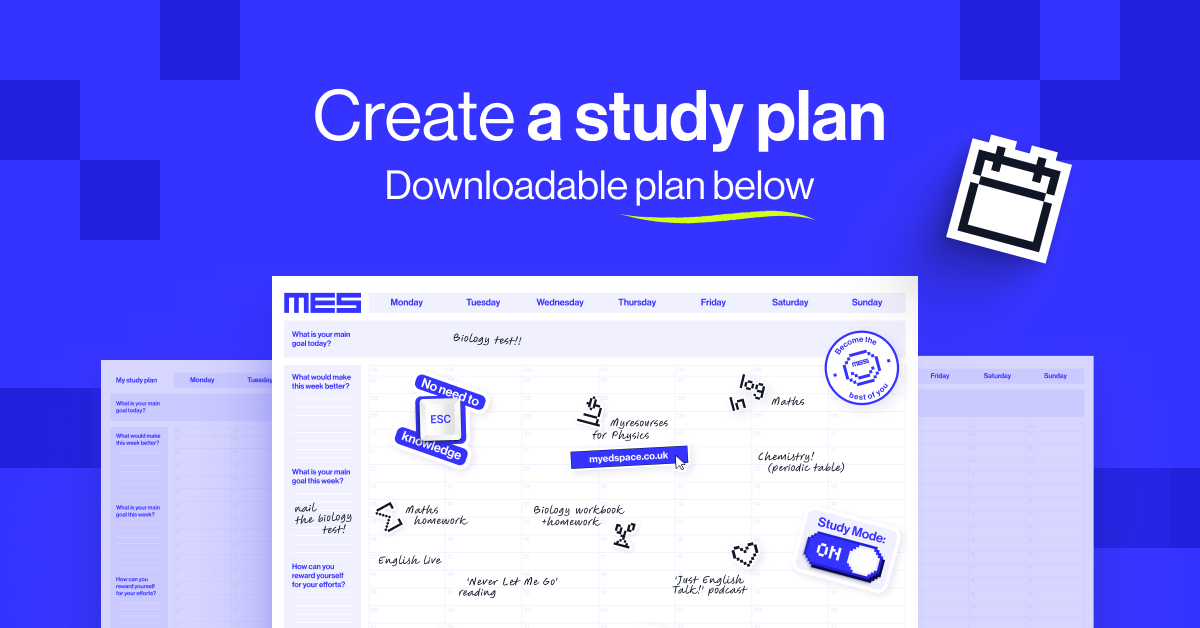
First, it’s important to say that any study plan must include time to rest and recharge. Studying is hard - especially at A-level - and working non-stop can lead to burnout, so make sure you take the time to fully switch off and enjoy some time away from the books.
Breaks are also important when you are studying. One popular approach is called ‘the Pomodoro Technique’ and incorporates 25 to 50 minutes of focus, followed by 5 to 10-minute breaks and is often more effective than marathon cram sessions for gaining and retaining knowledge.
When planning your study periods, it’s helpful to start by listing all the subjects you’ll need to cover, and breaking them down into individual topics. For example, if you are already studying on MyEdSpace, you could simply follow the monthly modules plan.
Next, think about how well you already understand each area, and use this to prioritise where to focus your revision efforts. While it makes sense to focus on those topics you’re less confident on, don’t forget to dedicate some time to revisiting areas you know well. As you get closer to the exams, you’ll find these priorities will shift so don’t be afraid to update your plan as your knowledge and understanding grows.
To help you get started, we’ve created this free A-level revision plan template.
Practice exam techniques and use past papers
Previous A-level exam papers are an excellent tool for understanding the format and language of A-level exam questions.
Familiarising yourself with the format and style of questions you’re likely to face early on can help you avoid surprises on the day. Also, take some time to review the mark schemes as this will help you understand how answers are evaluated and what the examiners will be awarding marks for.
When reviewing past exam papers, test yourself to answer the questions against the clock. This will help you check if you’re able to complete everything in the allotted time and help prepare you for reading the question thoroughly, thinking through your answer - and finally writing it out - under time pressure.
 Finally, if you’re after the best possible preparation, at MyEdSpace, most of our teachers are former exam board examiners - they literally wrote and marked the papers you will sit - so they know exactly what you need to do to succeed.
If that sounds like something you’d benefit from, it’s never too late to sign up to our A-level Exam Masterclasses now.
Use active revision methods
Some of the most effective ways to revise for exams and improve your understanding of topics is to use what are called ‘active revision methods’.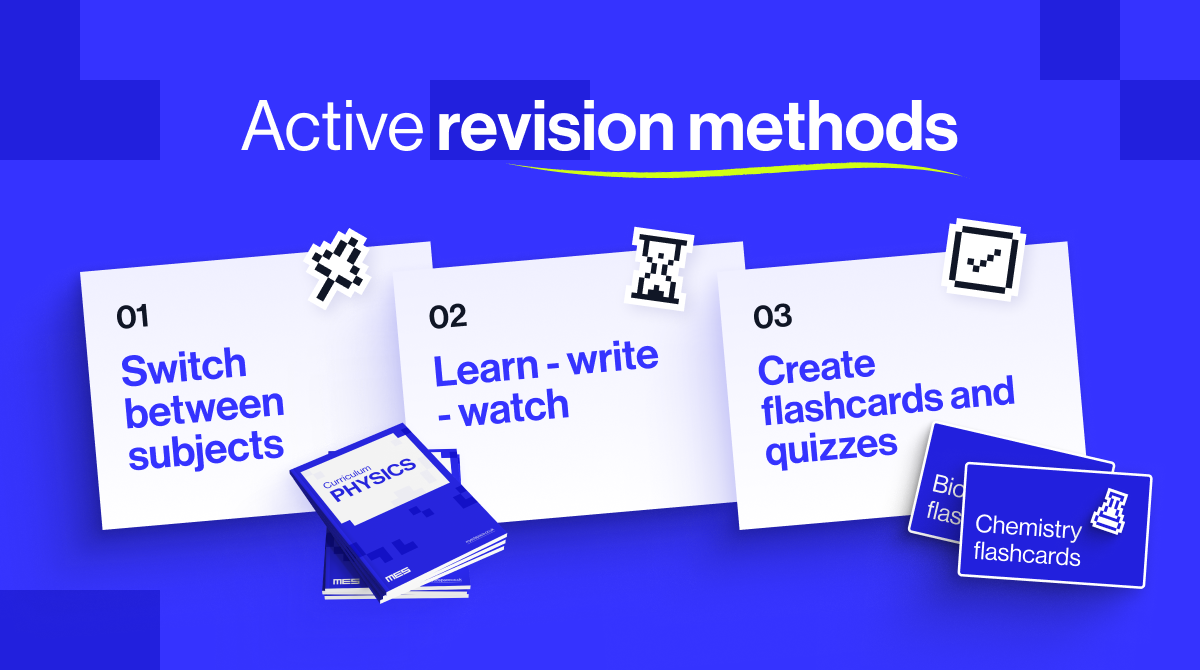
Here are some active revision methods you can try:
Switch between subjects
Instead of cramming a single subject for hours on end, switch it up and regularly change topics, before going back to them later to review what you’ve learned.
By switching your focus between different areas your brain has time to process the information more effectively, making it easier to recall when you return to it later.
Learn - write - watch
By switching between these different modes of working, you can keep your study sessions fresh, engaging, and more productive, preventing burnout and reducing mental fatigue.
-
Learn - start by reading or studying the topic at hand
-
Write - then, write a summary of what you’ve learned or answer practice questions
-
Watch - finally finish with visual learning, such as watching videos or tutorials on the subject
Create flashcards and quizzes
Build on the ‘learn-write-watch’ idea, by creating flashcards with questions on one side and the answers on the other - and then using these to host mini-quizzes.
Get a group of friends together and test each other, or get your family to test you over dinner. And of course, there’s nothing to stop you showing off a little and testing them too.
Teach someone else and have debates
A-levels are detailed and it’s likely you’ll know more than some of your friends or family, which provides a great opportunity to solidify your knowledge, simply by trying to teach them what you know.
Explaining the material you’ve learned to someone else forces you to break down complex information into simple terms, which in turn helps you to understand the material better too.
Through teaching someone else, you also test your knowledge and might encounter questions you hadn’t previously considered, further deepening your understanding.
Another way to do this is to form study groups and debate topics between yourselves. This challenges you to explain your understanding, which will be required in exams and helps you think about topics in new ways, further improving your memory and understanding of a topic.
Give yourself the best possible chance of being A*
If you want to give yourself the best possible chance of exceeding expectations, the data shows that we specialise in helping students achieve the best possible A-level grades they can. And, it costs a fraction of the price of a private tutor.
Last year for example,
-
Almost three-quarters of our A-level students achieved B or above (73%), nationally it was slightly over half (55%)
-
Double the numbers of MyEdSpace A-level Physics students achieved an A or A* (67%), compared to the national figure of only 32%
-
Almost twice as many of our A-level Biology students achieved A or A* (45%), nationwide it was 28%
-
Over half of our A-level students have been admitted into Russell Groups universities (56%) compared to only 27% across the UK

Get ahead this summer with our A-level Summer School
Summer's great. But, in those long, lazy days between July and September, momentum is lost and people can quietly fall behind.
Summer School fixes that without taking over the summer holidays. 6 hours of lessons, spread over 3 weeks - which you can join from anywhere - isn't a big ask, but it comes with big gains. Head into the new year months ahead of schedule and save yourself having to play catch-up later. Find out more and get ahead this summer.