Year 9
English
Course
Finish KS3 with a flourish and get a head start on GCSE English.
Alex Sarychkin will cover everything from Mary Shelley and Aldous Huxley to Daphne du Maurier and Yevgeny Zamyatin.

Your course snapshot
Live Lessons
Two engaging lessons per week delivered by the UK's elite teachers
Tailored homework and workbooks
Custom workbooks and tailored homework, build confidence and exam-readiness
Step-by-step explanations
Every topic is covered with step-by-step video explanations and walkthroughs
Available 24/7, 365
Study any time, day or night with every lesson recording and course material available for revision all day, every day

Loved by students. — Trusted by parents.
Frequently Asked Questions FAQs
Here are answers to some of the most common questions we receive.
What subjects do you offer?
We offer English, Maths and Science (including Biology, Chemistry and Physics) from Year 5 to A-level.
The full list of subjects we offer, organised by Key Stage and Year Groups are;
Year 5 (KS2): Maths, Science, English, 11+ preparation
Year 6 (KS2): Maths, Science, English
Year 7 (KS3): Maths, Science, English
Year 8 (KS3): Maths, Science, English
Year 9 (KS3): Maths, Science, English
Year 10 (GCSE): Maths, Biology, Chemistry, Physics, English
Year 11 (GCSE): Maths, Biology, Chemistry, Physics, English
Year 12 (A-level): Maths, Biology, Chemistry, Physics, Further Maths, UCAT preparation
Year 13 (A-level): Maths, Biology, Chemistry, Physics, Further Maths
All courses cover the full UK curriculum and are mapped to relevant exam boards.
GCSE science courses are available for either Combined or Triple, and we offer separate Higher and Foundation classes.
How can I check your credibility?
Academically, the results of the thousands of MyEdSpace students speak for themselves.
At GCSE level:
Over 2x more MyEdSpace students achieved GCSE grades 7-9 than the national average (45% v 22%)
81% of our students achieved GCSE grades 5-9, compared to only 52% nationally
Almost 1 in 4 (23%) of our GCSE Maths students achieved grades 8 or 9, compared to 1 in 10 nationally (10%)
Exactly 3/4 of our GCSE Maths students achieved a grade 5 or above (75%). Nationally it was less than half (41%)
60% of our GCSE Biology students achieved grades 7-9, compared to only 44% nationally
62% of our GCSE Chemistry students achieved grades 7-9, compared to only 47% nationally
56% of our GCSE Physics students achieved grades 7-9, compared to only 46% nationally
Our GCSE English Literature students achieved double the amount of grade 9s compared to the national average (6% v 3%)
1 in 3 of our GCSE English Literature students achieved grades 7-9 (33%), compared to only 1 in 5 nationally (20%)
Our GCSE English Language students achieved more than double the amount of grade 9s compared to the national average (5% v 2%)
Over double the amount of our GCSE English Language students achieved grades 7-9, than the national average (32% v 15%)
And at A-level:
3 in 4 of our A-level students achieved a B or above (75% - nationally it was just 61%)
Almost 90% of our A-level students achieved a C or above (89% - nationally it was just over 75%)
Almost half of all our A-level students achieved an A or above (43%), nationally only 39% achieved this
83% of our A-level Maths students achieved a B or above, 21% more than the national average (62%)
Over 90% of our A-level Maths students achieved a C or above (93%). Nationally it was only 78%
96% of our A-level Further Maths students achieved a C or above, 5 percentage points higher than the national average (91%)
Almost half of our A-level Biology students achieved an A or above (41%), nationally it was well under 1/3 (28%)
Almost 3 in 4 of our A-level Biology students achieved an B or above (74%), nationally it was slightly over half (51%)
88% of our A-level Biology students achieved a C or above. Nationally it was only 72%
Almost half of our A-level Chemistry students achieved an A or above (41%), nationally it was slightly under 1/3 (32%)
Almost 3/4 of our A-level Chemistry students achieved a B or above (74%). Nationally it was only around 1/2 (56%)
87% of our A-level Chemistry students achieved a C or above. Nationally it was only 75%
60% of our A-level Physics students achieved a B or above. Nationally it was only 54%
85% of our A-level Physics students achieved a C or above, 12 percentage points higher than the national average (73%)
Anecdotally, the story is the same.
⭐95% of parents reported finding learning on MyEdSpace helpful for their child’s education
⭐83% of parents noticed a positive attitude change in their child after using MES
⭐84.5% said MyEdSpace made them more confident walking into the exam hall
⭐84% of our GCSE students told us their results met or beat their own expectations
⭐79% of our A-level students got into their first-choice university
We’re proud that this is reflected in their reviews, where we’re rated ⭐⭐⭐⭐⭐ on both Trustpilot and Google Reviews.
We’re so confident you’ll see the benefits too, we offer a 14-day full money-back guarantee, so you can try it for yourself and get a full refund if we don’t meet your expectations.
Do you offer discounts for multiple courses or siblings?
Yes.
When you sign up two or more students, you'll get a 10% discount.
Contact our Customer Success team for more details.
We’re so confident you’ll see the benefits too, we offer a 14-day full money-back guarantee, so you can try it for yourself and get a full refund if we don’t meet your expectations.
Which is more effective, group learning or 1-to-1, private tuition?
Collaborative group learning provides numerous benefits which are lost in 1-to-1 tutoring and private tuition.
First, learning alongside their peers encourages more questions and collaboration, boosting confidence, engagement and energy levels, which can be lost in a more intimidating 1-to-1 setting where anxious students can feel put on the spot.
Our teachers are experts in providing safe, engaging learning environments, where there is zero-judgment and questions are encouraged. That’s a big part of why we hired them.
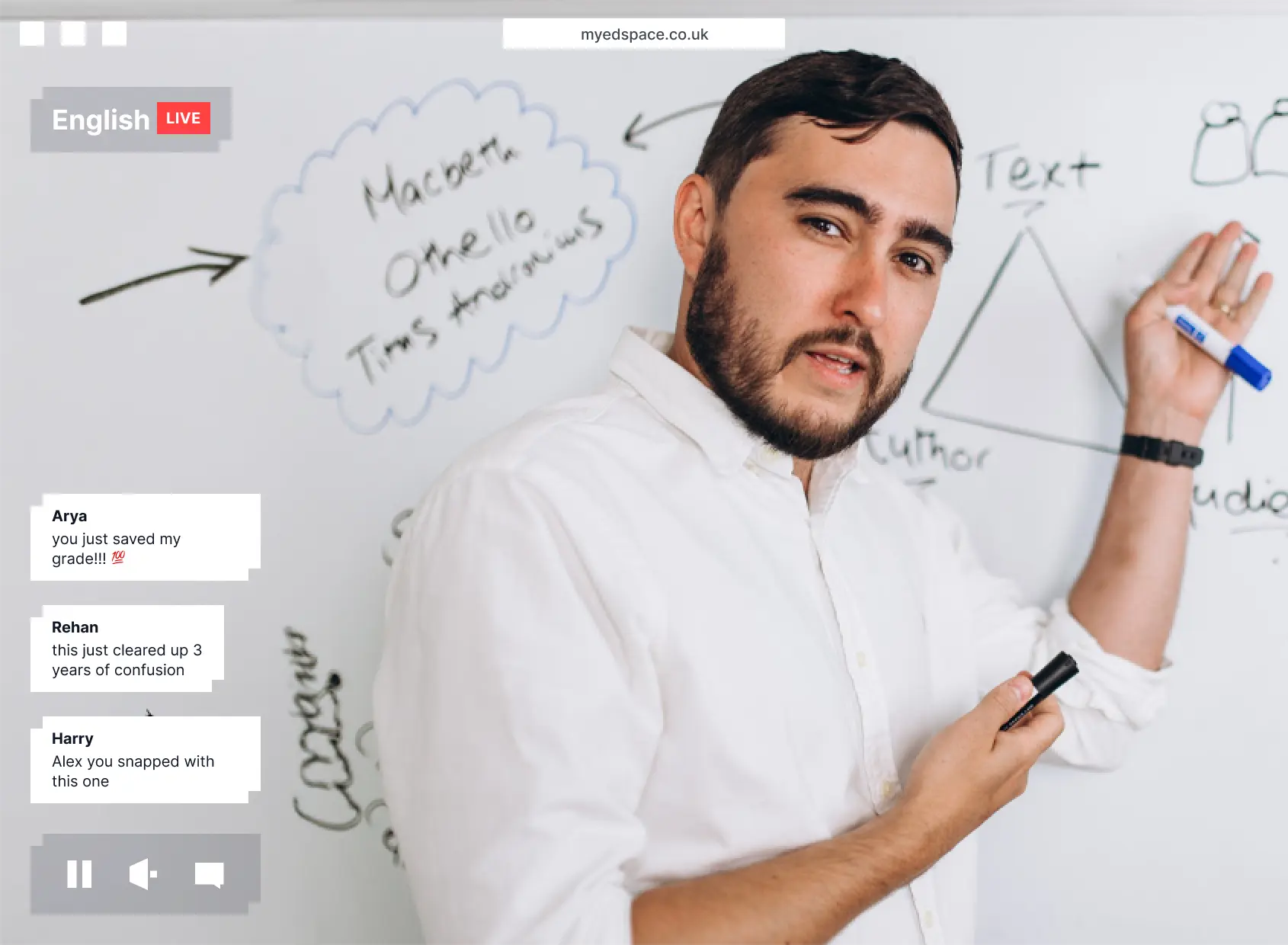
All student cameras are switched off, so no student appears on screen and their real-life identity is hidden behind the anonymity of a username and avatar.
We’ve chosen our specific way of delivering lessons to ensure that there’s no pressure to speak on camera or in front of the class – students can participate through the chat and ask questions anonymously.
We have found that this makes all students substantially more likely to contribute by asking and answering questions, while also providing a 'strength in numbers' feeling of reassurance and all the other benefits associated with collaborative learning.
We have found that each student on average sends 25 messages into the chat per lesson, creating an incredibly interactive atmosphere.
It’s quite difficult to find the right tutors for your kids. Parents often have to decide between cheaper, but less experienced tutors or highly qualified ones that ask for thousands per subject. Vetting their qualifications and suitability is also difficult, with no regulatory body in the UK.
We do things differently. We use technology and scale to cut overheads without cutting quality. By bringing people together, we ensure every child can access elite UK teaching talent at a fraction of the cost of hiring a private tutor.
We handpick high-quality, experienced teachers who have a track-record of helping children reach their full potential. Meaning you can rest assured that instead of a Grad Student looking to earn a few extra £s, your child is learning from highly-qualified teachers, who’ve spent years honing their talent for educating.
With MyEdSpace, there’s no compromise on quality - you’re just not paying for empty travel time or inefficiencies. It’s a 10x better education, at 10% of the cost.
Don't just take our word for it. We have thousands of 5* star reviews from parents and students on Trustpilot.
What’s included in a MyEdSpace course?
Our courses include two online interactive live lessons, per subject, per week, delivered by an experienced subject-specialist teacher.
Alongside the live lessons, each course also includes tailored workbooks, targeted practice questions and step-by-step video explanations for every topic, to reinforce learning.
Recordings of the live lessons, plus all the additional materials are available 24/7, allowing them to be rewatched and revisited at any time. Regular progress reports track improvement every step of the way.
How do you ensure the difficulty level is right for every student?
To make sure every student is working at a level that’s right for them, every student’s progress is monitored and parents receive a progress report.
If we feel that a student is struggling, or not being pushed hard enough, we can adjust the year group, or course level up or down accordingly.
If you want to discuss changing levels at any time, our Customer Success team are here to help.
Want to find out more?
We're here to help you!