Effective GCSE revision tips and tricks
With this year’s GCSE exams now only a few months away for Year 11 students, there’s no time like the present to start preparing and revising.
GCSE exam season can be a difficult and stressful time for students, so we’ve created this guide to GCSE revision, designed to help eliminate some of the stress and ensure every student feels confident and ready to do their best when they sit down and pick up their pen.
Create a GCSE revision study plan
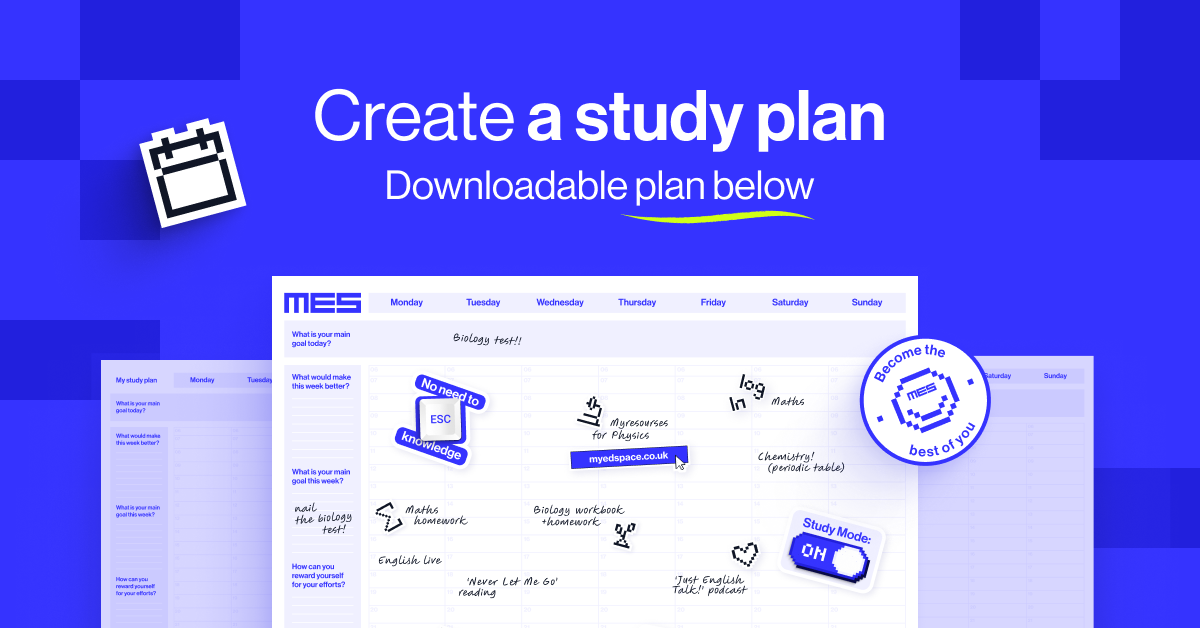
The first step is to create a study plan, as this will help you focus your efforts and track your progress - providing both structure and motivation as you go.
Don’t forget to also dedicate some time to revisiting areas you know well. As you move through your plan, you’ll find these priorities will shift so don’t be afraid to update your plan as your knowledge and understanding grows.
To help you get started, we’ve created this free GCSE revision plan template.
Break up big subjects into topics
A good place to start is by listing the subjects you need to revise, and then dividing those into topics. For example, if you are already studying on MyEdSpace, you could follow the monthly modules plan. By breaking subjects down into manageable chunks, topics which seemed overwhelming don’t appear quite so scary.
Next, think about how well you already understand each topic. This will allow you to prioritise where to focus your revision efforts and ensure you dedicate enough time to the areas you need to strengthen.
Don’t forget your life - remember to take a break
Of course your GCSEs are important, but life doesn’t stop and everybody has other things they need to fit in around revision, so time management is a crucial skill in achieving your dream grades.
When creating your revision plan, think about when your brain is at its most effective - for some people it’s first thing in the morning, while others work best during the evenings, so figure out what works best for you - and plan to cover the topics you find harder during those periods.
It’s also important to take breaks, have fun and recharge your batteries, so it’s vital to ensure your study plan includes time to rest, relax and enjoy yourself.
This also applies to dedicated study time, where a common approach is the Pomodoro Technique, which incorporates 5 to 10-minute breaks after 25 to 50-minutes of focused work (with no multitasking). These breaks can include stretching, walking, or grabbing a snack before starting up the next 25 to 50-minute block.
Finally, don't underestimate the power of a good night’s sleep for helping your brain be efficient and better able to retain information. Aim for seven or eight hours of sleep each night to allow your brain to absorb what you’ve learned through the day.
Use active revision methods
Some of the most effective ways to retain information and improve your understanding of topics is to use what are called ‘active revision methods’.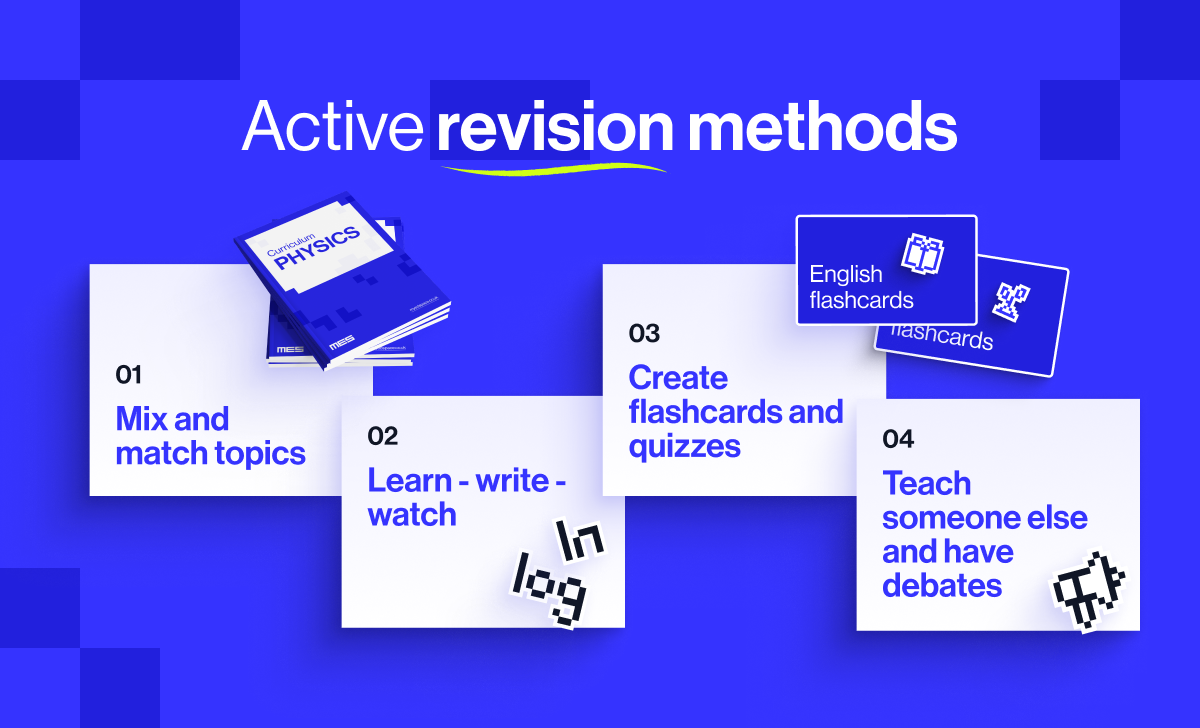
Here are some active revision methods you can try:
Mix and match topics
Instead of cramming one subject non-stop, study a few different topics in rotation and then go back later to review what you’ve learned.
By switching your focus between topics before going back to them, your brain has time to process the information more effectively, making it easier to recall later.
Learn - write - watch
This technique breaks your study sessions into three distinct areas:
-
Learn - start by reading or studying the topic at hand
-
Write - then, write a summary of what you’ve learned or answer practice questions
-
Watch - finally finish with visual learning, such as watching videos or tutorials on the subject
Switching between these different modes keeps your study sessions fresh, engaging, and more productive, preventing burnout and reducing mental fatigue.
Create flashcards and quizzes
Build on the ‘learn-write-watch’ idea, by creating a quiz around a certain topic by writing flashcards with questions on one side and answers on the other - and then take turns with friends to ask and answer questions.
You can also get your family to test you (and of course, there’s nothing to stop you testing them too).
Teach someone else and have debates
If you find your friends or family know less about a topic than you do, challenge yourself to teach them what you know.
Explaining the material you’ve learned to someone else is a powerful way to solidify your knowledge because it forces you to break down complex information into simple terms, helping you to understand the material better too. Through teaching someone else, you also test your knowledge and might encounter questions you hadn’t previously considered, further deepening your understanding.
Another way to do this is to form study groups and debate topics between yourselves. This challenges you to explain your understanding, which will be required in exams and helps you think about topics in new ways, further improving your memory and understanding of a topic.
Practice exam techniques
Mastering exam techniques is as important as understanding the subject material, and that’s why at MyEdSpace we have former exam board examiners - they literally wrote and marked the papers you will sit - so they know exactly what you need to do to succeed.
Review past papers
Familiarise yourself with GCSE question styles and exam formats from past papers. This is helpful for preparing you for the type of questions you will face, and the likely answers you will need to smash them.
Reviewing past GCSE exam papers will also help identify any knowledge gaps and help you prioritise where to focus your attention during your revision.
Test your time management
When reviewing past exam papers, test yourself to answer the questions against the clock. This will help you check if you’re able to complete everything in the allotted time and help prepare you for reading the question thoroughly, thinking through your answer - and finally writing it out - under time pressure.
Develop your answering skills
GCSE exam questions are often asking something specific, and the best way to pick up top marks is to ensure you’re answering the question being asked. We can teach you different types of answers and formats you can use to ensure your answer is hitting the mark, but if you’re working independently, focus on structuring your answers according to the exact question being asked. This is crucial for maximising your score. For example, if in your GCSE English exam you’re asked to compare two pieces of text, ensure your answer covers both texts AND a comparison of the two. The crucial thing, as always, is to ensure you read the question.
Seek feedback and don’t be afraid to ask for help
While you will spend some time working alone in peace and quiet, revision shouldn’t be a completely solo activity, and you will benefit from the support of your teachers, friends and family.
For example, from your teachers don’t be afraid to ask for constructive feedback and guidance on what areas they think you need to improve on and what you can do to get there.
Form study groups with your friends, which will help all of you keep motivation high, while also benefiting from the knowledge you’ve each picked up during the year.
Finally, make the most of the people around you by explaining what you’re learning to them and encouraging questions. This will reinforce your understanding and help you identify any final weak spots.
Give yourself the best possible chance of top GCSE grades
If you want to give yourself the best possible chance of exceeding expectations, the data shows that we specialise in helping students achieve the best possible GCSE grades they can. And, it costs a fraction of the price of a private tutor.
Last year for example,
-
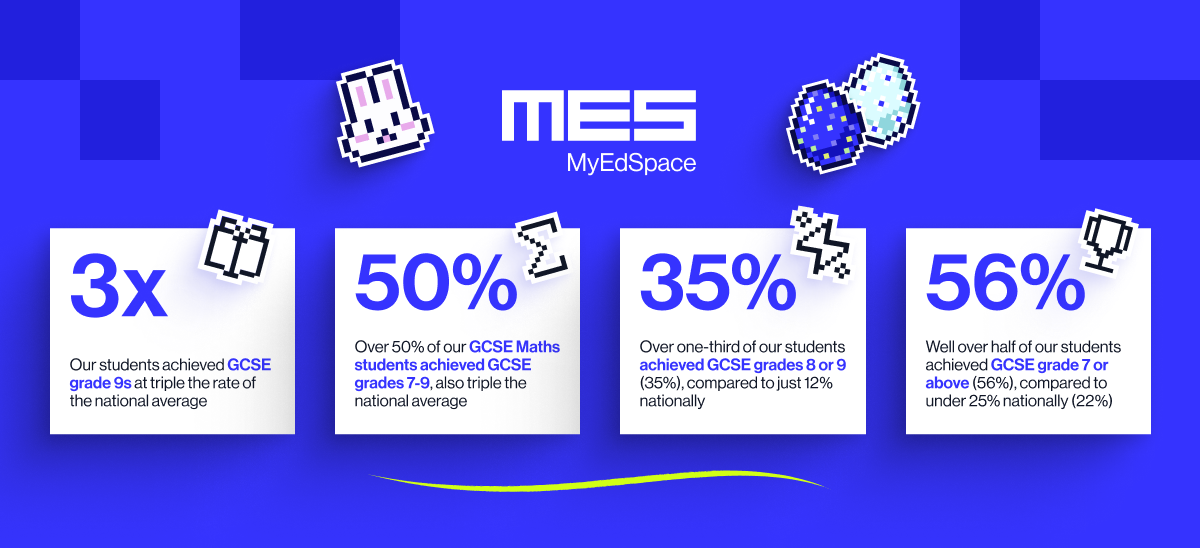
MyEdSpace students achieved GCSE grade 9s at triple the rate of the national average
-
Over 50% of our GCSE Maths students achieved GCSE grades 7-9, also triple the national average
-
Over one-third of our students achieved GCSE grades 8 or 9 (35%), compared to just 12% nationally
-
Well over half of our students achieved GCSE grade 7 or above (56%), compared to under 25% nationally (22%)
It’s never too late to join us, so sign up to our Exam Masterclasses today and let’s smash those exams together.