Meet the teacher - Dr Davinder Bhachu
When Dr Davinder Bhachu first started studying Chemistry, something just clicked.
“You know when you’re decent at a subject and you can more often than not work out the right answer? That’s how I felt about Chemistry”, he recalls. “I’ve always been drawn to understanding why things work the way they do, and I really enjoyed it”.
The theme of enjoyment and a love of learning is something that shines through when you speak to Dav, whose interests outside teaching span from birdwatching and quizzes to weightlifting.
However, it’s teaching that is - and always has been - his main passion.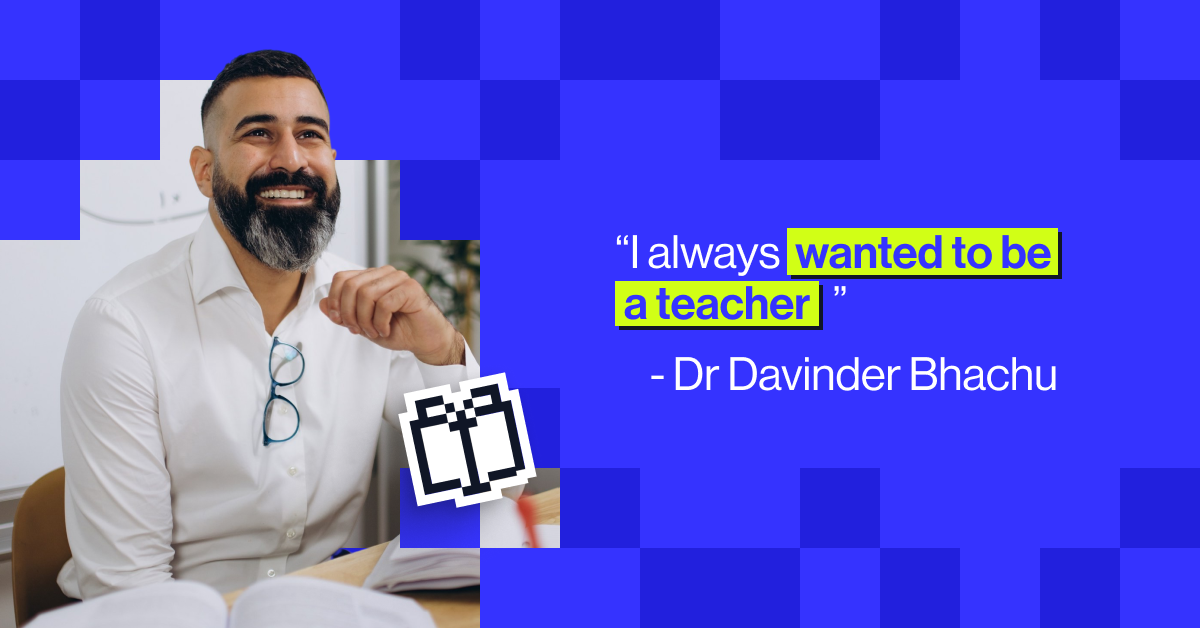
“I always wanted to be a teacher”, he begins. “I did my degree in Chemistry - graduating with a First Class degree and finishing in the top three of my year - with an eye on teaching, but ended up doing a PhD at University College London, and detouring into academia for three years. Then, when I started teaching undergraduate tutorials, I rediscovered that desire to teach, so started my teacher training.”
Once qualified, Davinder joined a school in East London, where over the years he worked his way up to Head of Chemistry.
“One of the main reasons I love teaching is that I enjoy taking a topic that students often find difficult or intimidating and breaking it down in different ways until it finally clicks. That moment - when a student suddenly sees the logic, the pattern, or the simplicity behind something complex - it’s genuinely exciting”, he enthuses.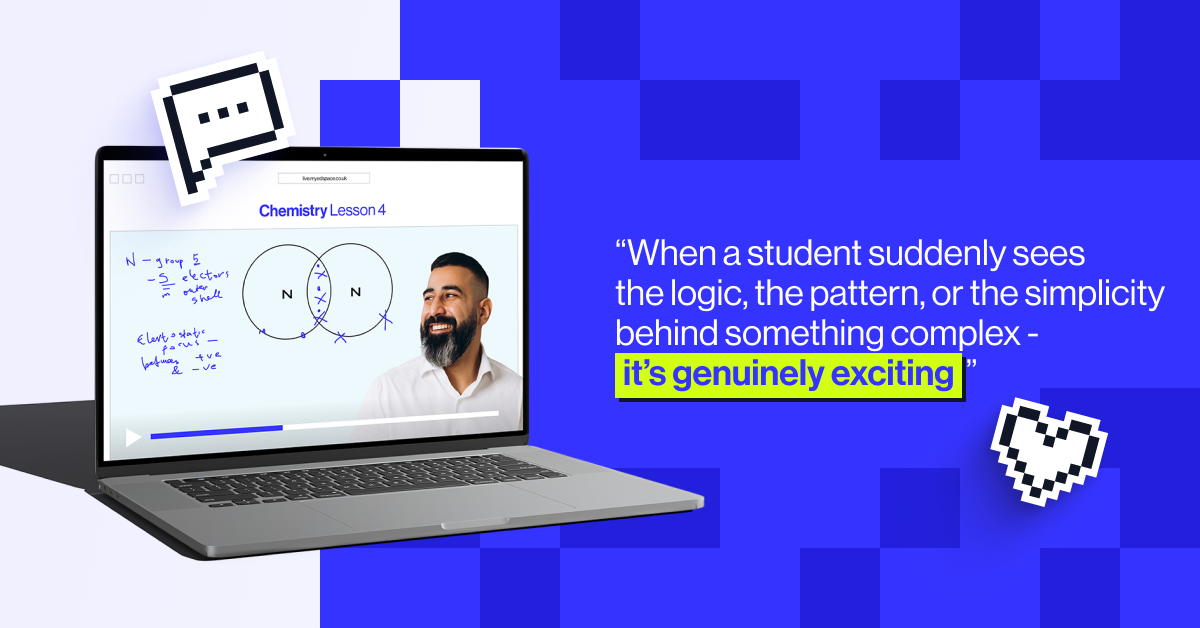
Ready for a new challenge Davinder stepped away from the classroom, and found MyEdSpace. “I joined MyEdSpace because I wanted to focus on excellent teaching rather than the admin and here we prioritise quality teaching and real student progress, which is exactly the atmosphere I want to work in. I’ve been teaching for over a decade, specialising in helping students make sense of the ‘tricky’ parts of science and there are a lot of advantages to teaching online”, Davinder starts to explain.
“First, the students have an anonymity and are in the comfort of their home - in their own space - which gives them the confidence to ask questions and engage more with the topic. That interaction leads to lots of great questions, which you can answer. In a bricks-and-mortar classroom, lots of kids don’t feel able to contribute in the same way. It’s liberating. Students can concentrate, ask questions more freely, review recordings, and get the clarity they often miss in a crowded classroom. It’s teaching stripped back to its most important parts.”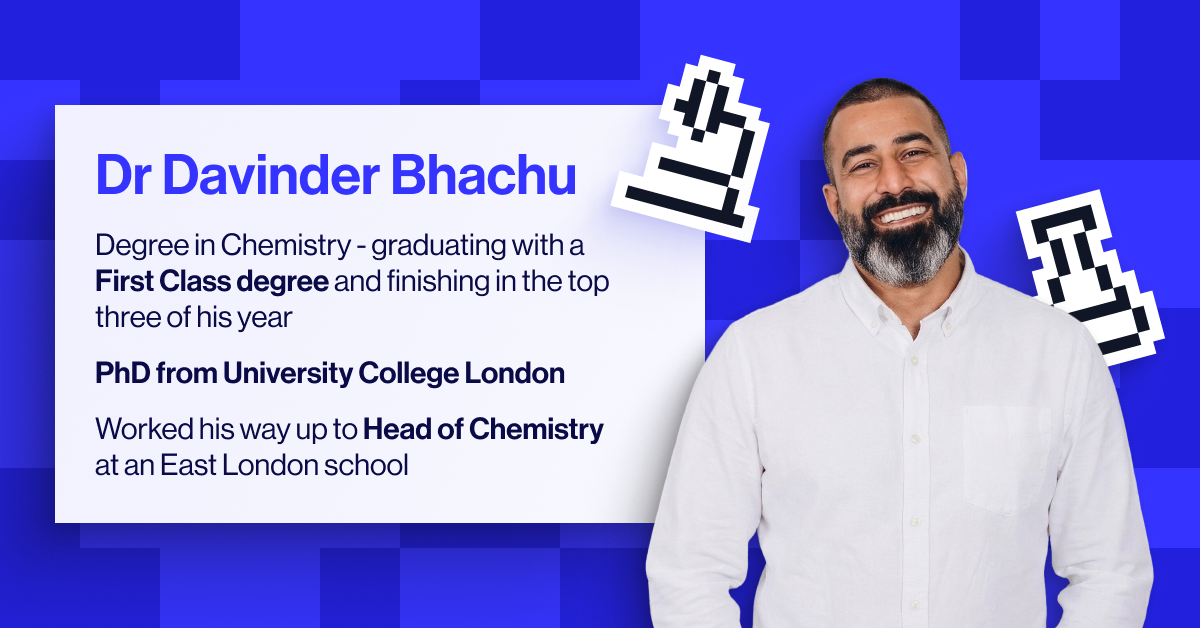
“I focus on clear explanations, exam-smart thinking, and helping students understand the deeper structure of chemistry rather than memorising disconnected facts. My lessons are straightforward, structured, and centred around helping students feel confident with the logic of the subject. I use lots of diagrams, visual models, and step-by-step breakdowns so students can gradually build a cartoon-like, intuitive picture of what chemistry actually is. When students can visualise particles, mechanisms, and processes, everything becomes easier — and far more memorable.”
“Also, with the regular assessments it’s easy for me as a teacher to see where the group are struggling, so we can address that. As we add more and more artificial intelligence to assessing the data, we’ll become even more effective at identifying areas to focus on. It’s exciting to see the potential for helping students achieve even more”.
Davinder’s use of “even more” is apt too, because his Chemistry students are already achieving results far exceeding anything you’d see in a traditional school. For example, last year, a massive 48% of his A-level Chemistry class achieved A or A*. “That was a cool moment, especially considering the variety of starting points students came in with”, Davinder smiles. 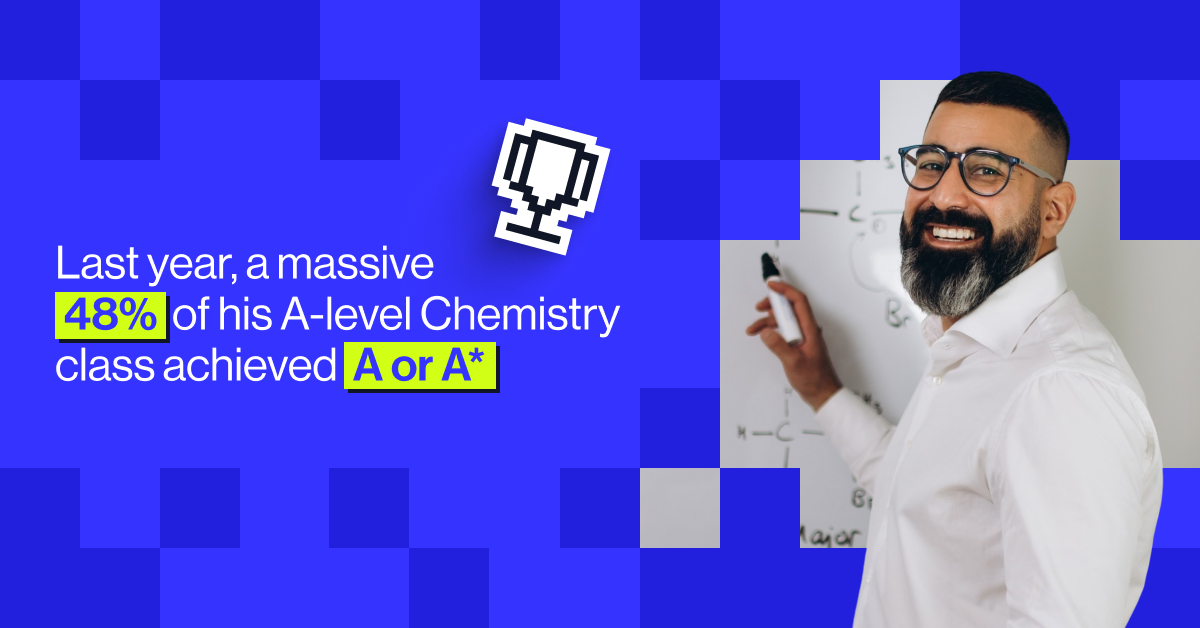
Get ahead this summer with our GCSE and A-level Chemistry Summer School
Summer's great. But, in those long, lazy days between July and September, momentum is lost and people can quietly fall behind.
Summer School fixes that without taking over the summer holidays. 6 hours of lessons, spread over 3 weeks - which you can join from anywhere - isn't a big ask, but it comes with big gains. Head into the new year months ahead of schedule and save yourself having to play catch-up later. Find out more and get ahead this summer.