Reciprocated Trigonometric Functions
Neil Trivedi
Teacher

Reciprocated Trigonometric Functions
Reciprocated trigonometric functions are derived from the primary trigonometric functions: sine, cosine, and tangent.
Reciprocated Trigonometric Functions
Cosecant (): The reciprocal of sine
Secant (): The reciprocal of cosine
Cotangent (): The reciprocal of tangent
As can also be written as .
Example 1:
Evaluate.
a)
b)
c)
No answer provided.
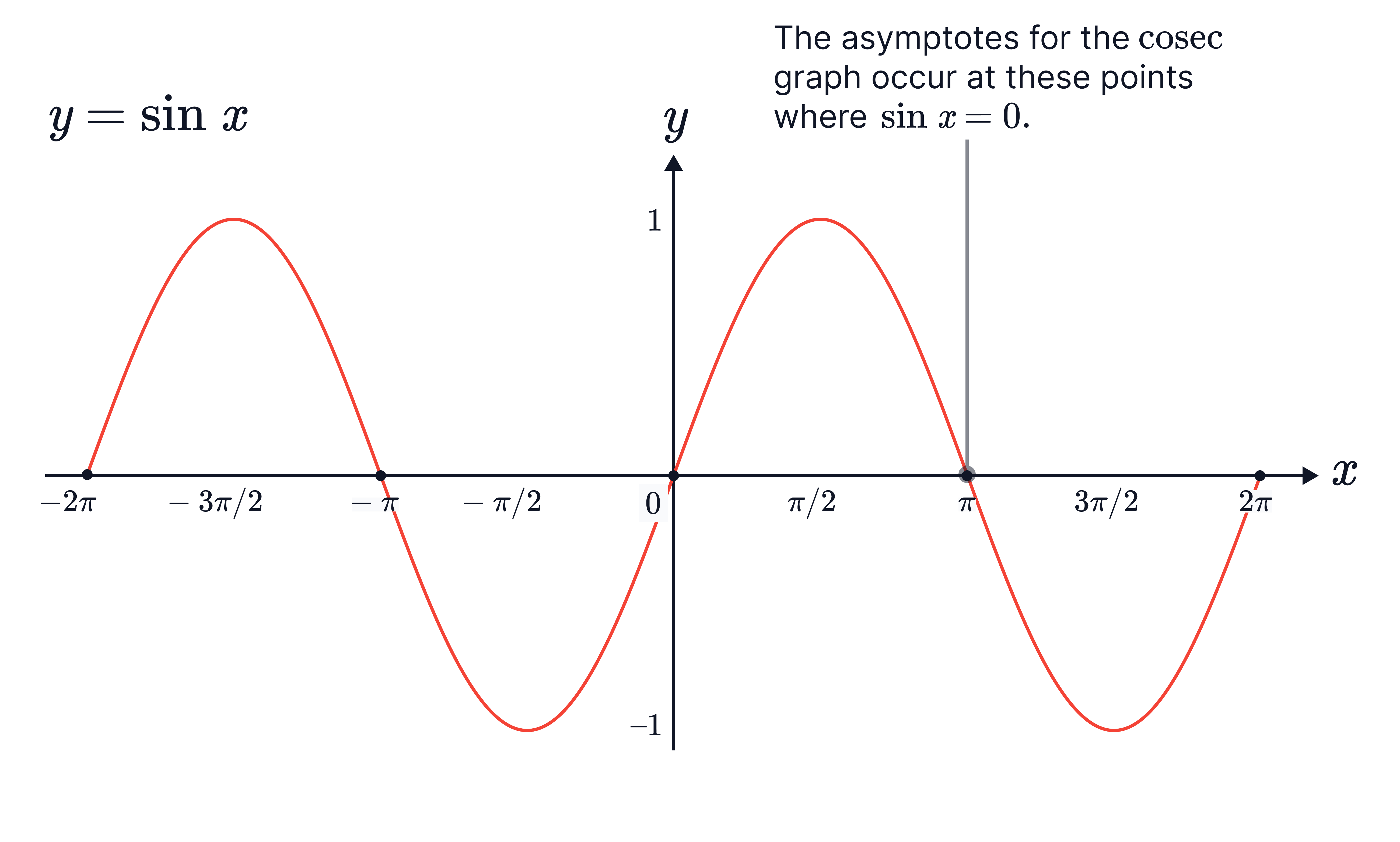
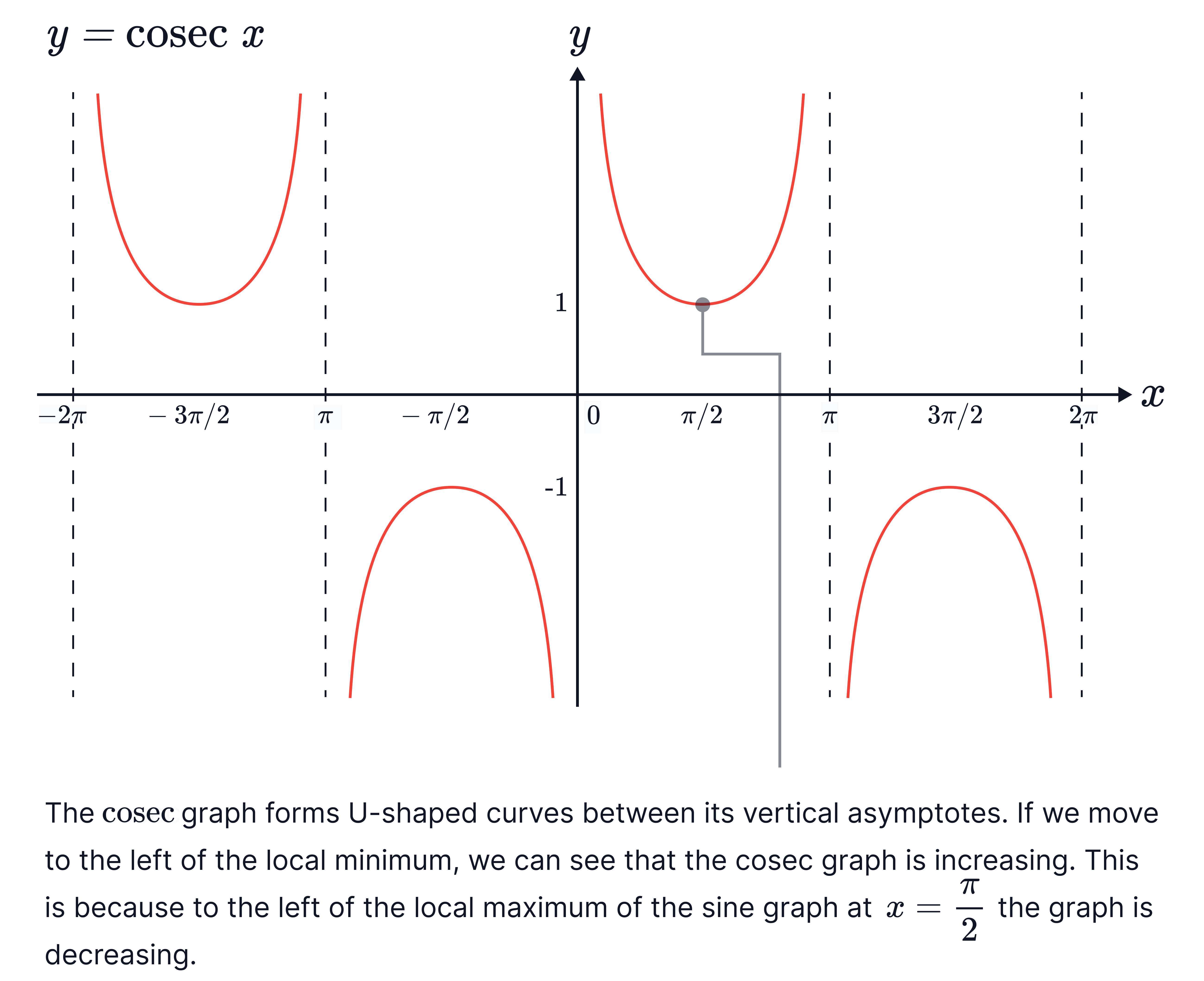
The graph of is the reciprocal of . At the points where , is undefined, so the graph has vertical asymptotes (i.e., where , in which is an integer.) The graph of also has local maxima and minima at , occurring where .
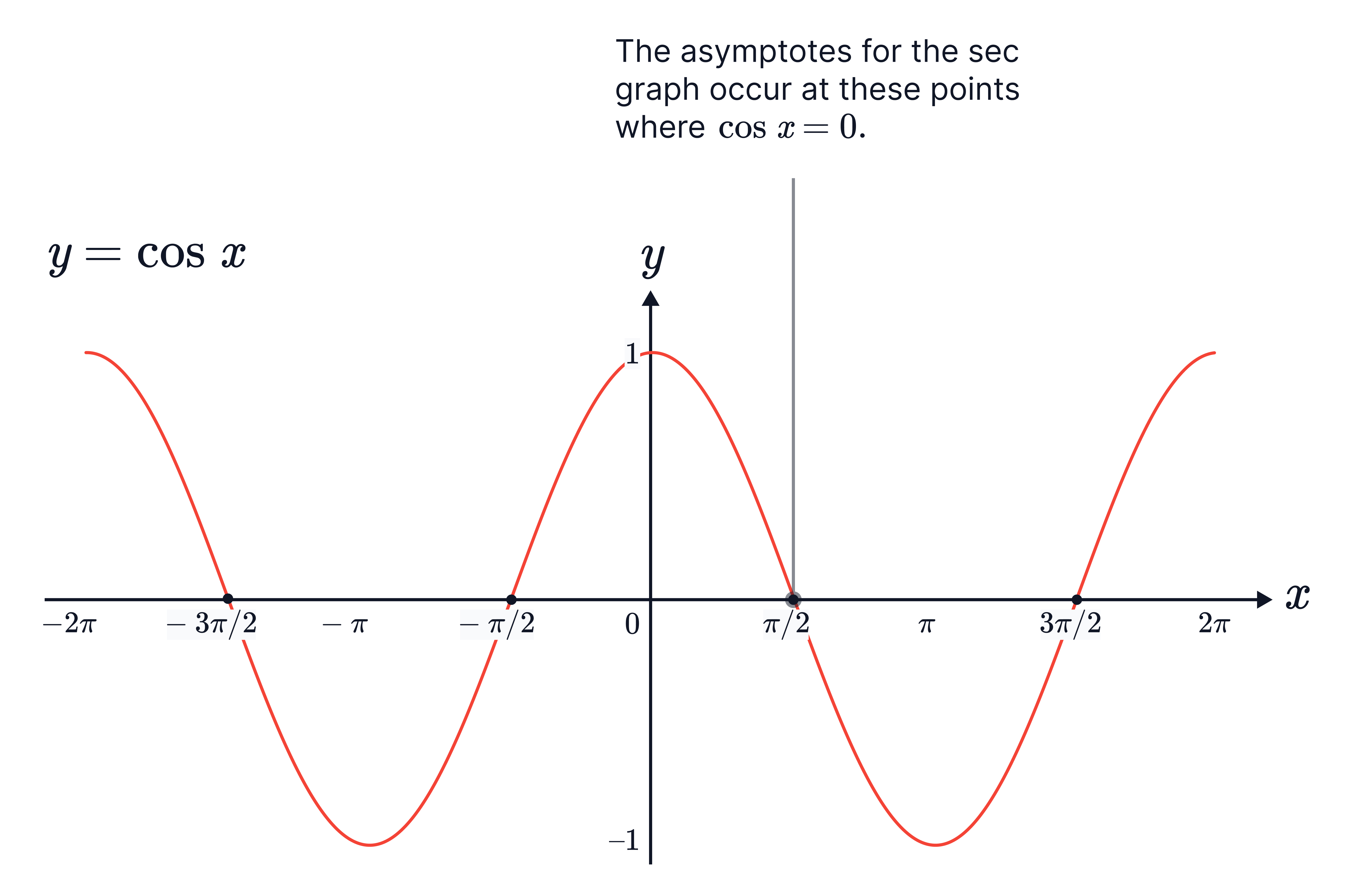
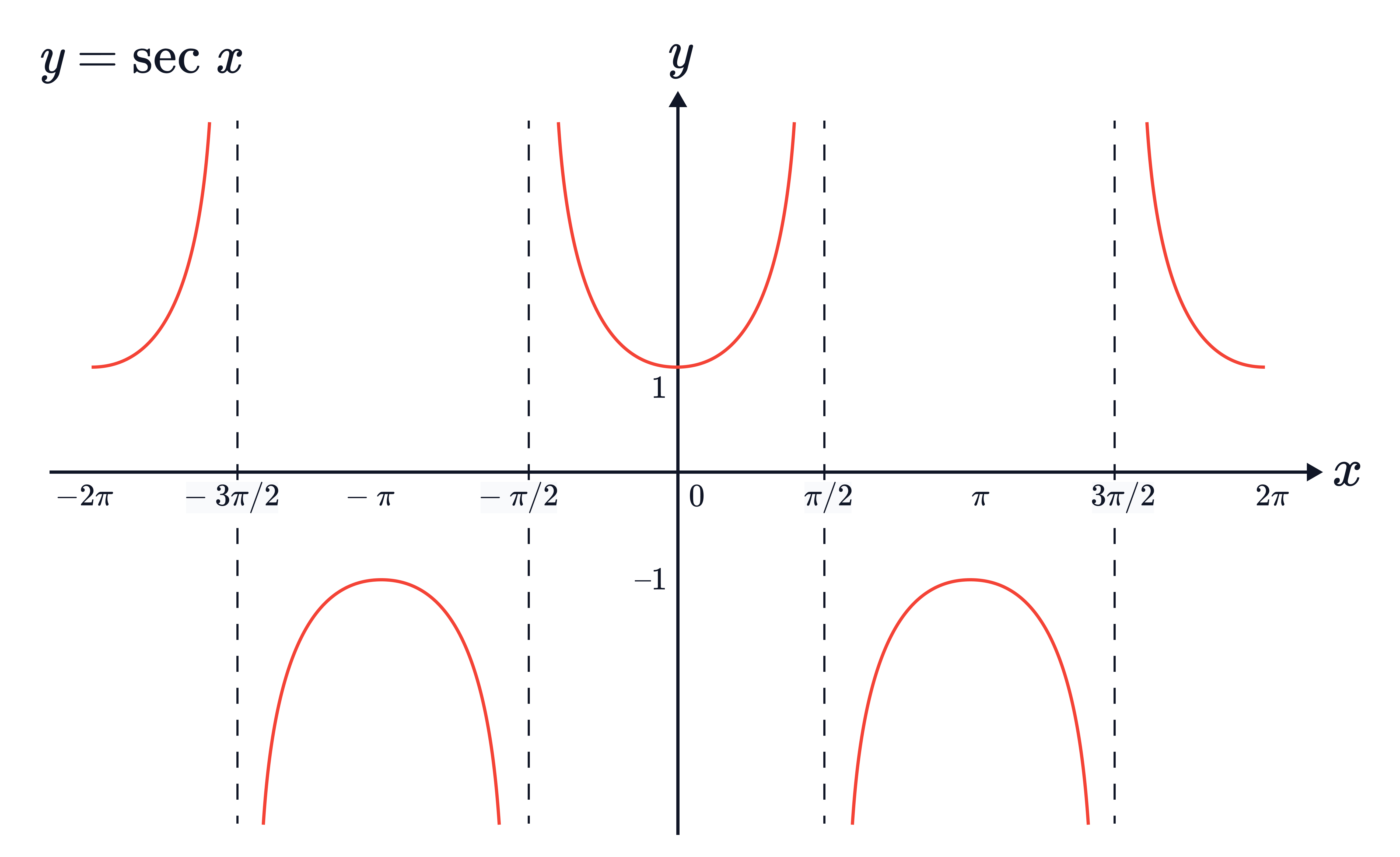
The graph of is the reciprocal of . At the points where , is undefined, so the graph has vertical asymptotes (i.e., where , in which is an odd integer.) Likewise, with the graph, the graph has local minima and maxima at , occurring where .
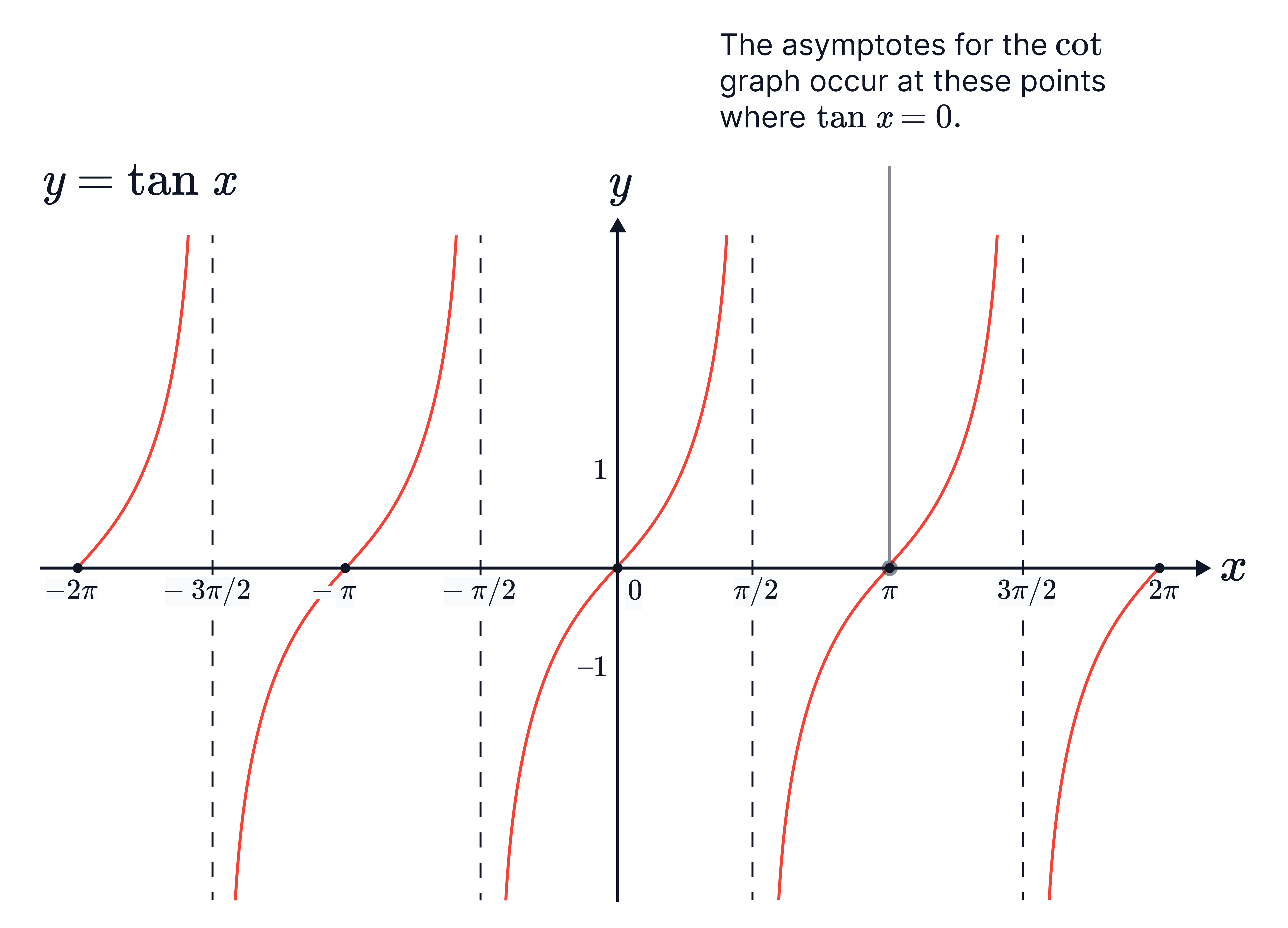
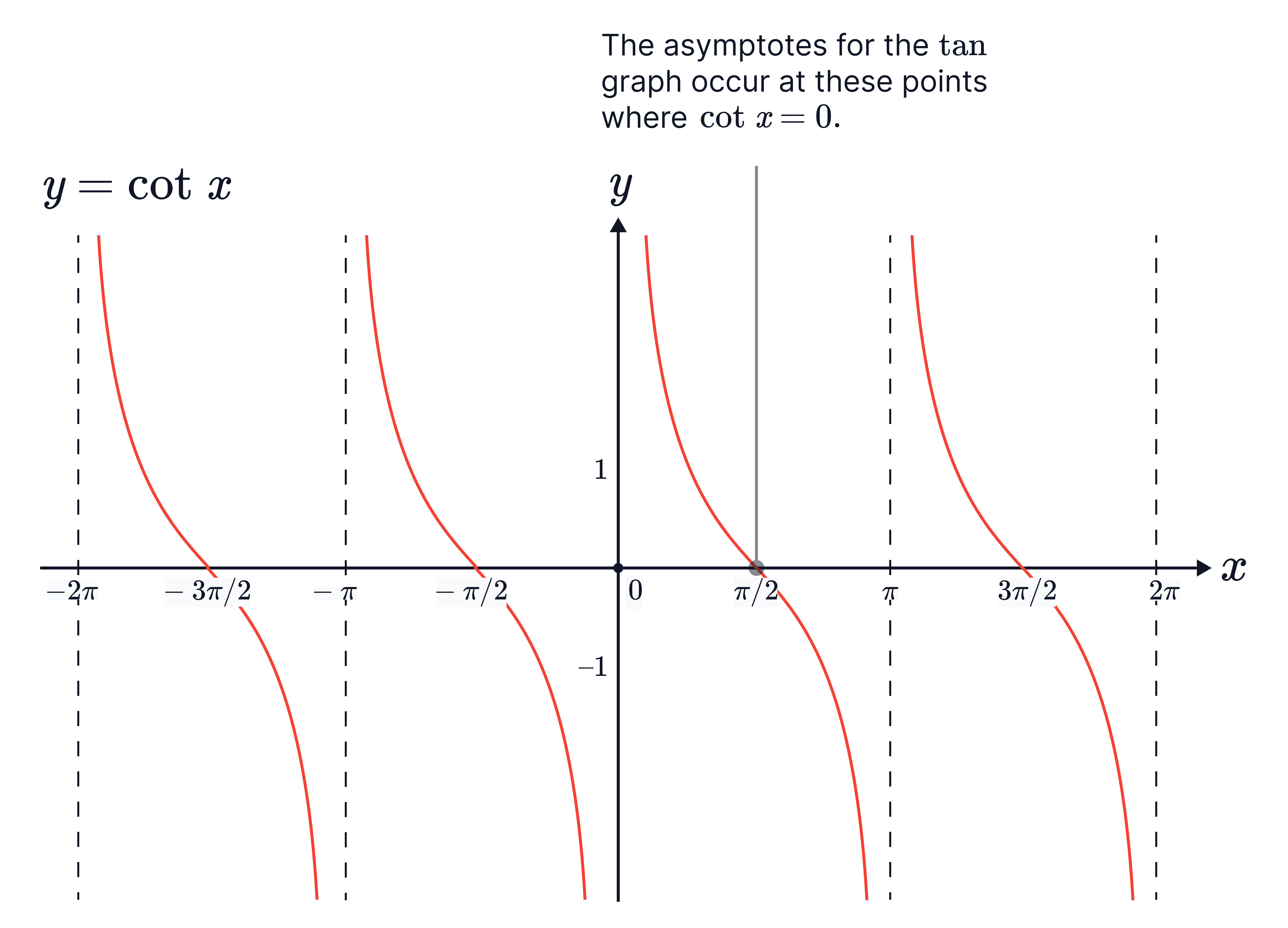
The graph of is the reciprocal of . It looks similar to the graph of , but the key difference is that between the asymptotes, the curves decrease from to , because and has a negative gradient where has a positive one. At the points where , is undefined, so the graph has vertical asymptotes (i.e., where , in which is an integer.)
Example 2:
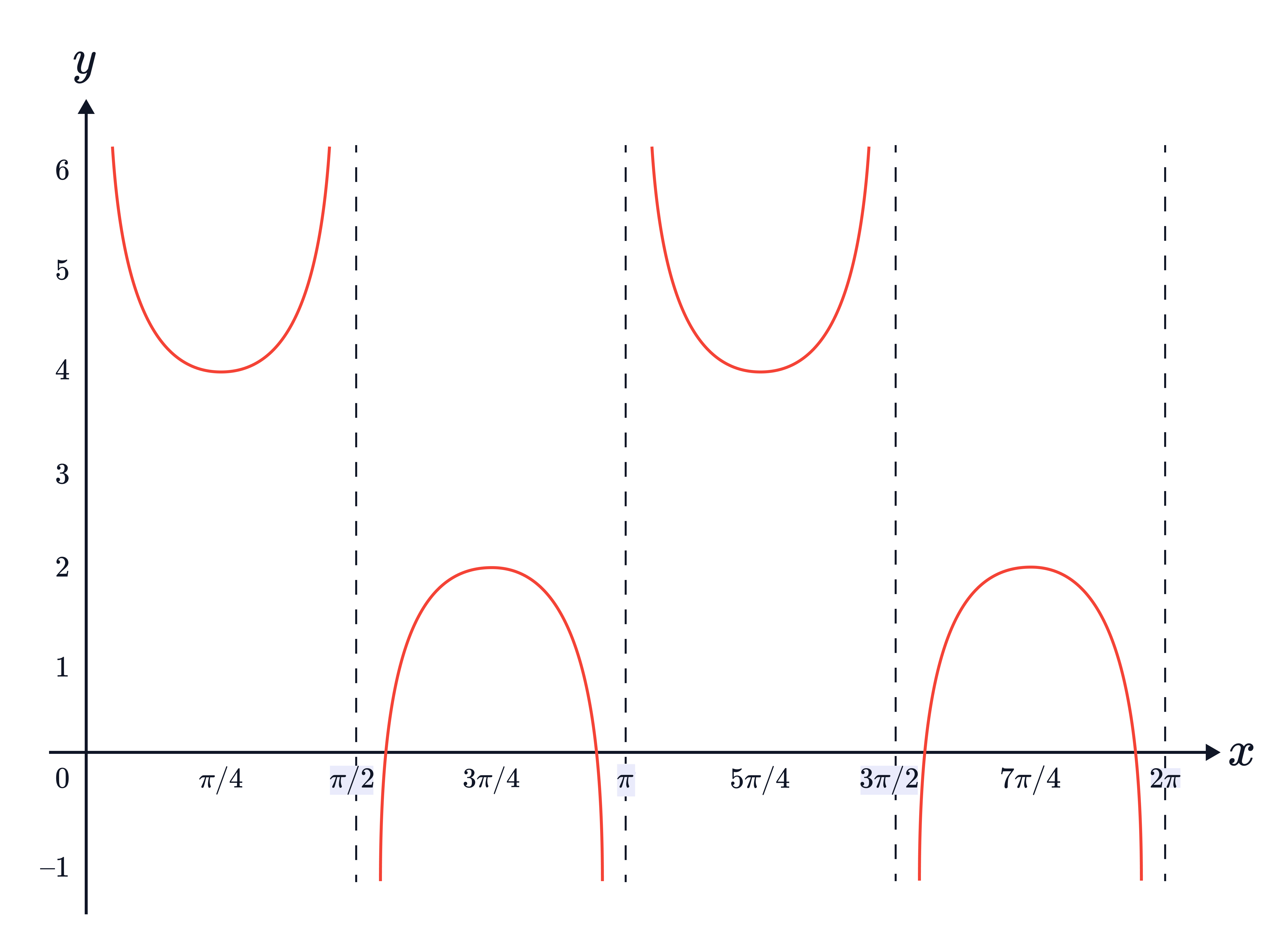
Sketch the graph of in the range of .
Step 1: The current range is for . We need to modify it to read . Do this by multiplying everything by . To note, the is outside the angle so it doesn't affect the range.
Step 2: Sketch the graph of for . Vertical asymptotes occur at , where is an integer. The local maxima and minima occur at and , respectively.
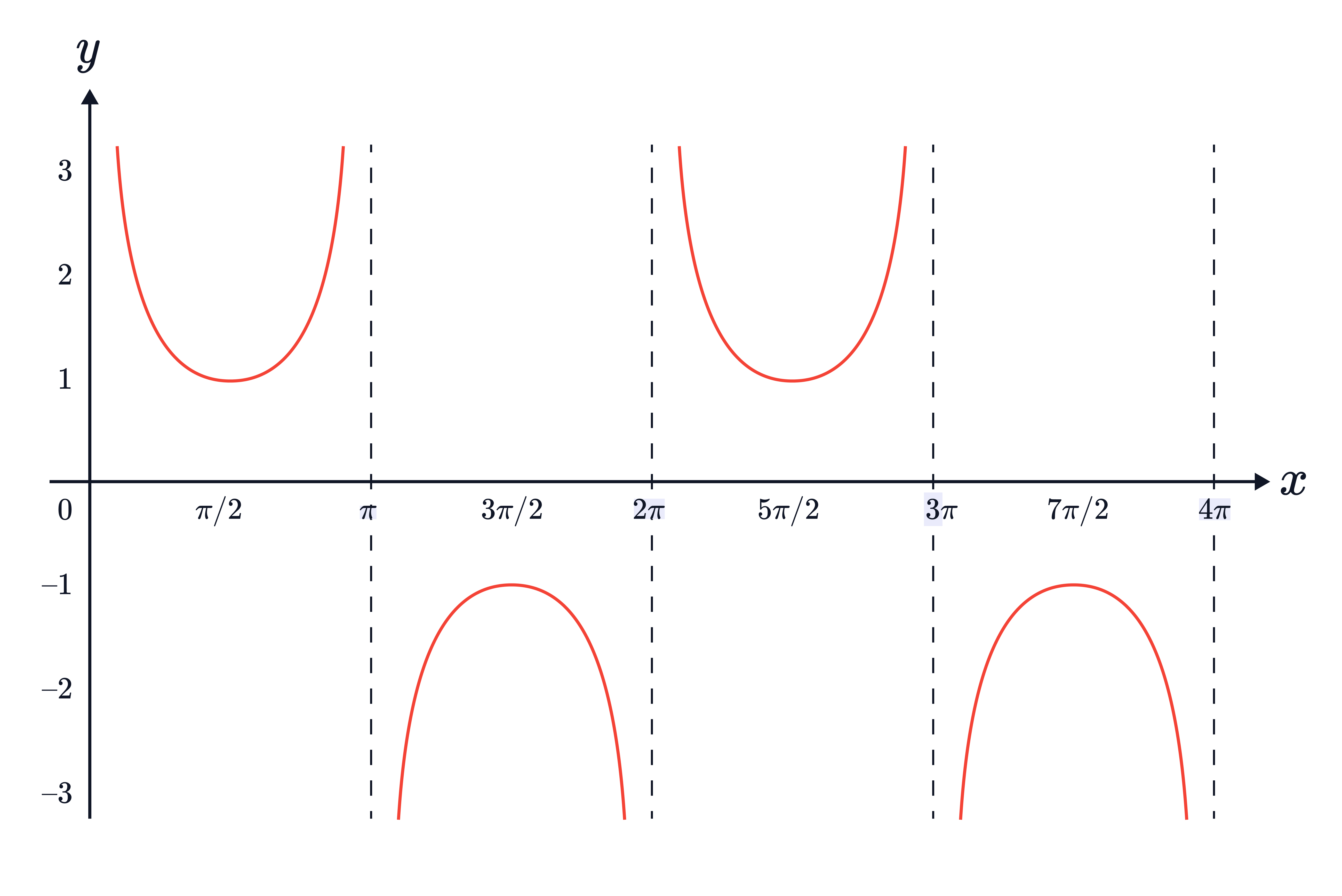
Step 3: To obtain the graph of in the range , we un-modify the range by dividing all values (including angles and asymptote positions) from the graph of by . This stretches the graph parallel to the axis by a scale factor of . The values do not change because the transformation of the graph is only occurring along the axis.
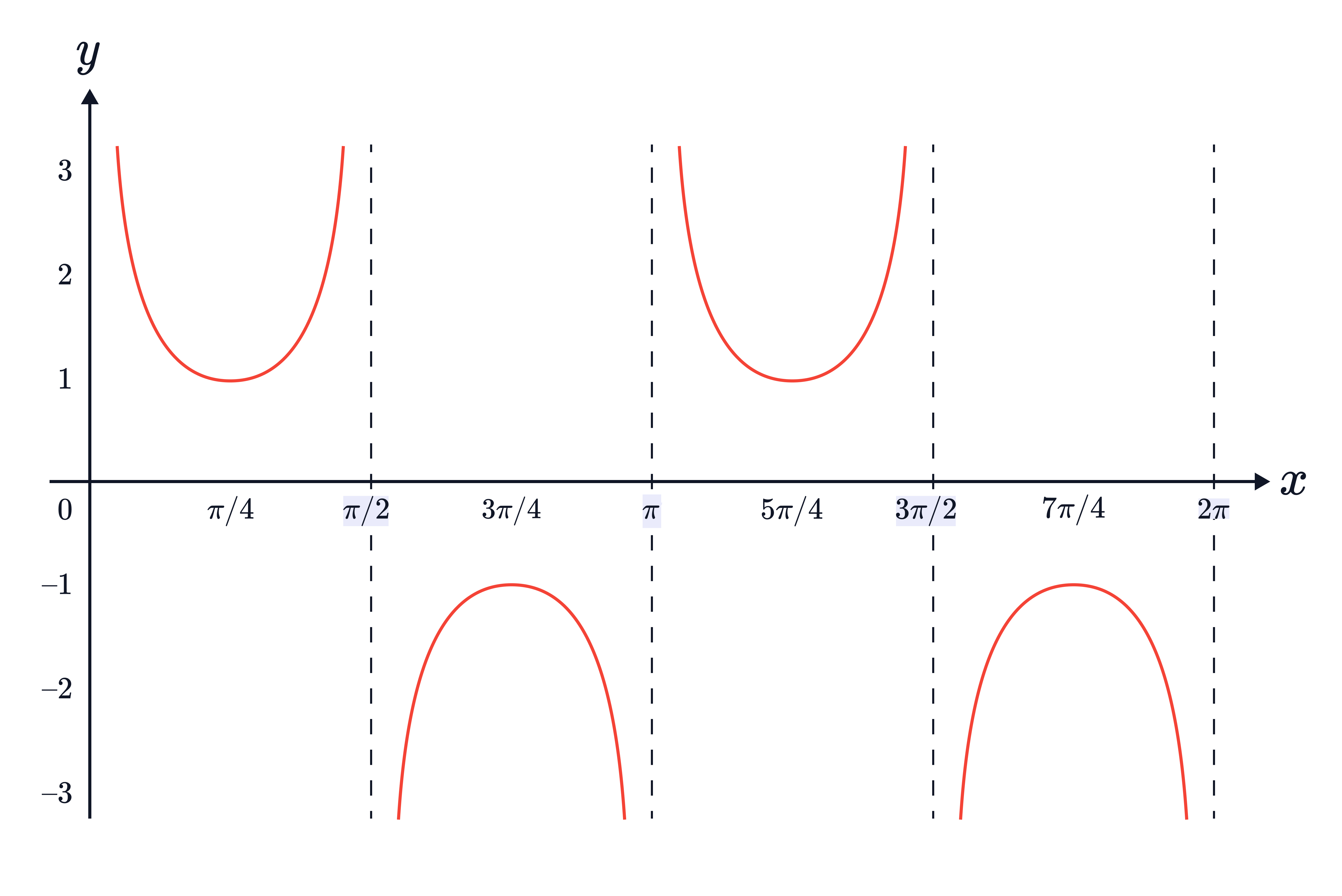
Step 4: Finally, apply the , which translates the graph upward by . This gives the graph of in the range . The local maxima and minima also move up by units. The local maximum points, originally at , are now at , while the local minimum points, originally at , are now at .
No answer provided.
Challenging Question