Small Angle Approximations
Neil Trivedi
Teacher

Small Angle Approximations
We can approximate sine, cosine, and tangent when the angle input is very small using small angle approximations. These approximations are particularly useful in fields such as physics, astronomy, optics, and robotics, where small-angle calculations simplify complex problems. They are commonly applied in pendulum motion, wave optics, satellite positioning, and robotic joint movements to improve efficiency and accuracy.
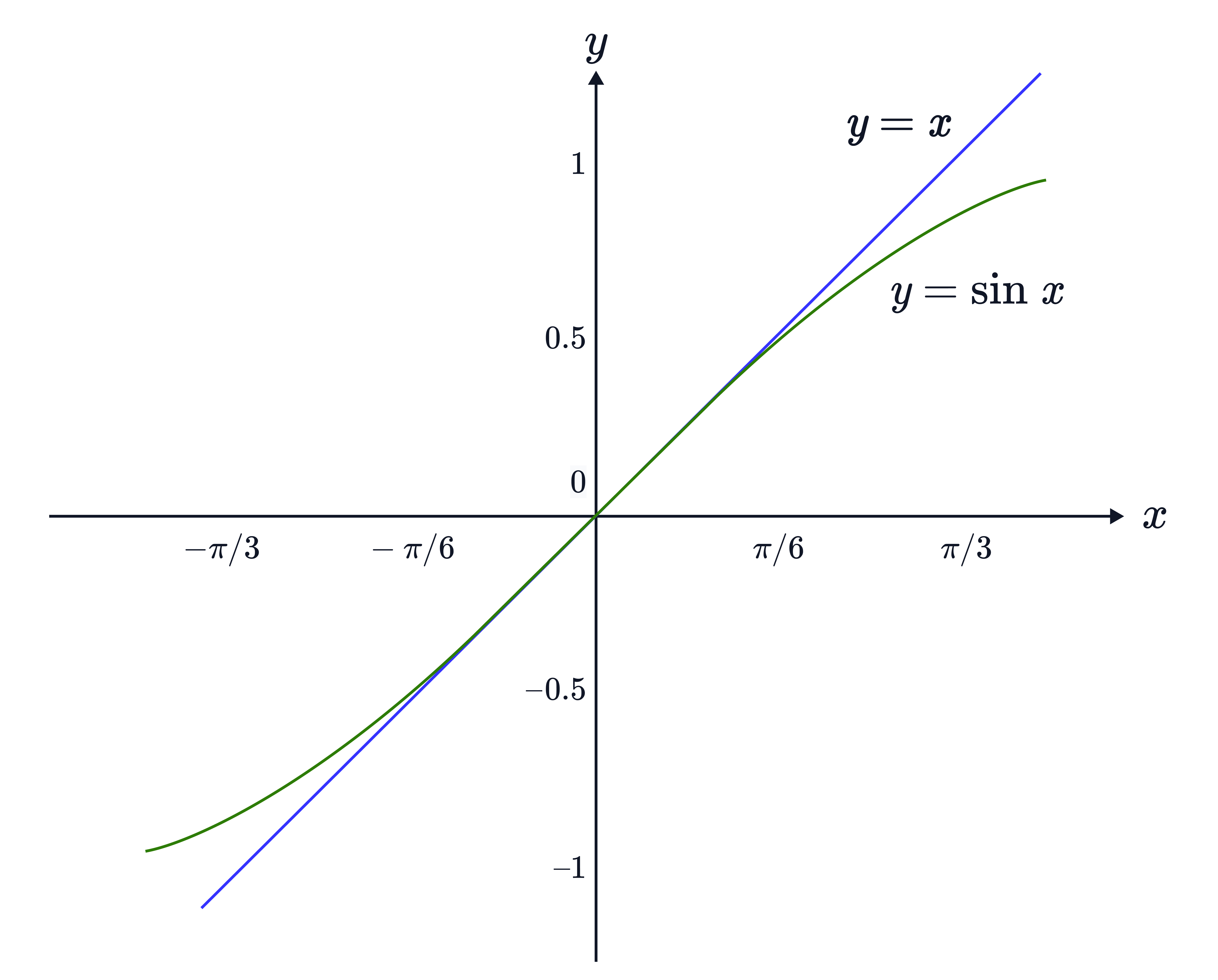
For , we can see that for small angles, the graph closely approximates the graph of . Hence, we can say that for small .
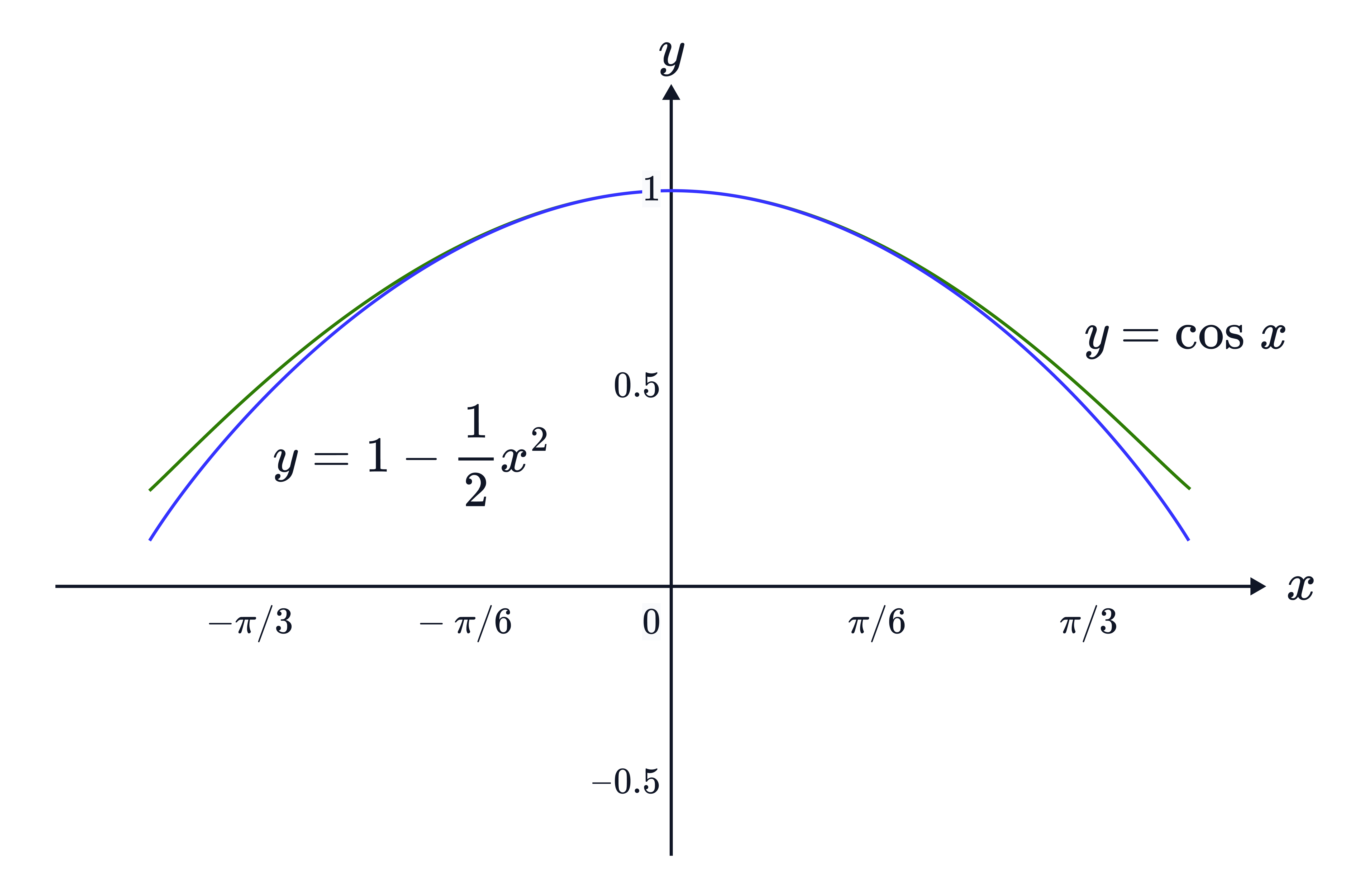
For , we can see that for small angles, the graph closely approximates the graph of
. Hence, we can say that for small .
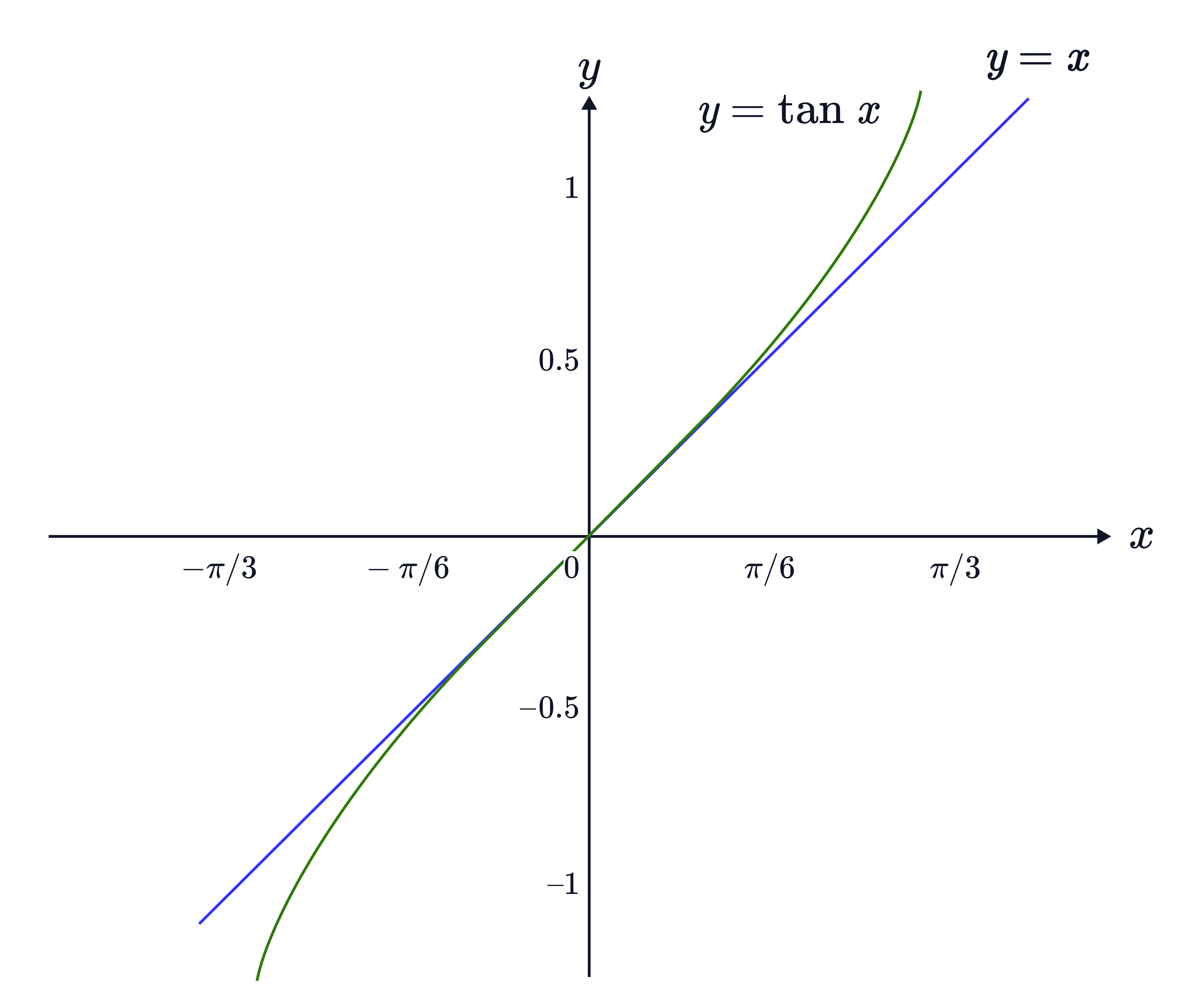
For , we can see that for small angles, the graph closely approximates the graph of . Hence, we can say that for small .
When is small and measured in radians:
These results are derived from expanding the trigonometric functions using the Maclaurin Series, which is studied in A Level Further Maths. For this reason, all angles in small-angle approximations are measured in radians.
Example 1:
When is small, find the approximate value of:
a)
b)
c)
No answer provided.
Example 2:
Use small angle approximations to find an approximate value for the smallest positive root of the equation.
Step 1: Apply the small angle approximations to each term in the equation.
Our simplified expression is
Move all terms from left to right then we have,
Step 2: Solve for using the quadratic formula and identify the smallest positive solution.
Both solutions are positive, so the smallest positive solution is .
No answer provided.
Challenging Questions