Vectors - Intersecting Diagonals
Neil Trivedi
Teacher

Vectors - Intersecting Diagonals
A vector is a quantity with both magnitude and direction, represented as a directed line or in coordinate form. Vectors are useful for studying diagonals in shapes such as parallelograms. They help find intersection points and check if diagonals bisect each other or divide in a specific ratio.
Example 1:
is a parallelogram, where and . The diagonals and intersects at a point . Prove that the diagonals bisect each other.
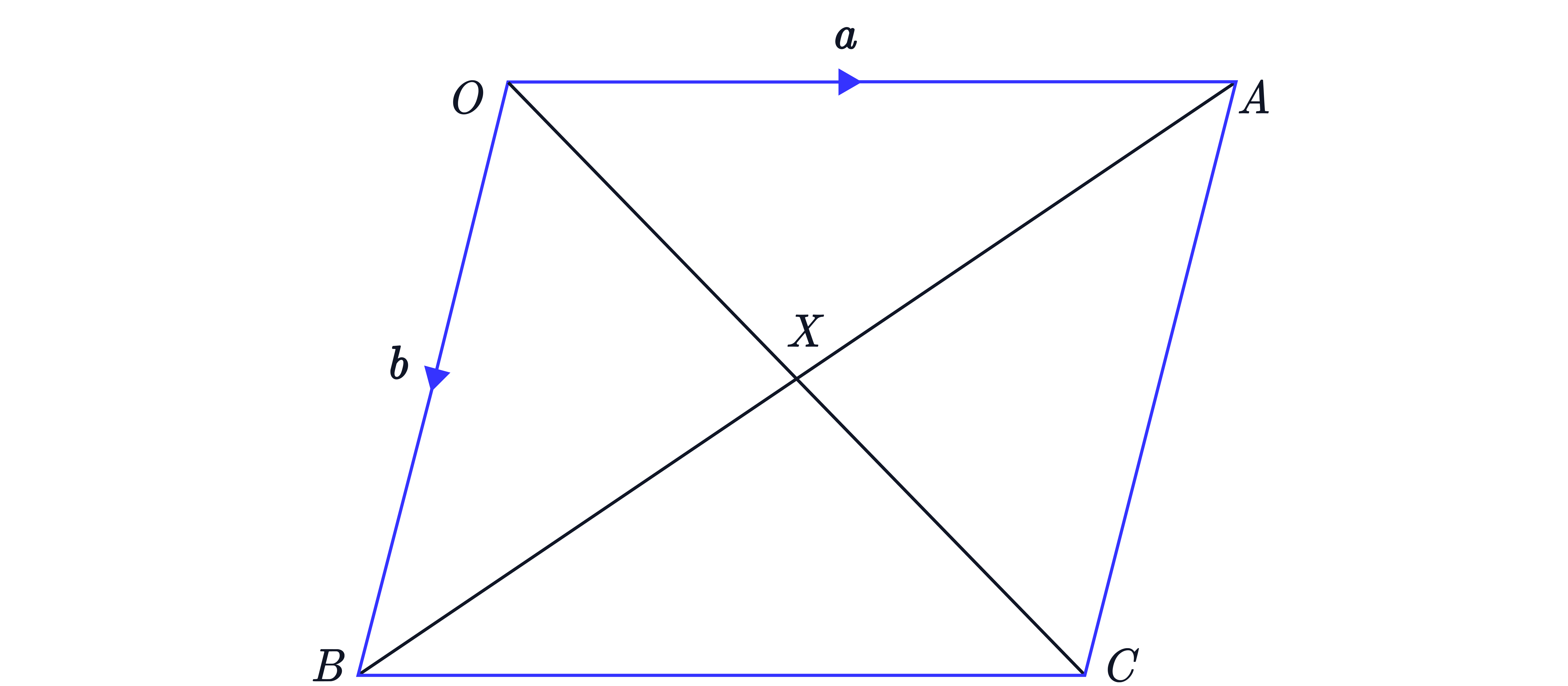
Step 1: Let and . and represent fractions between and that we are trying to find.
Note: We are first saying that is some fraction of and that is some fraction of . We need to show that both of those fractions (represented by and ) are .
Since , we can write
Since , we can write
Step 2: Find using two different paths, with one being direct and one being indirect.
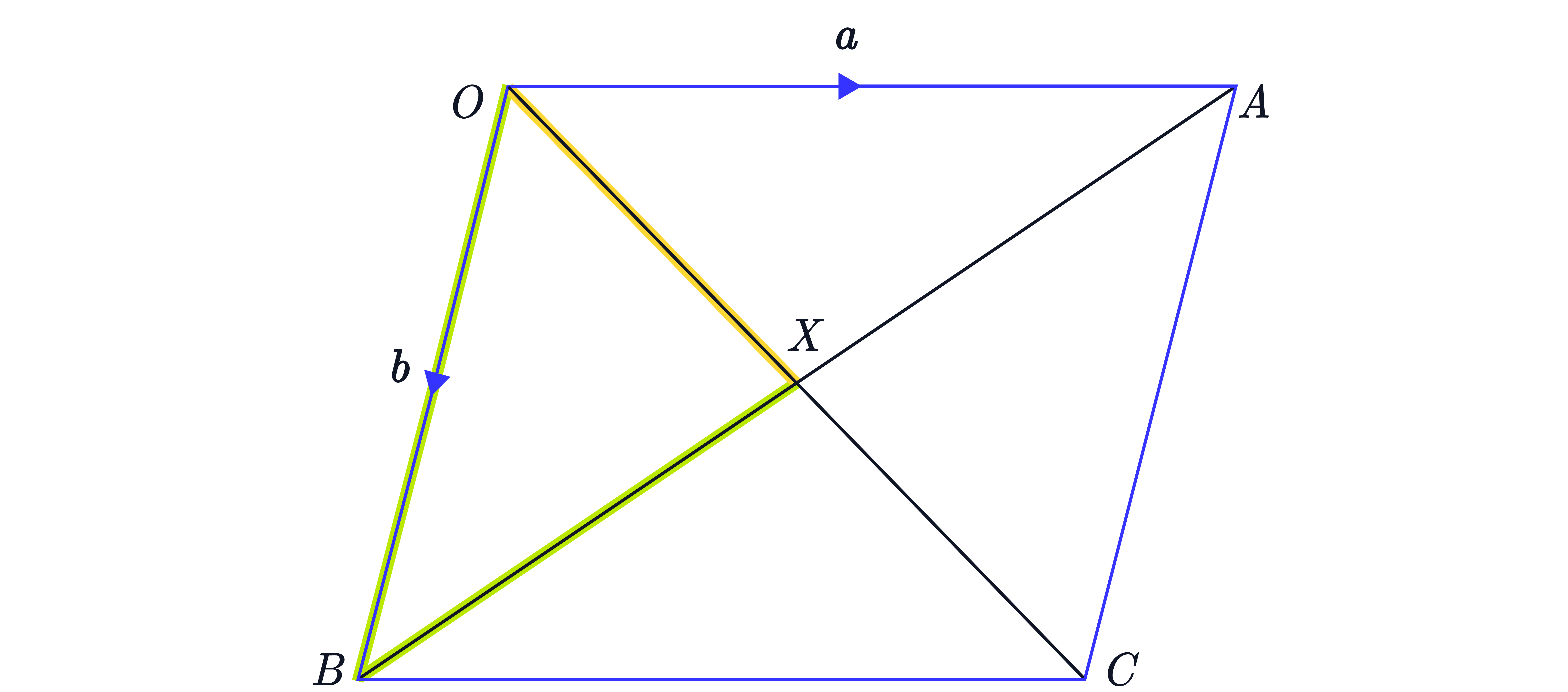
Direct:
Indirect:
Then collecting like terms by factorising from the first and last terms we are left with:
Step 3: Since is unique, the two vectors we found in step 2 must be equal. So, we equate the coefficients of and and solve.
Thus, and . Therefore, the diagonals bisect each other.
No answer provided.
Example 2:
Given that , find the ratio of .
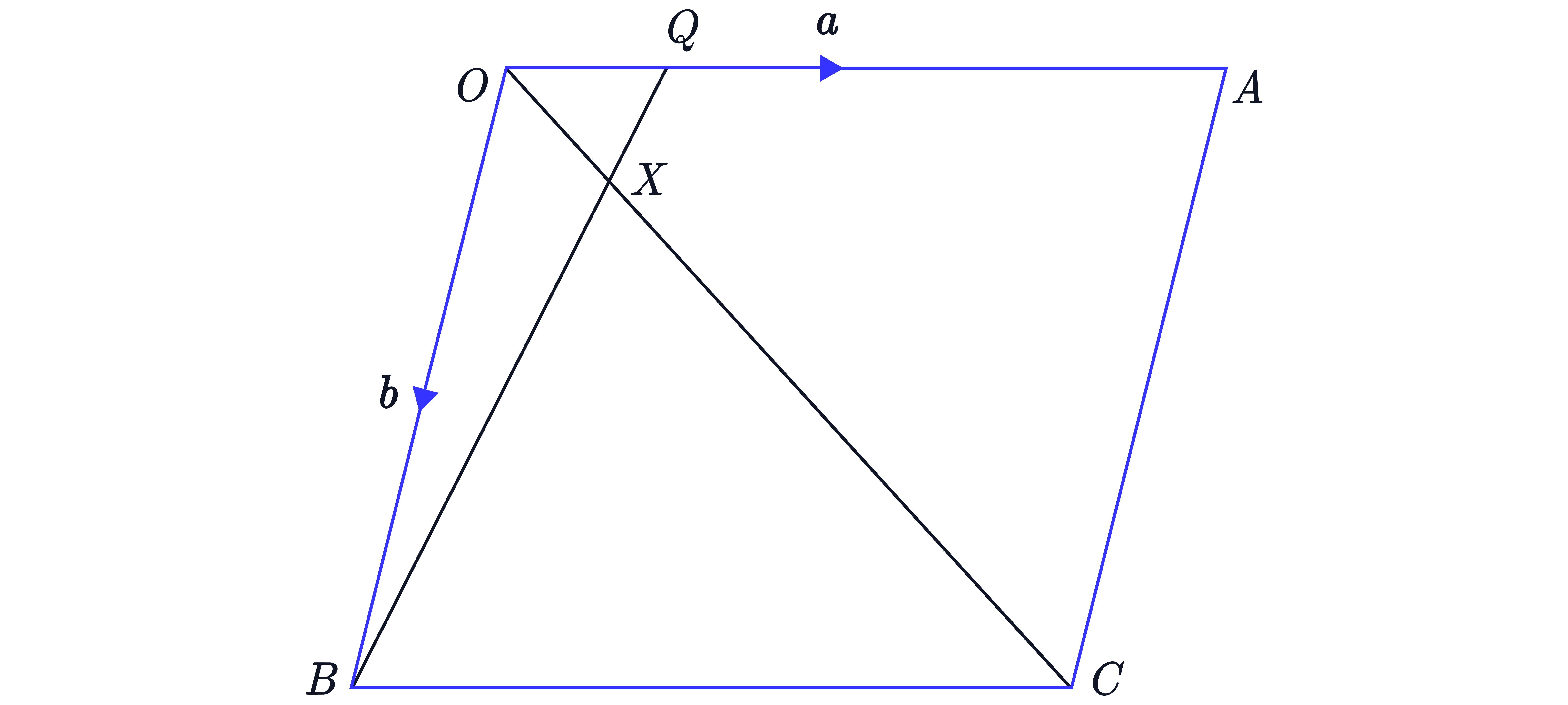
Step 1: Let and . and represent fractions between and that we are trying to find.
Since , we can write
Since , we can write
Step 2: Find using two different paths, with one being direct and one being indirect.
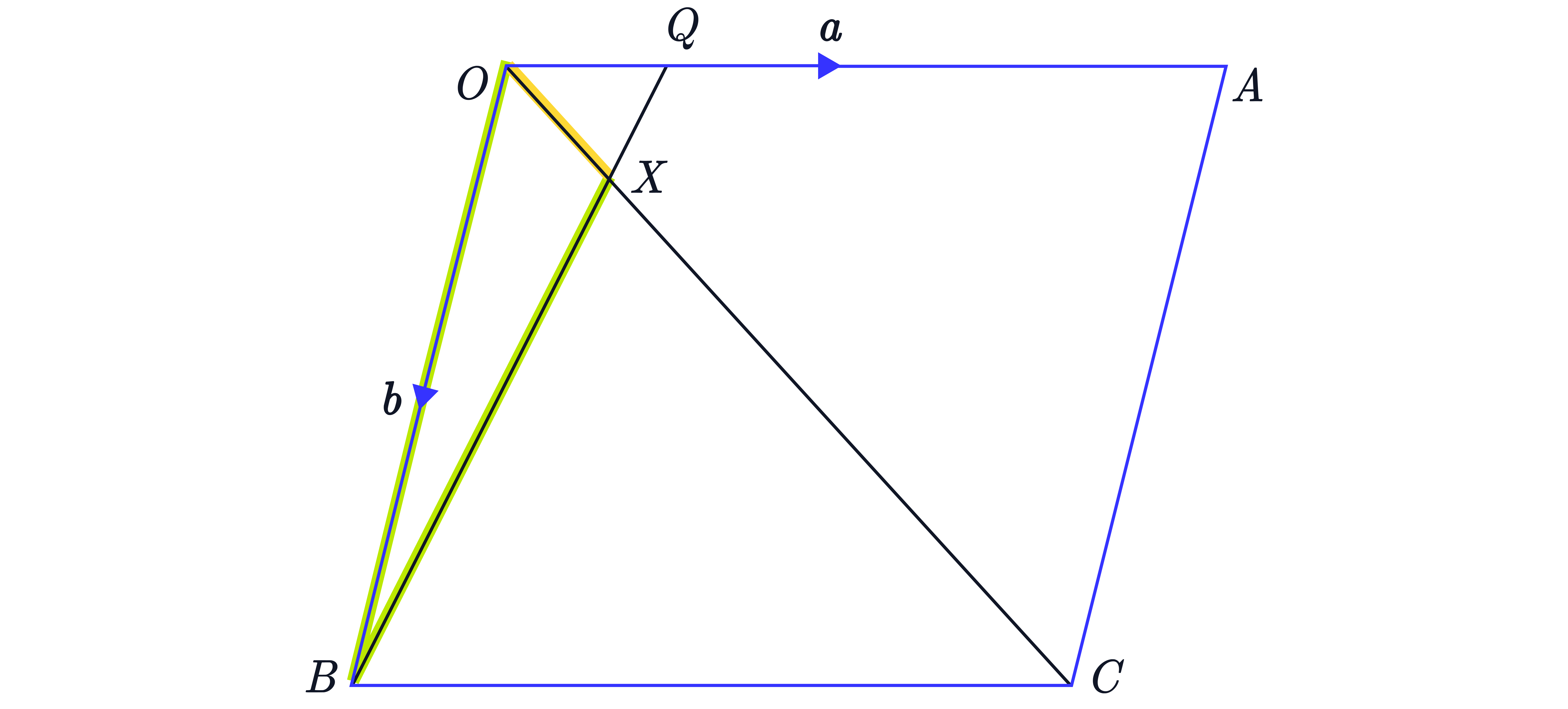
Direct:
Indirect:
Step 3: Since is unique, the two vectors we found in step 2 must be equal. So, we equate the coefficients of and and solve.
We now see that, .
Thus, the ratio is .
Note: If is of the diagonal line then the other part must be of the line.
Hence, the ratio .
No answer provided.
Challenging Question