Work Done
Brook Edgar & Hannah Shuter
Teachers


Contents
Explainer Video
Calculating Work Done
Work is done when a force causes an object to move in the same direction as the force.
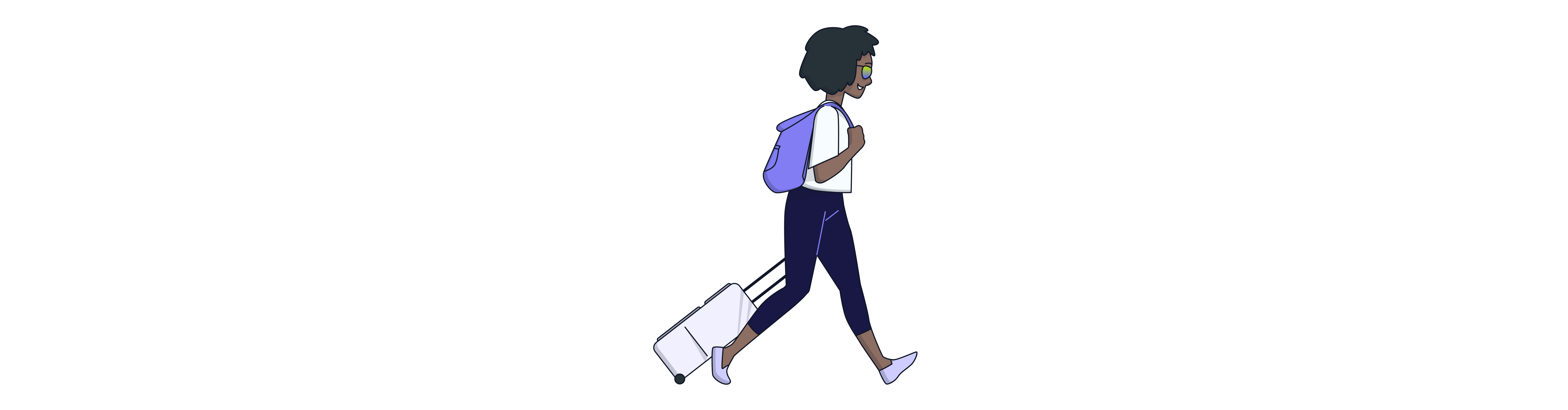
For example, when a woman pulls her suitcase along behind her at the airport, she is doing work. Or when a man lifts weights at the gym, he is doing work. Work done causes energy to be transferred to the object, for example, the suitcase moves along behind the woman, so it gains kinetic energy and when the weights are lifted, they gain gravitational potential energy.
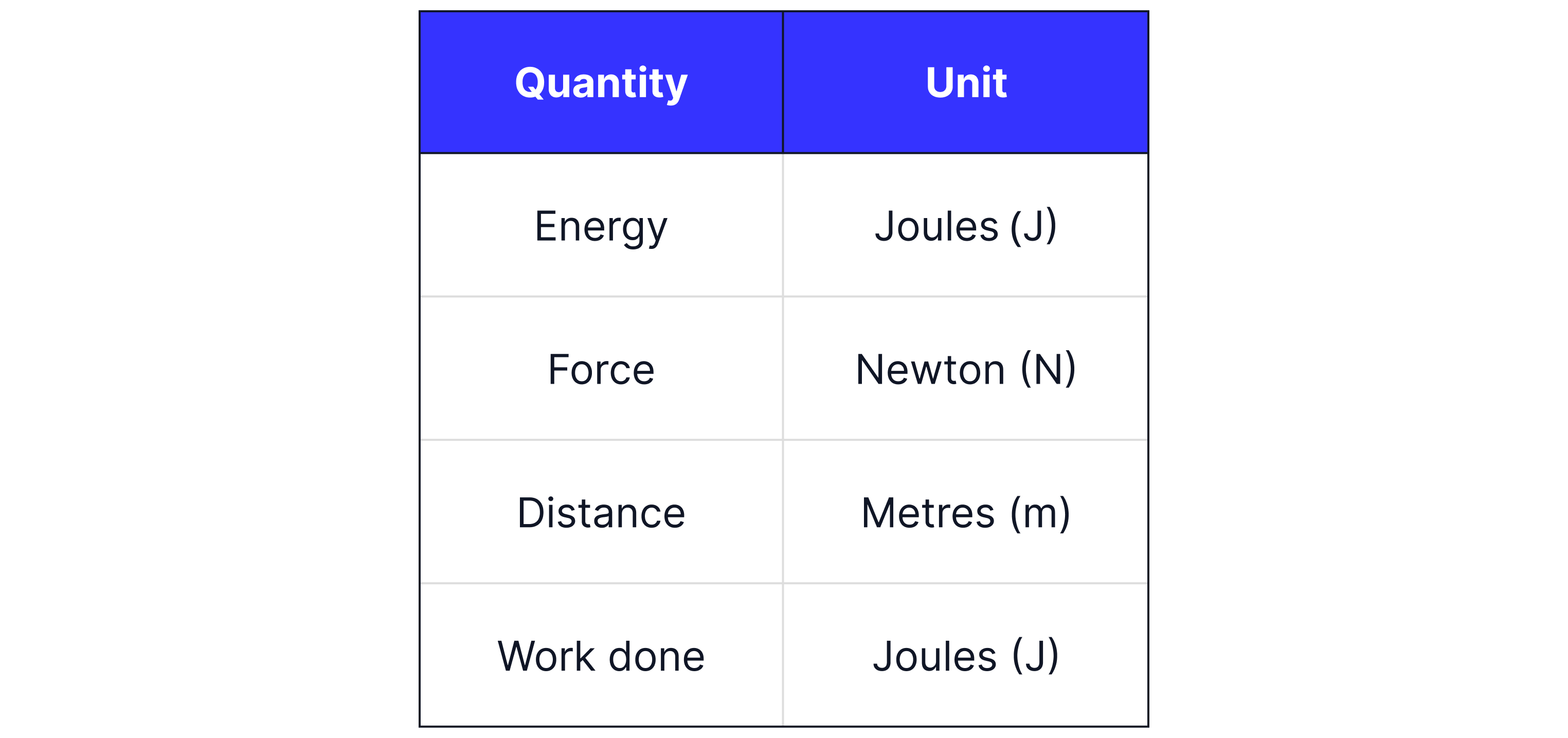
Work done, , can also be known as energy transferred, . Energy, as we already know, is measured in joules, , so work done is also measured in joules, .
If of work is done, of energy is transferred.
Formula:
To calculate the work done by a woman dragging her suitcase metres along the ground using of force, all we need to do is multiply the numbers together, as when the letters are beside each other in an equation, it means that we multiply them together.
*Some teachers prefer to write the equation as , where they use for distance instead of , as this is what is written on your equation sheet. This is optional, and it is your choice. You will not be penalised for either in the exam. I like as the mnemonic I use to remember the equation is 'weekends are Fifa days'.
Reminder: Physicists are lazy. Instead of writing , we write , and instead of writing , we write .
Worked Example:
Calculate the work to move a box with a force of .
Answer:
The first step is to figure out which equation to use. The question asks us to calculate work done, so we write the equation for work done.
Next, we need to figure out where the numbers go.
, represents force in the equation and we know that forces are measured in Newtons, , after Sir Isaac Newton, so the number we use for force is .
We know that represents distance. Distances are measured in metres, , in physics, so the number we use for distance is .
We then fill the numbers into the correct places in the equation to calculate work done.
*Don't forget to include the final unit for work done, joules, J.
Worked Example:
Calculate the work to move a box with a force of .
Answer:
As the question asks us to calculate work done, again, we are using the equation .
As , represents force in the equation, and we know that forces are measured in Newtons, , the number we use for force is .
We know that represents distance. Distances are measured in metres, , but here we are given the number in kilometres we need to convert from kilometres into metres.
of cash = pounds
We then fill the numbers into the correct places into the equation to calculate the Work done.
*Don't forget to include the final unit for work done, joules, .
Rearranging Equations
Sometimes we are not given the force and the distance, so we cannot easily calculate the work done by multiplying them together using the equation . Instead, we might be given the work done and asked to find the distance, knowing what force was used.
For example, we might get asked to calculate the distance a woman drags her suitcase using of energy and of force.
To do this, we follow the same steps as before :
1. Write the equation.
2. Fill the numbers into their correct places using their units.
3. Calculate the final answer, remembering to include the final unit.
With the woman above, we can see in the question that we were given the work done/energy transferred in joules, , and the force used in newtons, . We know that the physics equation that has both of these variables (terms in an equation) is . So we fill the numbers into their correct places.
Now we want to calculate the unknown term, -> distance.
To do this, we need to get the letter , by itself on the RHS of the equation. We then need to get rid of the '' from the RHS. To get rid of something from an equation, we do its opposite. The opposite of multiplying by is dividing by , and what we do to one side, we must do to the other.
The distance that the woman then moves her suitcase is metres -> .
Note: On the RHS the cancelled out, as and then , and .
Worked Example:
A force of does of work. Calculate the distance moved.
Answer:
In the question we are given the work done/energy transferred in joules, , and the force used in newtons, . We know that the physics equation that has both of these variables (terms in an equation) is . So we fill in the numbers into the correct places.
Now we want to calculate the unknown term, -> distance.
To do this, we need to get the letter by itself on the RHS of the equation. We then need to get rid of the '' from the RHS. To get rid of something from an equation, we do its opposite. The opposite of multiplying by is dividing by , and what we do to one side, we must do to the other.
The distance moved is metres -> .
Worked Example:
An object is raised by , requiring of work. Calculate the force needed?
Answer:
In the question we are given the work done/energy transferred in joules, , and the distance moved in metres, . We know that the physics equation that has both of these variables (terms in an equation) is . So we fill in the numbers into the correct places.
Now we want to calculate the unknown term, force.
To do this, we need to get the letter , by itself on the RHS of the equation. We then need to get rid of the '' from the RHS. To get rid of something from an equation, we do its opposite. The opposite of multiplying by is dividing by , and what we do to one side, we must do to the other.
The force needed was newtons -> .
Friction and Energy Dissipation
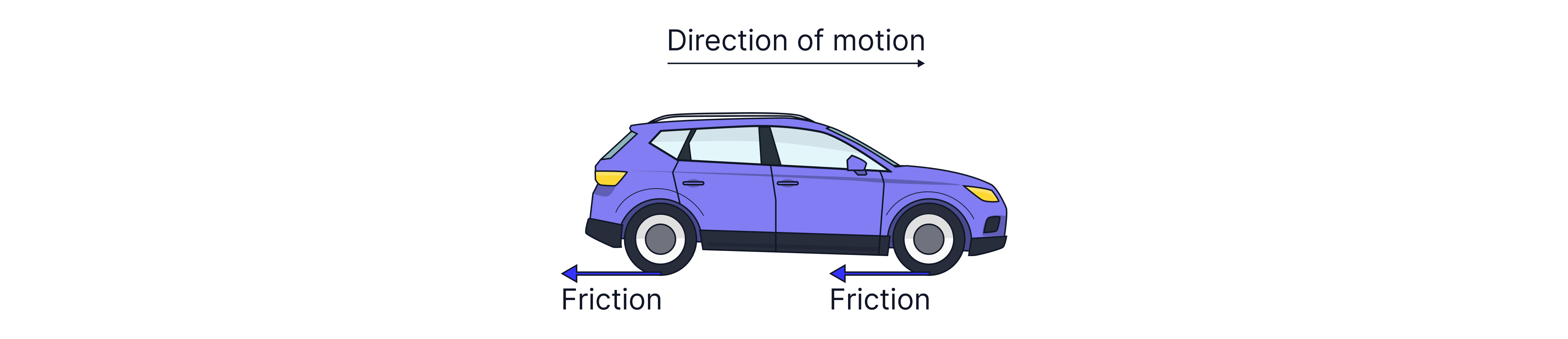
Friction is a force that opposes motion. If a car is moving forward, it tries to slow the car down. Friction acts between the car tyres and the road. As friction causes the car to slow down, kinetic energy is lost from the car, but it is not lost, it is transferred to the surroundings as heat the energy is dissipated. The force of friction then does work on the car; it causes energy to be transferred.
Example:
The force of friction acts on a car over metres, causing the car to lose of kinetic energy. Calculate the force of friction acting on the car.
In the question we are given the work done/energy transferred in joules, , and the distance moved in metres, . We know that the physics equation that has both of these variables (terms in an equation) is . So we fill in the numbers into the correct places.
Now we want to calculate the unknown term, -> force.
To do this, we need to get the letter , by itself on the RHS of the equation. We then need to get rid of the '' from the RHS. To get rid of something from an equation, we do its opposite. The opposite of multiplying by is dividing by , and what we do to one side, we must do to the other.
The force of friction on the car was newtons -> .
There are things we can do to reduce the energy dissipated. In the example of the car on the road , if the road was lubricated (wet) then the force of friction would be reduced. This happens naturally when it rains. When cycling to ensure that we can cycle as fast as possible, we can lubricate the gears on our bike by applying oil to the gears to reduce friction.
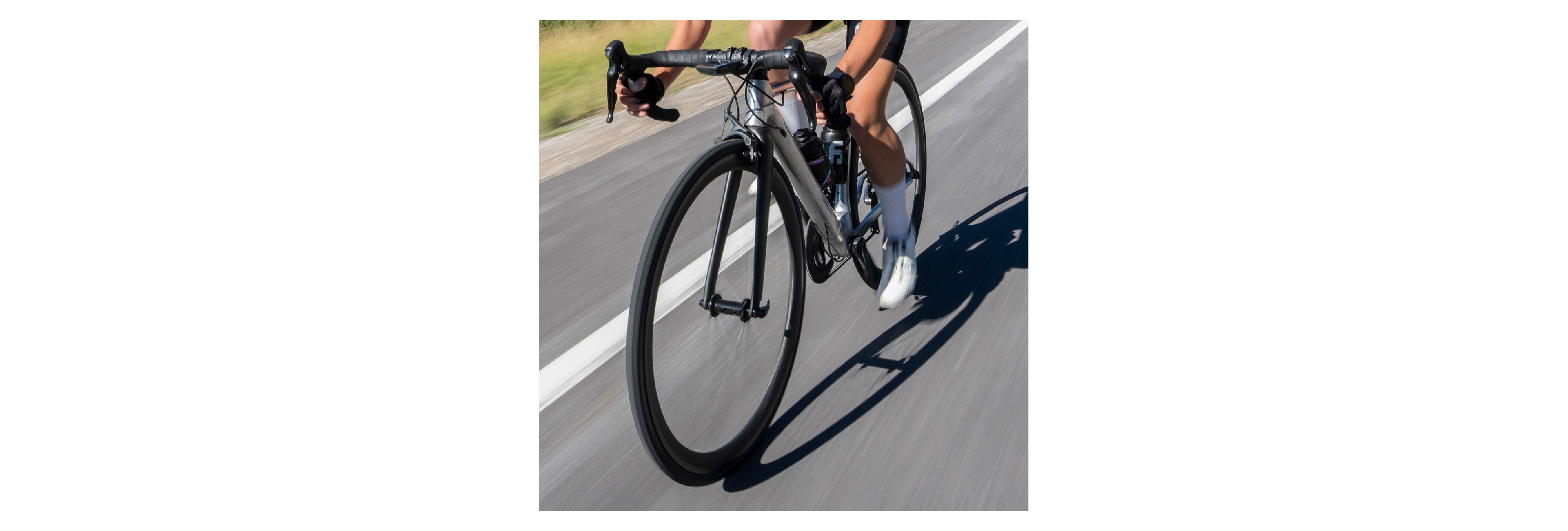
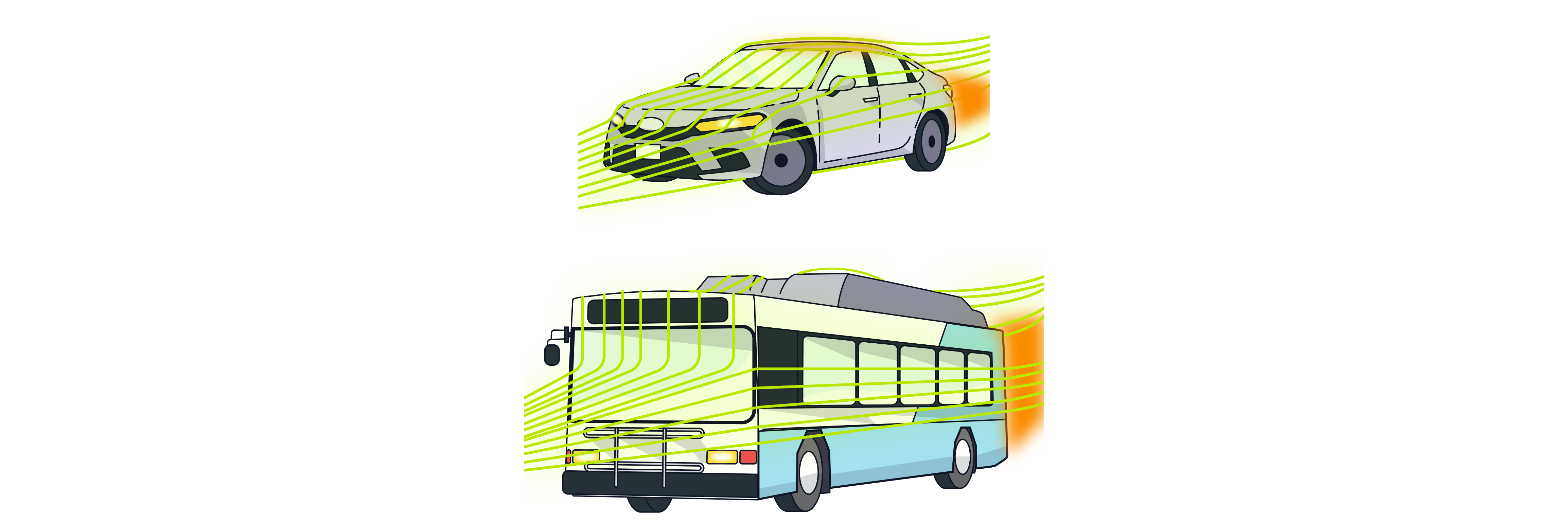
Other ways to ensure that less energy is transferred to the surroundings -> to ensure that our car, bike, or aeroplane can go as fast as possible, is to make them more aerodynamic. This means the object's shape is changed to ensure air flows over it rather than hitting it straight on. For example, a sports car has a smooth, curved front, unlike a bus, which is large and square. The sports car is streamlined -> it allows air to flow over it easily, reducing energy loss from head-on collisions with air particles, allowing it to move faster.
Practice Questions
A girl climbs a cliff, in height.
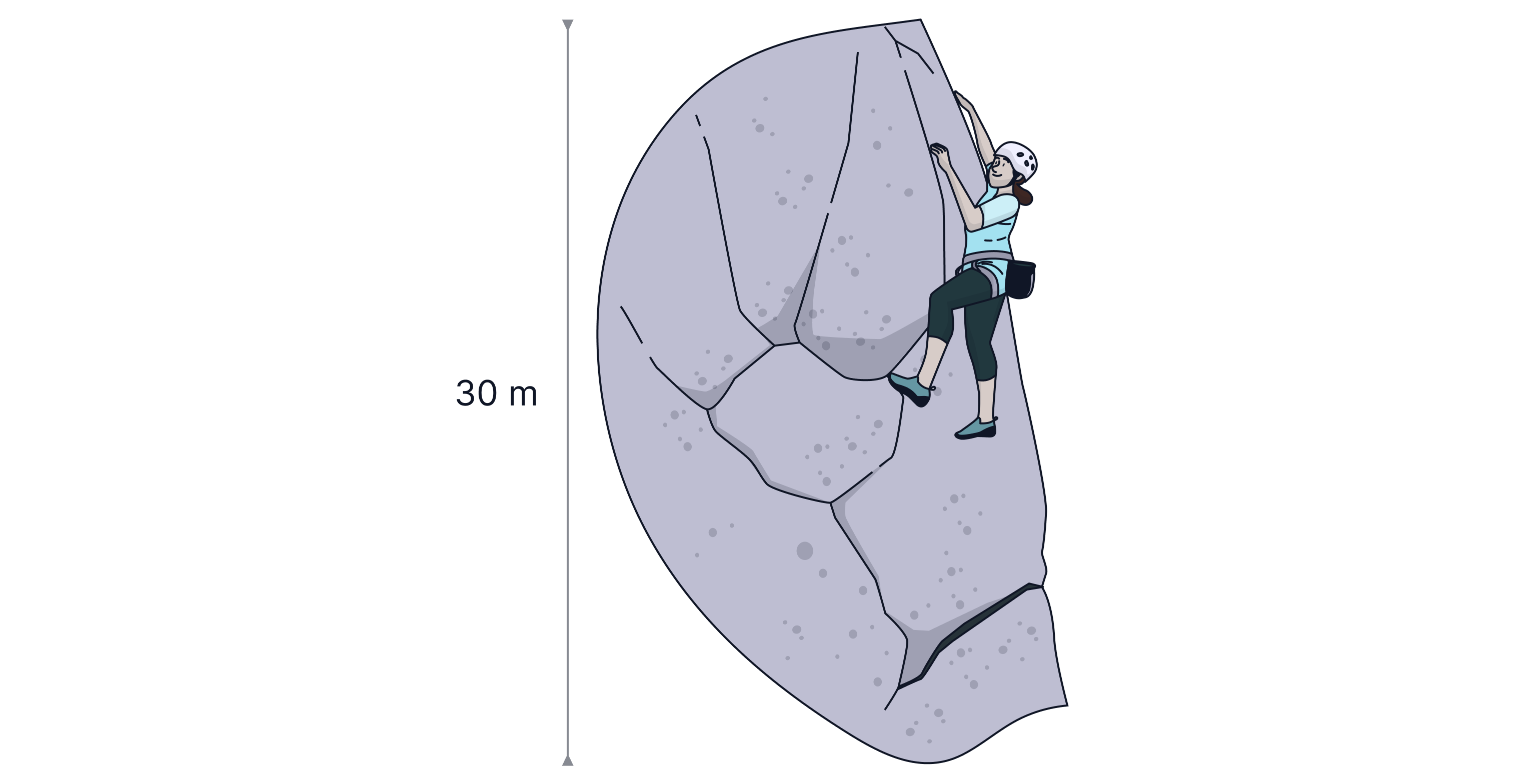
Fill in the gap. When the girl moves up, she gains gravitational ________ energy.
Calculate the work she must do to climb up the cliff. She weighs .
→ Check out Brook's video explanation for more help.
Answer:
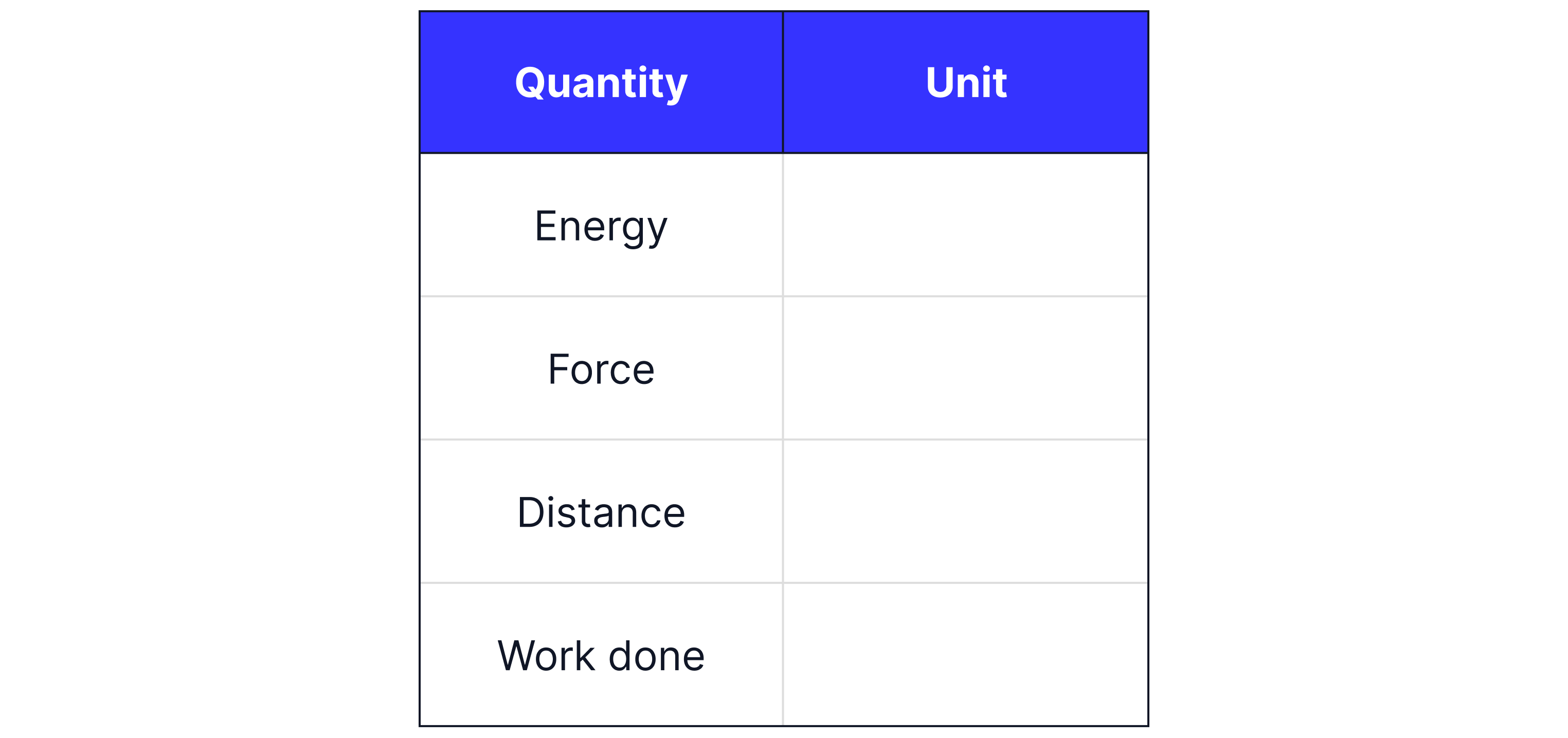
Complete the table with the correct units.
→ Check out Brook's video explanation for more help.
Answer: