
8 Christmas revision tips to stay focused this winter
The Christmas holidays have arrived and all across the UK people are taking a well-earned break from the daily grind.
However, there is one group of people who won’t completely down tools this Christmas - students.
Classrooms may be closed and summer exams might feel a world away, but for those people hoping to achieve top grades on results-day, the winter break is a great opportunity to top up on what’s been learnt through autumn, and get a headstart on spring.
To help you make the most of the holidays, we’ve put together a handy holiday revision guide.
Take a break
First, it’s important to say that giving yourself time to rest and recharge your batteries isn’t laziness, it’s vital to your long-term success.
Studying is hard and working non-stop can lead to burnout. While we don’t recommend doing no studying over the holidays, make sure you take the time to fully switch off and enjoy some time away from the books.
Breaks are also important when you are studying and even a 10-15 minute break every hour or so can do wonders for your concentration and ability to retain what you’re learning. Grab some snacks, have a drink, stretch or even go for a walk and you’ll return feeling fresh for longer.
Also, don't underestimate the power of a good night’s sleep for helping your brain be efficient and better able to retain information. Aim for seven or eight hours of sleep each night to allow your brain to absorb what you’ve learned through the day.
Create a study timetable
To help ensure you’re striking a healthy balance, create a study timetable.
Start by breaking bigger topics down into smaller sections, like chapters or theories and set yourself clear, realistic targets. Be honest about how much you can achieve each day, and over the course of the holiday - remembering to take time to rest - and allow extra time for unexpected delays. You can always adjust your goals as you progress.
Next, create a weekly schedule. Divide your day into focused blocks, like one- or two-hour sessions, with breaks in between. Plan to complete tougher tasks when your energy levels are the highest and keep easier tasks for times you expect your energy to dip. To help, we’ve created this free downloadable study timetable template to help you get started.
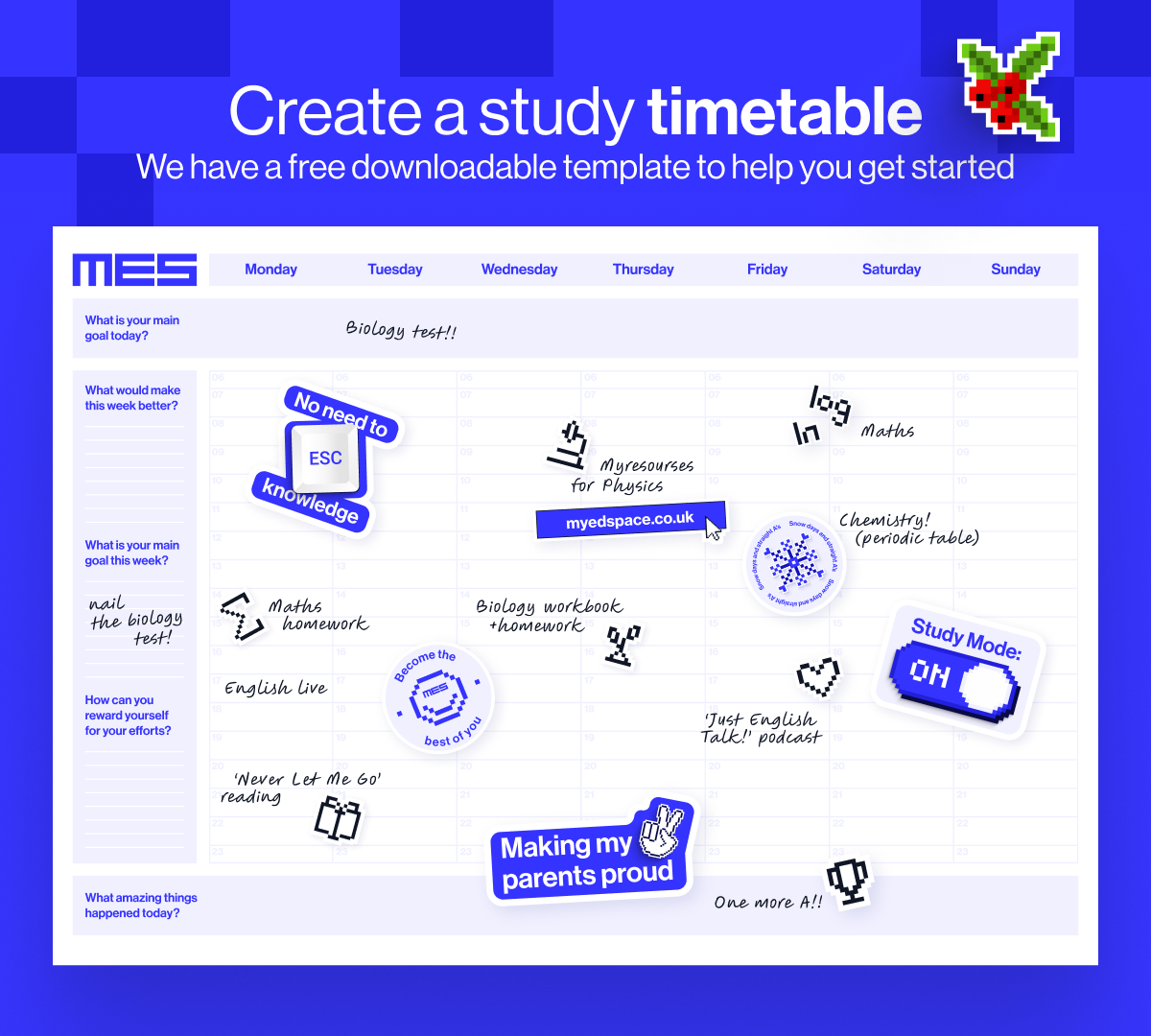
Prioritise what is most important and urgent, by identifying the subjects or topics you struggle with the most and work on these first. Also consider which areas carry the most weighting in exams, or appear most frequently. However, don’t ignore your stronger areas, and make sure to set aside some time to review them too.
Create a study-friendly space
Where you work plays an important role in how well you can focus and retain information, so choose your space carefully
Try and find a quiet spot where you’re unlikely to be frequently interrupted, like a corner of your room or a library.
Avoid distractions by silencing your phone or using apps to block non-study sites. If you’re using a device, stick to academic tasks.
Personalise your space with small touches like a plant or motivational quote, but keep it simple and organised. A clean, focused setup can make all the difference.
Use smart revision techniques
There are lots of revision techniques that can help make the time you spend studying as effective as possible.
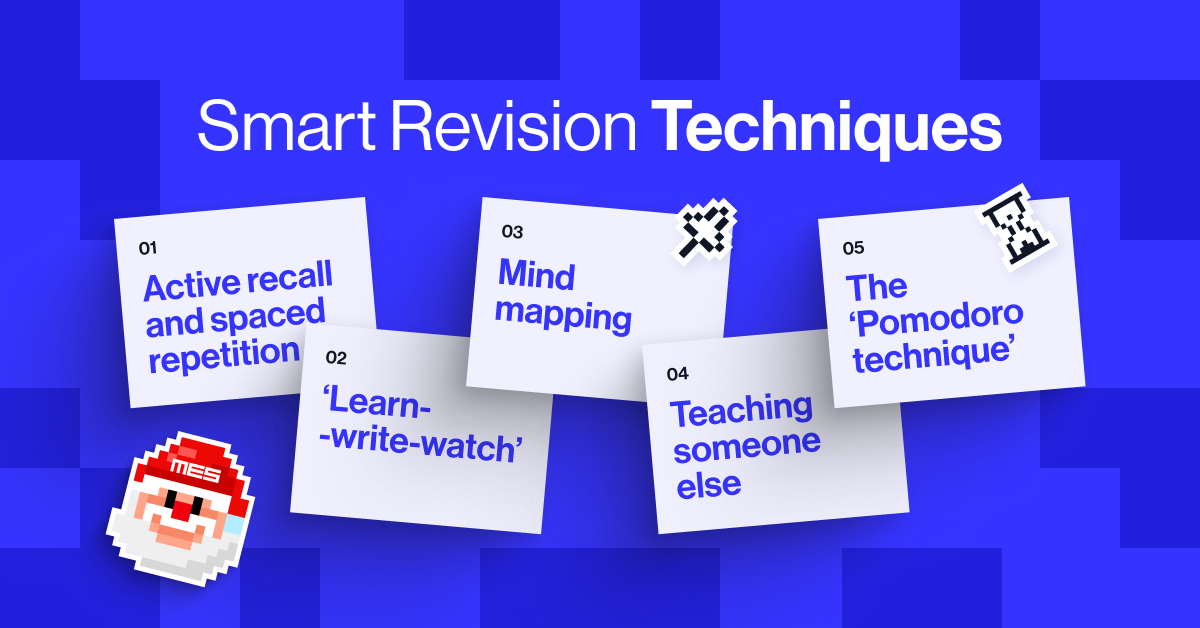
Here are five smart revision techniques that can boost your productivity and help you retain information more effectively:
-
Active recall and spaced repetition
Active recall is all about actively retrieving information from your memory rather than just reviewing or highlighting your notes.
By using flashcards, self-quizzing, or summarising what you’ve learned without looking at your notes, you strengthen the neural connections associated with the information.
Spaced repetition builds on this by reviewing information at increasing intervals. This technique takes advantage of the spacing effect, which helps you retain information more effectively over time. Combining active recall with spaced repetition is one of the most effective ways to improve long-term memory.
-
‘Learn-write-watch’
This technique breaks your study sessions into three distinct areas:
-
Learn - start by reading or studying the topic at hand
-
Write - then, write a summary of what you’ve learned or answer practice questions
-
Watch - finally finish with visual learning, such as watching videos or tutorials on the subject
Switching between these different modes keeps your study sessions fresh, engaging, and more productive, preventing burnout and reducing mental fatigue.
-
Mind mapping
Mind mapping is a visual technique that organises information around a central theme. As the name suggests, you create a map with branches radiating out to represent subtopics and related details.
It’s an ideal approach for visual learners because it creates visual connections between different pieces of information, improving recall. Mind mapping also allows you to see the whole subject at once which can provide a clearer understanding.
-
Teaching someone else
Explaining the material you’ve learned to someone else is a powerful way to solidify your knowledge.
Teaching another person what you’ve learned, forces you to break down complex information into simple terms, helping you to understand the material better too.
Through teaching someone else, you also test your knowledge and might encounter questions you hadn’t previously considered, further deepening your understanding.
-
The ‘Pomodoro technique’
The ‘Pomodoro technique’, which we covered in our ‘7 tried and test revision techniques’ blog last year, helps maintain productivity by using short, focused intervals of work followed by short breaks.
This method combats burnout and helps sustain concentration by giving your brain time to rest between sessions.
By breaking your revision into chunks, you stay focused during study time and refreshed during your breaks, improving your efficiency in the long run.
Get out of the house
Christmas at home can be pretty hectic, with family, friends, and all the festive chaos. If it’s tough to focus, consider getting a change of scenery and heading to a cafe or library to help you get in the zone.
Added to that, the darker days and colder weather can drain motivation and make it tempting to stay indoors. The temptation to put off revising until the new year, or the Easter holidays can be strong. If you find yourself in this position and struggling to stay motivated, check out our blog on beating the winter blues.
Even an hour or two out of the house and in the fresh air can make a difference to your energy levels. Plus, it’s a good excuse to grab your favourite seasonal coffee or simply enjoy a bit of time to yourself.
Reward yourself
Rewarding yourself is a great way to stay motivated while studying.
After hitting a study goal or completing a challenging task, treat yourself to something that feels like a reward. It could be something simple like watching an episode of your favourite show, enjoying a sweet snack, playing a game you love - or, as it’s mid-winter, even ice-skating.
Get the family involved
There’s no rule saying revision has to be a solo activity, especially during the festive season.
You can get your family involved by turning your revision notes into a quiz, or asking them to proofread your essays. Or, you could simply request a steady stream of festive snacks and hot drinks delivered to your desk.
Getting the family on board with your study routine and making your goals communal can make a big difference, especially if you're feeling overwhelmed or lacking motivation.
Start the new year as you mean to go on
The holidays are a perfect time to relax, recharge and get ready to take the new year by storm.
Whether you have your GCSE or A-level exams coming soon, or you’re putting the foundations in place now for next year, there is no time like the present to start building good habits and getting the help you need to achieve your goals.
At MyEdSpace, we have the UK’s top teachers ready and waiting to help you do just that. Sign up today for the Ultimate Pass and you’ll get everything you need, for every course we offer, from as little as £5 an hour.
With the 14-day money back guarantee, you have nothing to lose from giving it a try in January and seeing if it’s right for you.
In the meantime, enjoy your break and we hope to see you in 2026.