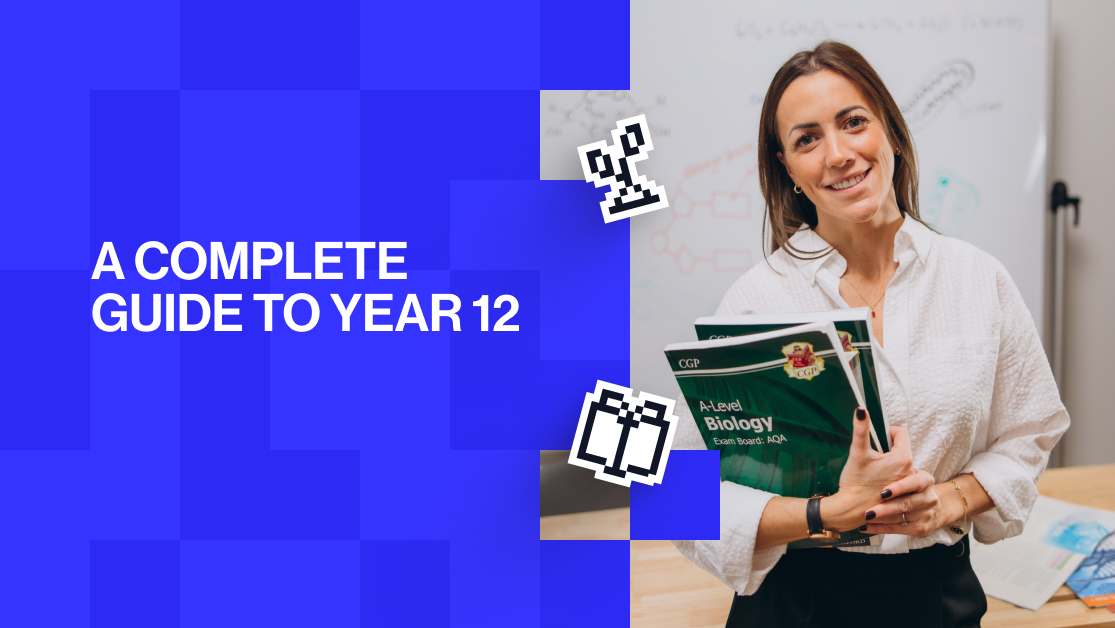
A complete guide to Year 12: A-levels begin
Year 12 is the first year of A-level study and is usually called ‘Sixth Form’ or ‘College’ rather than ‘school’. Students in Year 12 are usually 16 and 17-years old.
The jump from Year 11 to Year 12 is one of the biggest in the education system, as students move from studying nine or 10 GCSE subjects at a comparatively broad level, to focussing on just three or four - but in far greater depth.
While there are no exams at the end of Year 12, the content covered during this year forms part of the A-level examinations at the end of Year 13. Plus, a student’s performance and predicted grades attained in Year 12, can directly impact UCAS applications.
If you or your child is in Year 12, here's what to expect this year, and what support is available.
What students study in Year 12
A-levels are a two-year course examined at the end of Year 13, and students typically study three subjects in depth. Unlike GCSEs where English, Maths and the Sciences are compulsory, students have free reign over which A-levels to study. 
Often the choice of subjects studied at A-level will be influenced by what that individual wants to do next, either at University, or as a career. For example students wanting to go on to study Medicine usually need Chemistry and Biology A-levels. Meanwhile Engineering courses may require Physics, Maths or Further Maths - so choosing what to study, matters.
Students applying for Medicine, Dentistry or Veterinary Science will also need to sit the UCAT admissions test in the summer before Year 13. This tests a student’s reasoning skills rather than subject knowledge and scores directly affect which universities will (and won’t) offer interviews.
How to support students in Year 12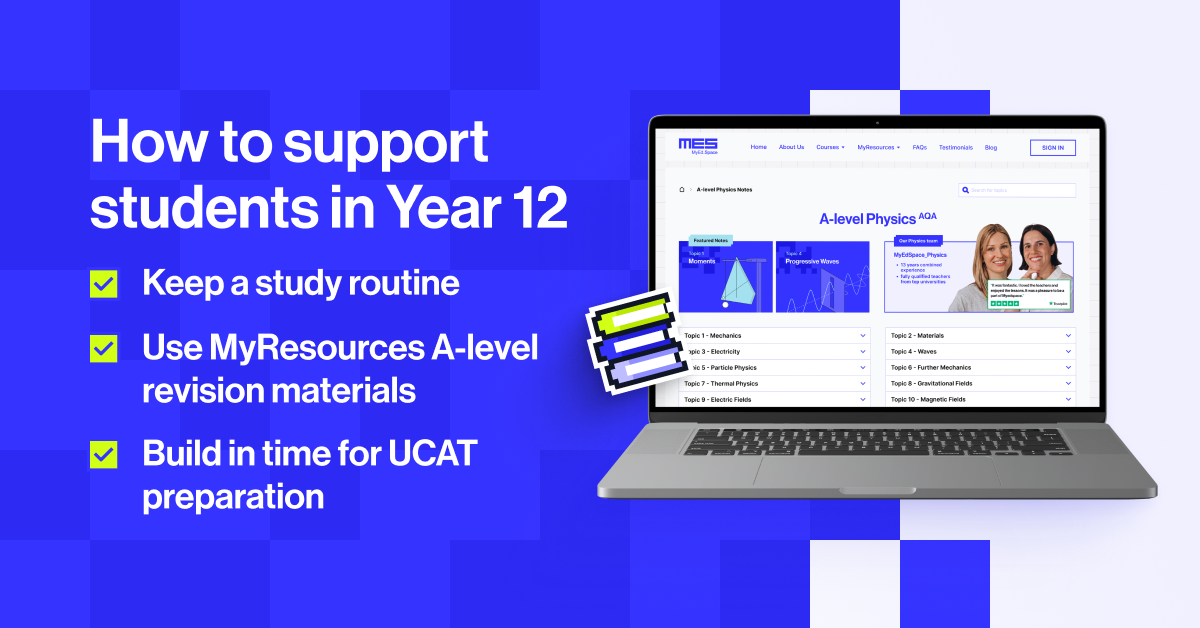
A few simple things make a real difference this year:
-
Keep a consistent, sustainable study routine going
-
Use MyResources A-level revision materials and past papers - they're freely available and are among the most effective revision tools out there
-
Ask what they're enjoying and what they're finding difficult
-
Act now if they're feeling overwhelmed or losing confidence in a subject - rather than waiting
-
Attend any university (or alternative careers event) information evenings the sixth form or college offers
-
Build in time for UCAT preparation - if they're applying for Medicine, Dentistry or Veterinary Science
Get ahead in Year 12
Year 12 is where students establish their predicted A-level grades, and therefore what their university options will look like, so treating it as seriously as Year 13, rather than as a settling-in year, is important.
And, you don't have to do this alone.
At MyEdSpace we support students through A-levels with live lessons taught by elite UK teachers in Maths and Further Maths, as well as Biology, Chemistry and Physics.
Importantly, with prices starting from just £45 per month, you can get a full month of support with us, for less than the average private tutor charges for a single hour.