GCSE Physics: what’s involved and how to prepare
Stepping up from Key Stage 3 Science into GCSE Physics can be both incredibly exciting and feel a little intimidating as many parents and students aren't entirely sure what the course involves, how difficult it is, or what choices they'll need to make along the way.
This guide explains what to expect from GCSE Physics, the topics students will study, and how to make sure they're fully prepared before starting the course.
Combined Science vs Triple Science: What's the difference?
One of the first major decisions students face is whether to take Combined Science or Separate Sciences.
The good news is that most schools will allow students to progress to A-level Sciences regardless of whether they have studied Combined or Separate Sciences at GCSE. Because of this, the key question is not which route is "better", but which one is right.
It's worth thinking about how much they genuinely enjoy science. Do they want to study science in greater depth, or would they prefer to use that curriculum time to explore another subject they're interested in?
If Physics is a subject they particularly enjoy, then Triple Science may be worth considering.
Foundation vs Higher Physics
Once a student has decided between Combined and Separate Sciences, they'll usually need to consider another important choice - whether to choose the Foundation or Higher tier.
Many people assume that Foundation Physics is simply an easier version of Physics. In reality, that's not the case. The majority of the content is the same across both Foundation and Higher courses.
The main difference is that Foundation papers present questions in a more accessible way and are designed for students working towards a different grade range.
However, there is an important consideration. Students taking Foundation tier can achieve a maximum grade of 5. If your child is considering studying A-level Sciences in the future, the Higher tier is more likely to be the more appropriate option.
What topics are covered in GCSE Physics?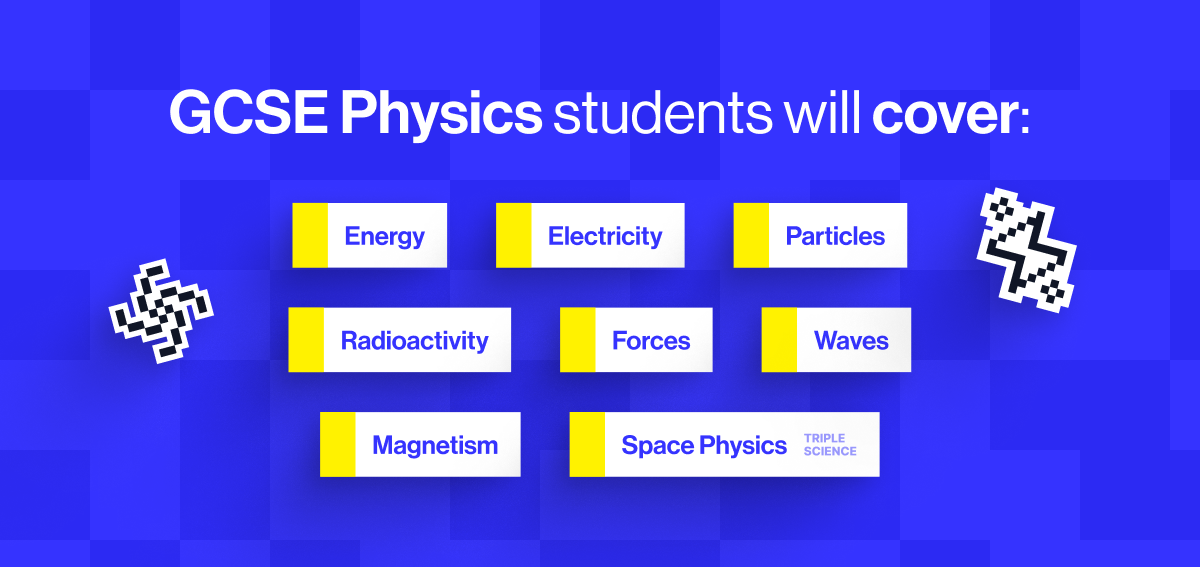
Physics is a subject that relies heavily on prior knowledge, and GCSE Physics is no exception.
GCSE Physics covers topics such as:
-
Energy
-
Electricity
-
Particles
-
Radioactivity
-
Forces
-
Waves
-
Magnetism
Students who study Triple Science will also cover Space Physics.
Many students find these topics fascinating because they explain how the world around us works, from the electricity powering our homes to the forces acting on moving objects and even the origins of the universe.
Why do some students find GCSE Physics difficult?
One of the biggest challenges with Physics is that every topic builds on previous knowledge.
There is an assumption that students have securely grasped the Key Stage 3 Science before they begin the GCSE course. Unfortunately, this is where some students start to struggle. The level of prior knowledge from KS3 is often assumed rather than retaught from scratch.
Students who struggle in Year 11 often have shaky foundations that they have then tried to build more complex GCSE knowledge on top of.
This is why building strong foundations before the course begins can make such a significant difference later on.
How much Maths is there in GCSE Physics?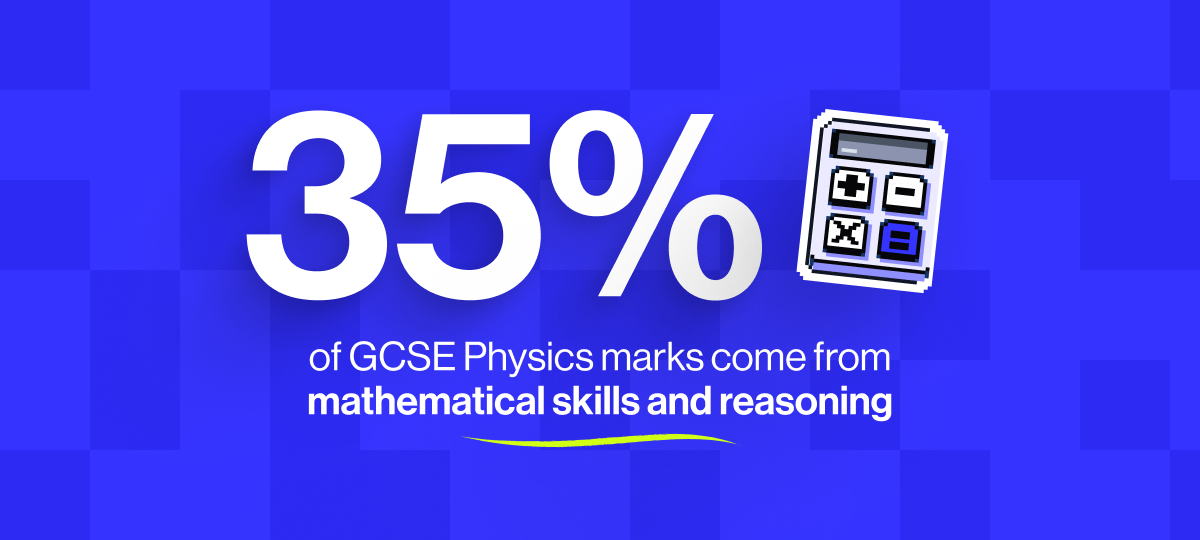
Another major concern for many students is the volume of mathematical content of GCSE Physics.
As students move into GCSE, they will encounter more equations and calculations. They'll need to become comfortable manipulating formulae, converting between units, and recognising prefixes such as milli-, kilo- and mega-.
In fact, around 35% of the marks available in GCSE Physics come from mathematical skills and reasoning.
For some students, the challenge isn't understanding the Physics itself but having the mathematical confidence needed to apply that knowledge in exam questions.
Get ahead and stay ahead this year
If you've just started your GCSEs, now is the time to get ahead.
The secret to achieving academic success in the UK? Studying with top-quality teachers and former examiners, handpicked for their ability to make things click for their students and working hard. Do that and results follow. This year, it's your turn to get ahead and stay ahead.
And, it’s more affordable than you might think. With us, you can get a full year of expert teaching for less than a few classes with the average private tutor.
Check out our course catalogue to begin.

Free GCSE Physics study notes
As well as our Summer Schools, MyEdSpace also provides free online learning resources through MyResources.
MyResources contains a comprehensive GCSE and A-level curriculum, primarily aligned with the AQA specification. Students can access worked examples, video solutions, YouTube explanation videos, and concise summaries of the key knowledge they need to learn for their exams.
The platform is designed to support students throughout their studies, whether they need help understanding a difficult topic, reviewing classwork, or revising for assessments.