Home education and socialising: how families build friendships outside school
"What about socialising?"
It's the question almost every home educating parent hears, often before any other. It's a reasonable question to ask, but the truth is, home education doesn't remove social opportunities, it simply means they need to be deliberately built into a child’s routine, rather than relying on school to provide them by default.
Here's what the research into socialising and home education says, and how families build genuine friendships and social confidence outside the school gates.
What the research says
A 2019 qualitative study - titled ‘“We’re not just sat at home in our pyjamas!”: a thematic analysis of the social lives of home educated adolescents in the UK’ - published in the European Journal of Psychology of Education, found that students engaged in a range of social experiences that supported their social skills, happiness, and confidence, and interacted with a diverse range of people across different age groups.
While this is one small study and not a sweeping verdict on all home educated children's social lives, the researchers themselves noted that most prior research on the socialisation of home educated children focussed on younger children, and that adolescent social experiences specifically were under-studied, which is why, despite its small scale, this study is useful.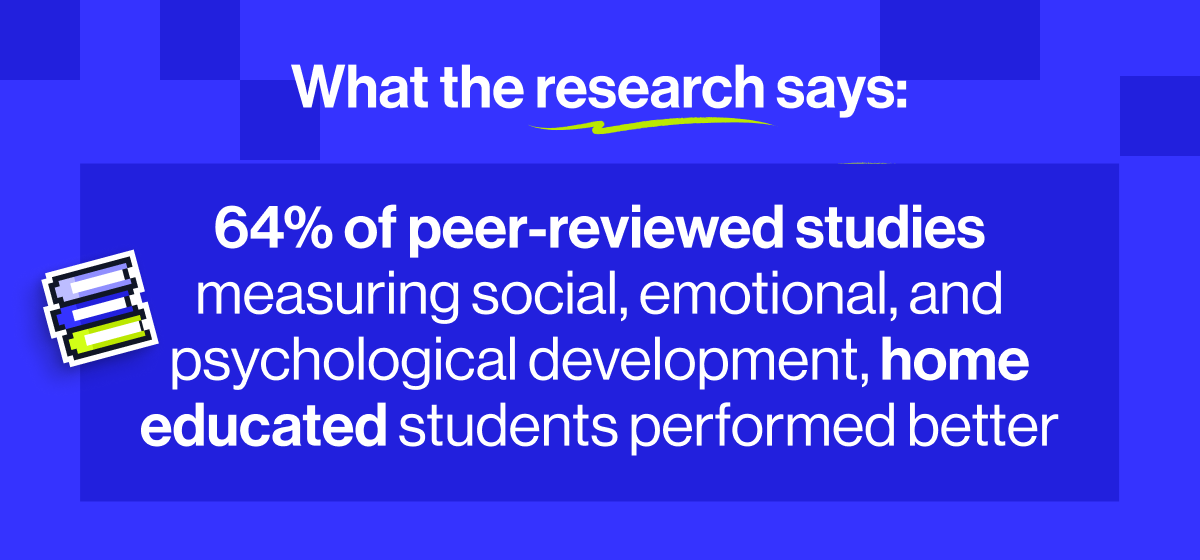
Separately, a broader body of international research (collated by the US-based ‘National Home Education Research Institute (NHERI)’ in 2025) reported that across 64% of peer-reviewed studies measuring social, emotional, and psychological development, home educated students performed better than their peers who’d been educated in schools.
Why the concern persists
Socialisation worries come from a reasonable and logical place. After all, for most of us - especially those of us educated in schools - school is where we first make friends and form relationships with people outside our family units.
What's different about home education is that social opportunities don't happen automatically through a forced proximity to 30 children our age in a classroom. Instead, they have to be proactively built. However, rather than a problem, for many home education families, this turns out to be a feature rather than a flaw, since it tends to introduce children to a wider range of ages, backgrounds, and interests than a single school year group might allow.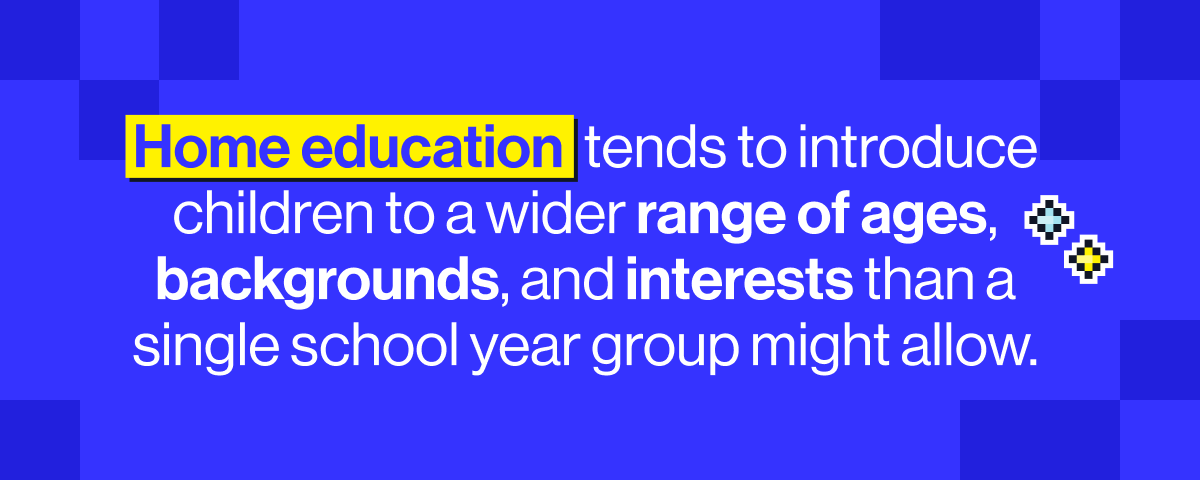
How families build friendships outside school
Opportunities for children - both home educated and those who go to school - to meet new people and make friends include:
-
Sports clubs and teams - outside school hours, sport offers a natural way to build friendships, learn coping skills when things don’t go your way, and has the added health benefits of exercise and motor skill development
-
Community classes and clubs - drama groups, music lessons, Scouts, Guides, and similar activities all provide regular, structured social contact
-
Volunteering - by getting involved in volunteering in the local community, gives children the opportunity to meet a diverse range of people, while also teaching them about civic pride and the value of community. As an aside, research cited by NHERI suggests home educated individuals often engage more in community service and volunteering in young adulthood than school-educated peers
-
Local home education groups and co-ops - many areas have active home educator communities who meet regularly for group activities, days out, or shared learning sessions
-
Live online lessons - group-based live teaching, like MyEdSpace's lessons, gives students regular contact with like-minded children studying the same subjects, alongside the interaction with their teachers and classmates in the lesson live chat
None of these replace the school environment on their own but combined, they can build a social world that's deeper and broader than purely relying on the classroom.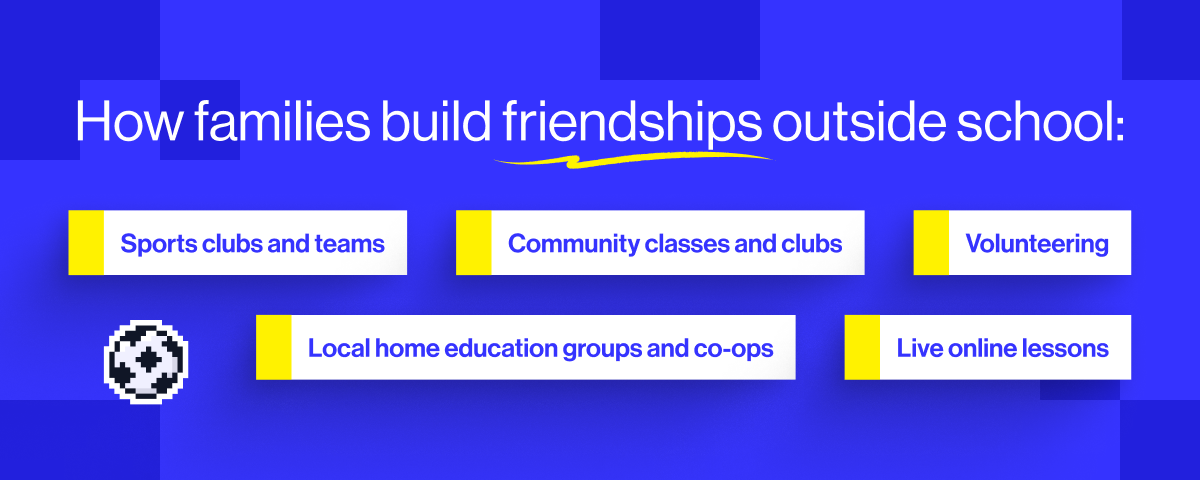
Live lessons bring social benefits, not just academic ones
One thing that can be overlooked is that live, structured learning can play a social role as well as an academic one.
At MyEdSpace, lessons are taught live by expert teachers, with students able to participate through chat, ask questions, and learn alongside other students studying the same subject, meaning that learning at home doesn't have to be a solitary experience.
If you're just getting started and want the full picture on setting up home education, our guide to getting started with home education is a good first stop.
And for a complete overview of home education in the UK, including legal requirements, building a timetable and choosing a curriculum, our ultimate guide to homeschooling in the UK covers it all.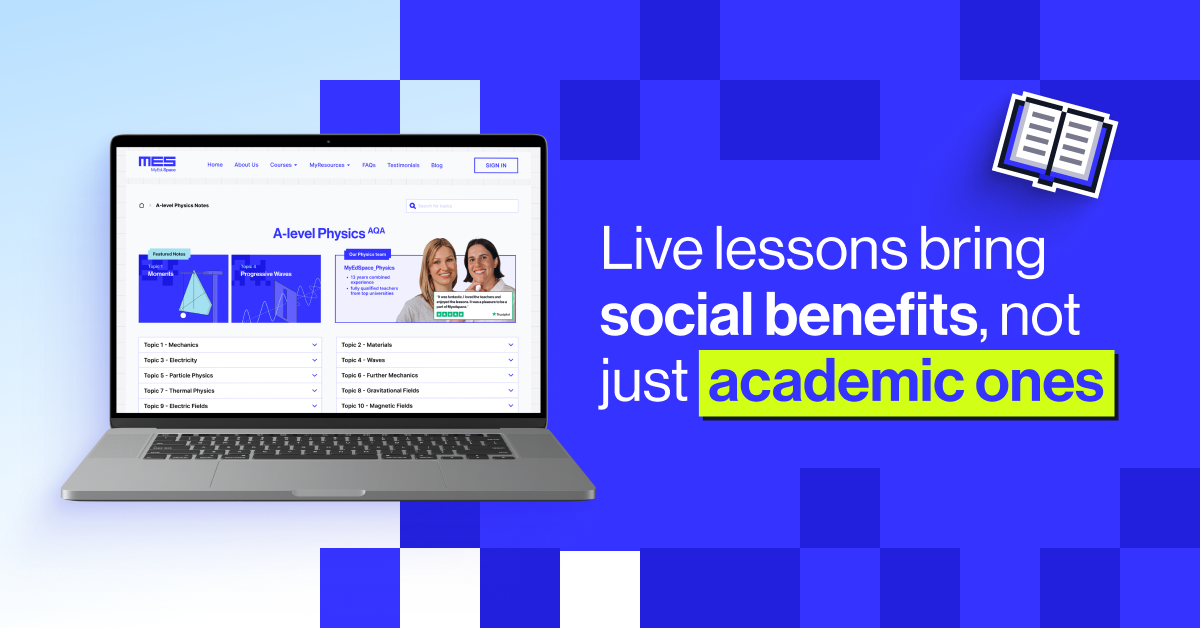
Try before you buy
Whether your child is getting started with Year 5, preparing for the 11+, heading towards their KS2 SATs in Year 6, or moving through KS3 in Year 7, Year 8, and Year 9, starting their GCSEs in Year 10 or preparing for exams in Year 11 or making that final step-up into Year 12 and their A-levels, which finish off Year 13 - now is the time to establish the habits that will bring success.
We've handpicked elite UK teachers and created lessons with them that give your child the academic advantage.