How to get started with home education
Deciding to home educate your child is one of the biggest decisions a family can make and it's natural to feel both excited and overwhelmed at the same time.
The good news is that thousands of UK families make this choice every year, so you’re not alone and there’s lots of support available to help you make it a success.
To help you understand what making the decision looks like for families, this guide walks you through exactly what to do, from the legal basics to choosing your curriculum and way of teaching, so you can start educating at home with confidence.
Understand the legal basics first
In England and Wales, parents have the legal right to educate their children at home instead of sending them to a traditional school. This is known as elective home education, or ‘EHE’ for short.
If your child is currently enrolled in school, you'll need to write to the headteacher to formally deregister them. The school is then required to notify the local authority, though they cannot refuse your request. If your child has never been enrolled in school, you don't need to inform anyone before you start.
There's no need to follow the National Curriculum, hold teaching qualifications, or stick to school hours and term times. Your only legal duty is to provide your child with a full-time education suitable to their age, ability, and any additional needs they may have.
For the complete legal picture, including special circumstances like Education, Health and Care Plans (EHCPs) and what to do if your child has additional needs, our ultimate guide to homeschooling in the UK covers everything in detail.
Decide on your approach before buying anything
One common mistake people make when deciding to educate their children at home is buying a curriculum before deciding how they actually want to teach. Home education isn't one-size-fits-all, and the right structure depends on your child and your family's rhythm.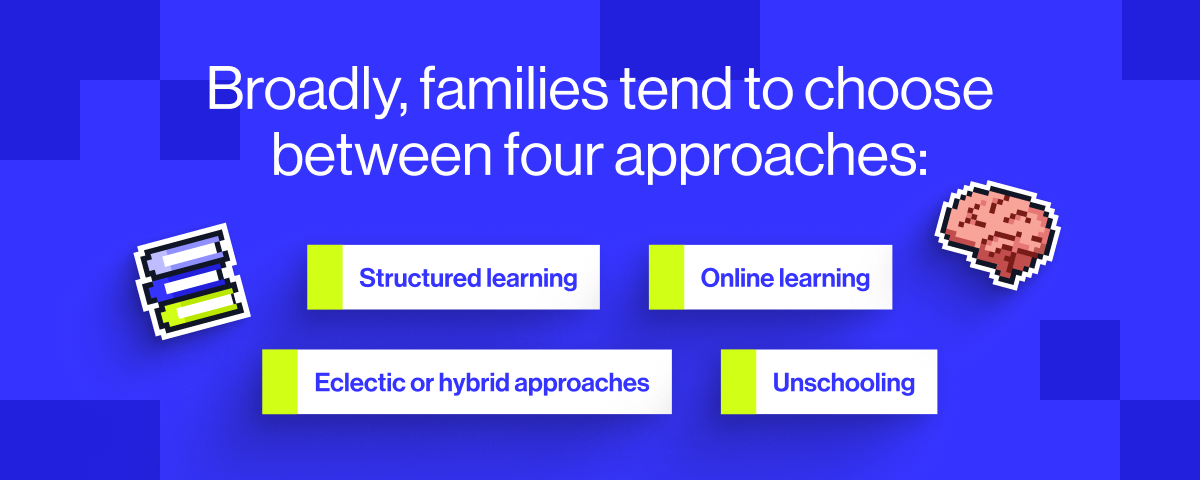
Broadly, families tend to choose between four approaches:
-
Structured learning - a more traditional, timetabled approach with set lessons
-
Online learning - live or recorded lessons from expert teachers, like MyEdSpace
-
Eclectic or hybrid approaches - a mix of structured and flexible, project-based learning
-
Unschooling - fully child-led learning based on natural interests and curiosity
There's no single right answer here and it’s possible to mix and match to find the right blend.
If you want to dig deeper into the different homeschooling methods and how to pick a curriculum that fits your child, our guide to choosing a homeschooling method and curriculum breaks down each option in more detail.
Build a timetable that works for your family
You don't need to replicate a 9am to 3pm school day and often people find that focused learning takes less time to cover the same ground than a full school day with 30 children in the room. How much time you dedicate to learning - just like the method you use - depends on your situation, and how your child learns best.
When thinking about a schedule, start by blocking out time to cover the core subjects (Maths, English, Science) on days and times they concentrate best. Around that, you can build in flexibility for trips, appointments, or other subjects they’re interested in.
Live lessons can help here too, since they give your week a natural rhythm and routine without locking you into a rigid school-style schedule.
Finally, it’s important to ensure you leave space for breaks - both within the day, and days off across the week. During study days, consider the Pomodoro Technique, which suggests working in 25-minute chunks, then taking a short (5-10 minute) break before starting another chunk.
Think about exams early, even if they feel far away
Home educated students sit exams including GCSE and A-levels at registered exam centres rather than through a school.
Our complete guide to sitting GCSEs privately walks through finding an exam centre, understanding the fees involved, and what to expect on the day, so there are no surprises later.
Find the right support, rather than doing it all alone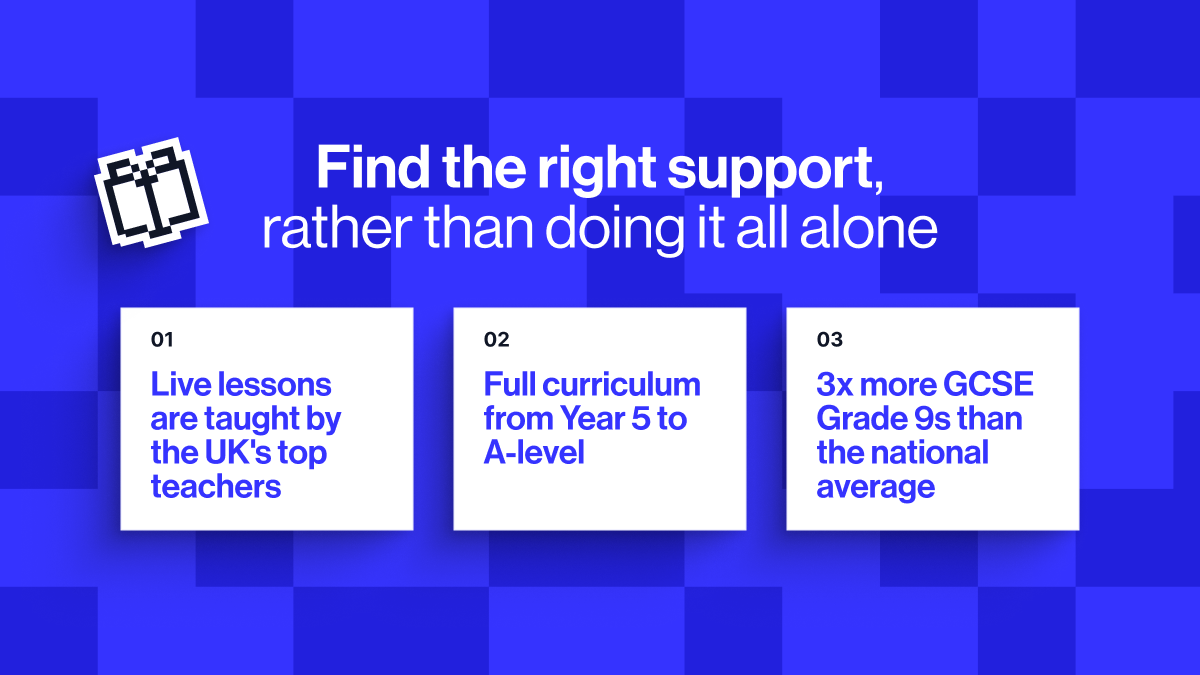
Home educating your children doesn't mean going it alone.
At MyEdSpace, live lessons are taught by elite English, Maths and Science teachers, who cover the full curriculum from Year 5 through to A-level, so your child gets expert teaching without you needing to become a subject specialist in everything.
The results our students then go on to achieve in exams, proves the effectiveness of our approach. For example, last year, well over half of our students achieved GCSE grade 7 or above (56%), compared to under 25% nationally (22%). At the top end, MyEdSpace students achieved 3x more GCSE Grade 9s than the national average.
Try before you buy
Whether your child is getting started with Year 5, preparing for the 11+, heading towards their KS2 SATs in Year 6, or moving through KS3 in Year 7, Year 8, and Year 9, starting their GCSEs in Year 10 or preparing for exams in Year 11 or making that final step-up into Year 12 and their A-levels, which finish off Year 13 - now is the time to establish the habits that will bring success.
We've handpicked elite UK teachers and created lessons with them that give your child the academic advantage.