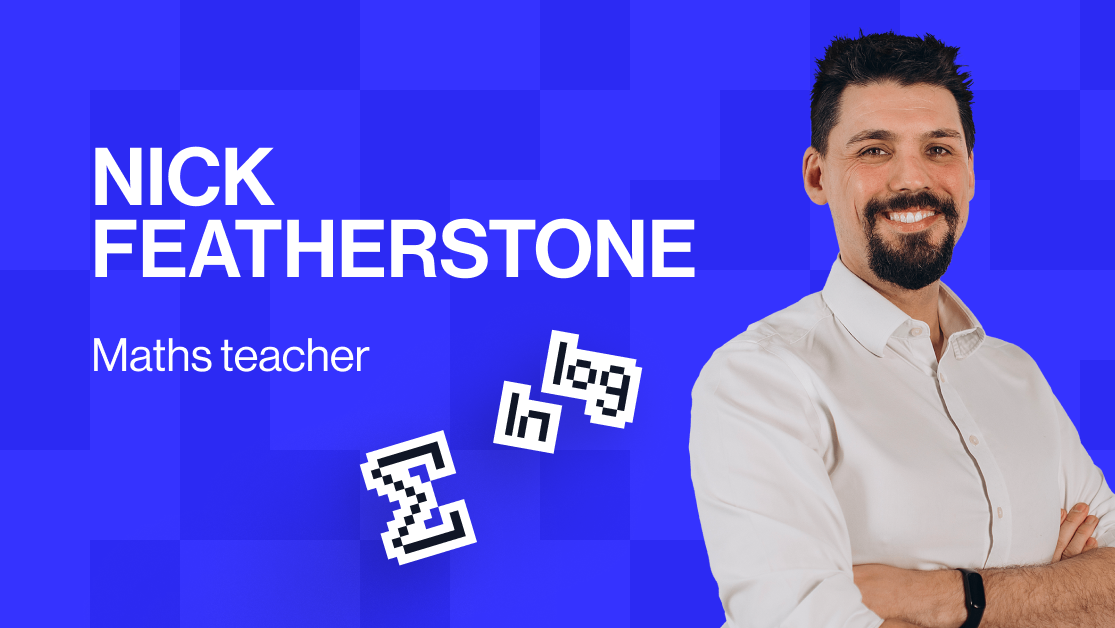
Meet Maths teacher Nick Featherstone
When Nick Featherstone was a child becoming a Maths teacher wasn’t remotely what he had in mind for his future. He wanted to be a clown.
“I just enjoyed entertaining,” he smiles. “I still do.”
Back then, Maths - the subject Nick would go on to get both a Master’s and PhD in - didn’t really get a look in.
“I got really interested in history at school, especially prehistory. We did a few trips to archaeological sites and I found all that stuff absolutely fascinating - I still do. Maths was just something I was good at. I didn't have to think about it very hard.”
Then, Nick met Mr Jadin, and everything changed.
“He had this attitude of Maths being something fun to just fiddle around with - as something interesting and fun. He wasn’t stuffy about it, and he would go off on tangents or talk about how to use a technique or where this or that approach came from. He talked about Maths being mental stimulation for the simple pleasure of doing it rather than desperately rushing to an intended outcome. That approach really made the entire thing click for me. It wasn’t until then that I really thought ‘ok, this is cool, I could do this’.”
It was that new-found enjoyment - rather than any grand career plans - which shaped Nick’s choices for where his education would take him next.
“I have always leaned into doing the things I enjoy and that’s how I have ended up here”, he begins.
“As well as Mr Jadin, I had a very good Chemistry teacher in Mr Hilbert and I loved studying that too. Initially, I applied to read Chemistry at Oxford and I distinctly remember writing on my personal statement that ‘I like chemistry because it's one of the more mathematical Sciences’. In hindsight, I suppose that was a big clue.”
Having grown up and studied in Belgium - his parents moved from the UK for his Mum’s job as a Commercial Director just before he started school - Nick was turned down by Oxford, but did have the chance to come to the UK to get his A-levels ahead of re-applying.
“About two months in, we all realised that Chemistry was not for me, so I dropped Chemistry A-level completely and focused in on Maths. I say that because I think it’s important for people to see that you don’t have to have it all figured out on the first go. You don’t have to have a grand plan. Things change and you can pivot - and that’s fine, just lean into the thing you enjoy and see what happens”.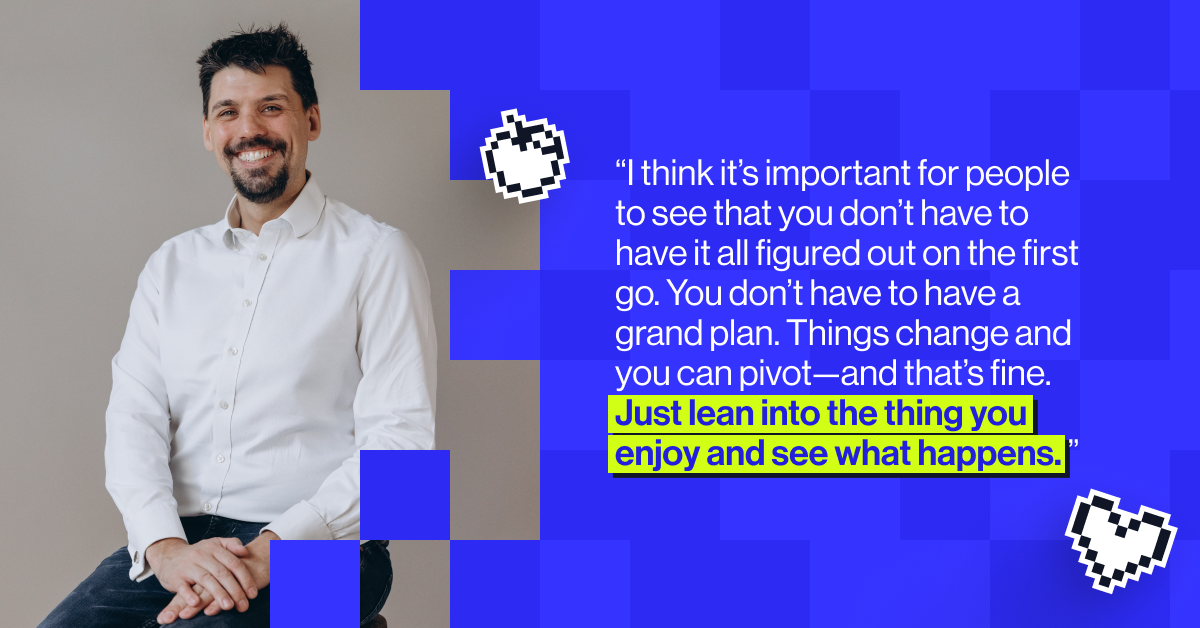
What happened for Nick was acceptance into Oxford University, where he earned a Master’s and worked towards a DPhil (Doctor of Philosophy), all the time finding the joy of Maths he’d picked up from Mr Jadin years before.
During his studies, Nick had the opportunity to work as a Teaching Assistant (TA), with the occasional requirement to step in and do a bit of teaching for the 1st and 2nd year undergrads. In doing so, Nick discovered a new source of enjoyment, which scratched an old itch.
“I really enjoyed teaching those groups, much more than Research Maths. It was enjoyable and interesting at the same time - and I guess I was entertaining in a way, so while I wasn’t exactly a clown, it was still fun. I knew there were opportunities to get into teaching, so again I made the decision to knock my research on the head and follow the fun”.
Nick learned his trade at Brighton College, before joining MyEdSpace after a decade in the classroom learning how to balance being an entertainer with being an educator.
“As a teacher I think you do need to be - on some level - an entertainer, because you need kids to be in your lesson. As a teacher, you have to enjoy your subject because kids will pick up on that and your enthusiasm will transfer to them - but it’s a balance.”
“When I started off teaching, I very much tried to lean into being entertaining a lot - which was great for the high level groups, but not so good for the lower ability students or students that didn't have that enjoyment of the subject. Over the years, I've had to learn when to switch it on, when to switch it off, which kids to switch it on with, which kids to switch off, where I have to be a bit more in the middle”. 
“Different students need different things. You can be a dry teacher and still be a very good teacher, that’s very effective in what you do. And that is grand. There are some kids where you could chuck a textbook at them and they will learn. You could just write facts on a board and they will learn, and that's fine. But there are some kids that if they don't want to be there, they won't. So, you need something that can bridge the gap and try to bring those students along with you too.”
“It’s a balance. You have to be entertaining enough for students to want to be there and want to listen, but too much of it and you can go the other way and find students can’t take you seriously. You have to find the middle ground.”
The rewards of finding that middle ground are the ability to make a difference to student’s lives in just the way Mr Jadin and Mr Hilbert did for Nick all those years ago.
“What’s cool about being a teacher is that you know that just by doing the job and doing it well, you can make a huge difference to those kids.”
Try before you buy
Whether your child is getting started with Maths Year 5, preparing for the 11+, heading towards their KS2 SATs in Year 6, or moving through KS3 in Year 7, Year 8, and Year 9, starting their GCSEs in Year 10 or preparing for exams in Year 11, or making that final step-up into Year 12 and their A-levels, which finish off Year 13 - now is the time to establish the habits that will bring success.
We've handpicked specialist Maths teachers and created lessons with them that give your child the academic advantage.