The importance of fun for effective online (and offline) learning
The idea of “having fun in the classroom” is surprisingly controversial.
People usually fall into one of two camps on the issue. On one side are those who think “fun” means messing around and derailing the lesson entirely. On the other are those who think a classroom without fun is like a tree without leaves: still technically a tree, but not quite flourishing in the way it should be.
As with most controversies, there is a happy medium – and principles we can all agree on. If we take “fun” to mean going completely off-topic and getting rowdy, then we agree – that’s obviously a problem. But we can also agree that a robotic lesson with no personality isn’t going to inspire anyone. If, instead, we use the word “fun” as a shorthand for engagement, humour, interactivity, and play, then its place in the classroom starts to become clear.
When I was a part-time personal trainer during my undergraduate degree, I learned something important very early on. I loved keeping up with the latest research on strength and conditioning; I really nerded-out hard, and I was keen to apply it with my clients.
But it quickly became apparent that none of that expertise on what is “optimal” even mattered if the programme was too complicated, too hard, too boring. Clients would stop showing up, or bring a lacklustre effort to the sessions. Ironically, they actually started making less progress than they would’ve done on a less research-backed, “perfect” programme. In short, the best plan was the one a client would actually stick to.
The same goes for the classroom. If a student is engaged, interested, and motivated, they are more likely to stick with the learning – and commit it to memory more securely. It’s not just nostalgia and idealism that informs my theory; the point is backed by solid research, and this article looks at what that research tells us.
As I see it, and as the research affirms, fun in the classroom comes down to three things: engagement, relationships, and presentation.
The positive relationship between engagement and learning
A growing body of research suggests that what people tend to describe as “fun” in learning is in fact not at all far removed from what makes for effective teaching.
The best lessons are the ones where teachers hold your attention, keep you hyped to learn, and draw you into taking part. That’s even more the case in online and blended learning, where it is far easier to drift off or disengage. Enjoyment is only one part of the picture, though. As teachers, we want you to be happy and having a blast, of course – but it is our job to teach you.
Fortunately, a recent meta-analysis of online higher education found a significant positive relationship between student engagement and learning outcomes (g = .43), suggesting that students who are more engaged tend to do better academically. That finding is supported by broader work on blended learning, where lesson designs that deliberately build in engagement – including interactivity, peer participation, and a “fun factor” – have been shown to produce substantial boosts in both engagement and learning outcomes. This is the beauty of it all: fun directly leads to progress – assuming it’s channelled right.
In that sense, fun works best as a practical way of holding engagement. Live questioning, polls, quizzes, humour, pace, and variety help students stay involved behaviourally, cognitively, and emotionally. Research on active learning in digital environments also shows that activities which require students to respond, think, and participate are more effective than passive content consumption.
Lessons with energy and movement give students more chances to stay mentally present and more reasons to keep going. There’s a reason why we at MyEdSpace never shut up, and why we want you popping off in the chat with your ideas, questions, comments, and debates. It’s not a Q&A session but a meeting of minds.
The importance of the tutor-student relationship
Further pedagogical research suggests that effective learning depends heavily on human connection. This should come as no surprise.
The thing is, with face-to-face teaching, teacher presence can be easy to take for granted – the teacher is physically there, the scent of a morning coffee on their breath. Online, though, that presence – that sense of “sir is here in just the same way that I’m here” – has to be built more deliberately. Evidence suggests that this is one of the key ingredients in successful digital learning. (So maybe I should hold up my coffee for the camera – make it feel really real…)
On a serious note, there is data to back this up. A large-scale study across 334 universities found that “teaching presence” significantly shapes students’ online learning experience, with facilitating interaction coming out on top as the most influential component. In practice, that can be as simple as encouraging discussion in the chat and firing up the good vibes.
Likewise, a meta-analysis of online higher education found that social presence – that feeling that your teacher is genuinely there and involved – has a positive effect on both student satisfaction and learning outcomes.
Other research shows that social and cognitive presence, especially when supported through meaningful interaction, are key predictors of engagement and achievement in virtual learning environments.
From a self-determination theory perspective, teacher support also strengthens intrinsic motivation (the drive to learn for the sheer joy of making progress), and that in turn encourages greater interaction and engagement.
That’s a lot of data. It all helps explain why warmth, responsiveness, and personality are so important. Teachers who react to students in real time, show genuine interest, and create a shared atmosphere, allow students to feel connected to the lesson and to one another. It’s a community, really.
That is the MyEdSpace approach, through and through.
Humour belongs here too. Experimental research suggests that course-related humour can increase intrinsic motivation and enjoyment while reducing negative emotions. In online settings specifically, humour has also been shown to improve the quality of teacher-student relationships, which supports engagement.
So the next time Neil greets you with “Qué pasta?”, you can take it as more than just throwaway banter. It is a strategy for bringing you all together. He’s not the circus clown, but the ring master.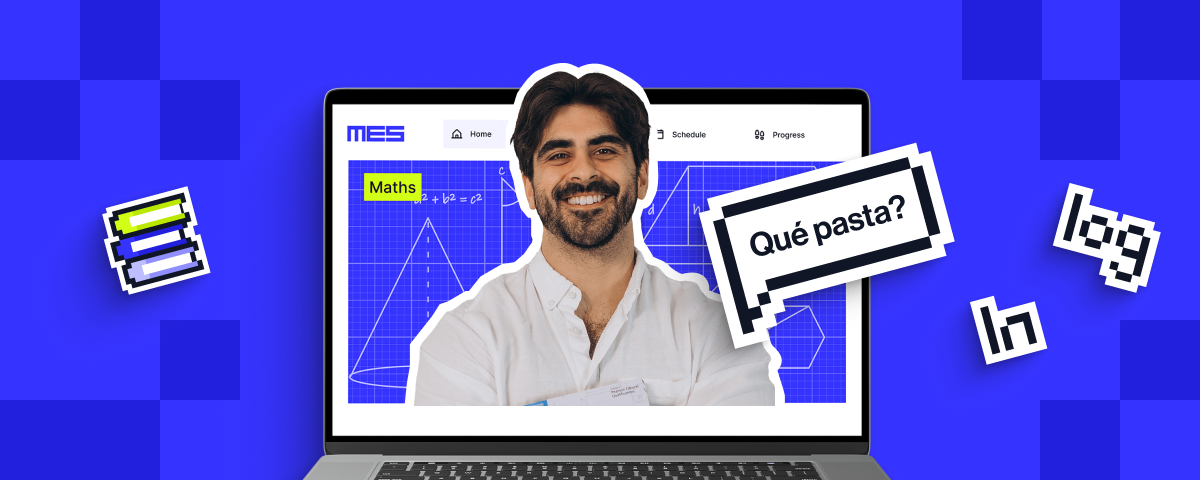
Fun also shapes the kind of atmosphere in which students feel comfortable speaking up, asking questions, and sticking with difficult material. That is of the utmost importance in online learning settings, where isolation can creep in insidiously.
Making learning as easy as possible
A third area of the research focuses on how learning is presented, because even great content can lose students if the delivery is flat, or cluttered, or difficult to follow. Slides and presentation with a clear structure, visual support, cues, emphasis, and timely feedback all make learning easier to take in and easier to stay engaged with. Let’s see how the researchers put it.
Research on multimedia learning shows consistently positive effects when teaching combines words and visuals effectively, especially when text and diagrams are used together (pedagogical nerds call this “dual coding”). More recent work on online learning environments also suggests that cueing strategies, such as visual highlights, gestures, and emphasis, have a moderate positive effect on learning outcomes by directing attention and reducing cognitive overload. These features help students notice what deserves their attention and make the lesson easier to process. We are equipped with tablets and pens for good reason – the more we scribble and highlight, the more arrows we draw, the more egregiously bad our spontaneous artwork is, the more your eye as a student is directed to where it needs to be.
Feedback is just as crucial. A meta-analysis of online feedback found a positive effect on learning outcomes, especially for cognitive achievement. Timely feedback helps students correct misunderstandings before those misunderstandings get stuck in the long-term memory. It also gives you a more legitimate sense of progress, which makes it easier to stay motivated.
This is one reason live, interactive teaching works so well: students are guided through the material, asked to respond, and given chances to adjust their understanding straight away. You’ve probably noticed that we at MyEdSpace don’t just take a “halfway-there” answer and give an electronic high-five; instead, we push you for the “rightest-of-the-right” in your responses to the chat – because that is where the magic happens.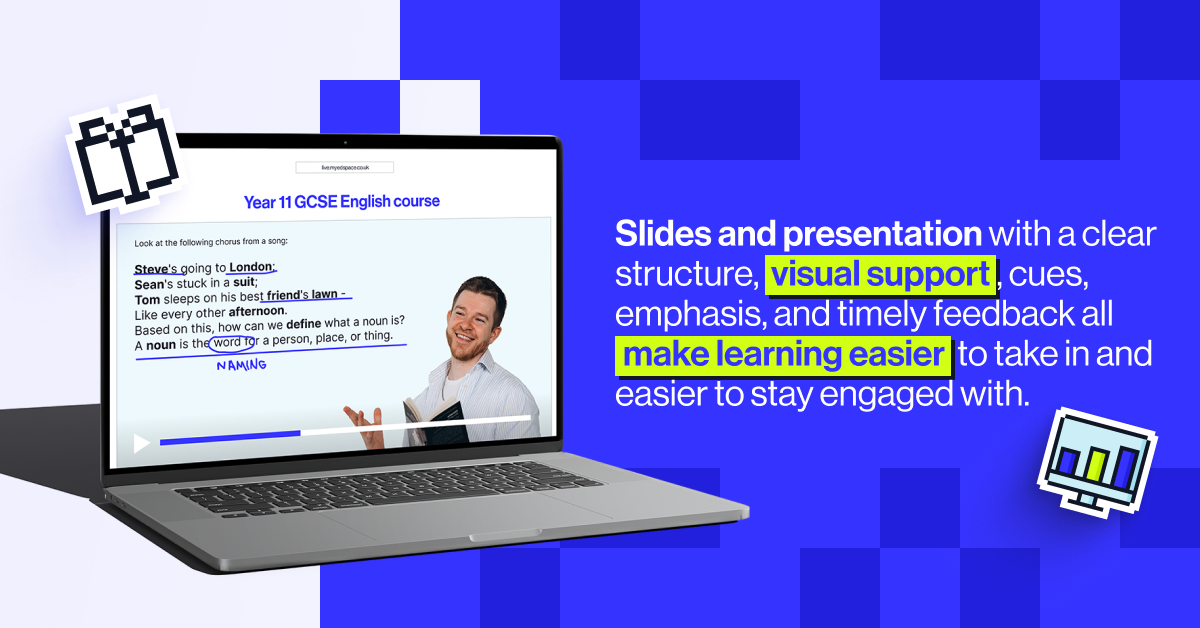
Finally, our approach pays off even outside of the live lessons. Benefits continue through to homework and consolidation – including rewatches, which is why every single lesson is recorded. Asynchronous and self-paced materials can reinforce learning by allowing students to replay content, think at their own speed, and work more independently. Meta-analytic work demonstrates that self-regulated learning strategies are positively associated with academic performance in online and blended environments, while research on microlearning suggests that short, self-contained units can support cognitive, behavioural, and affective outcomes. It may be less fun, on your own, but the gains continue.
Crucially, this kind of self-paced learning appears to work best when it is combined with structured, interactive teaching rather than used on its own. The strongest learning experience usually comes from a combination of live guidance, active participation, and resources students can return to later.
Sound familiar? That’s how we designed MyEdSpace to work.
This is what good teaching looks like
Across these three areas, the elusive sprite called “fun” makes a home.
-
Engagement helps students keep their attention and effort focused
-
Relationships create the trust and connection that make participation easier
-
Presentation shapes how clearly and effectively the material comes across
Together, these fun-centred tenets form a large part of what good teaching looks like – especially online.
So that’s why “fun” makes learning work better. Energy, interaction, warmth, humour, and clarity all support the conditions that research consistently links to better learning: attention, motivation, participation, understanding, and persistence.
Students are more likely to stay with learning when it feels lively, human, well-designed… and visually pretty. They are more likely to enjoy it, and more likely to succeed.
That is one reason the MyEdSpace model works so well: students learn more when the experience gives them something to feel part of.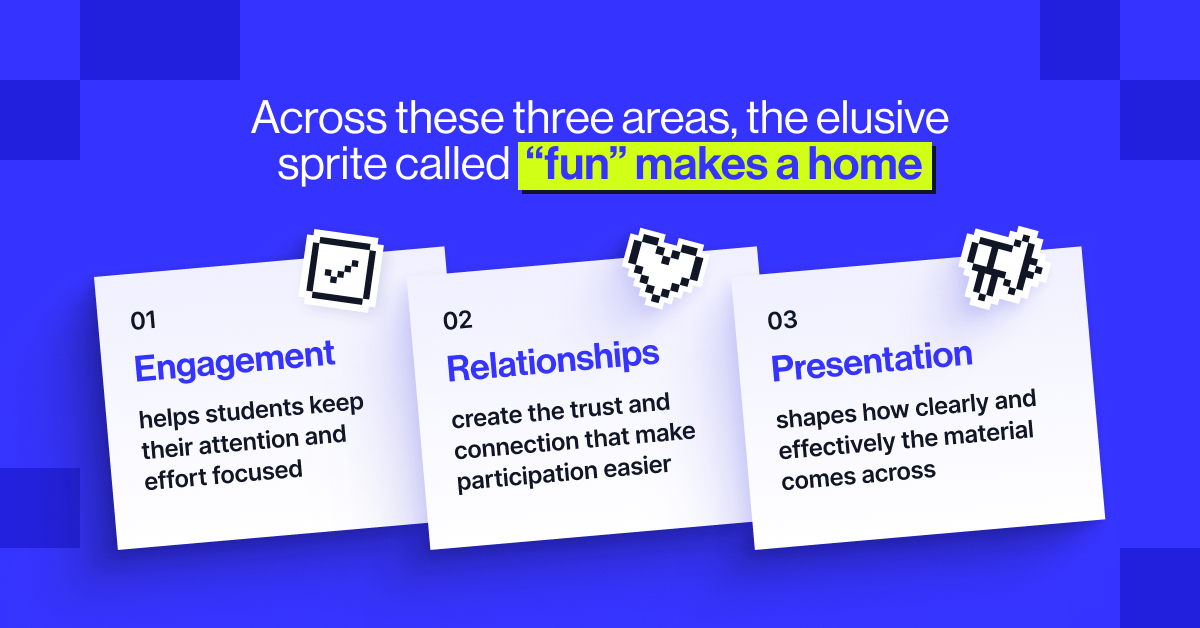
Get ahead and stay ahead this year
Whether your child is getting started with Year 5, preparing for the 11+, heading towards their KS2 SATs in Year 6, or moving through KS3 in Year 7, Year 8, and Year 9, starting their GCSEs or their A-levels, now is the time to get ahead.
The secret to achieving academic success in the UK? Studying with elite teachers and former examiners, handpicked for their ability to make things click for their students and working hard. Do that and results follow. This year, it's your child's turn to get ahead and stay ahead.
And, it’s more affordable than you might think. With us, you can get a full year of expert teaching for less than a few classes with the average private tutor.