Normal Distribution Properties
Neil Trivedi
Teacher

Contents
The Normal Distribution
Normal distributions are a selection of bell-shaped curves that are all symmetrical with a larger concentration of values at the centre.
The height and spread of the curves are determined by the mean and standard deviation. Remember, the standard deviation tells us how close our values are to the mean, so the larger the standard deviation the "wider" the curve as the points are generally further away from the mean.
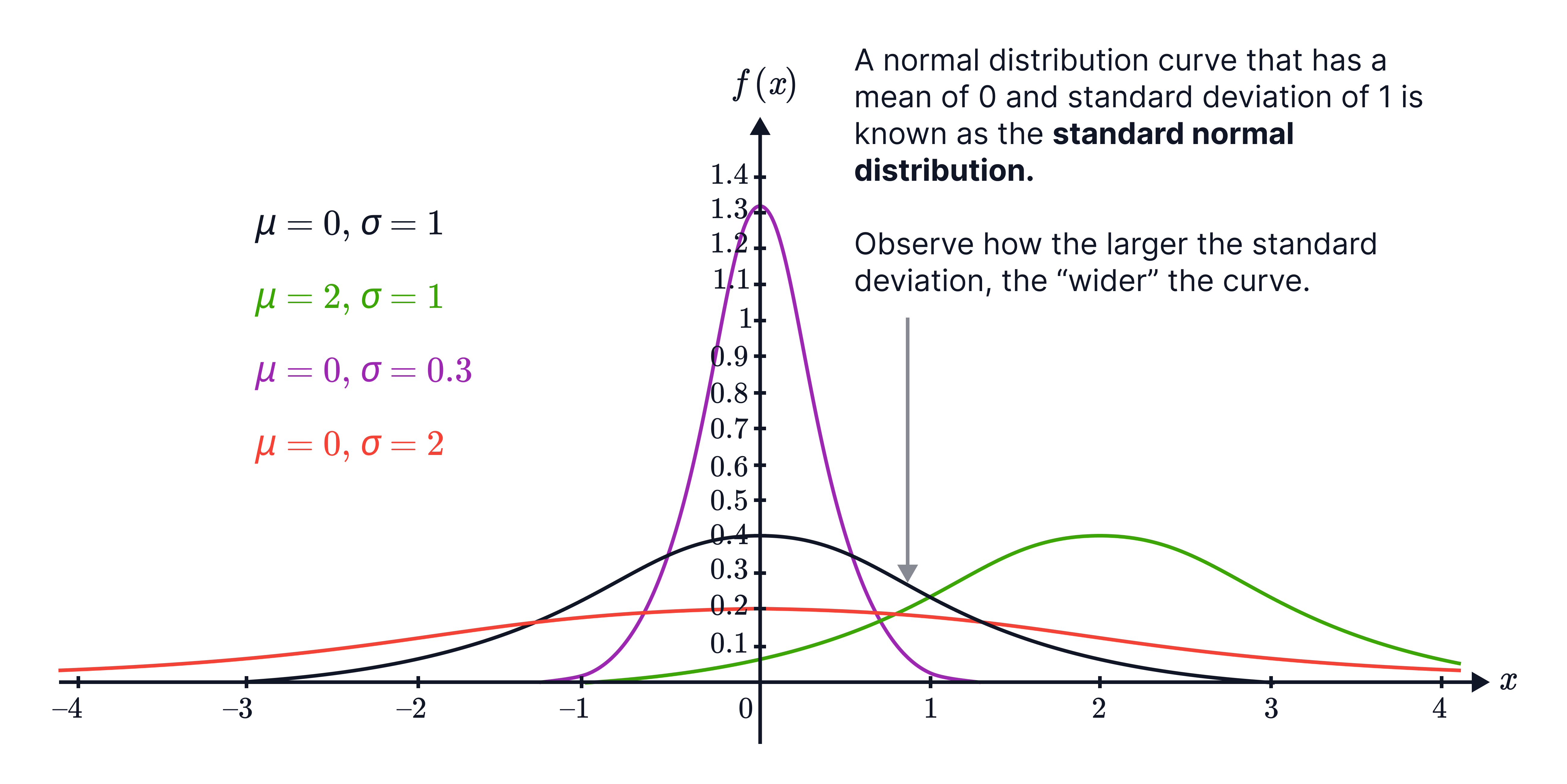
If we have an event and its outcomes follow that of a normal distribution with mean and standard deviation then we would say:
Note: represents the outcome of an event and represents the probability of that happening.
You do not need to know or work with the actual formula of the normal distribution.
Properties of a Normal Distribution
a) Normal distributions are for continuous data only.
b) Just like all probabilities in a discrete distribution add up to , the area under a normal distribution curve is also .
c) The probability of getting anything above or below the mean is due to symmetry.
d) The probability of say is zero as the chance of obtaining an exact value with continuous variables is impossible this is because has no area and hence no probability.
e) The probability of finding and are the same probability.
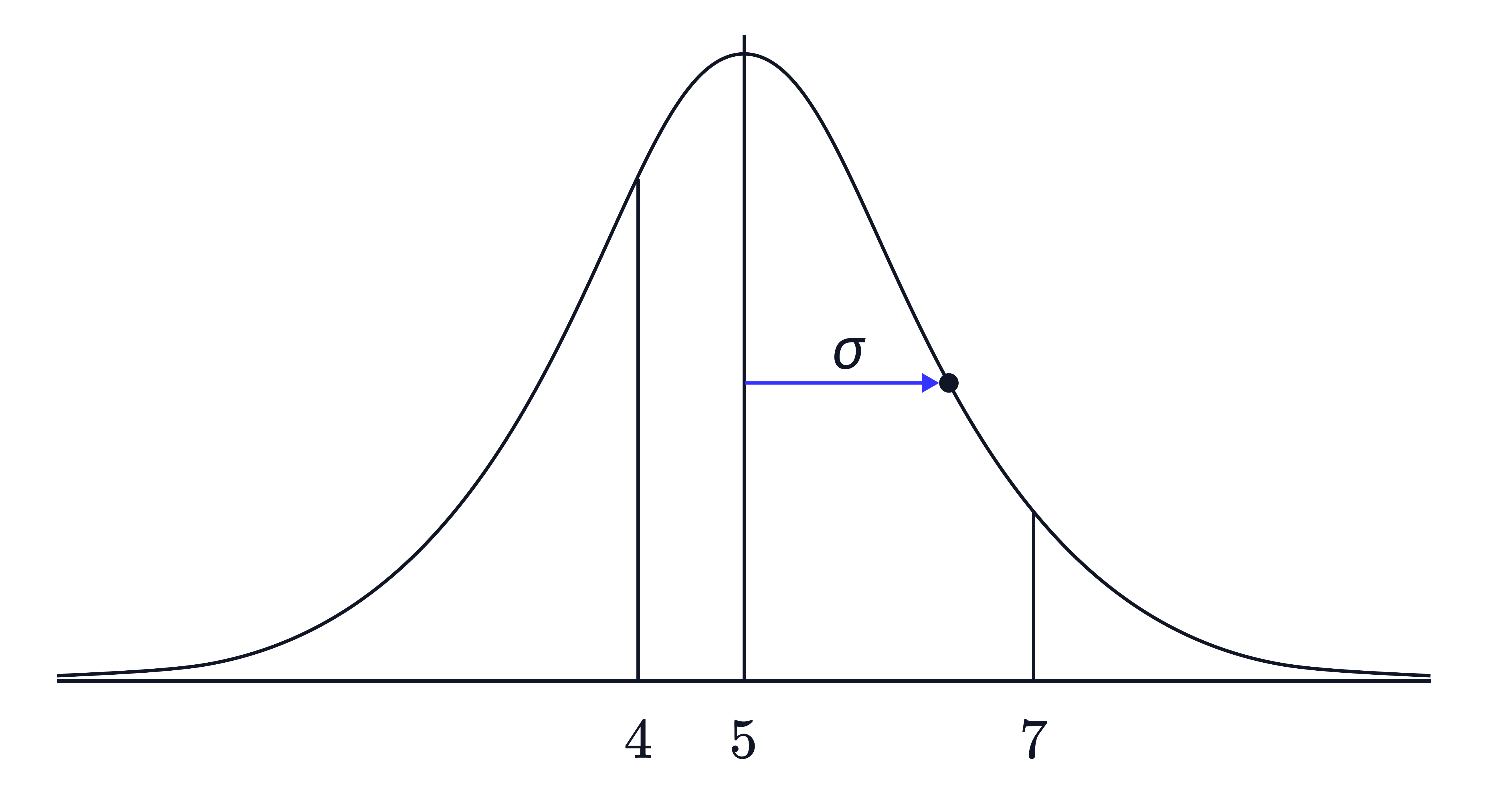
f) To find the probability of you just find the area between the two values.
Percentage Rules
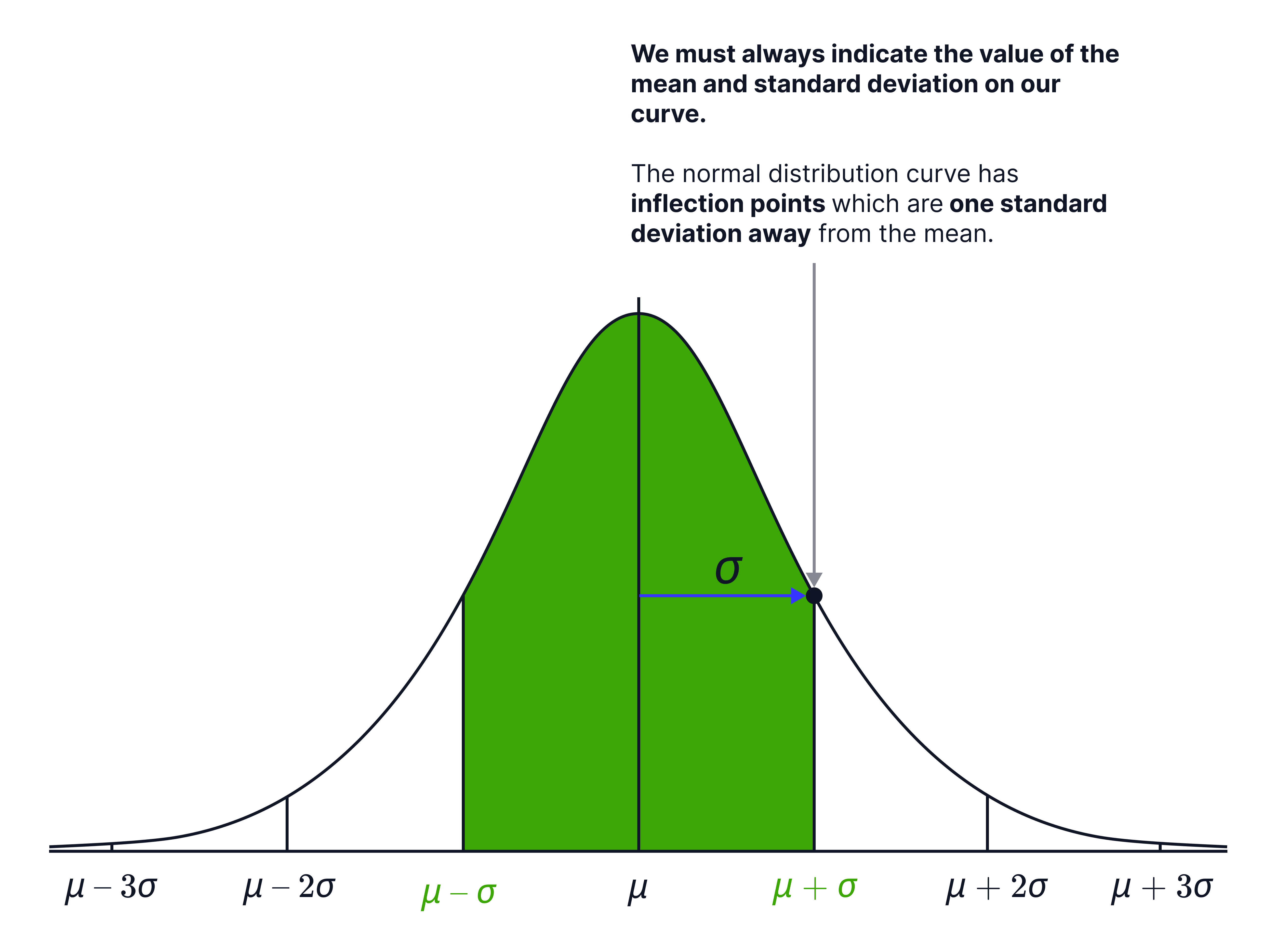
You also need to be aware of the , , rule meaning:
of data is within one standard deviation of mean
of data is within two standard deviations of mean
of data is within three standard deviations of mean
It is generally accepted that all values lie within standard deviations from the mean
No matter how simple the problem is, ALWAYS sketch. It helps visualising the area under the curve we’re concerned about.
Example 1:
The height, in cm, for a given population is, by definition, normally distributed using
Find:
a)
Single Step: Noticing is the mean, we can plot the graph and apply normal distribution properties.
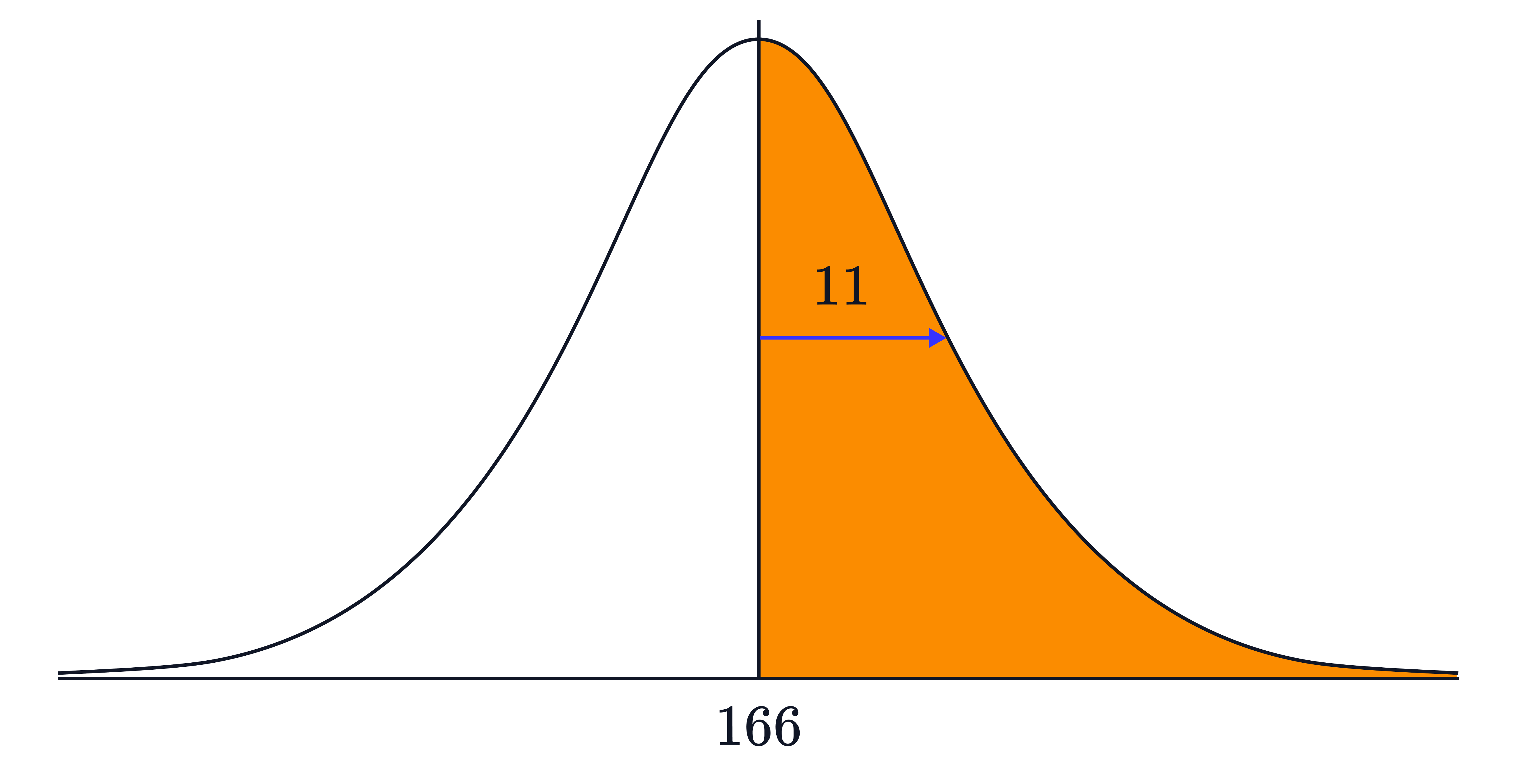
We know that it is the area above the mean, and hence the probability is .
b)
Single Step: Noticing and are standard deviations away from the mean and , we can plot the graph and apply normal distribution properties.
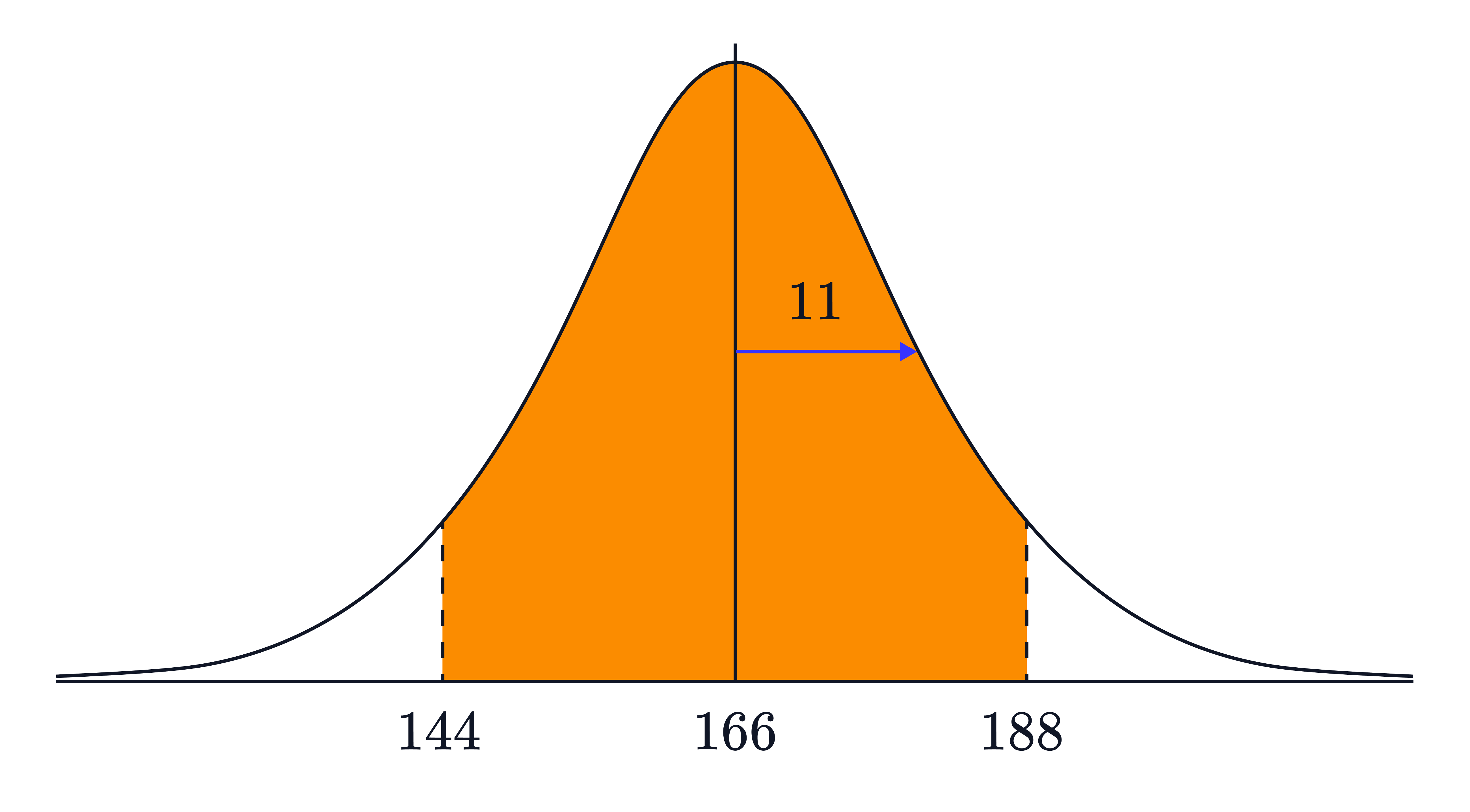
We know that the data is within two standard deviations of the mean, and hence the probability is .
c)
Single Step: Noticing is standard deviations away from the mean , we can plot the graph and apply normal distribution properties.
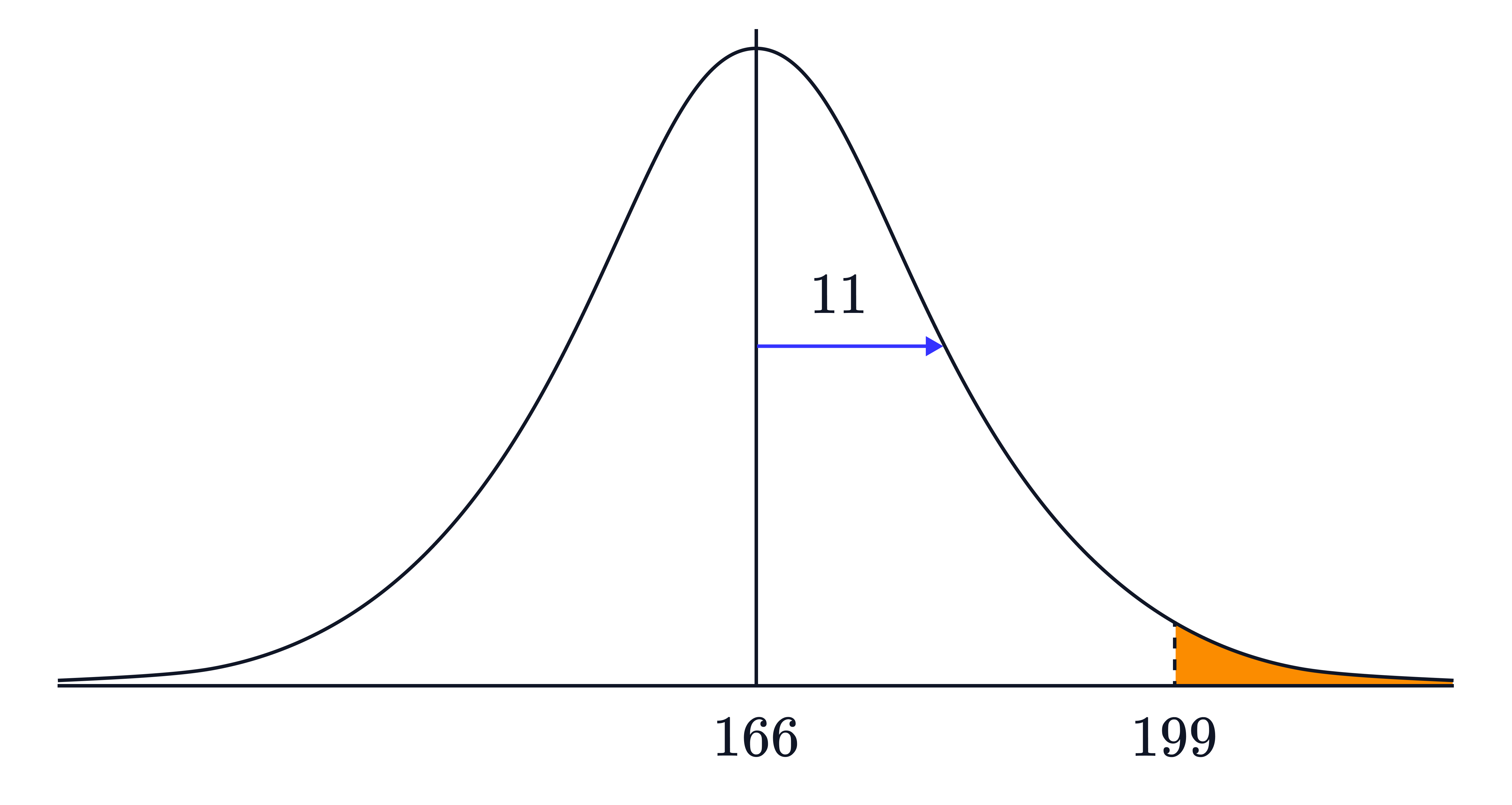
We know that the probability of data lying within three standard deviations of the mean is . Therefore, the probability of data lying outside three standard deviations is: .
represents only one tail (one side of the distribution). Due to symmetry, we divide the probability found by to obtain:
No answer provided.
Using Calculators
Depending on which calculator you have, you will have to use different ways to find the probability of a normal distribution . In general, follow these steps:
• Press MODE.
• Find the DISTRIBUTION setting
• Choose Normal CD (Cumulative Distribution)
• Input the upper value, lower value, mean and standard deviation
If the lower value is effectively , just type in (just enough that it is more than standard deviations away from the mean), and if it is the case for the upper value , we can do the same.
Example 2:
A basketball player in Japan is considered “exceptionally tall” if their height exceeds cm. The height, in cm, of male basketball players in Japan follows a normal distribution .
a) The probability of a basketball player chosen at random being “exceptionally tall”.
Single Step: Sketch the diagram to find .
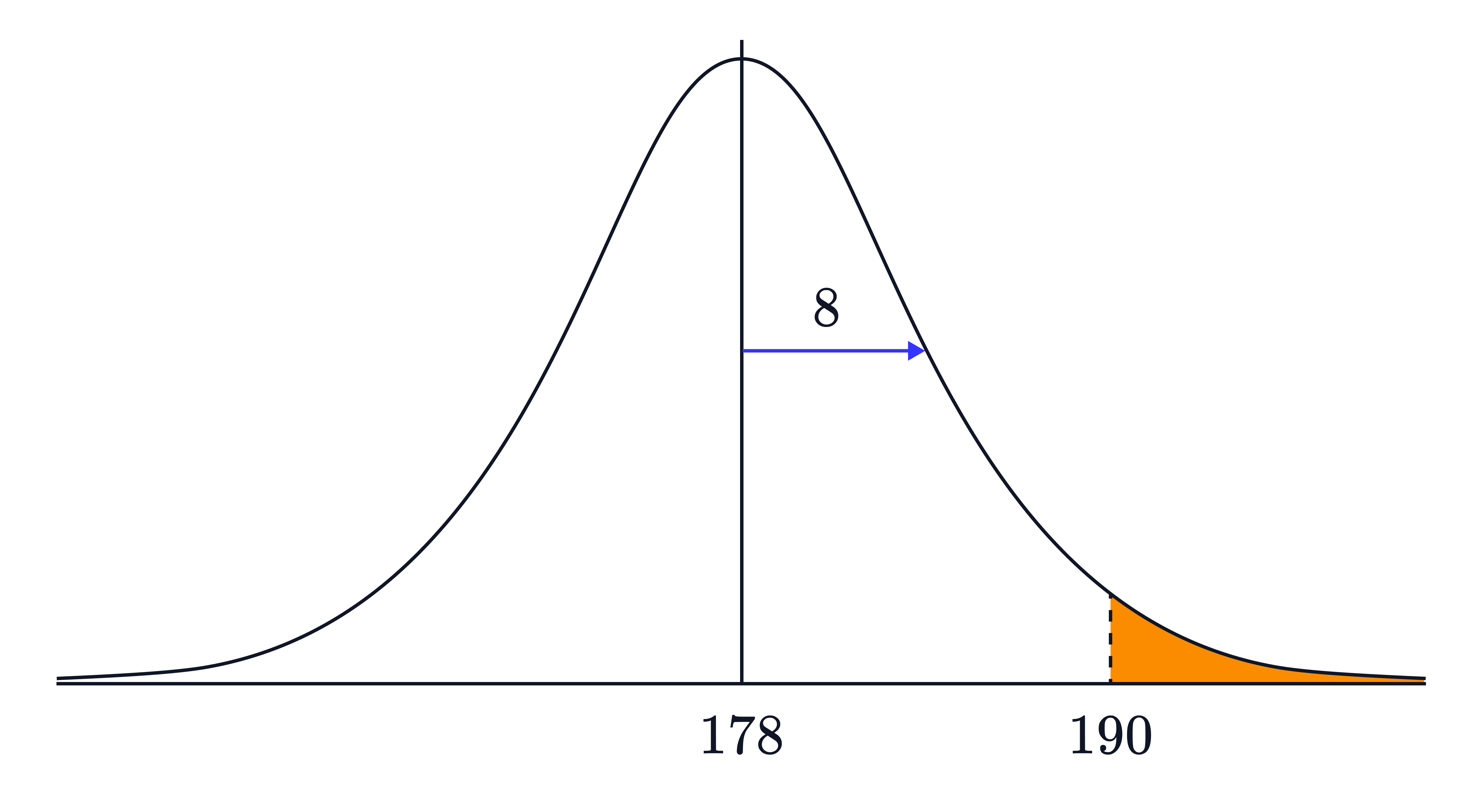
The mean is , the standard deviation is , and we take the lower value to be , and upper value to be . Inputting into our calculator gives
dp
b) A sample of basketball players is randomly collected. What is the probability that at most, of them are considered as “exceptionally tall”.
Step 1: Recognise the distribution.
Let denote the number of “exceptionally tall” players out of .
We are using binomial distribution as there are basketball players, a fixed probability of success ( calculated in part a) and each trial is independent (one player's height does not affect the next person's height.)
We know that . The probability of success is found in part a).
Step 2: Find the required probability.
Using the Binomial CD mode of our calculator, we get
dp
No answer provided.