The Inverse and Cumulative Normal Distribution
Neil Trivedi
Teacher

Inverse Normal Probabilities
We use the inverse normal distribution when we’re told a cumulative probability (area to the left of a point on a normal curve) and we need the corresponding cut-off value . If the probability is a right-tail or a central area, first convert it to a left-tail area.
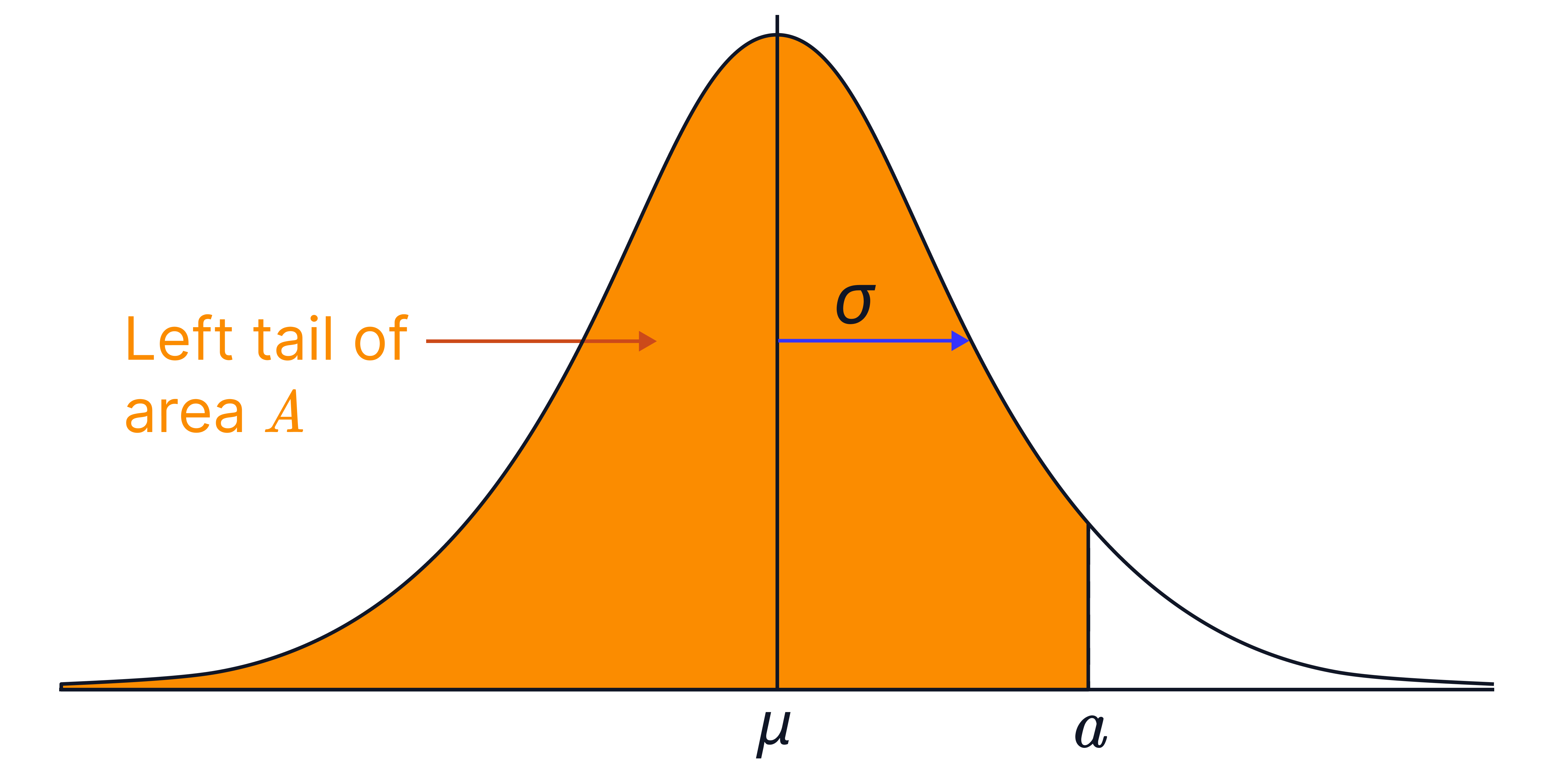
Idea: For , given a probability , find such that .
What you enter on the calculator are:
1. Area to the left (a number between and )
2. Mean
3. Standard deviation
The calculator returns .
If you’re not given a left-tail area, convert it first:
Right tail:
Example 1:
A certain type of fish has length, cm and can be modelled using the normal distribution
. Using your calculator,
a) determine the value such that
Single Step: Convert the probability into the form where we can input to the calculator.
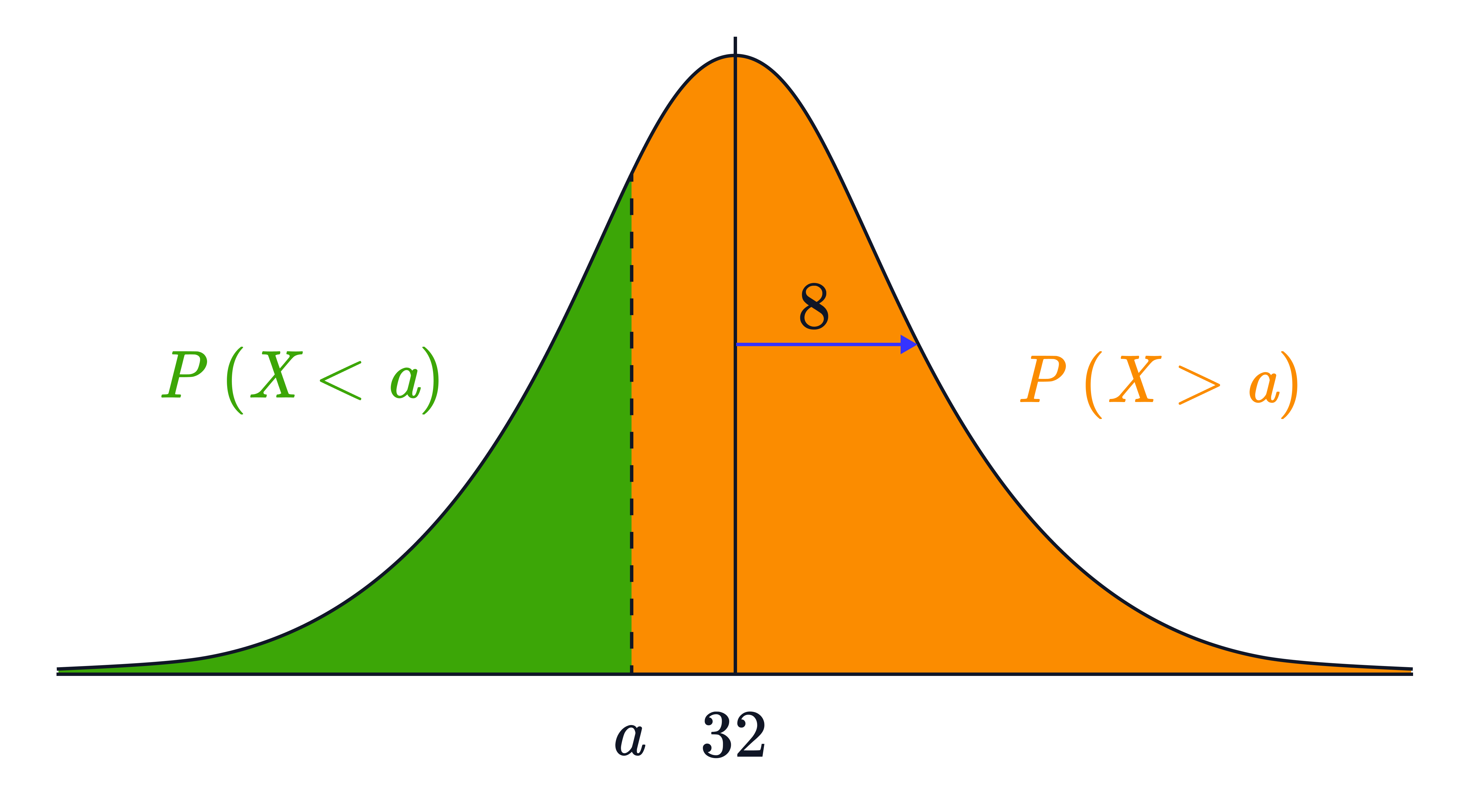
We know that probabilities sum up to . So we can deduce from that . Then we can input that into the calculator with area , , to get sf.
b) determine the value such that
Step 1: Breakdown the probability into probabilities that can be found using calculator.
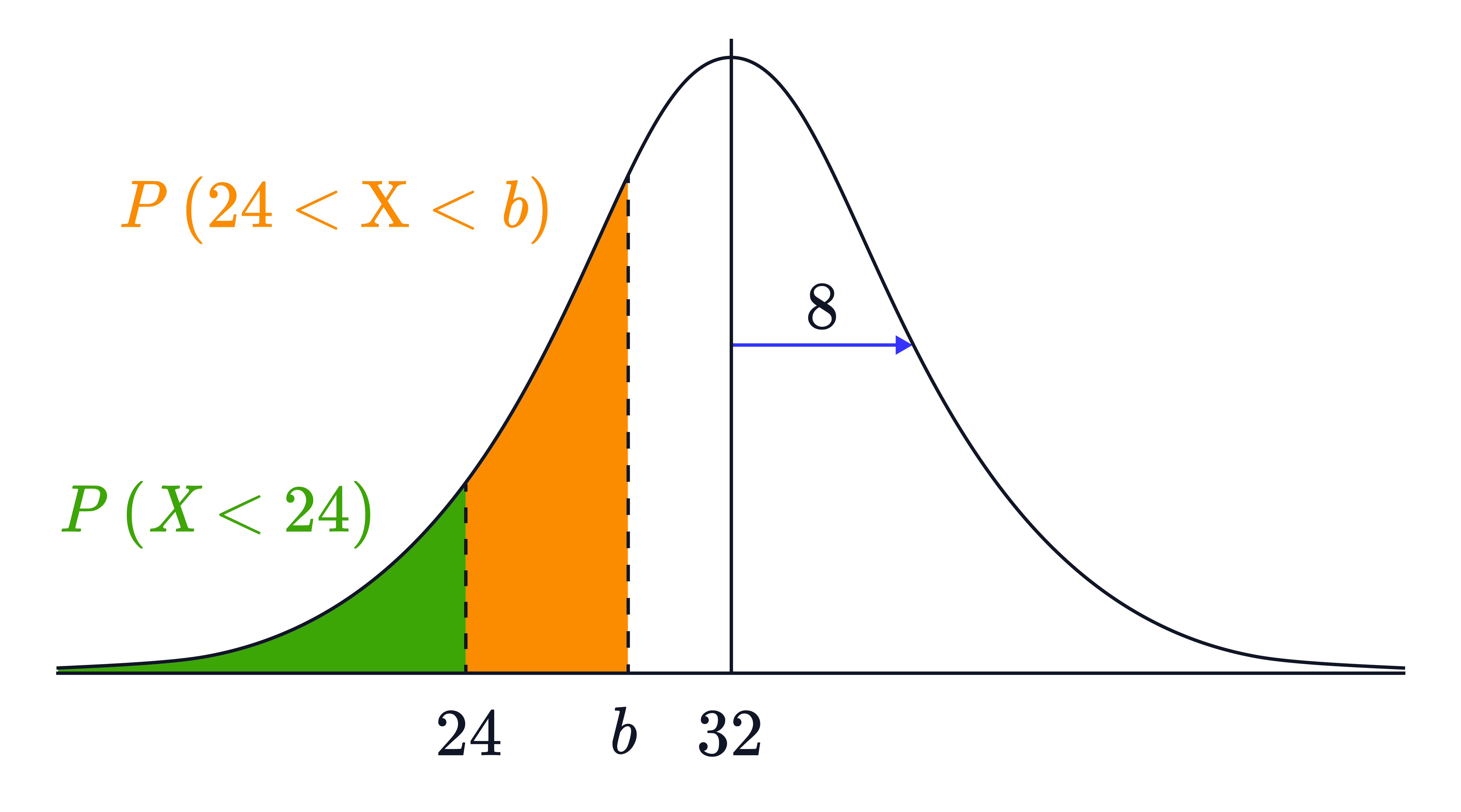
Clearly, we can see that we do not have the complete left tail from . If we find and add it to , then we will.
Step 2: Find the respective probabilities using the same parameters as part a) and rearrange to find the final answer
Using the inverse normal function in our calculator with area , , , we get sf.
c) determine the value of such that
Step 1: Breakdown the probability into probabilities that can be found using calculator.
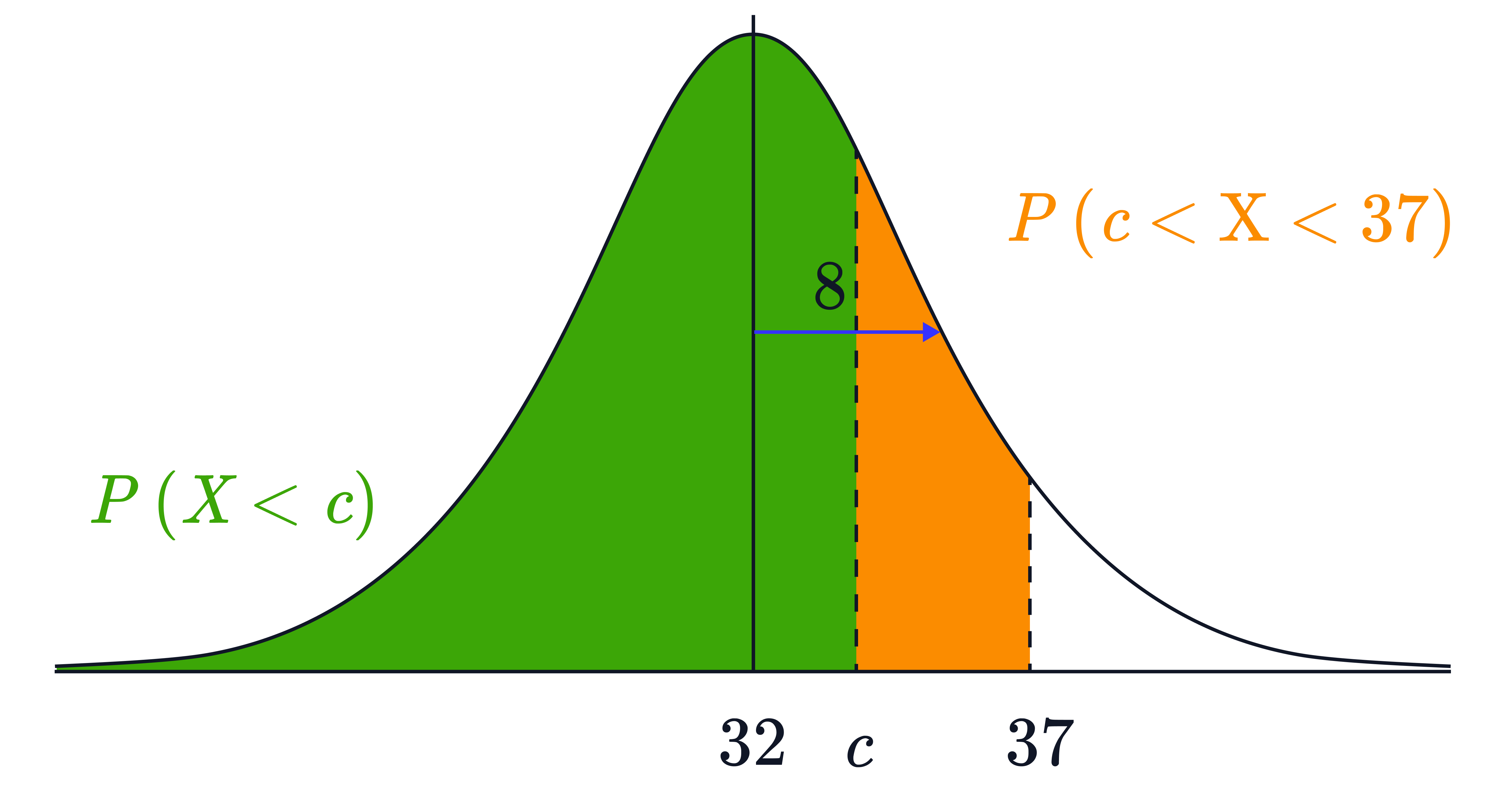
Clearly, we can see that we do not have the area of the left tail from . If we find and subtract from it, then we will.
Step 2: Find the respective probabilities using the same parameters as part a) and rearrange to find the final answer.
Using the inverse normal function in our calculator with area = , , , we get
sf
d) determine the interquartile range of .
Single Step: Find the upper () and lower quartile () to work out the interquartile range
().
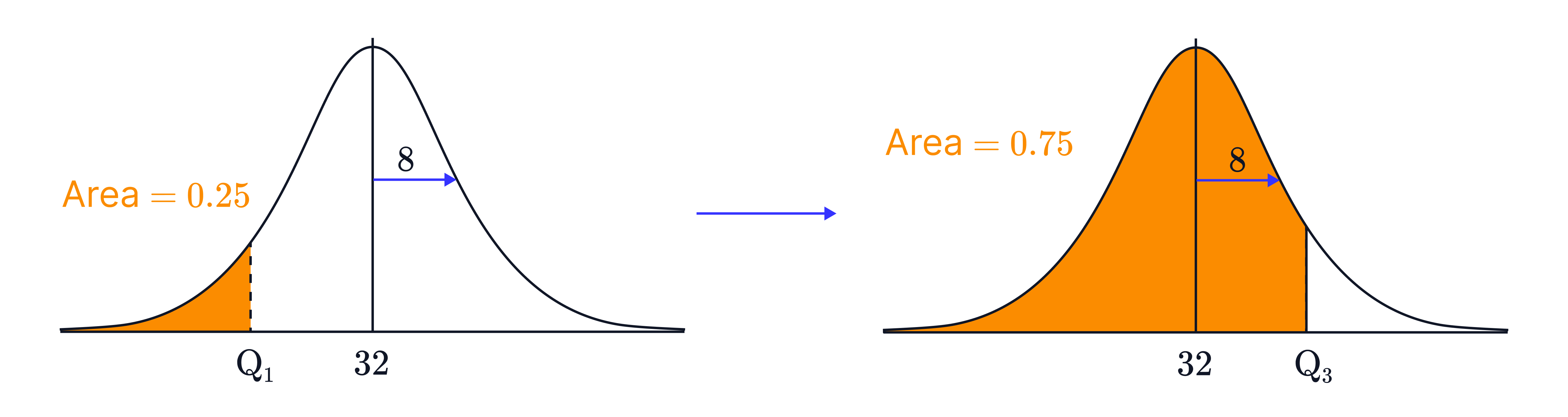
The upper quartile is the point where the area left of it is , and likewise, the area left of the lower quartile is . The interquartile range can be found by finding the difference between upper and lower quartile.
Using the inverse normal function in our calculator with , , we get
sf
No answer provided.
The Cumulative Distribution
is the cumulative distribution for the standard normal distribution.
Example 2:
The random variable . Write in terms of for some value of .
a)
Single Step: Convert into standard normal distribution.
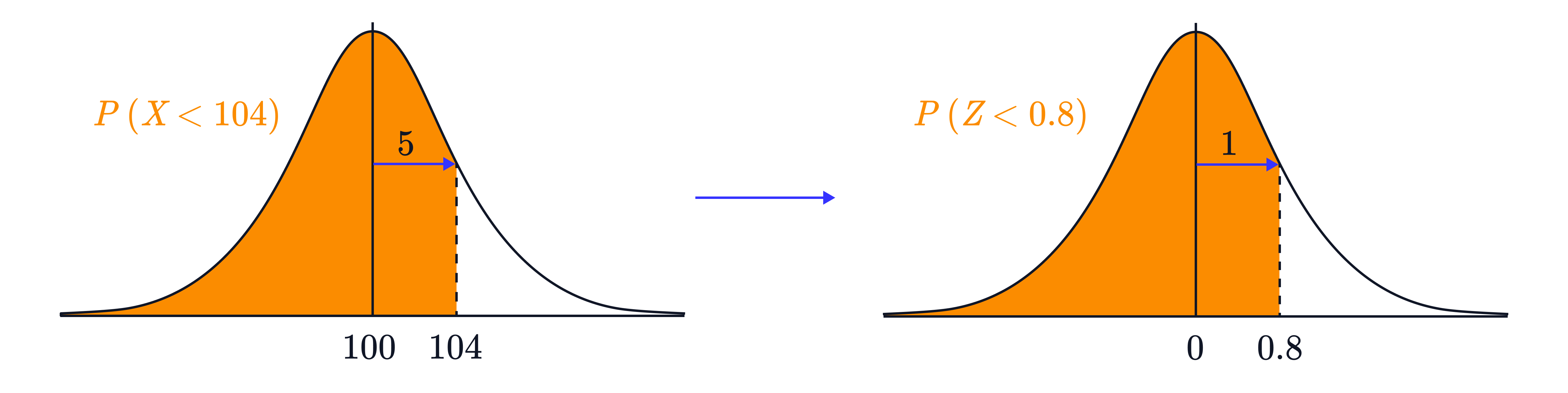
From the distribution notes, we know the transformation is
So, in this case we have
which corresponds to .
b)
Step 1: Convert into standard normal distribution.
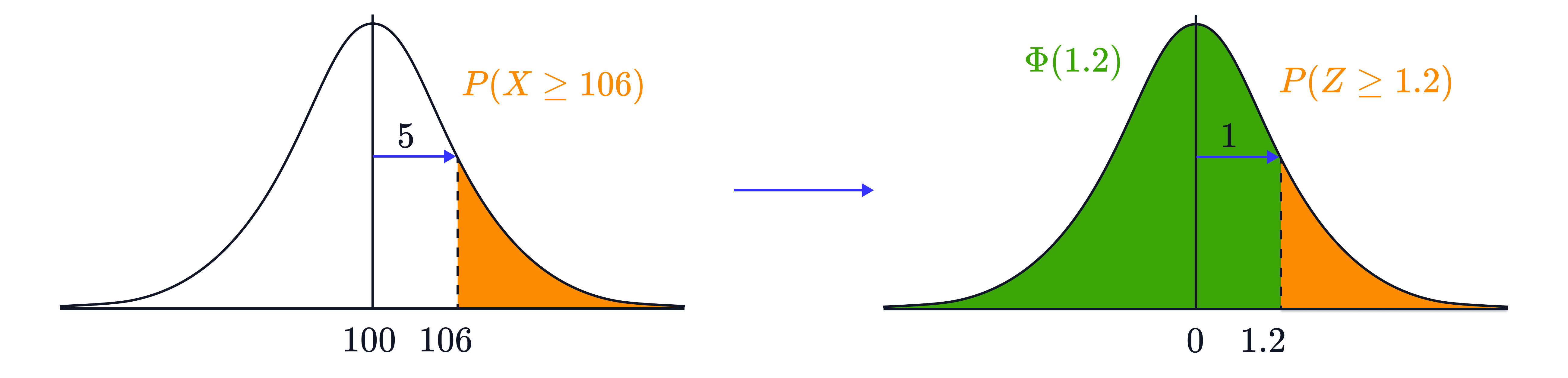
We have
Step 2: Since has to be in the form of . We need to convert into that form.
As probabilities sum up to ,
So we have
No answer provided.
Challenging Question