Probability and Tree Diagrams
Neil Trivedi
Teacher

Probability and Tree Diagrams
A tree diagram can be broken down formally by using conditional probability, giving us a clear view of what is happening within the tree.
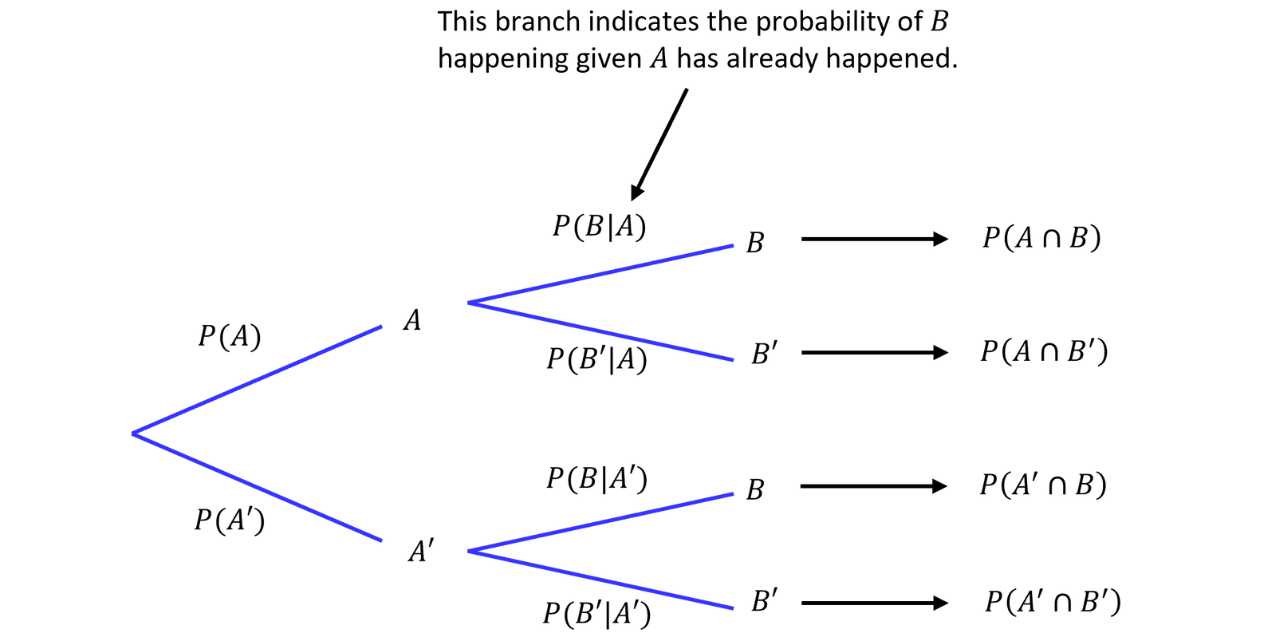
Example 1:
A bag contains green marbles and yellow marbles. A marble is taken out of a bag at random, the colour is recorded and not replaced. A second marble is taken from the bag and its colour is again, recorded. Given that both the marbles chosen are the same colour, what is the probability that they were both yellow?
Step 1: Construct a tree diagram with the given information.
Let denotes the event that a green marble is picked and denotes the event that a yellow marble is picked.
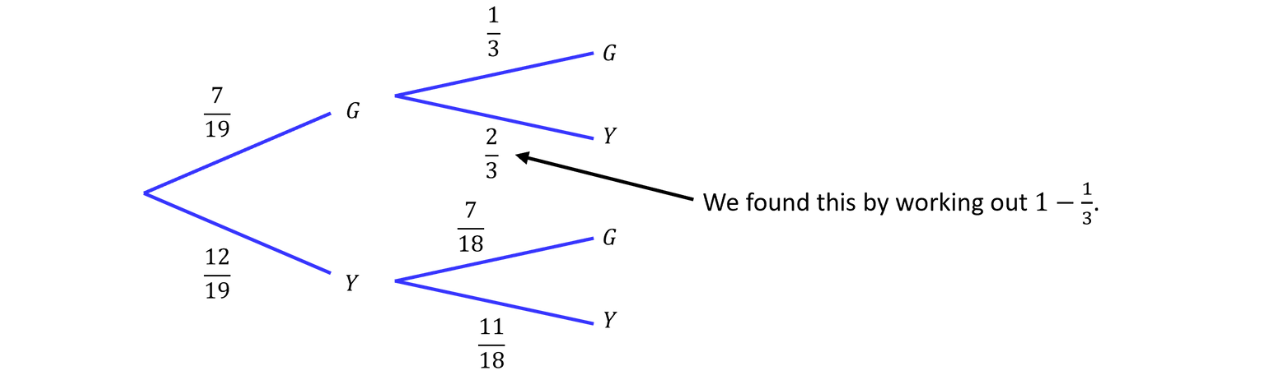
The easiest way to fill the tree diagram is to first fill the probabilities of picking the same colour twice. There are green and marbles in total, so the probability of picking a green marble for the first time is .
Once we take a green marble and do not replace it, the probability of choosing another one is .
Similarly, for the yellow marbles, the probability of picking one for the first time will be and then once we have chosen one, we subtract from the numerator and denominator which leaves us with for the probability of choosing a second yellow marble.
Step 2: Find the required conditional probability.
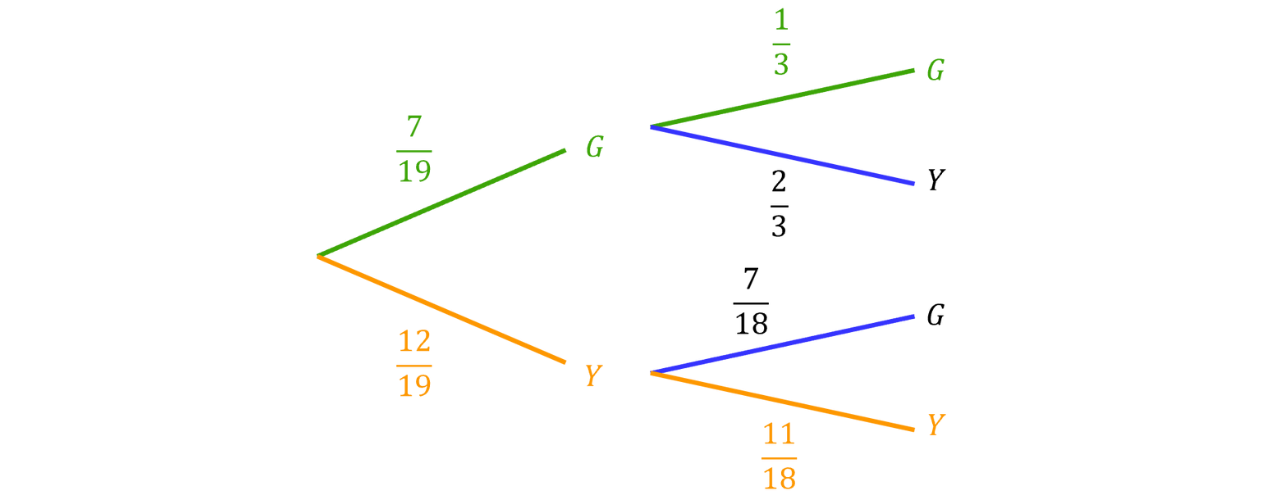
Let denote the event that both marbles picked are the same colour. They are asking us to find the probability of choosing two yellow given that the two marbles are the same colour. Rewrite this given statement using our conditional probability formula.
Notice that the event is actually the event that both marbles picked are yellow. So,
No answer provided.
Example 2:
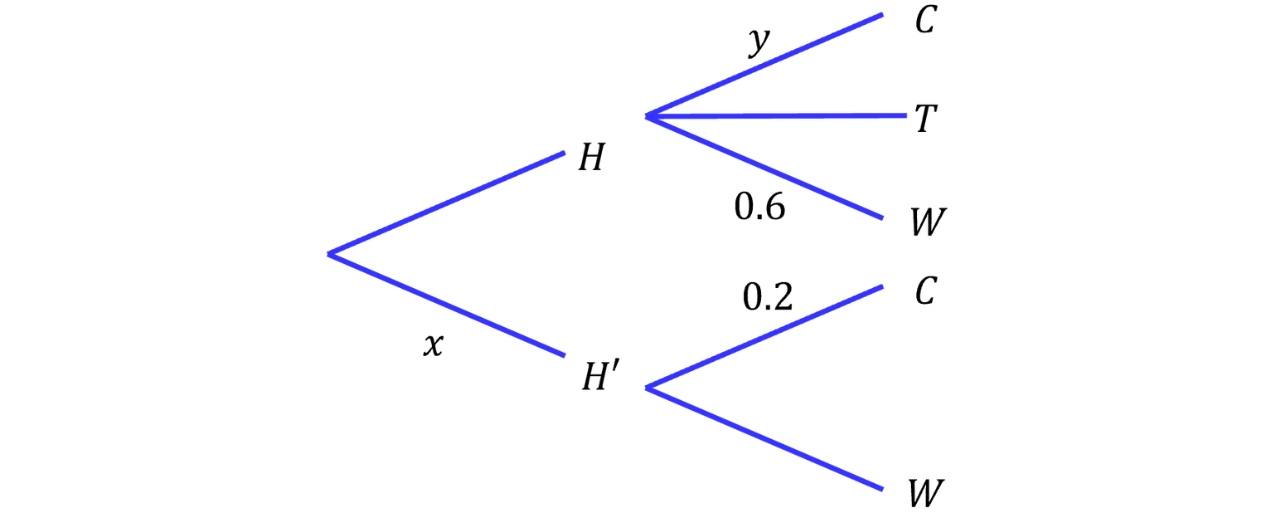
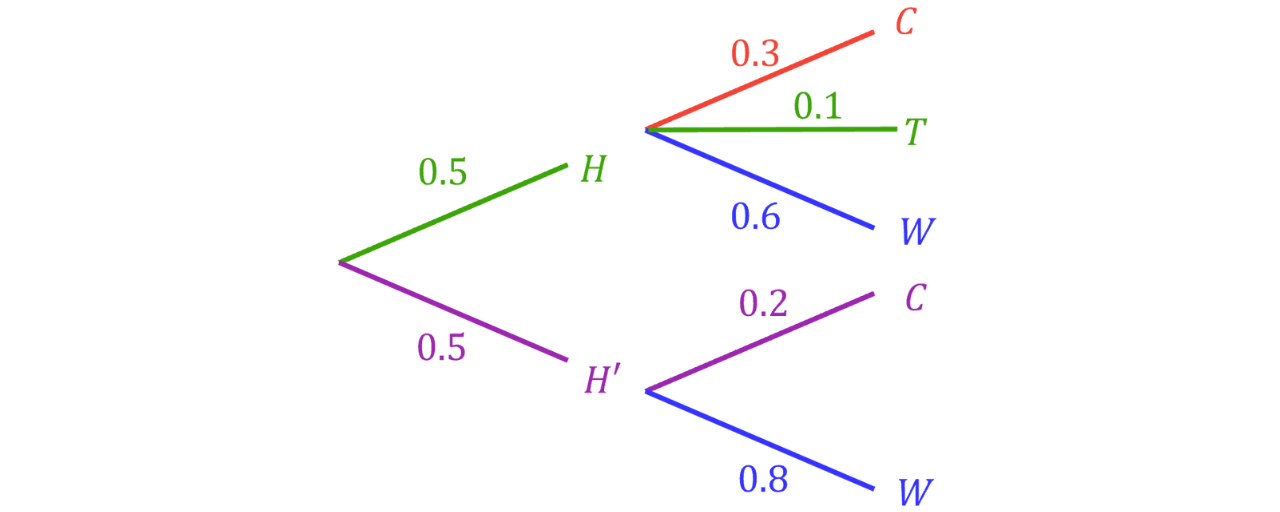
The partially completed tree diagram, where and are probabilities, gives information about Neil’s choice of drink each day.
• represents the event that it is a hot drink.
• represents the event that Neil drinks coffee
• represents the event that Neil drinks tea
• represents the event that Neil drinks water
Given that ,
a) find the value of .
Step 1: Complete the tree diagram.
Using the fact that the probability of the branches add to , we can fill in the missing probabilities of the tree diagram.
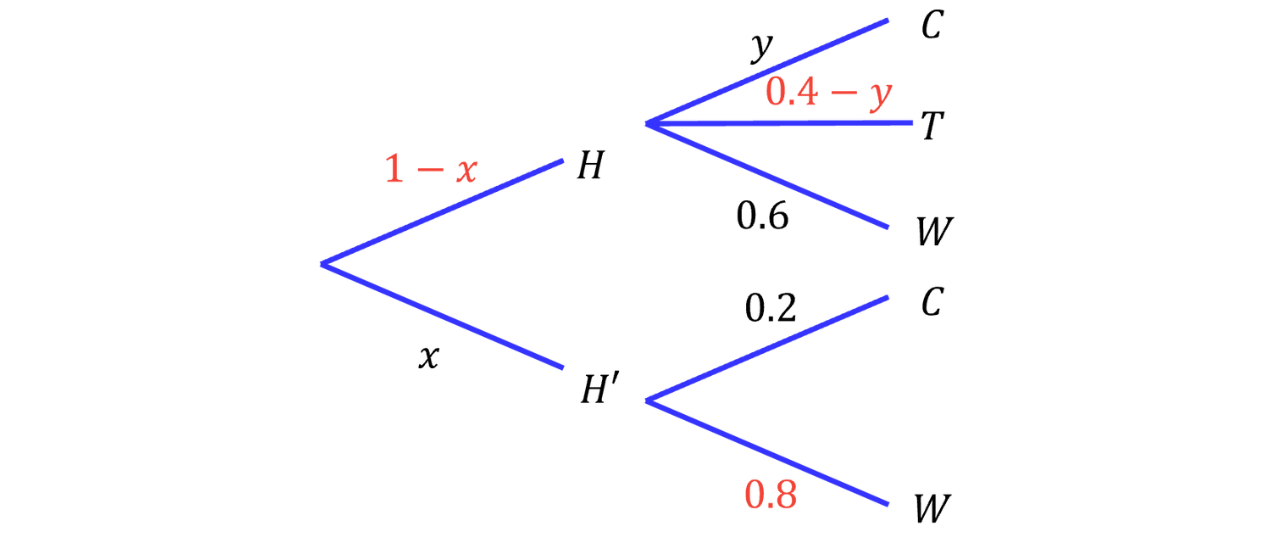
Step 2: Set up an equation on to solve for .
To find , we follow the branches that end with .
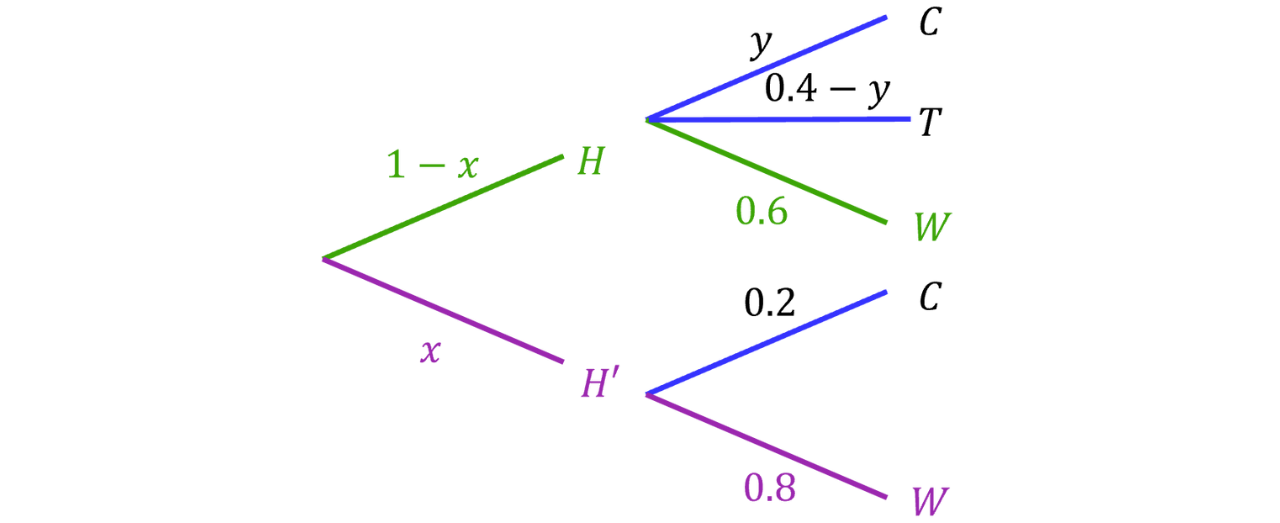
Expanding the brackets and simplifying,
Subtracting from both sides,
Given also that
b) find the value of .
Single Step: Rewrite using our conditional probability formula to then set up an equation, which we can solve for .
To find , we follow the branches that end with . To find , we follow the branch and then the branch.
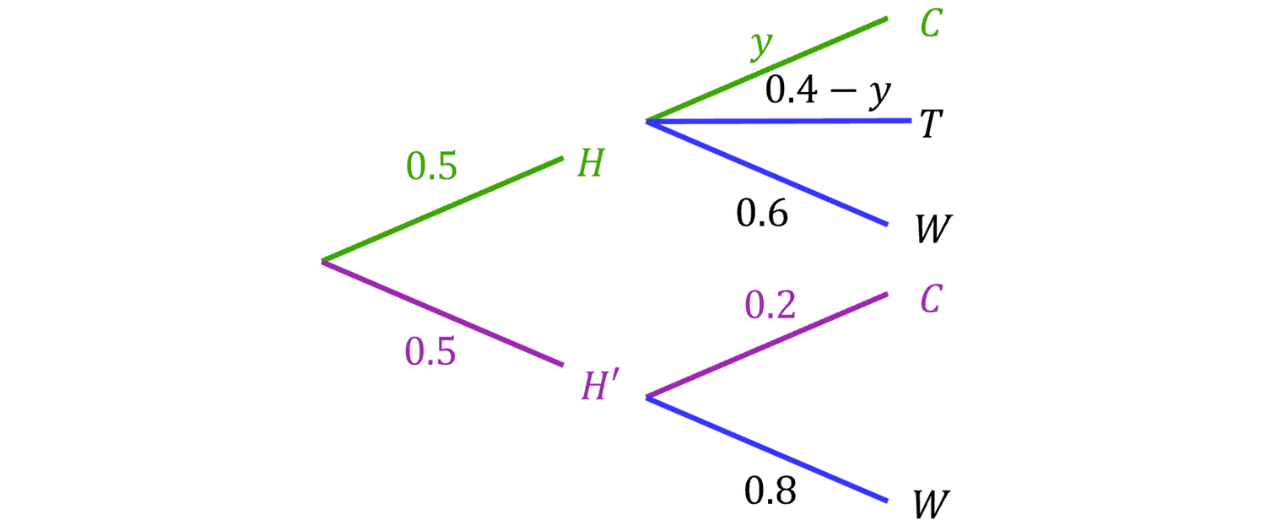
Multiplying both sides by ,
Expanding the brackets,
Bringing all terms to the LHS,
Dividing both sides by ,
c) Find the probability that Neil drinks tea.
Single Step: Compute the required probability using probabilities from the tree diagram.
To find the probability that Neil drinks tea, we follow the branch that ends at .
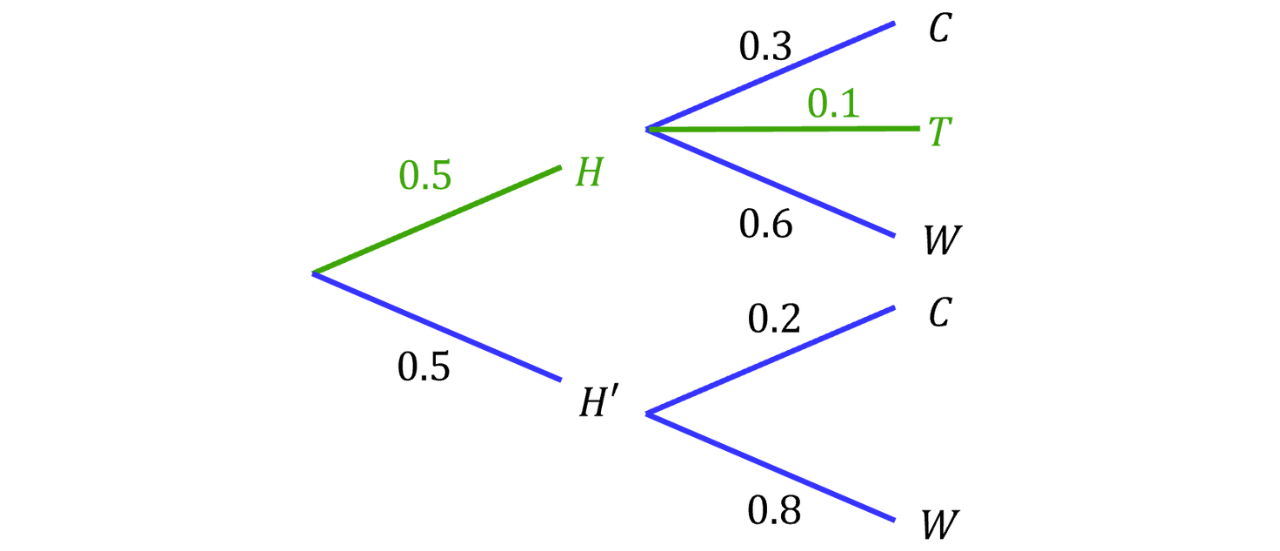
Given that Neil does not drink water today,
d) find the probability that he has a hot drink.
We want to find to find the probability that Neil has a hot drink, given that he did not drink water.
So, we’re finding .
Single Step: Compute the conditional probability by applying the formula.
To find , we follow the branches that don’t end with . We can find the probabilities from the branches that end with and then subtract from . To find , we follow the branch and then any branch that’s not .
e) Over the span of days, estimate the number of days Neil will have coffee.
Single Step: Find and then multiply that by to find the estimated number of days Neil drinks coffee.
As mentioned before, to find , we follow the branches that end with .
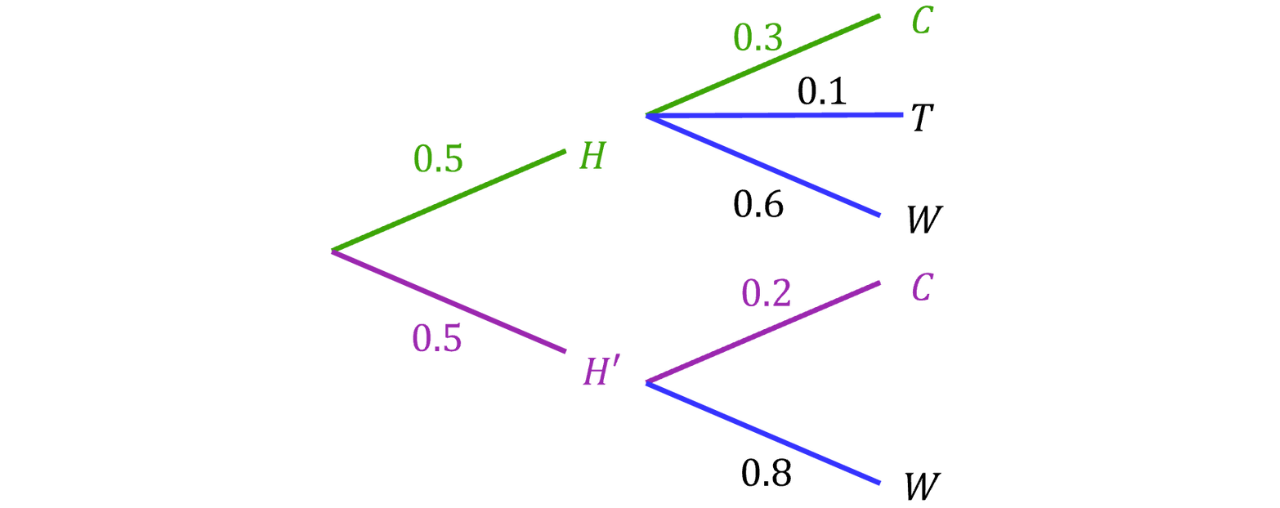
Multiplying by ,
Therefore, we estimate that Neil will have coffee on of the days.
No answer provided.
Challenging Question