Probability and Venn Diagrams
Neil Trivedi
Teacher

Probability and Venn Diagrams
Example 1:
The Venn diagram shows the probabilities of customers booking a Qatar Airways flight.
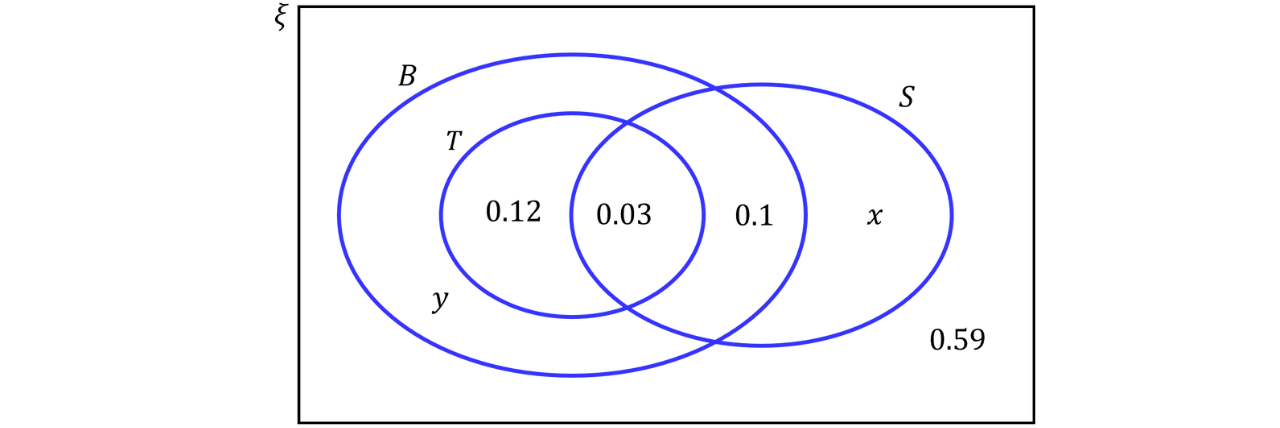
• is the event that a customer books business.
• is the event that a customer shops onboard
• is the event that a customer gets tomato juice
• and are probabilities.
a) Write down the probability that a customer books a business flight but doesn’t get tomato juice.
Single Step: Find the corresponding region in the Venn diagram.
This customer will be in set but not in set . For illustrative purposes, here is the shaded region, on the Venn diagram, which represents .
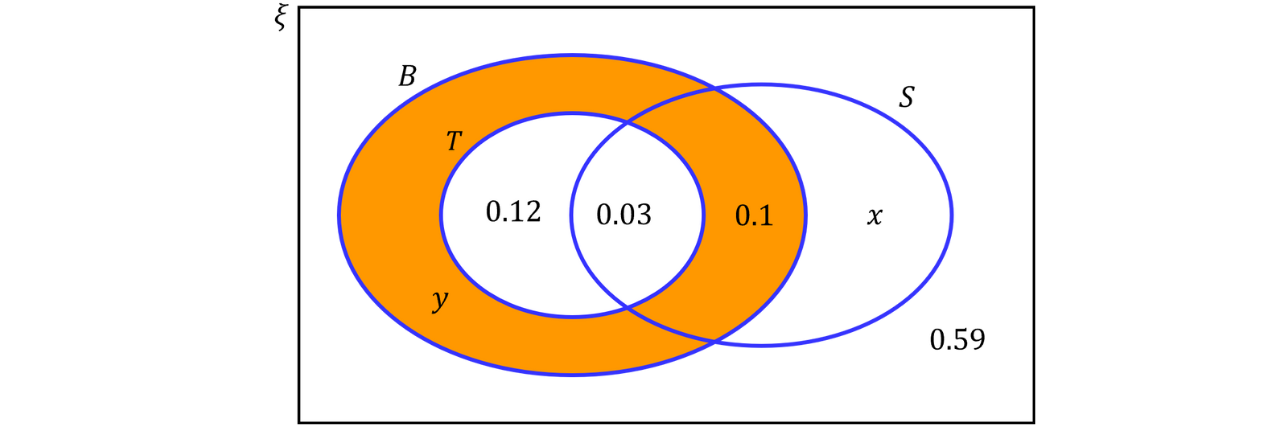
Observing the Venn diagram, we can see that .
Given that the events and are independent,
b) find the value of .
Step 1: Write down the formula for independence first so we know which probabilities to find.
Step 2: Find , , and using the Venn diagram.
Here is the shaded region, which represents on the Venn diagram.
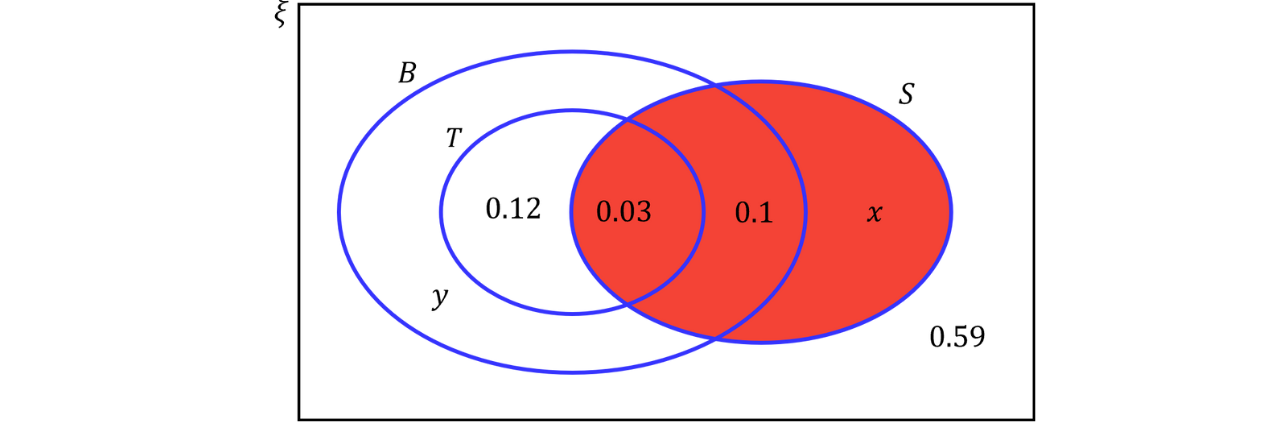
Here is the shaded region which represents .
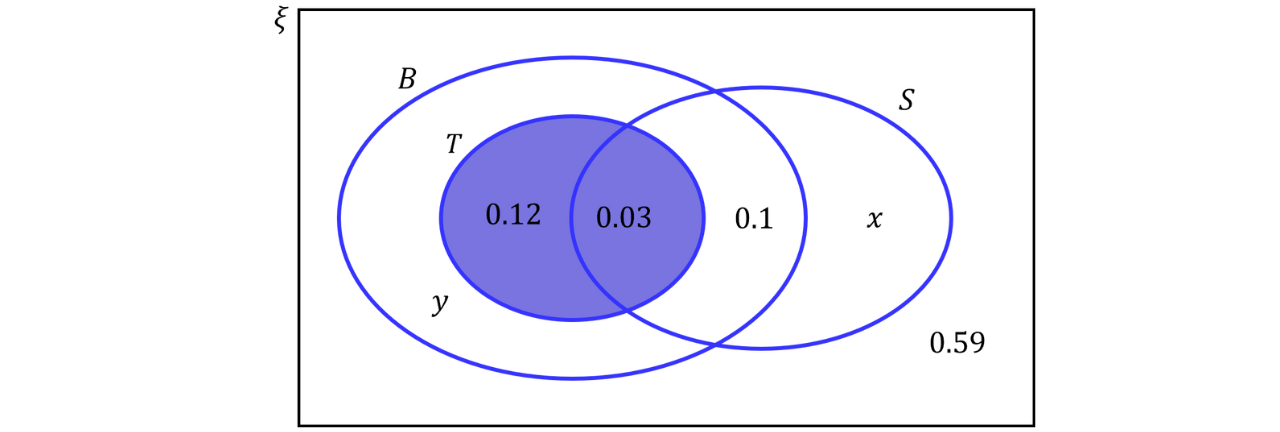
Here is the shaded region which represents .
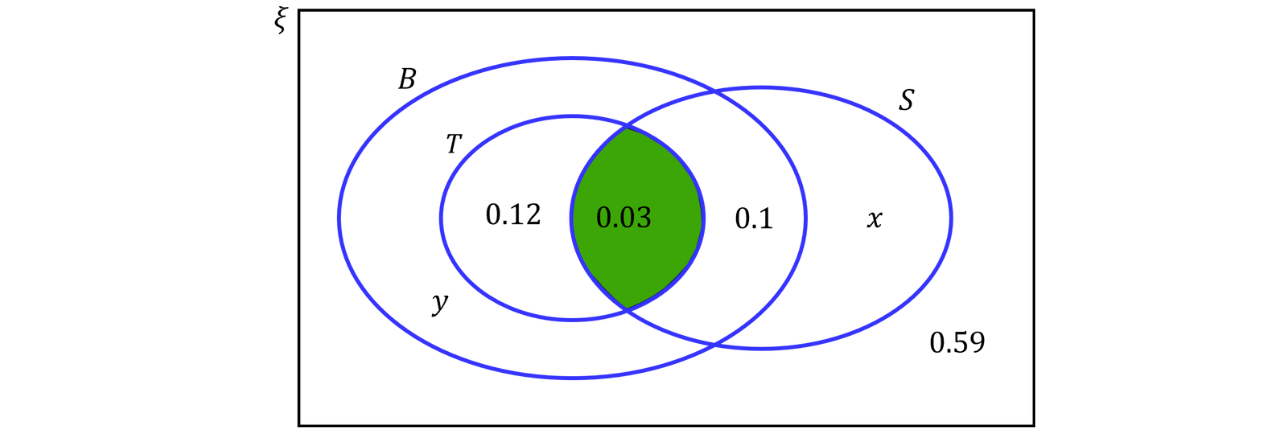
Step 3: Substitute our values and then rearrange to find .
Dividing both sides by ,
c) hence find the value of .
Single Step: The sum of probability of the Venn diagram should equal .
d) Find
i.
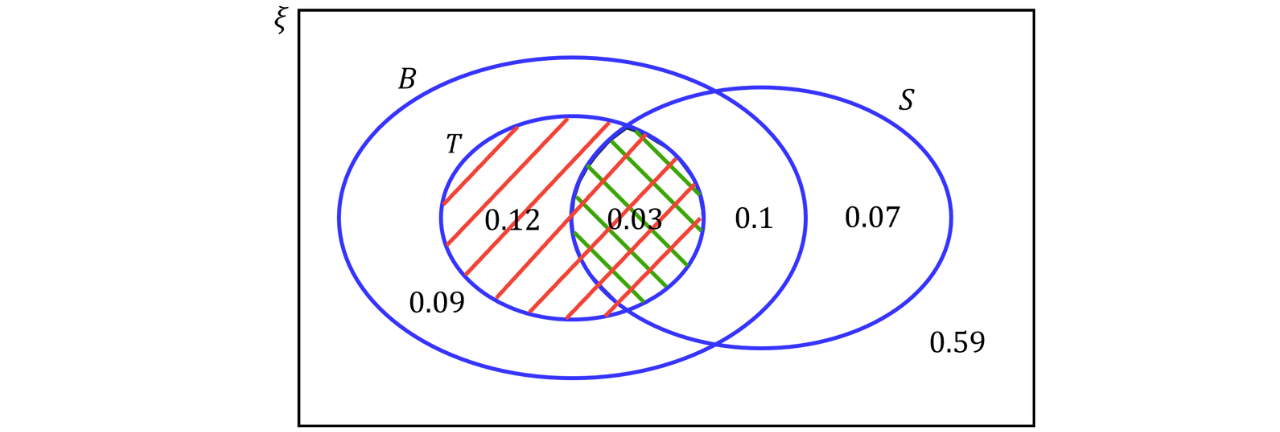
Single Step: Find the conditional probability using the formula.
We can use the Venn diagram to visualise the shaded regions that represent and .
ii.
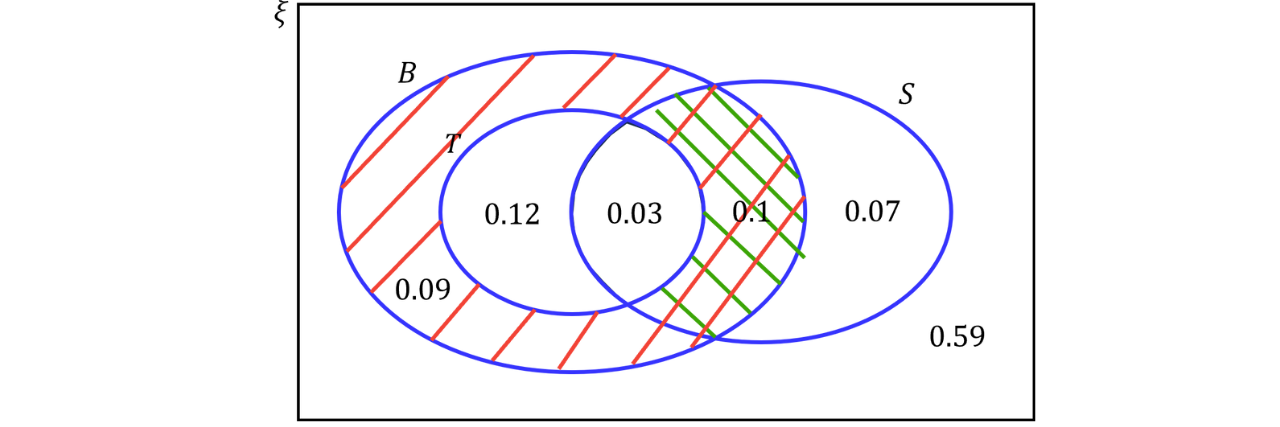
Single Step: Find the conditional probability using the formula.
We can use the Venn diagram to visualise the shaded regions that represent and .
A flight to Dubai is going to seat customers.
Of these customers,
• have booked Business class and had tomato juice.
• have booked Business class and did not have tomato juice.
e) Estimate how many of these customers will shop onboard.
Single Step: Making use of the probabilities found in both parts of (d) to estimate the number of customers required.
This is a conditional probability question. Given that a customer has booked business class and had tomato juice, what proportion will shop on board? This statement translates to the probability found in part di) which was . This means that of the business and tomato drinking customers will shop on board. There are of them so
We now need to do the same for the who booked business but did not have tomato juice. The probability of this group shopping on board was so
In total, we’d then have customers who are estimated to shop on board.
No answer provided.
Example 2:
Three events , and are such that
, and
Given that and are mutually exclusive, find
a)
Single Step: Recall the properties of mutually exclusive events.
For mutually exclusive events, so by the addition rule:
Given that and are independent,
b) show that .
Step 1: Write down two equations using the formula for independent events and the addition rule.
Using the formula for independence,
Using the addition rule,
Step 2: Solve for by collecting the 's together and subtracting from both sides.
c) Find .
Single Step: Apply the formula for conditional probability for independent events.
Given that ,
d) draw a Venn diagram to represent the events , and .
Single Step: Use the information we already have to find the missing probabilities and hence, draw the Venn diagram.
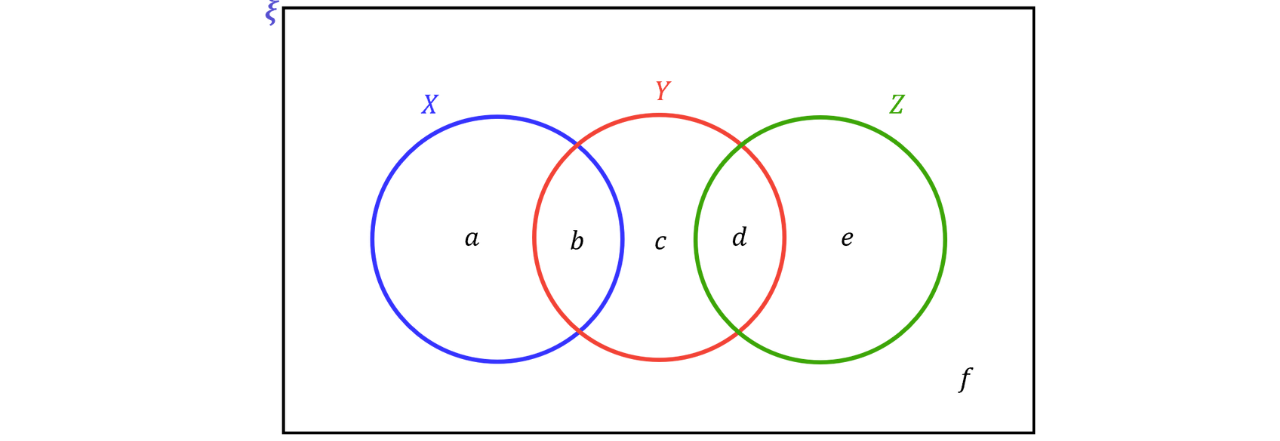
Currently, we know that , and . We were told that and are mutually exclusive so . So, our Venn diagram will have the following structure, and we’ll find the missing probabilities in our Venn diagram.
We know that and are independent so
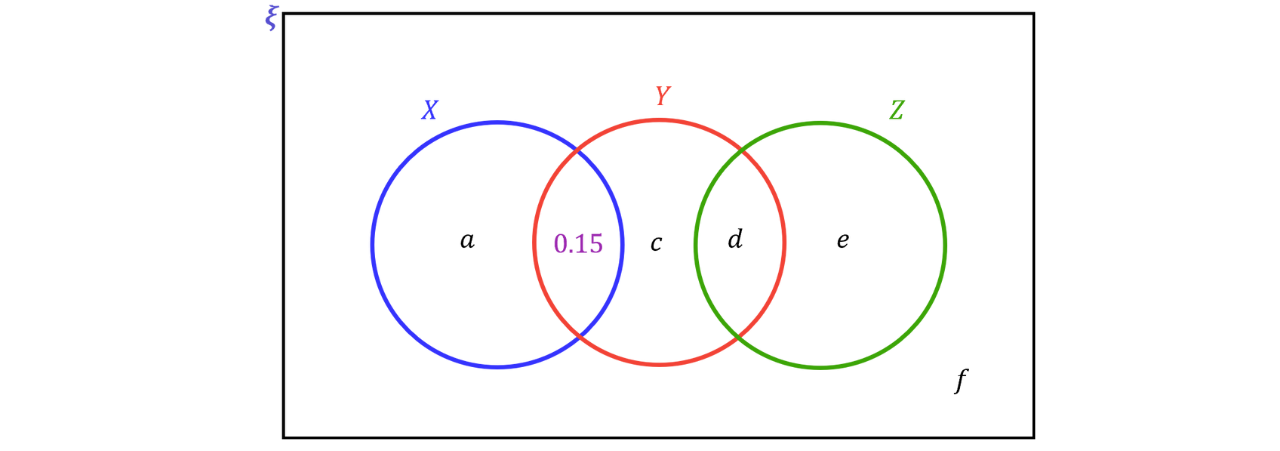
To note, we cannot assume that and are independent because the question doesn’t explicitly state it. So, we can’t just multiply and to get , which is denoted by .
Next, we can find the value of , which represents the region in but not in , i.e. , using the fact that .
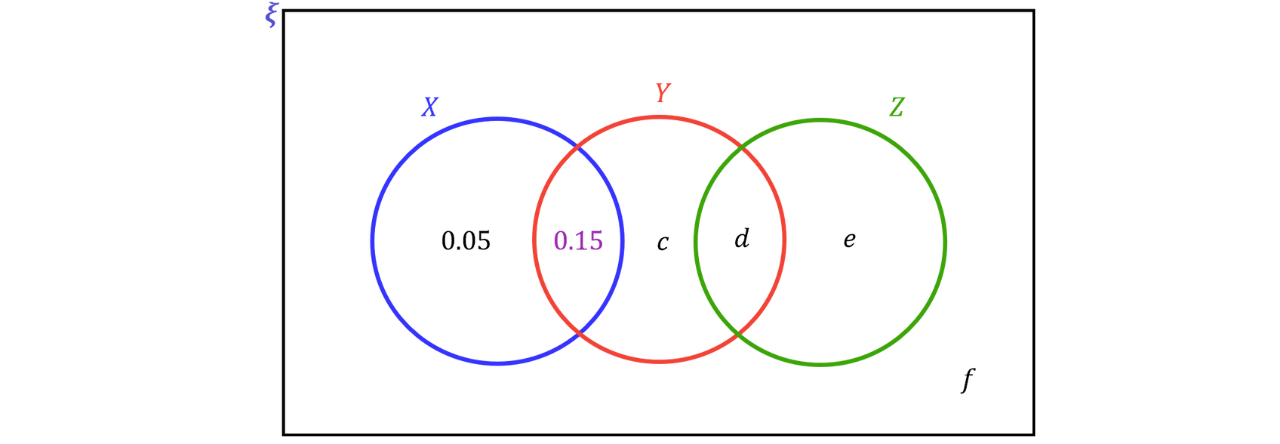
Then, we can work out , representing the region that’s outside , and , which is denoted by . We can use the fact that , which is given in the question. Here is the region that’s represented by this probability, which is everywhere outside and .
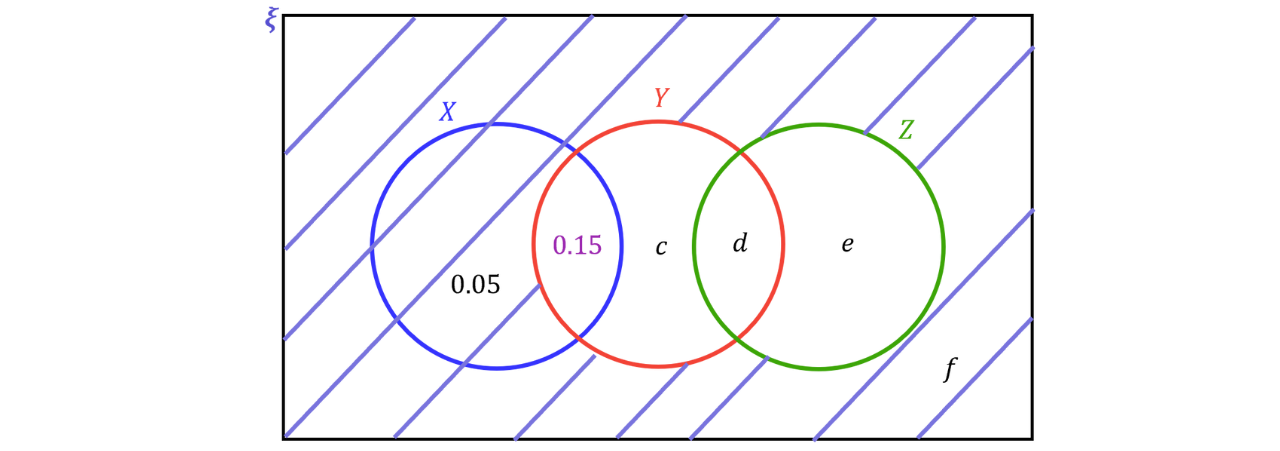
We can see in the Venn diagram that to get , we need to subtract the region that is represented by .
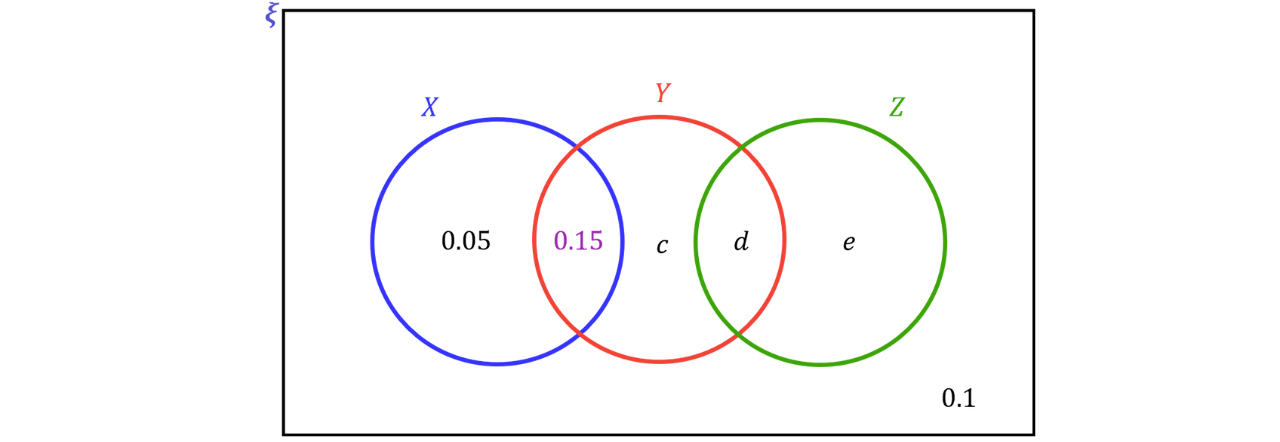
To find , and , we can form some equations using what we now know to solve.
Using the fact that all probabilities add to ,
Using the fact that ,
Substituting the equation for into equation ,
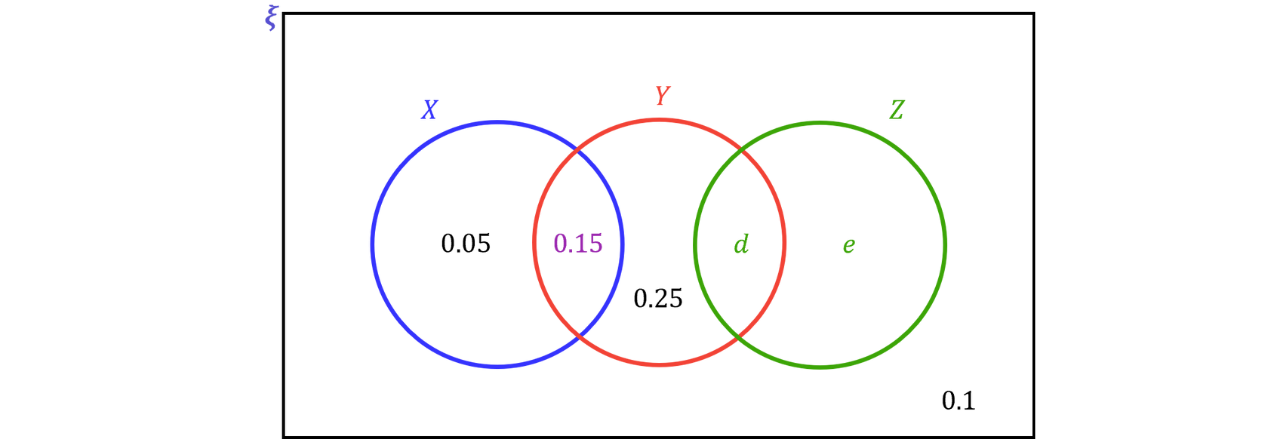
Now, let’s find , using the fact that .
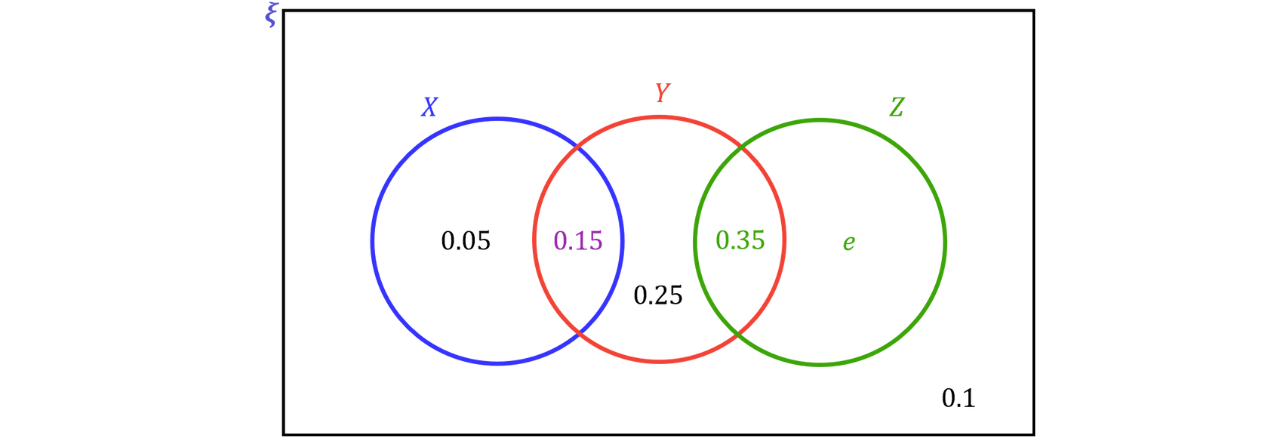
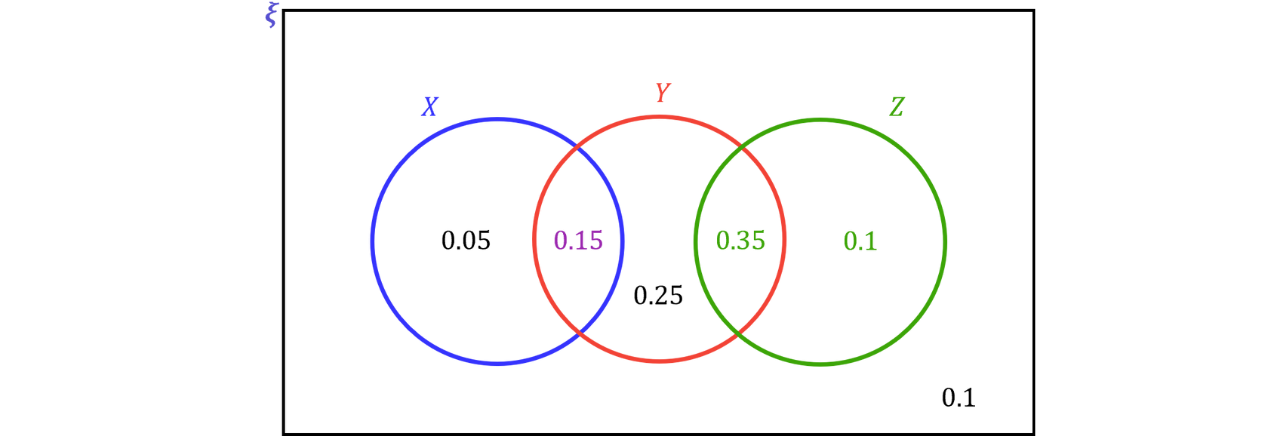
Finally, to find , we can use the fact that and the value we found for .
We have found all the missing probabilities, and we will get the following completed Venn diagram.
No answer provided.
Challenging Questions