Set Notation and Venn Diagrams
Neil Trivedi
Teacher

Set Notation and Venn Diagrams
Definitions and Set Notation:
• A set is a collection of distinct objects, which are called elements. Sets are denoted as where the elements are inside the curly brackets.
For example, is the set containing the elements and and red green blue is the set containing the elements red, green and blue.
• represents the whole set, and we normally use this symbol on Venn diagrams.
• means “is an element of”.
• ( union ) represents anything that’s in set or set or both.
• ( intersection ) represents anything that’s in both set and set .
• or ( complement) represents anything that’s not in set .
• means given (this is conditional probability).
• represents the empty set i.e. a set with zero elements.
Here are some examples of common sets used in mathematics:
• represents the set of all natural numbers .
• represents the set of all integers .
• represents the set of all rational numbers numbers of the form with .
• represents the set of all real numbers (i.e. any number that can represent a point on a number line).
• represents the set of all complex numbers (Further Mathematics only).
Here are examples of some Venn diagrams showing various shaded regions and what they represent.
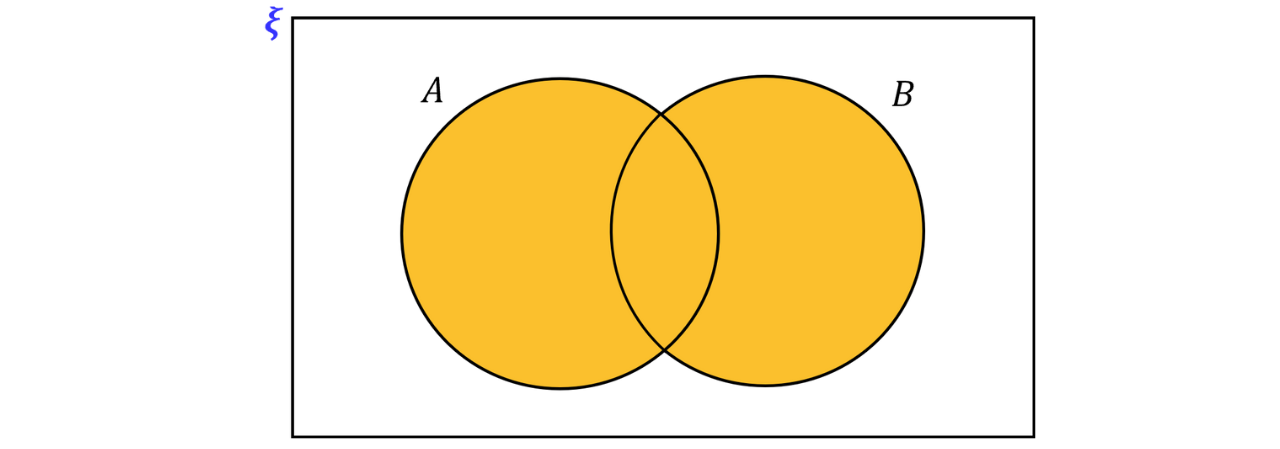
The diagram above shows the shaded region representing all elements that are either in set or set or both. Therefore, this region represents .
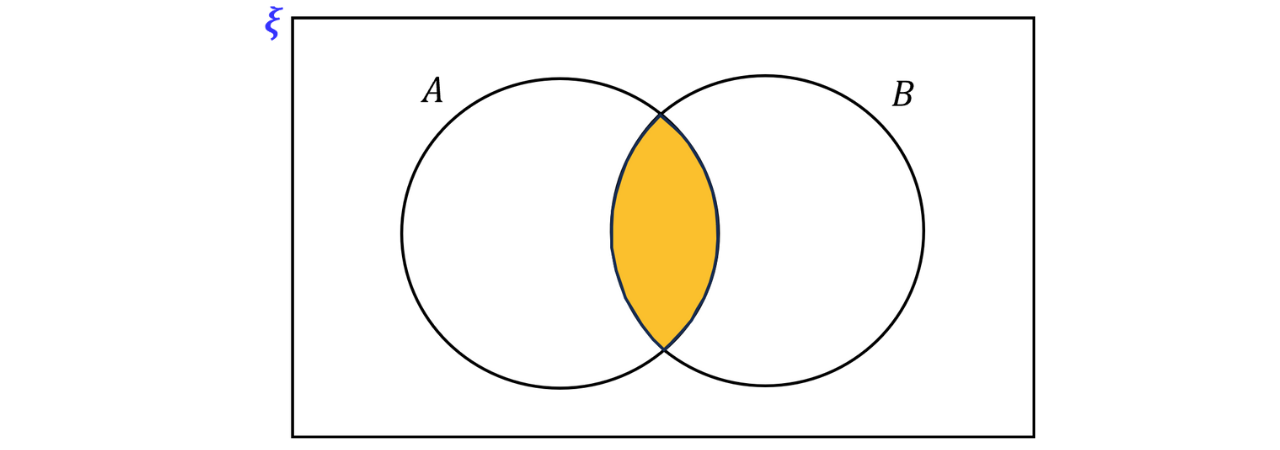
The diagram above shows the shaded region representing all elements that are in both set AND set only. Therefore, this region represents .
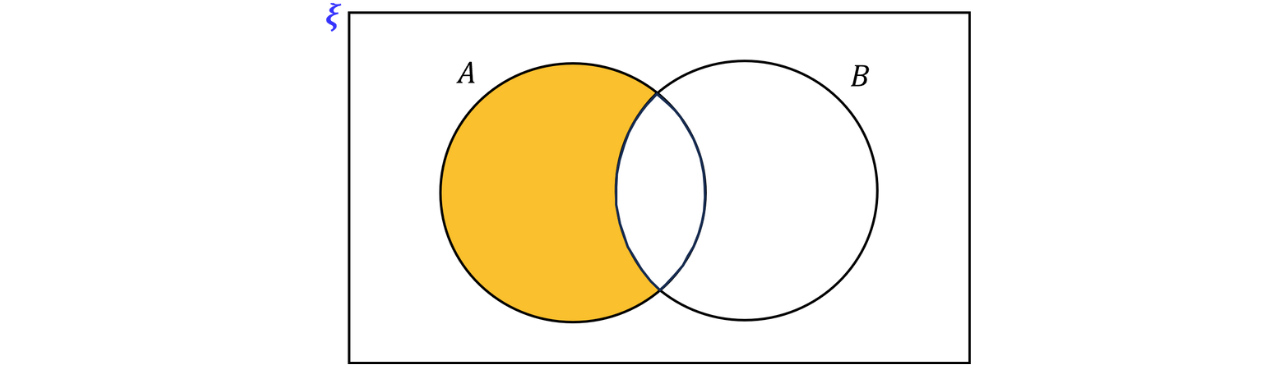
The diagram above shows the shaded region representing all elements that are in set but are NOT in set . Therefore, this region represents .
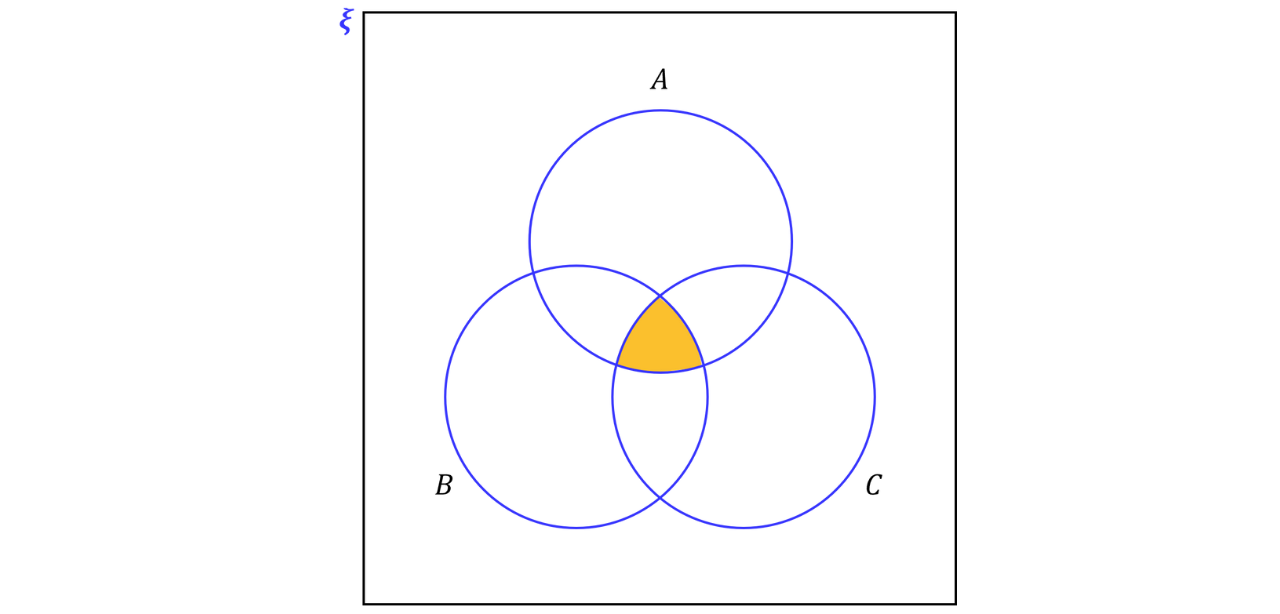
The diagram above shows the shaded region representing all elements that are in set AND set AND set only. Therefore, this region represents .
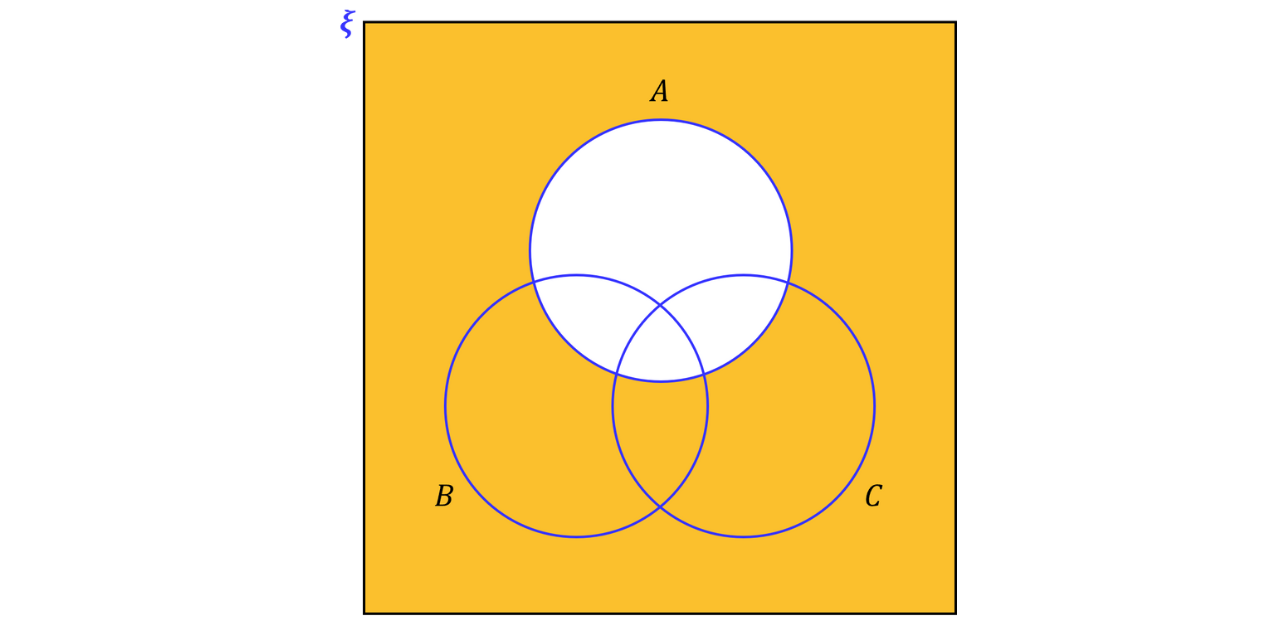
The diagram above shows the shaded region representing all the elements that are not in set . Therefore, this region represents .
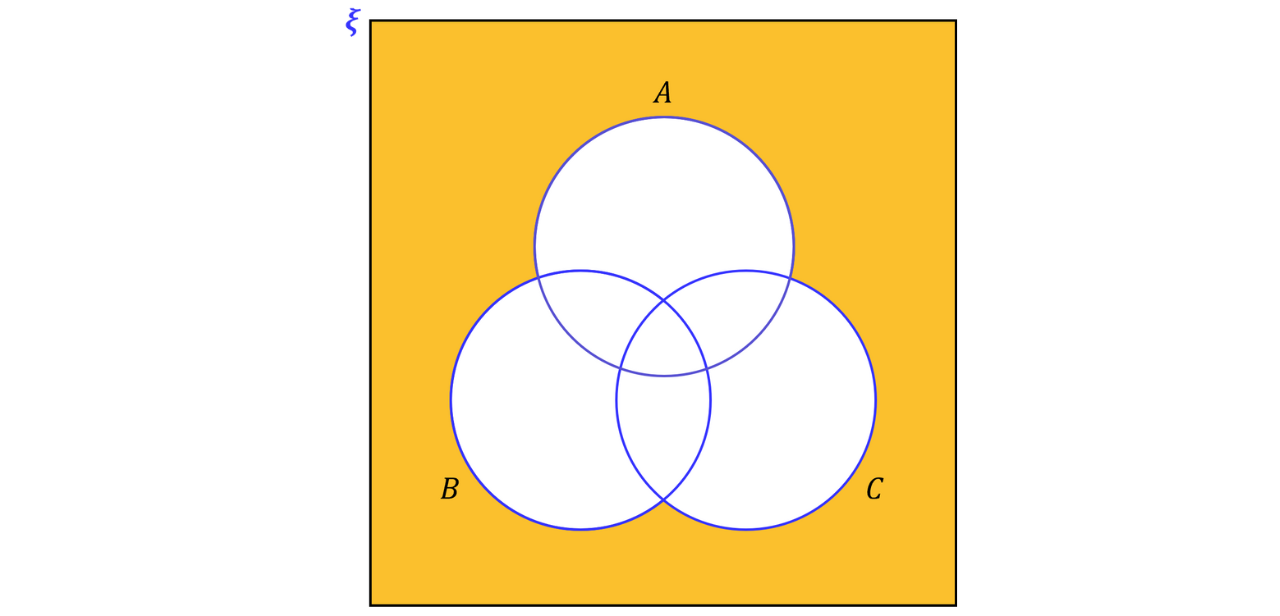
The diagram above shows the shaded region representing all elements that are not in set nor set nor set .
This region can be written as since the elements are outside all three sets. However, this can be rewritten as .
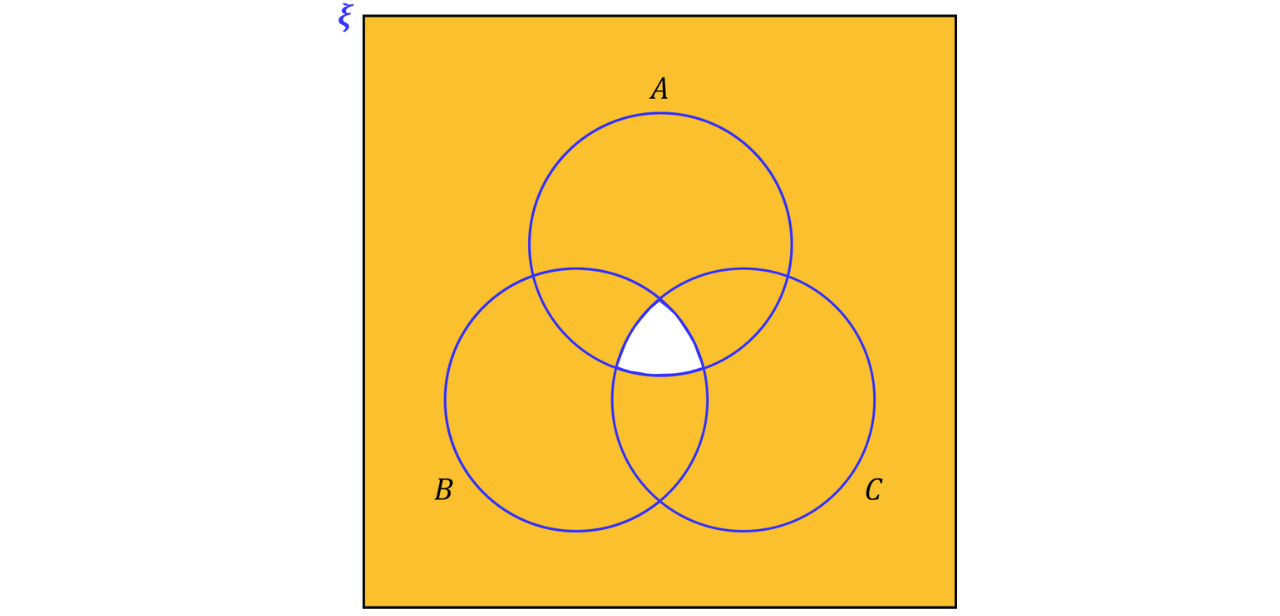
The diagram above shows the shaded region representing all elements that are not in all three sets , AND .
This region can be written as since an element only needs to be missing from at least one of the sets , or to be included. However, this can be rewritten as , which represents all elements except those that belong in all three sets.
Example:
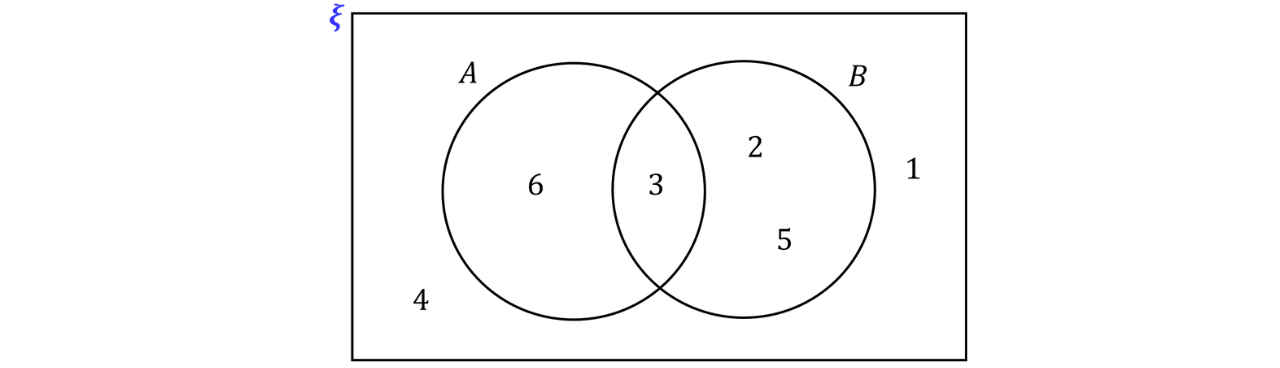
• the whole sample space ( to )
• multiples of on a standard six-sided die.
• prime numbers on a standard six-sided die.
Find:
a)
This means all elements that are not in set . Here is the Venn diagram where the shaded region represents .
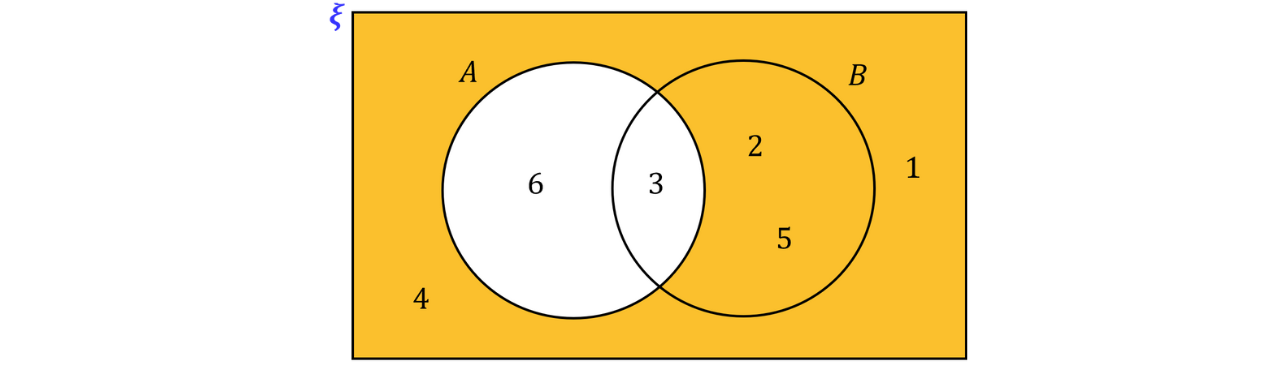
Observing the Venn diagram, the elements that are not in set are , , and . Therefore,
Note: the numbers do not have to be in order.
b)
This means all elements that are in either set or set or both. Here is the Venn diagram where the shaded region represents .
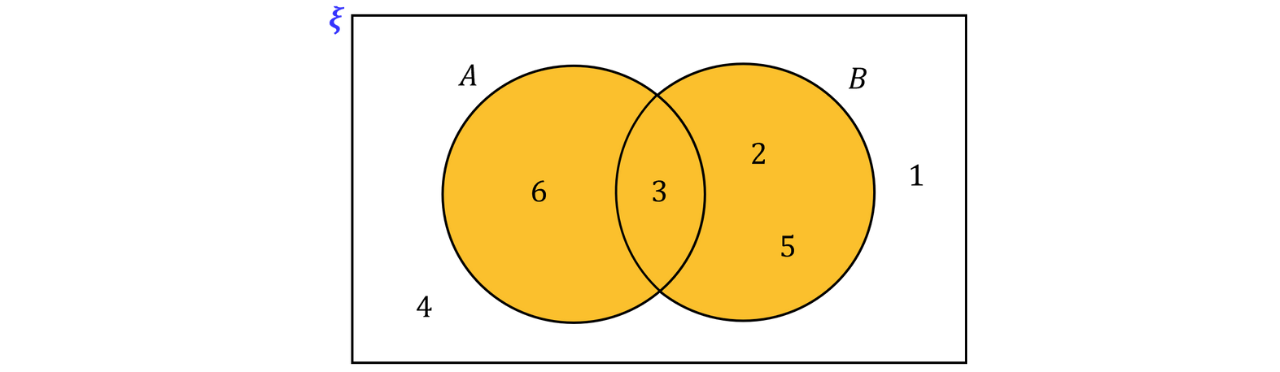
Observing the Venn diagram, the elements that are in either set or set or both are , , and .
Therefore,
c)
This means all elements that are in set and not in set . Here is the Venn diagram where the shaded region represents .
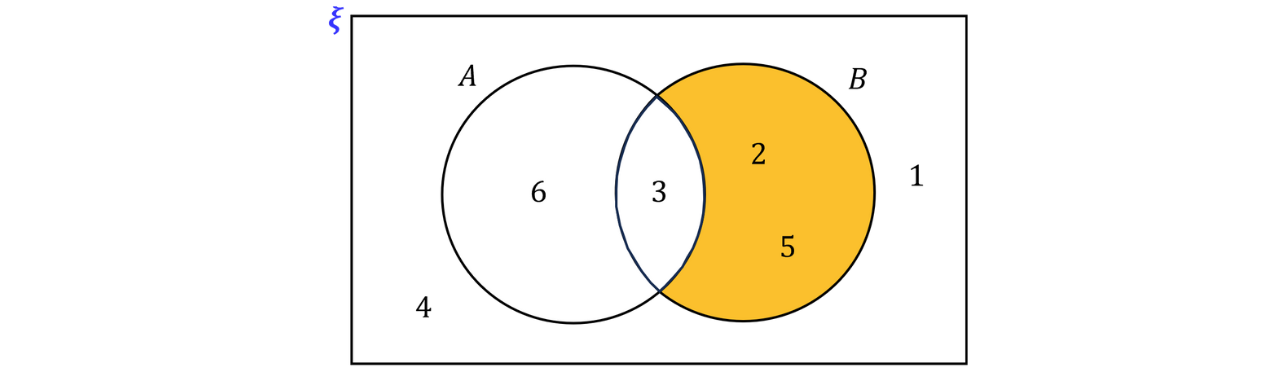
Observing the Venn diagram, the elements that are in set and not in set are and . Therefore,
d)
This means all elements that are not in both set and set . Here is the Venn diagram where the shaded region represents .
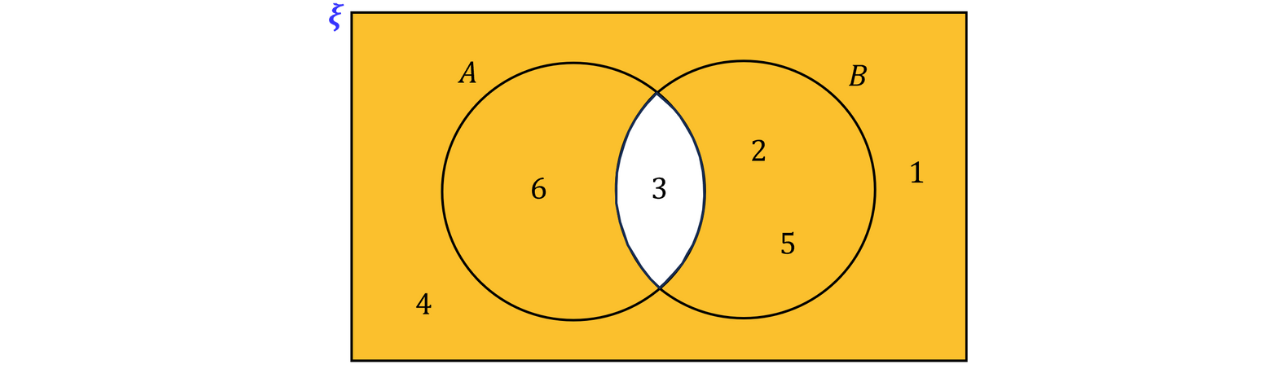
Observing the Venn diagram, the elements that are not in both set and set are , , , and .
Therefore,
No answer provided.
Practice Question