Solving with Modulus Functions
Neil Trivedi
Teacher

Solving with Modulus Functions
Steps to solve any problems involving modulus functions:
E.g., Solve .
1. Sketch both graphs of and .
2. Label each part of the curves where necessary.
3. Solve each part of the graphs where two curves intersect.
Example 1:
a) Sketch the graph of .
Single Step: Since the function is inside the modulus, we reflect up any section below the axis.
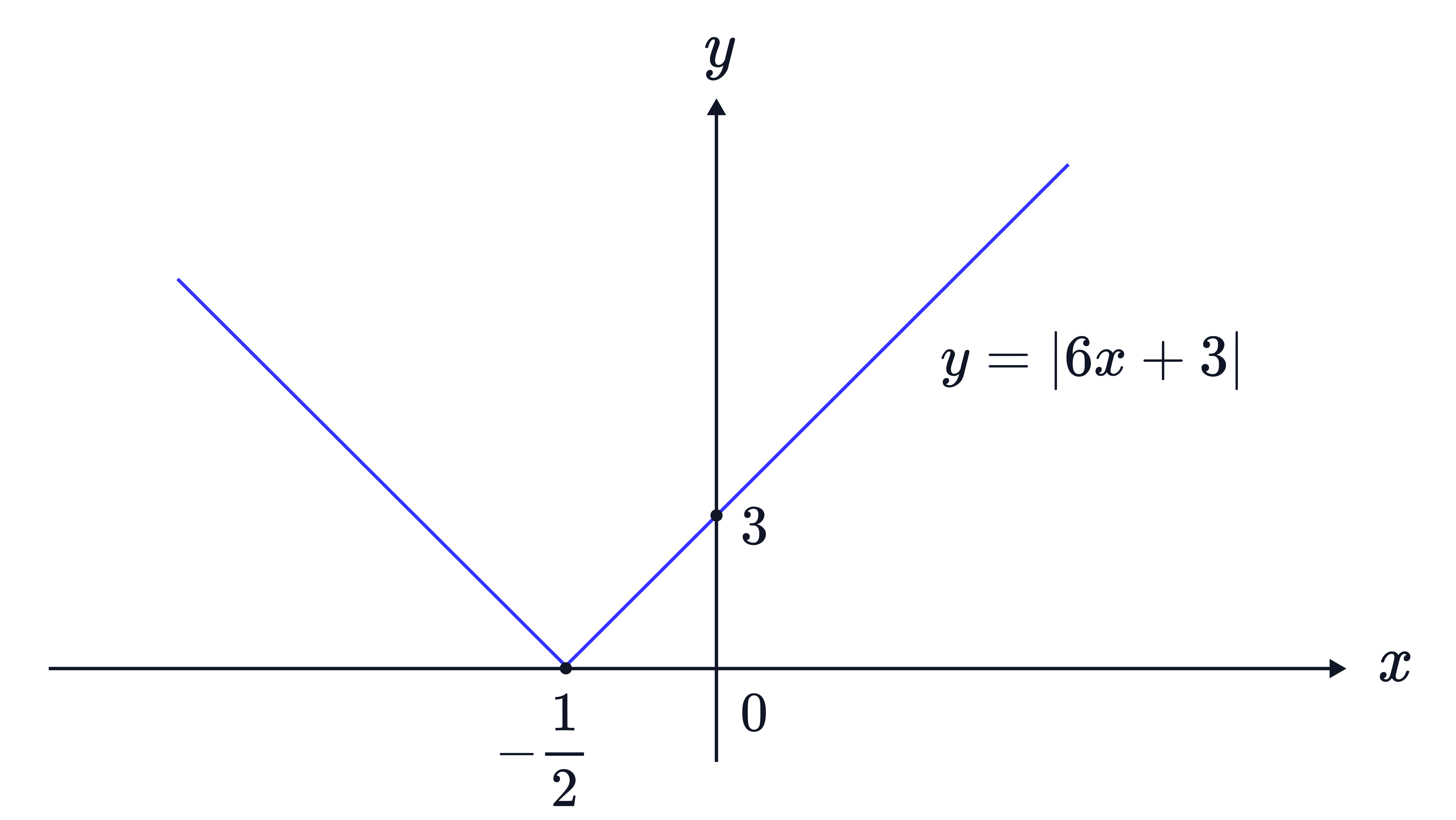
b) Hence, or otherwise, solve the equation .
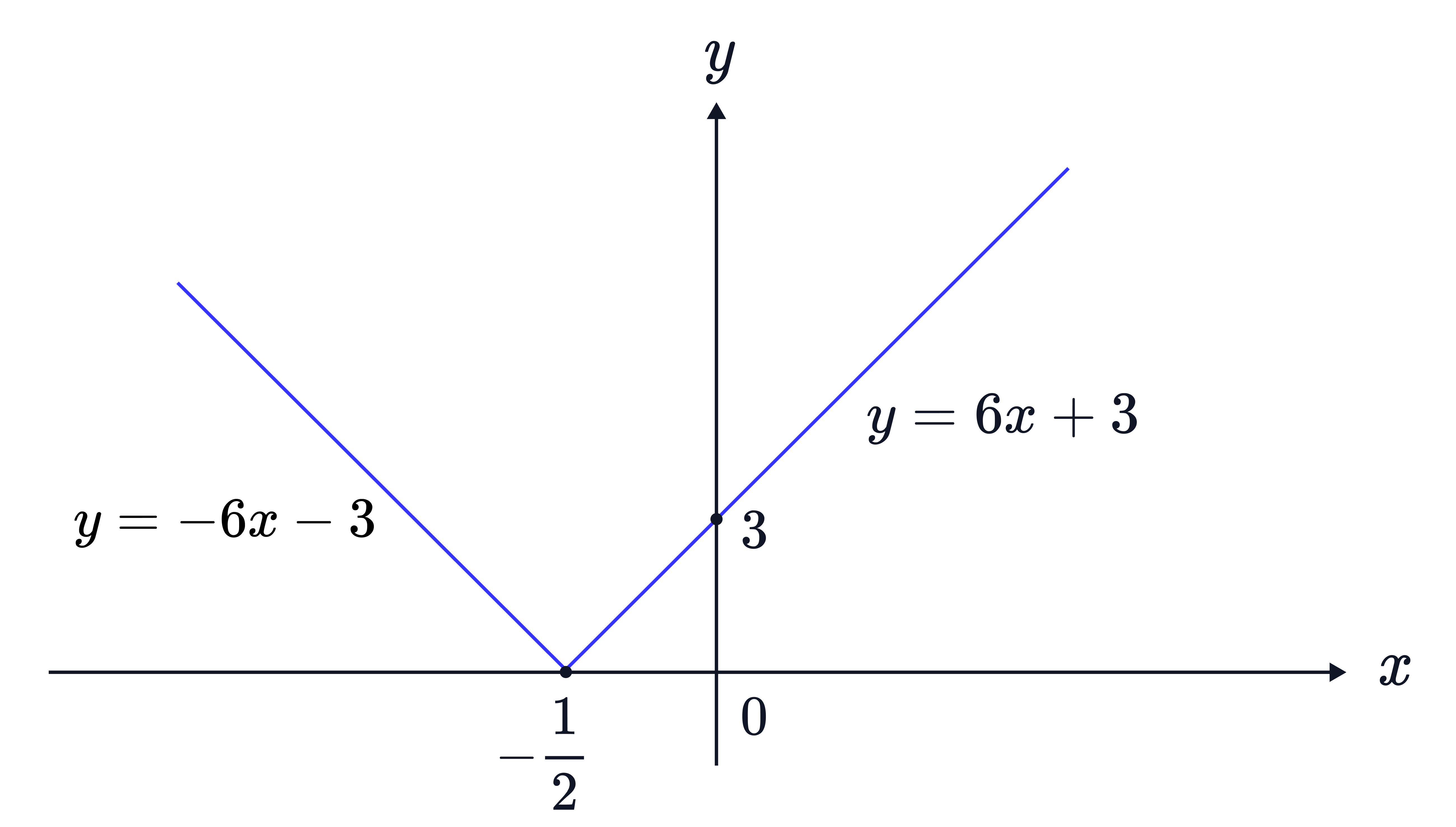
Step 1: Label each part of the graph from part (a) separately.
Remember, if , then or , so when we remove the modulus, the function inside (the argument) is either positive or negative. To tell which is which, we just observe which part of the function has a positive or negative gradient. Clearly, the right side of the vertex has a positive gradient, so the equation of that line will be . The line to the left of the vertex has a negative gradient, so the equation of that line will be .
Step 2: Add the line with equation onto the diagram above.
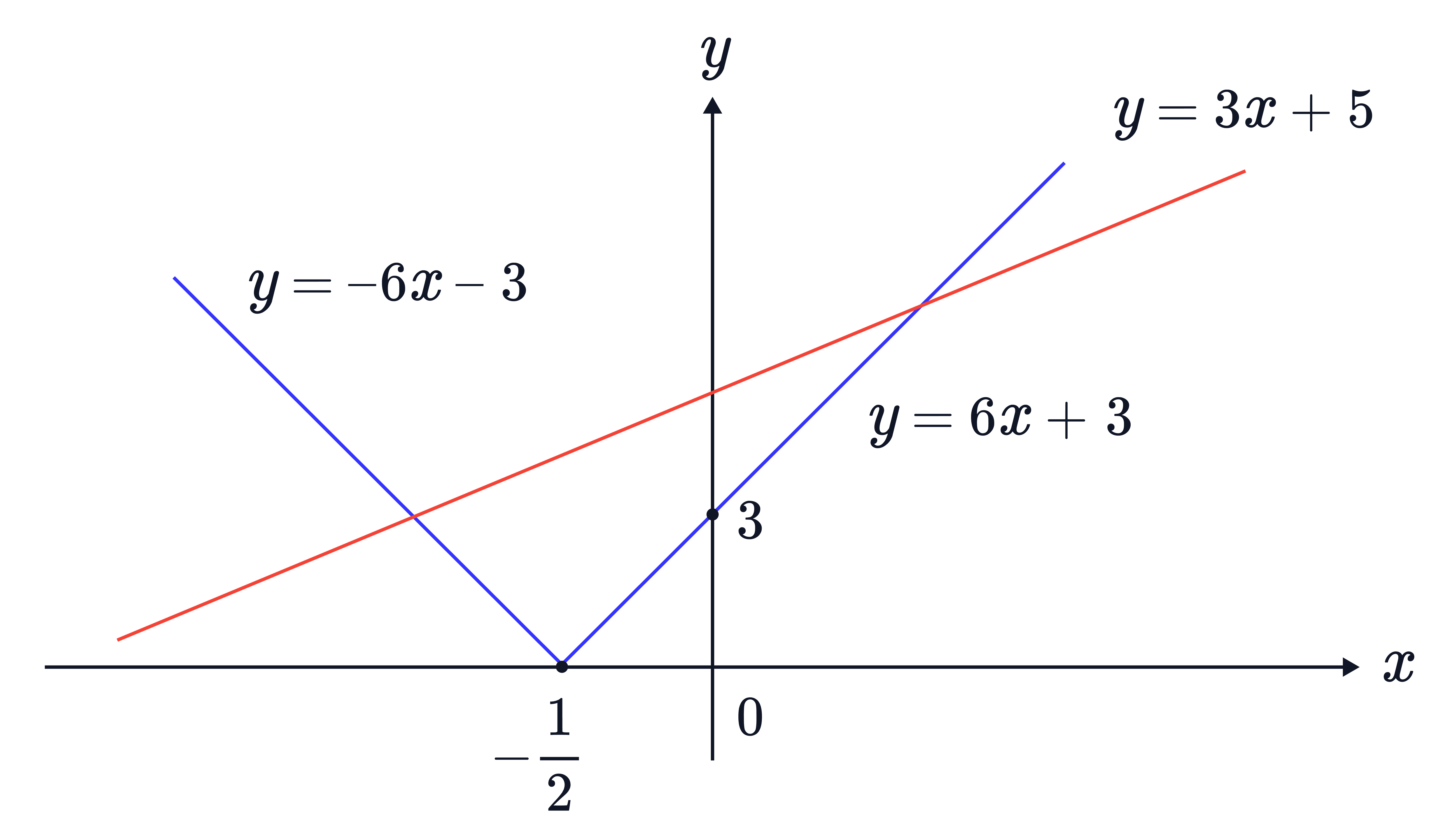
Step 3: Find the points where the equations intersect.
On the left, we have the line and intersecting. So, we have
On the right, we have the line and intersecting. So, we have
Therefore, we have solutions and .
No answer provided.
Example 2:
Find the range of the possible values of that satisfy:
Step 1: Plot the two equations and label each line separately.
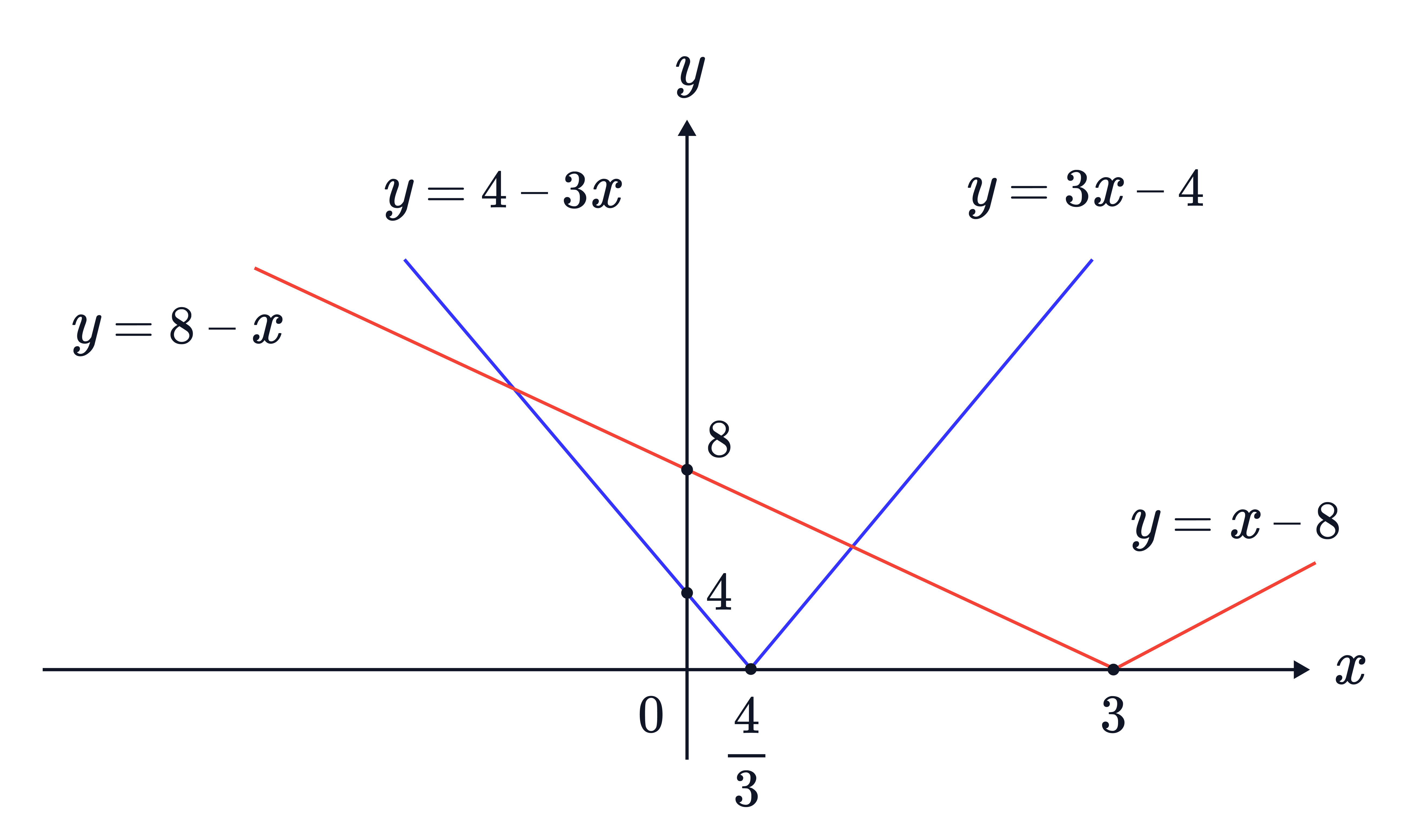
Step 2: Find the points where the equations intersect.
On the left, we have the line and intersecting. So, we have
On the right, we have the line and intersecting. So, we have
Step 3: Put the values obtained into inequalities by referring to the graph.
We see that the equation is above the equation between and .
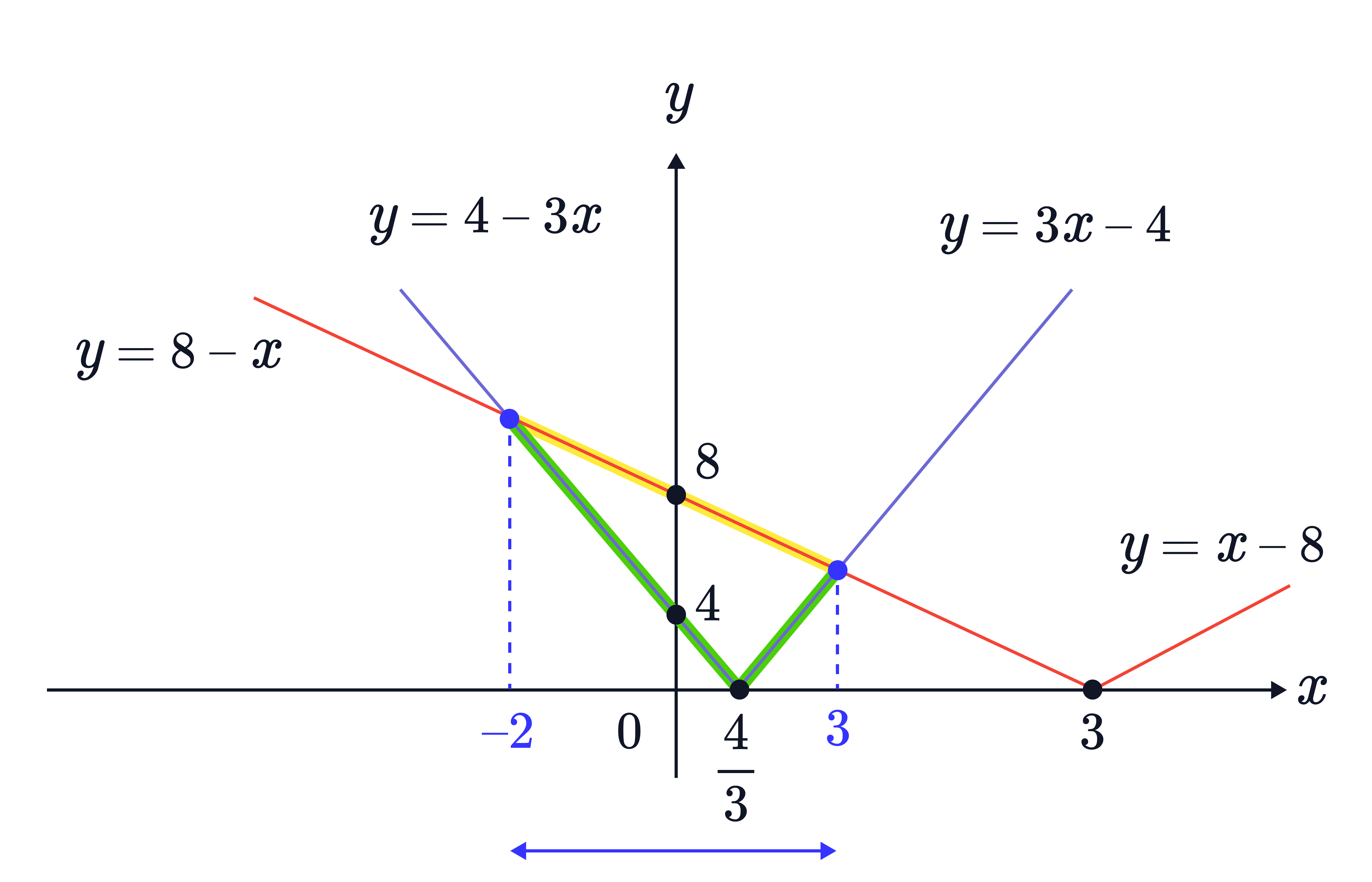
Therefore, we obtain the inequalities
No answer provided.
Challenging Question