Statics of Rigid Bodies
Neil Trivedi
Teacher

Statics of Rigid Bodies
Statics of rigid bodies is a field of mechanics that studies objects that do not deform and are at rest. Being at rest means they do not move or rotate. The object must be in equilibrium, meaning:
• The sum of all forces on it is zero (no linear motion).
• The sum of all moments about any point is zero (no rotation).
Similar to solving equilibrium of forces and moments questions, we start by resolving all forces into their horizontal and vertical components (parallel to and perpendicular to the inclined plane for some questions). We then equate the forces and/or the clockwise/anti-clockwise moment about a point, which allows us to solve for unknown distances or forces either individually or simultaneously.
Ladders
Example 1:
A ladder of length m and mass kg has one end resting on rough horizontal ground and its other end resting against a smooth vertical wall. The ladder lies in a vertical plane perpendicular to the wall and makes an angle to the ground where . The coefficient of friction between the ladder and the ground is .
A teenager of mass kg stands on the ladder at a point where m. The ladder is modelled as a uniform rod and is at the point of slipping, and the teenager is modelled as a particle.
Find the value of .
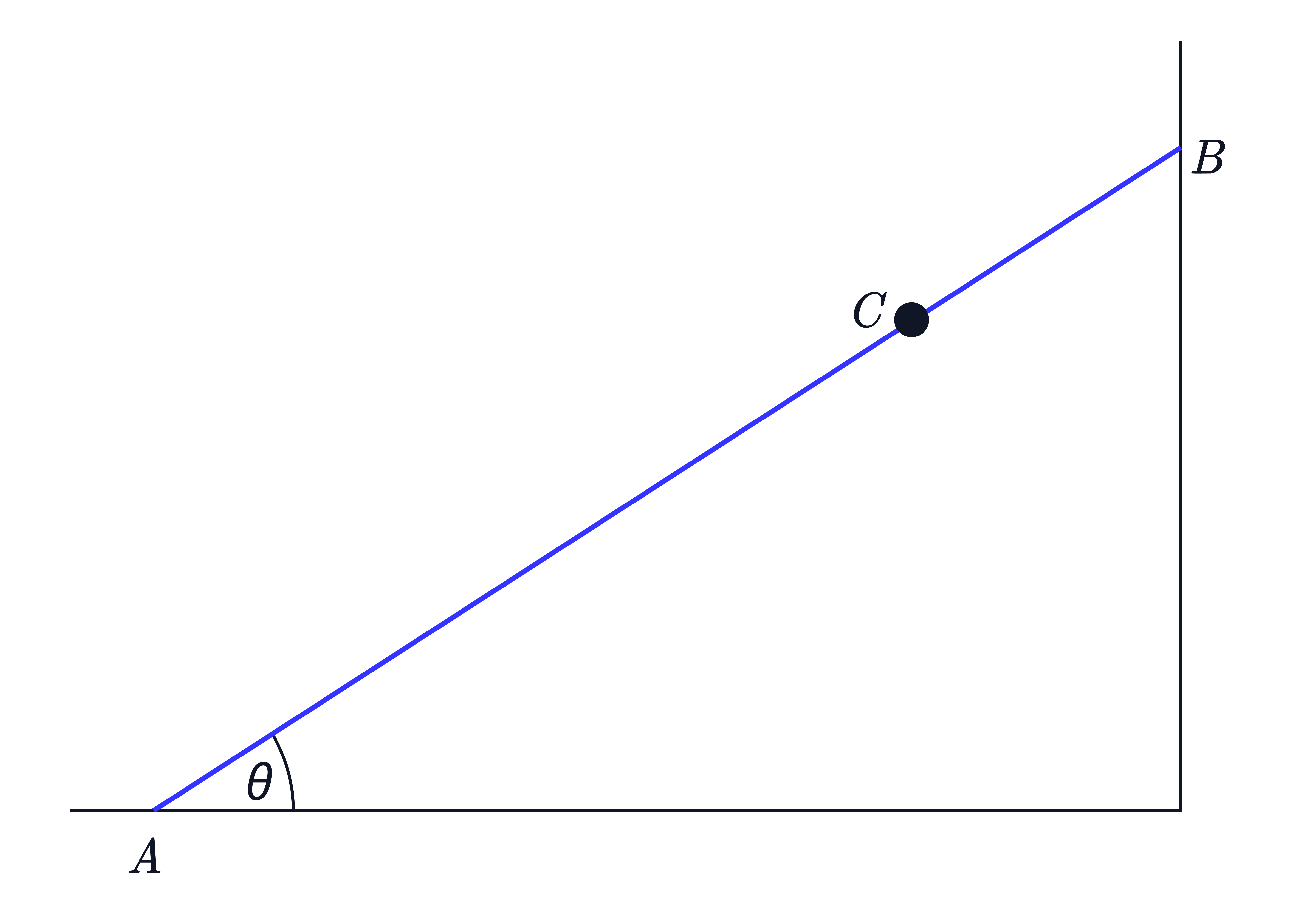
Step 1: Draw the force diagram
• - the weight of the ladder, acting at the centre
• - the weight of the teenager acting m along the ladder from point or m from the centre of the ladder
• - the normal reaction (contact force) of the ladder and the ground
• - the normal reaction of the ladder and the wall
• - the maximum value of friction since we are in limiting equilibrium acting in the opposite direction of where the ladder would move if friction did not exist.
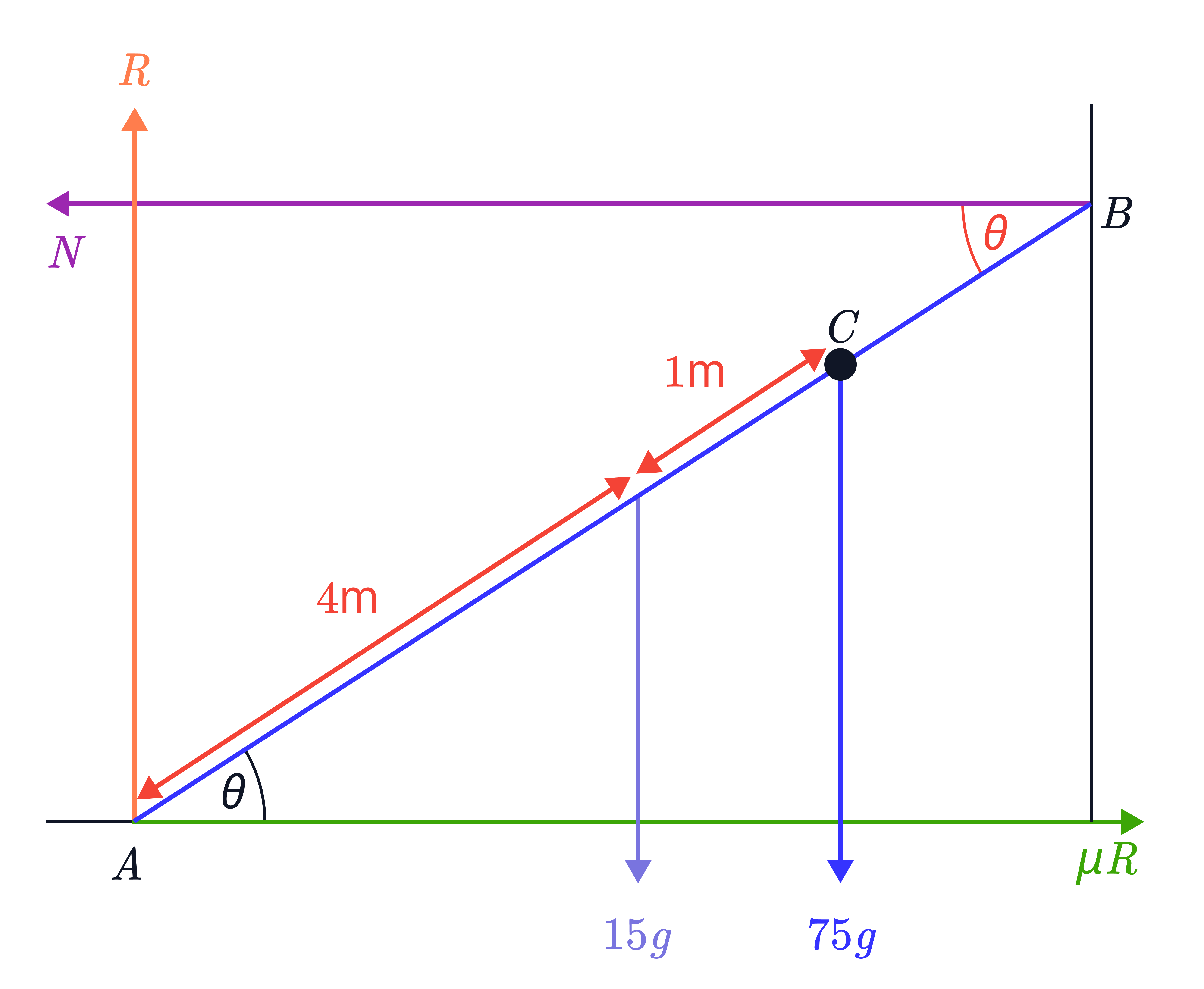
Step 2: Resolve horizontal and vertical force.
Vertical:
Horizontal:
Step 3: Take moments about point A.
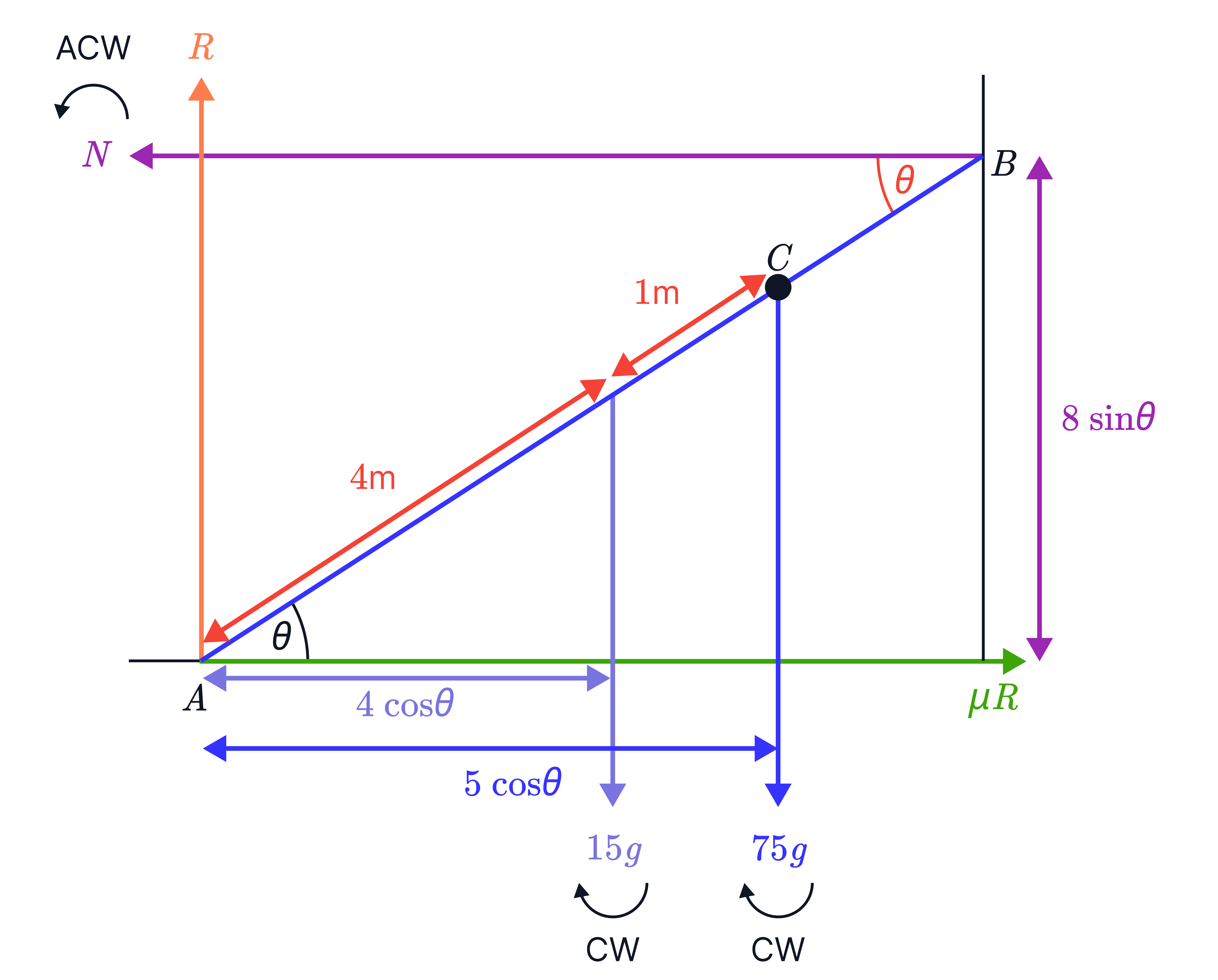
Clockwise moments Anticlockwise moments
and Moment force Force Perpendicular distance
We know , we can draw the triangle out using the ratio and use Pythagoras’ Theorem to find and .
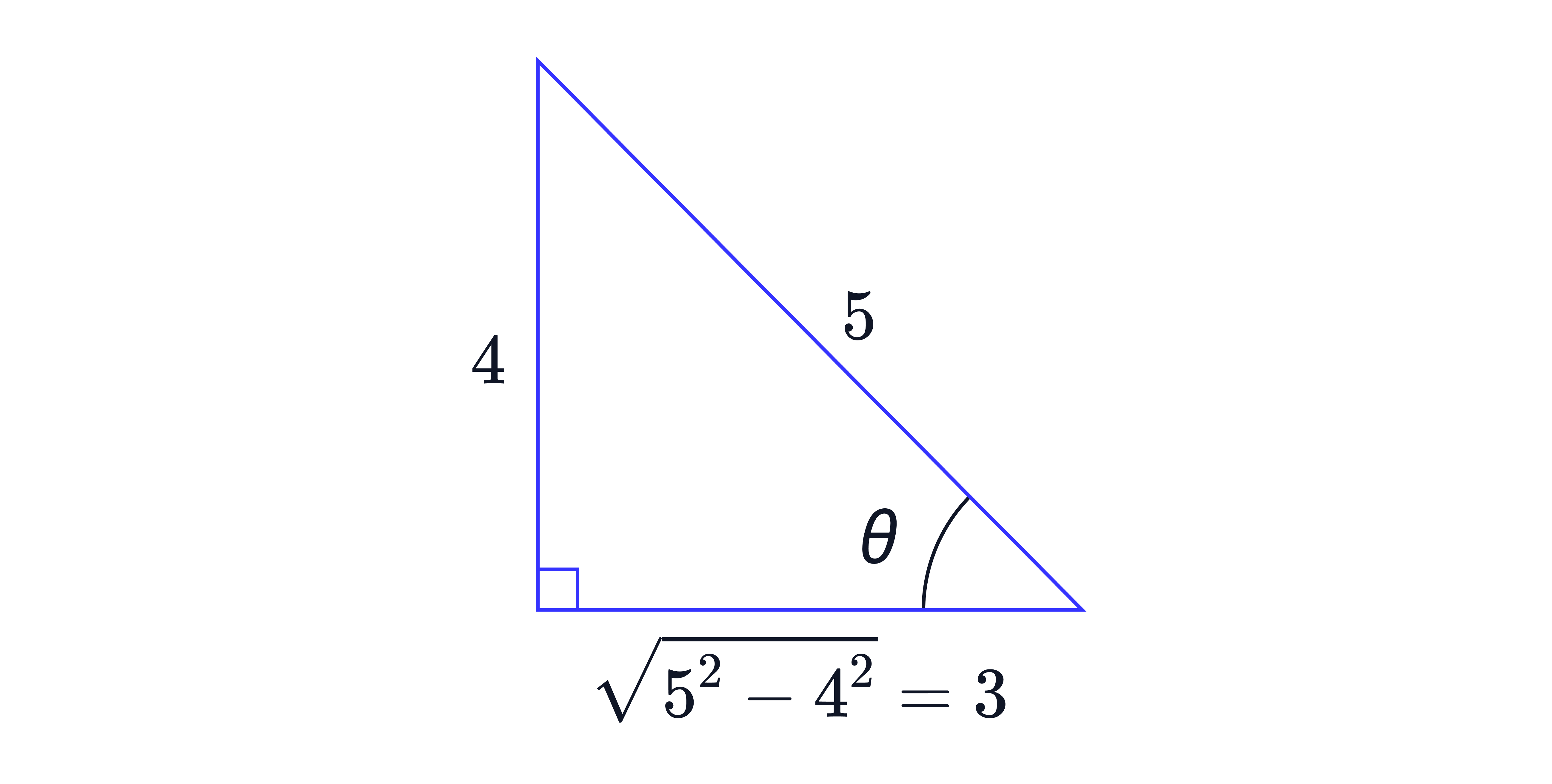
Using the triangle, we find that .
So,
No answer provided.
Pegs
Example 2:
A rod of length and mass has one end resting on rough horizontal ground. A particle of mass rests at the other end . The rod rests against a smooth horizontal peg , where . The rod is modelled as uniform and lies in a vertical plane perpendicular to the peg. It rests in equilibrium making an angle with the horizontal where . The coefficient of friction between the rod and the ground is .
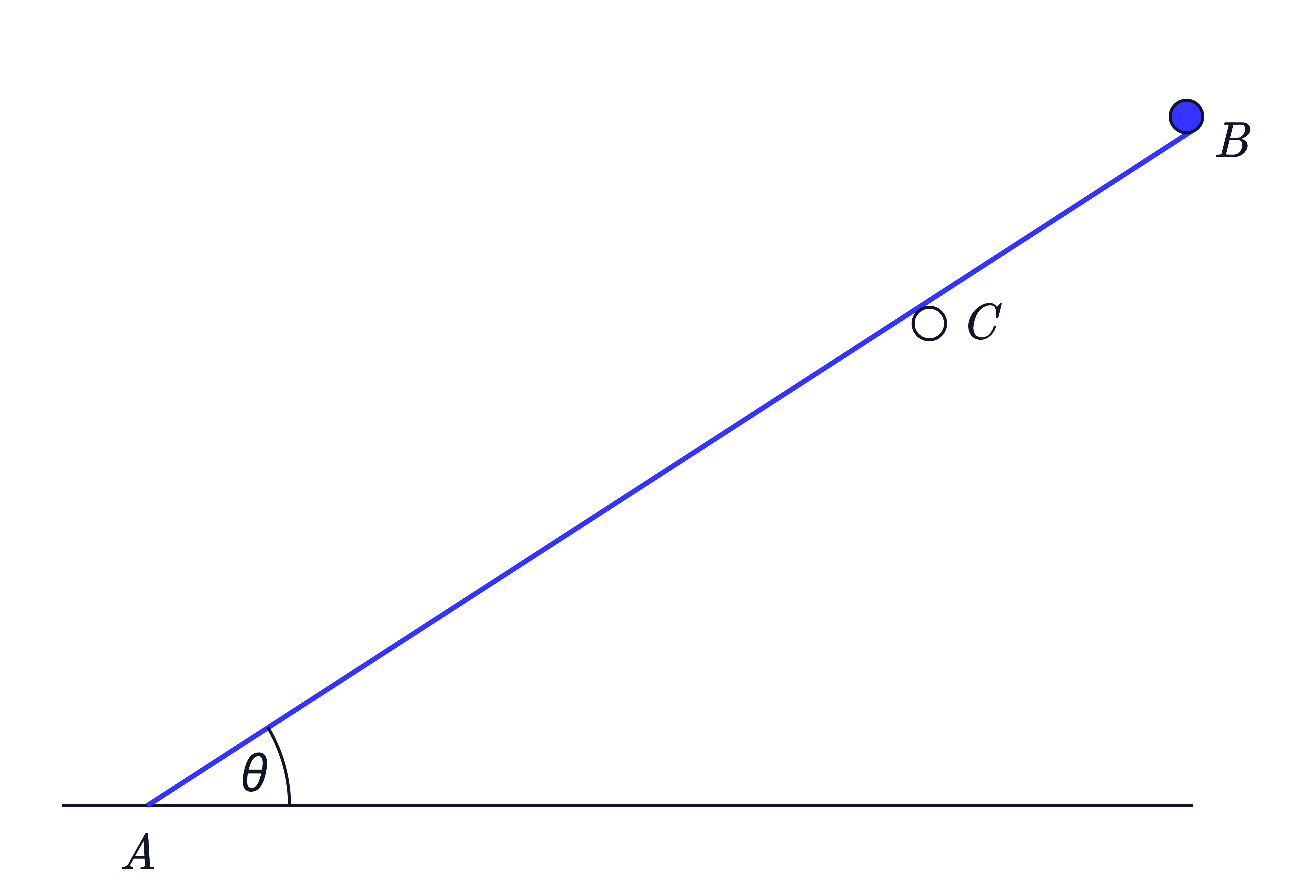
a) Show that the reaction of the peg on the plank has magnitude .
Step 1: Draw the force diagram.
here is again the reaction force which acts perpendicularly to the surface it is in contact with. The peg is modelled in the same way we would model a particle so it is acting at a single point, perpendicular to the rod itself. If you imagine it as being a circle, it would be a line that goes through the centre of the circle and the rod is a tangent to the circle.
As the ladder is not at the point of slipping, friction is not necessarily at its max and we label it as .
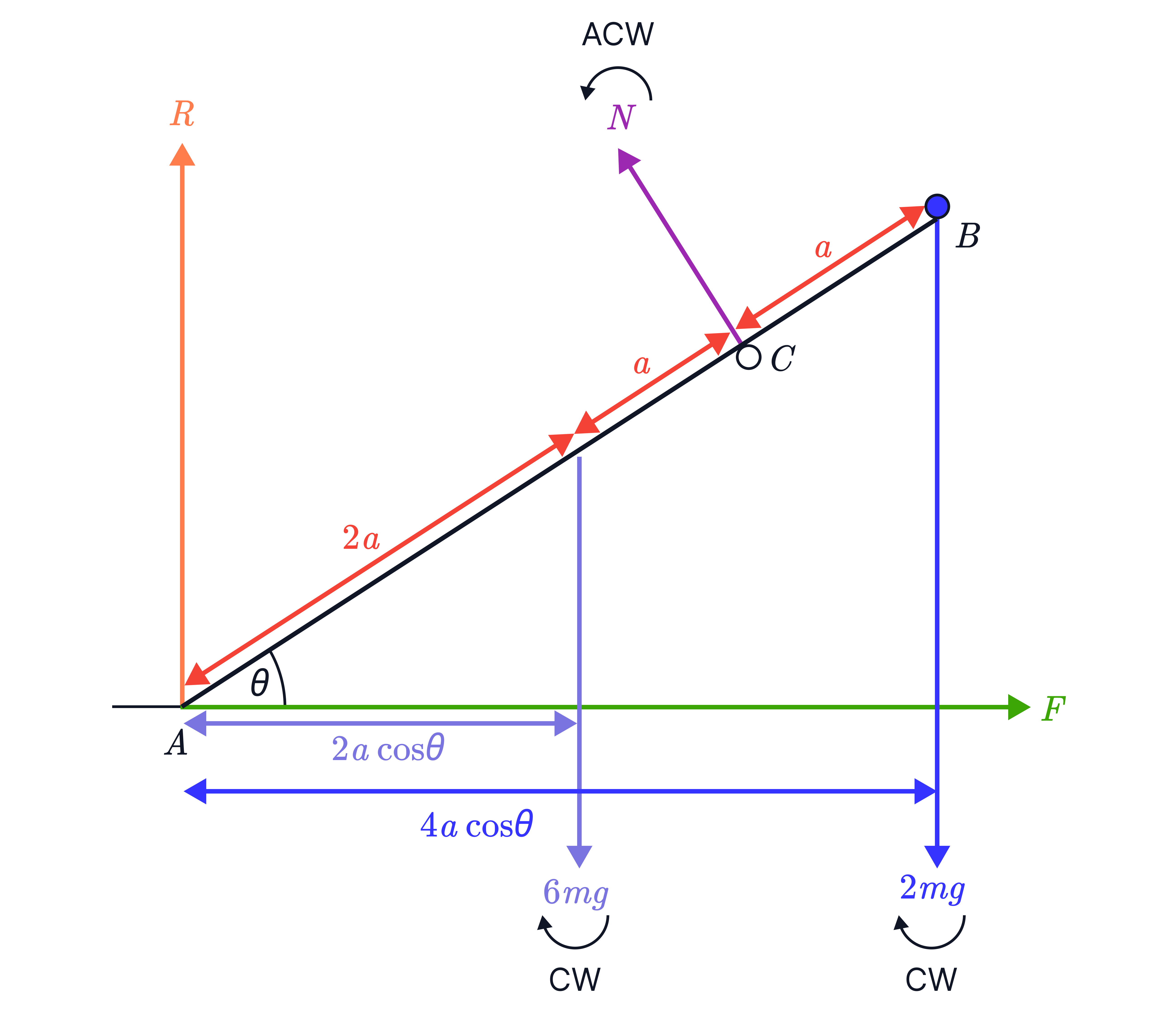
Step 2: Take moments about A.
We do not equate forces yet as there will be two equations with more than two unknowns which are unsolvable. We will take moments about first to eliminate all unknowns apart from . When we take moments about , we can eliminate and as these two forces are acting through point directly which produce no moment.
Similar to the previous example, if we can deduce using a right-angled triangle.
Anti-clockwise moment = Clockwise moment
is already perpendicular to the rod so its shortest distance to is .
b) Show that .
Step 1: Resolve to vertical and horizontal forces.
Notice now is not pointing vertically or horizontally so we need to resolve it.
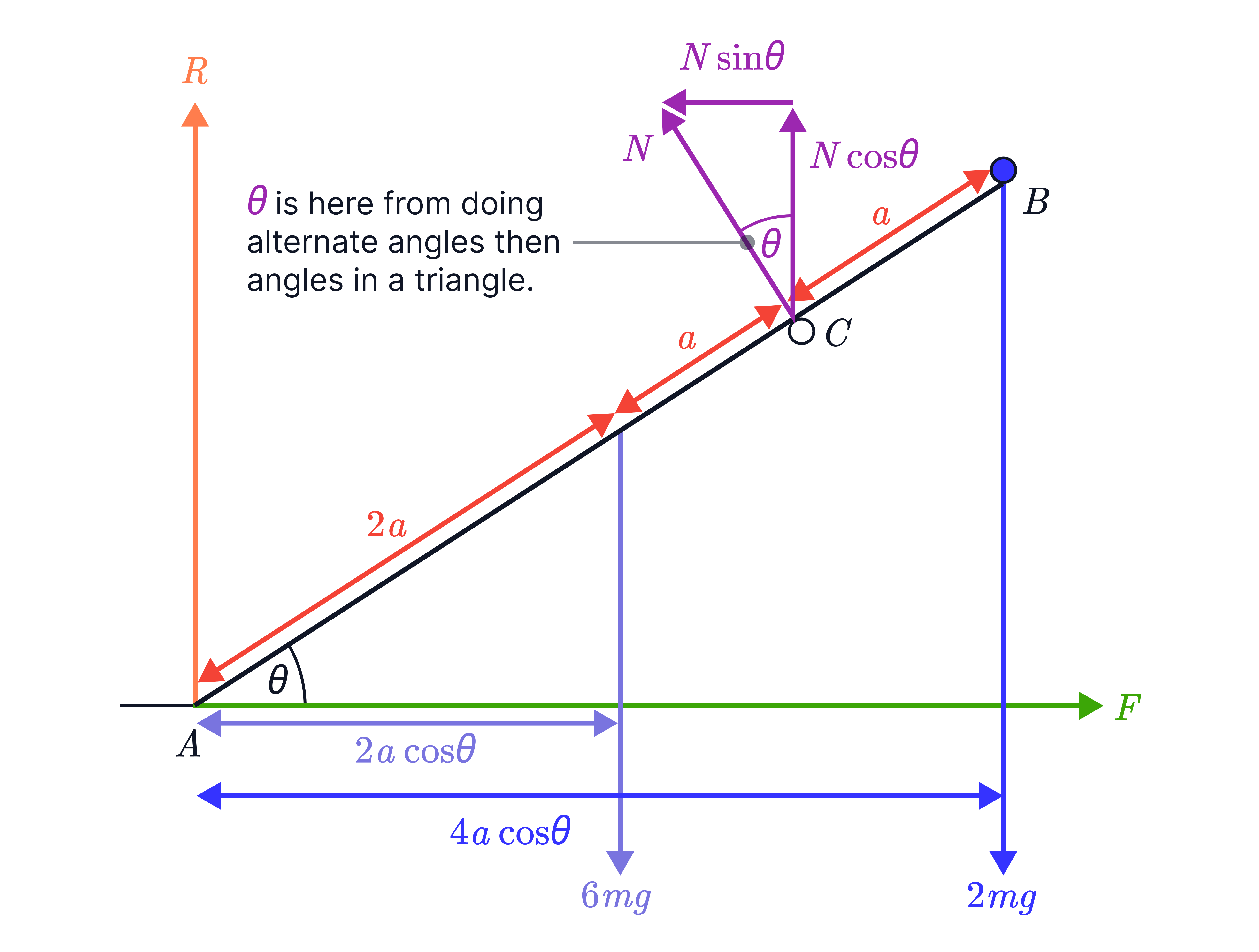
Vertical:
Horizontal:
Step 2: Use the friction formula to find the required inequality.
At equilibrium, . So we have
No answer provided.
Hinges
Example 3:
A uniform rod , of length and weight , is free to rotate in a vertical plane about a smooth hinge at . One end of a light inextensible string is attached to . The other end is attached to a point which is vertically above , with . The rod is in equilibrium with horizontal.
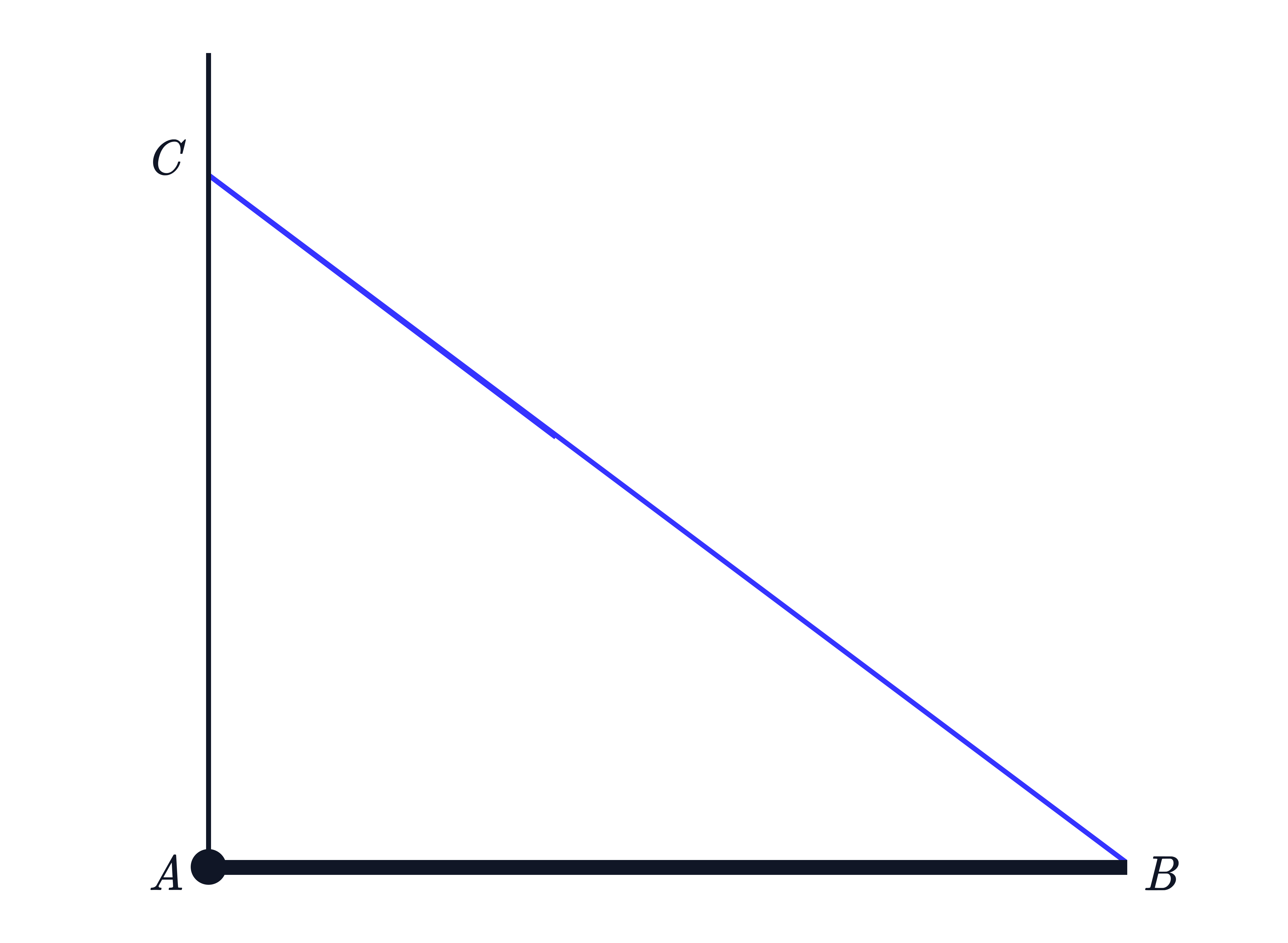
a) By taking moments about or otherwise, find the tension in the string, in terms of .
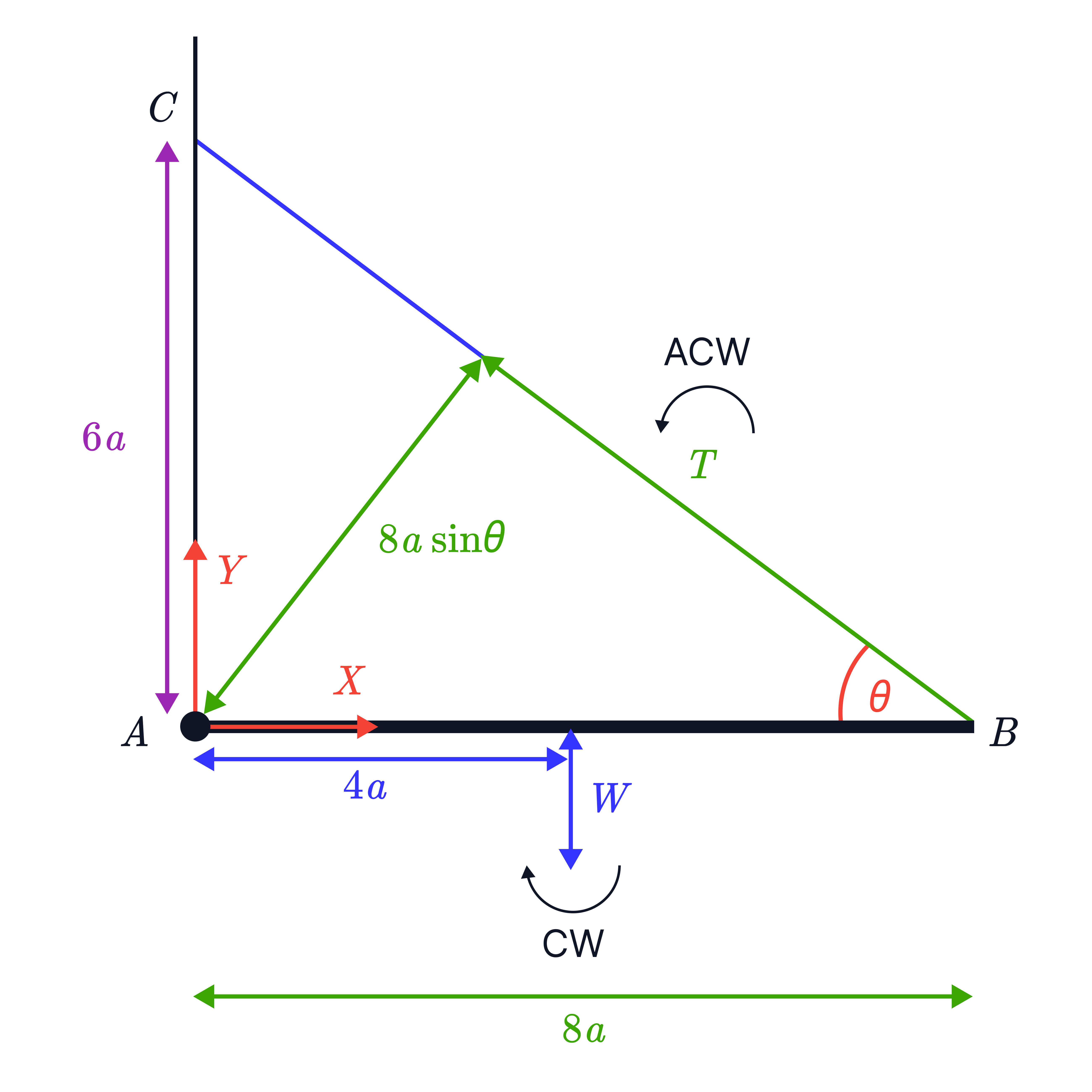
Step 1: Draw the force diagram
• - Weight of the rod, acting at the centre as it is uniform
• - Tension in the string acting away from the rod
• - horizontal force exerted by the hinge/wall on the rod. The wall/hinge is stopping the rod from being pulled through the wall by the string.
• - vertical force exerted by the hinge on the rod. The hinge is stopping the rod from falling.
• - The angle has not been given to us in the diagram nor has it been described in the question so add it for future use/investigation.
Step 2: Resolve moments about .
We do not equate forces yet as there will be two equations with more than two unknowns which are unsolvable. We will take moments first about to eliminate all unknowns apart from and , which then can be solved. As we are taking moments about , we eliminate and as they are applied directly on the hinge and give no moment.
Remember how we knew nothing about theta? Well, if we observe the overall diagram, we can see that , and so it follows that and . Had we put theta at the top of the triangle then and would still have given us the same result.
Clockwise moment = Anti-clockwise moment
The diagram does not tell us the perpendicular distance of the force from so we must add that in ourselves and use SOHCAHTOA to find its length.
b) Calculate the magnitude of the force exerted by the hinge on the rod, in terms of .
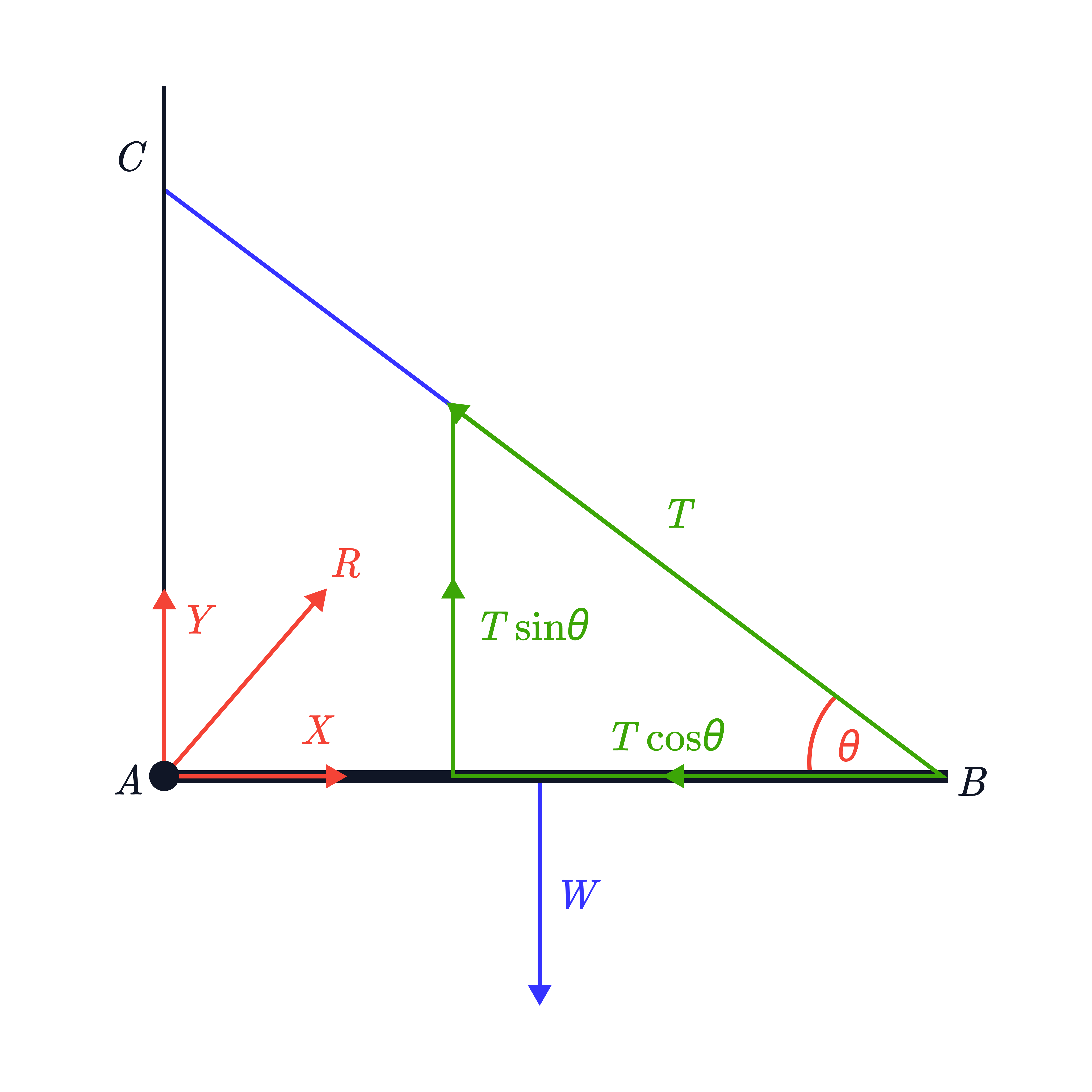
Step 1: Resolve horizontal forces to find .
The magnitude of the force at the hinge is the resultant force of and . It is only the force that is not pointing horizontally and vertically, so we resolve it horizontally and vertically to find what and are.
Step 2: Resolve vertical forces to find .
Step 3: Find the magnitude of the force exerted by the pivot on the rod with Pythagoras Theorem.
Magnitude
No answer provided.
Challenging Questions