Variable Acceleration and Vectors
Neil Trivedi
Teacher

Variable Acceleration and Vectors
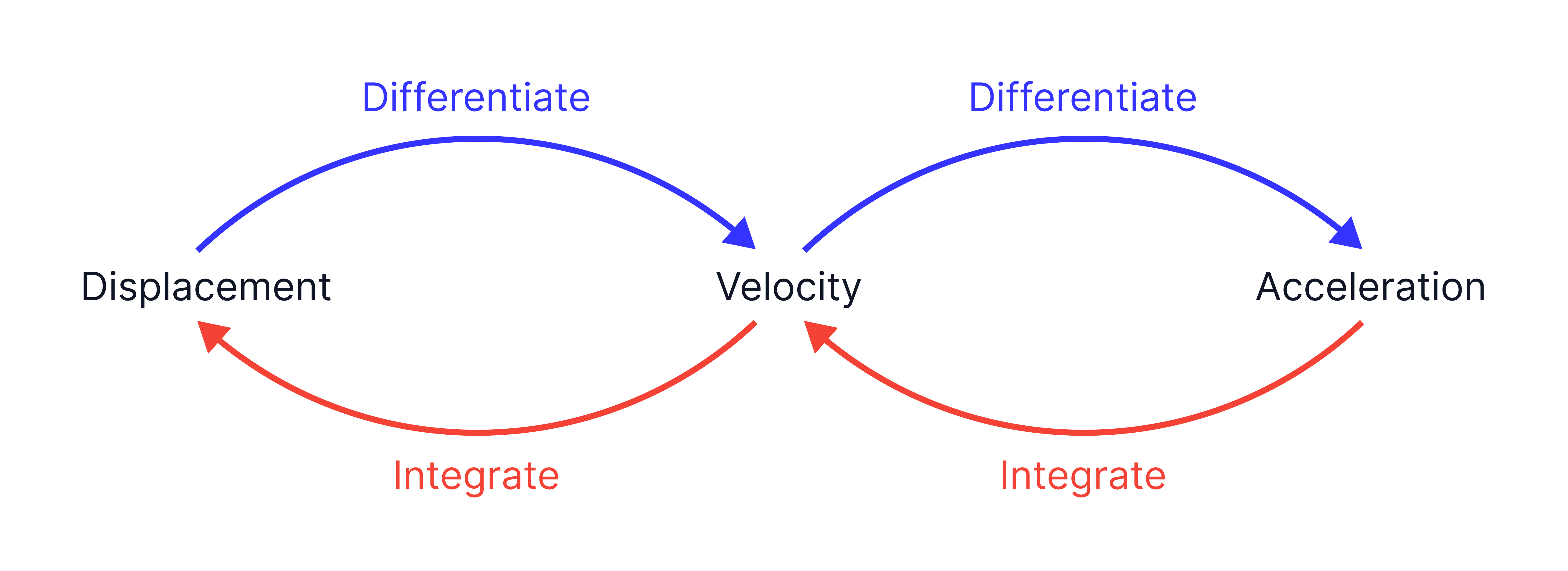
Variable acceleration, where a particle’s acceleration changes over time, can be described using vector functions. In this note, we’ll explore how calculus with vectors helps us model motion in two dimensions.
Displacement, velocity, and acceleration are expressed as vectors in terms of and components, and we differentiate or integrate each part separately. To find scalar quantities such as speed or distance, we calculate the magnitude of the vector using Pythagoras’ Theorem.
These techniques can also be applied to motion in more than two dimensions.
Example 1:
A particle is moving in a D plane so that, at time seconds, its acceleration is
ms. When , the velocity of is ms and the position vector
of is m with respect to a fixed origin .
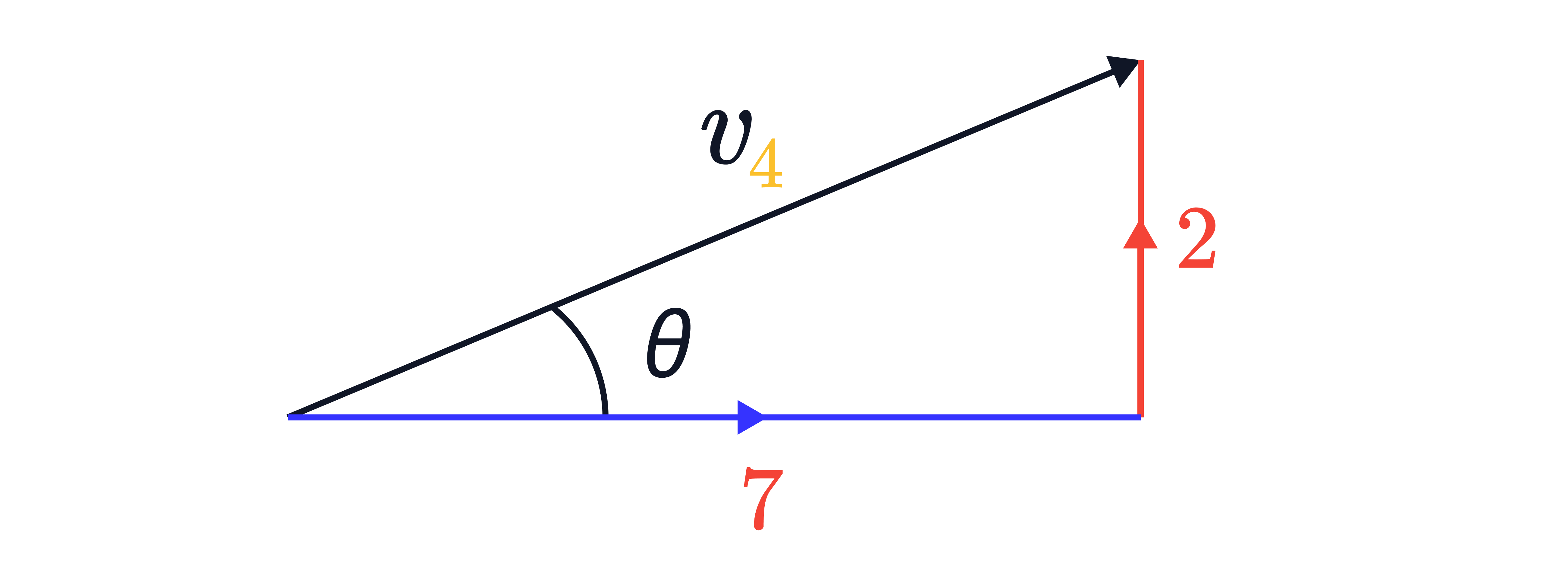
a) Find the angle between the direction of motion of and when .
Note: When we see the words “direction of motion”, we immediately think of the velocity.
Step 1: Rewrite as a column vector, then integrate it to find the velocity vector ,
in terms of .
Note: It is important to not use the same constant of integration in the and components.
Step 2: Using the conditions given in the question, we substitute to get and hence find the values of and .
This is .
ms
Step 3: Now, substitute into the velocity vector, then calculate the angle between the direction of motion of and using SOHCAHTOA.
b) Find the distance of from when .
Step 1: Integrate the velocity vector (from part a) to find the position vector , in terms of .
Note: Do not use and as constants of integration as we have used those already.
Step 2: Using the conditions given in the question, we substitute to get and hence find the values of and .
Hence,
m
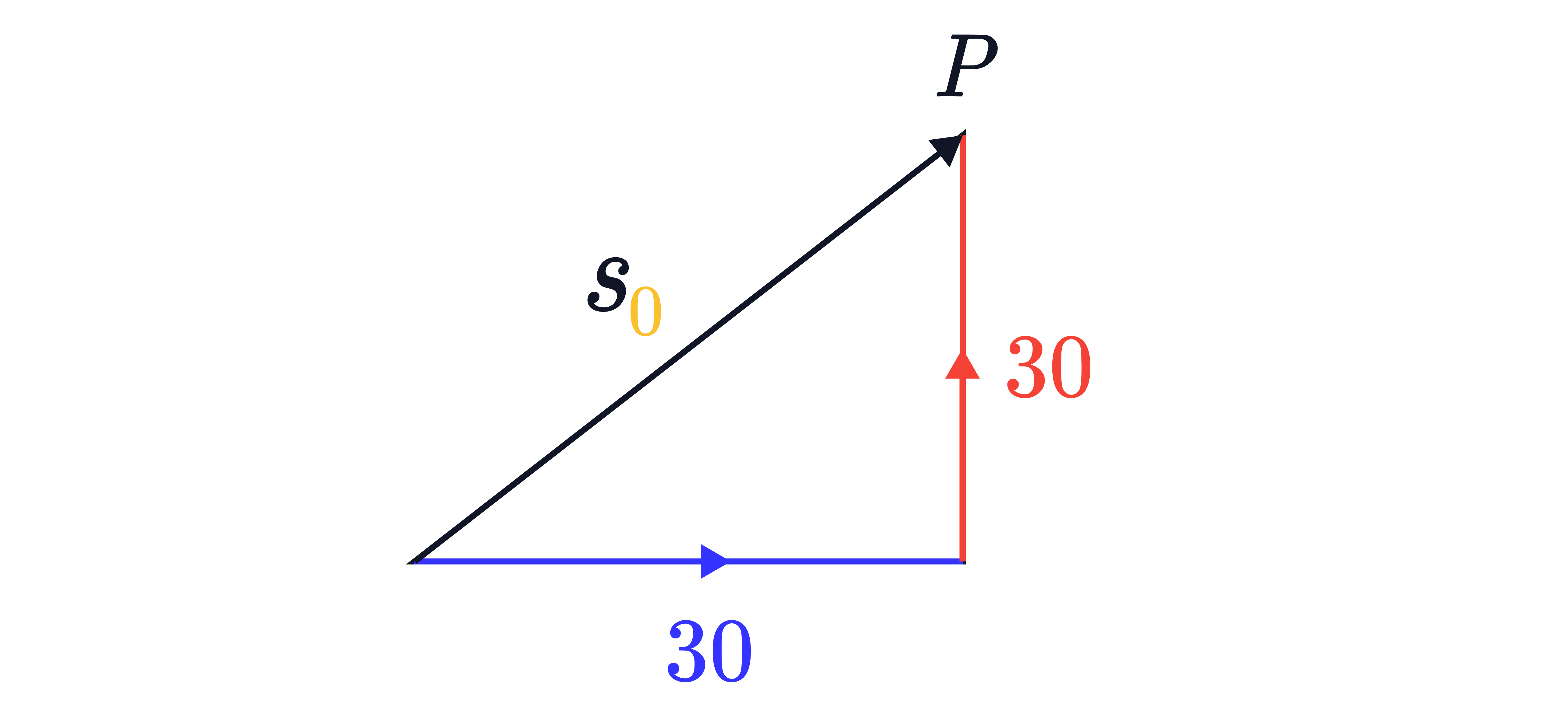
Step 3: Substitute into the position vector, then use Pythagoras’ Theorem on the and components to find the distance of from .
m
No answer provided.
Example 2:
A particle of mass kg is acted on by a single force N. Relative to a fixed origin , the position vector of , metres, at time seconds is given by:
a) Find the speed of when .
Step 1: Rewrite as a column vector, then differentiate it to find the velocity vector , in terms of .
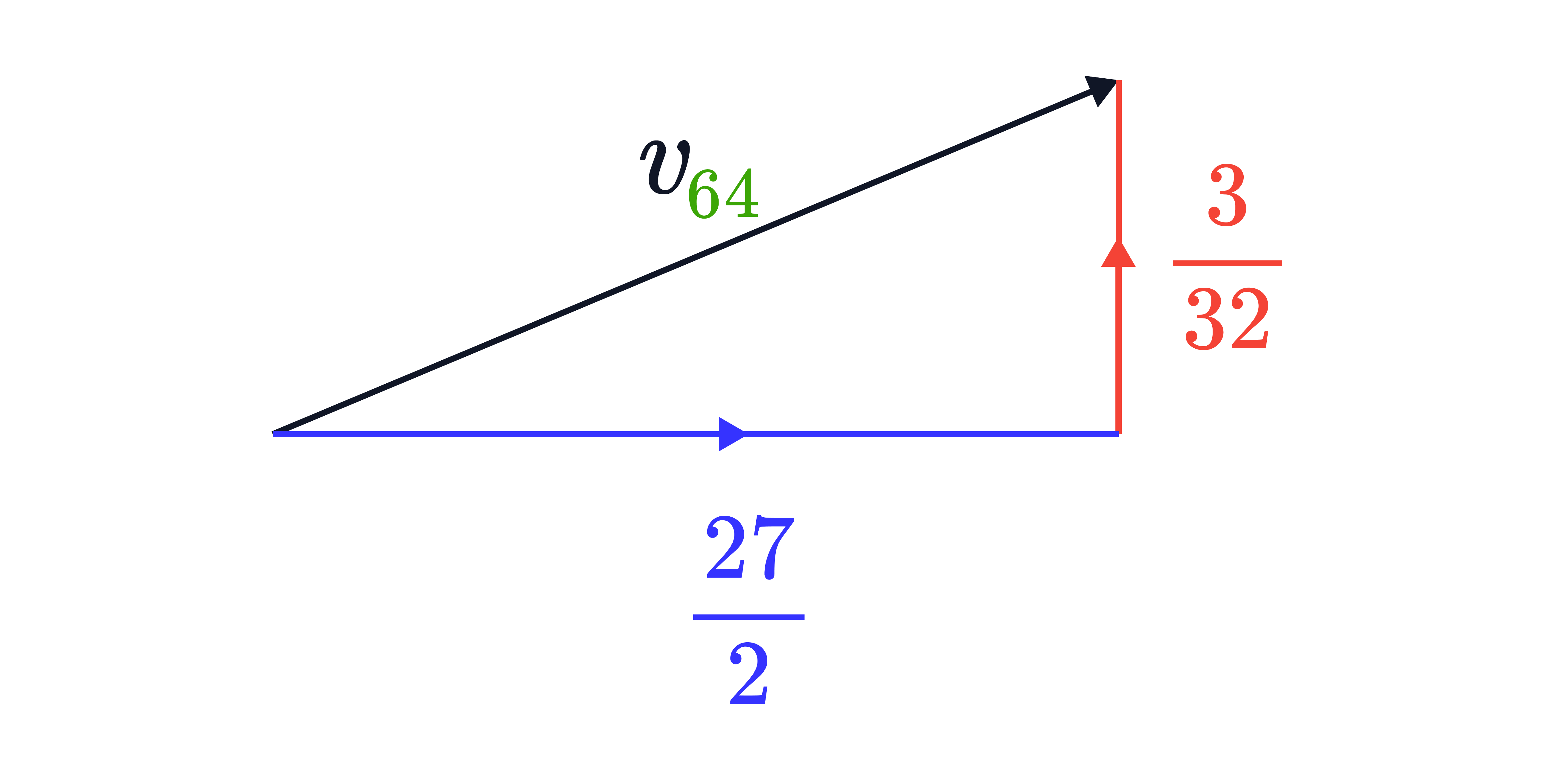
Step 2: Substitute to get , then use Pythagoras’ Theorem on the and components to find the speed of .
ms
ms
b) Find the acceleration of , as a vector, when .
Step 1: Differentiate the velocity vector (from part a) to find the acceleration vector , in terms of .
Step 2: Substitute to get .
ms
c) Find when .
Single Step: Use Newton’s second law, , where and , to find the force vector.
N
No answer provided.
Challenging Question