Alternative Methods Of Extracting Metals (HT Only)
Emmanuel Opoku
Teacher

Contents
Alternative Methods Of Extracting Metals
Why Alternative Methods Are Needed
- The Earth’s supply of high-grade metal ores is limited - copper ores especially are becoming scarce.
- Traditional mining and extraction methods:
- Use a lot of energy (e.g. smelting, electrolysis).
- Cause environmental damage (e.g. habitat destruction, air pollution).
- Scientists have developed new, more sustainable ways to extract metals from low-grade ores (ores with a low concentration of metal).
Two key alternative methods:
- Phytomining
- Bioleaching
Phytomining
Definition:
Phytomining uses plants to absorb metal compounds (e.g. copper compounds) from contaminated or low-grade soil.
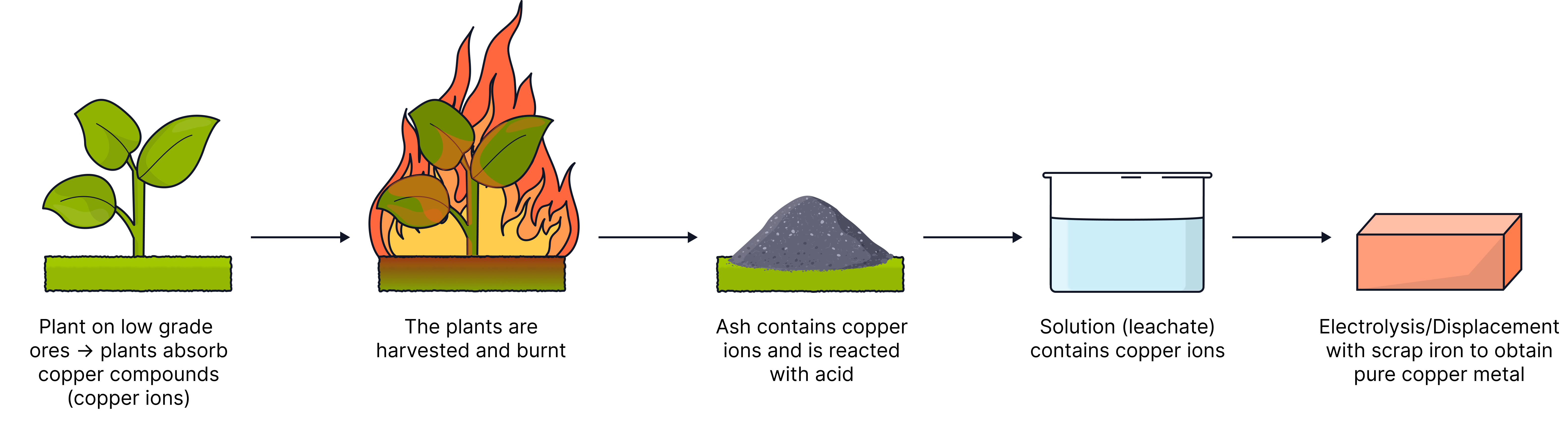
Process:
- Plants are grown in soil containing metal compounds.
- They absorb the metal ions through their roots.
- The plants are harvested, dried, and burned to produce ash.
- The ash contains metal compounds, which can be dissolved using acid to make a metal salt solution.
- Copper is extracted from this solution by:
-
- Displacement using a more reactive metal (e.g. iron), or
- Electrolysis.
Example (Displacement Reaction):
Fe + CuSO₄ → Cu + FeSO₄
Advantages:
- Can extract metals from contaminated or low-grade ores.
- Requires less energy than mining.
- Reduces the need for digging and destroying habitats
Disadvantages:
- Very slow process – plants take a long time to grow.
- Small yield of metal.
- Requires suitable land and climate for growing plants.
Bioleaching
Definition:
Bioleaching uses bacteria to extract metals from low-grade ores.
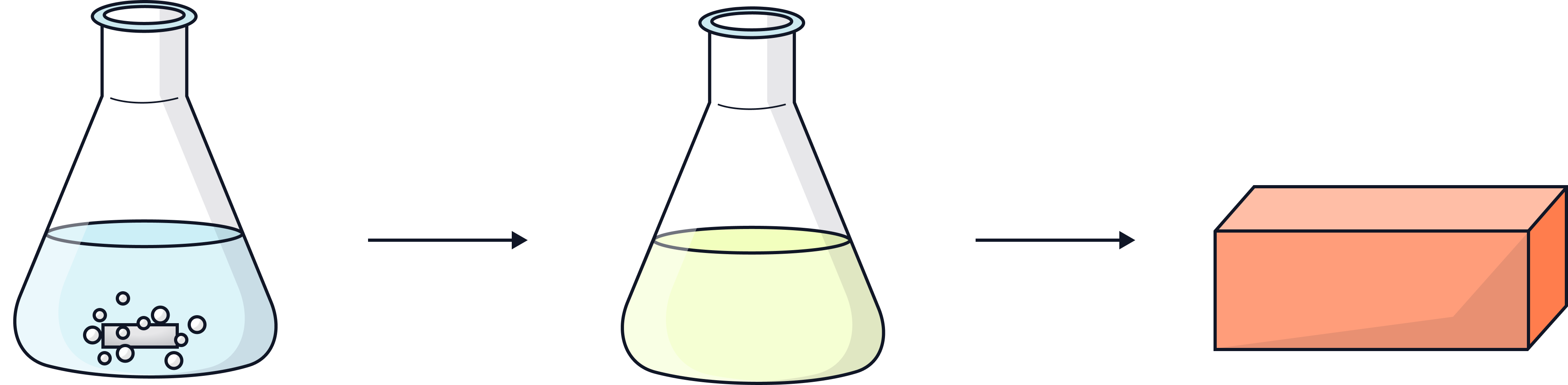
Process:
- Bacteria feed on metal compounds in the ore.
- They produce a leachate solution containing metal ions (e.g. Cu²⁺).
- Copper is extracted from the leachate by:
-
- Displacement using iron, or
- Electrolysis.
Advantages:
- Uses very little energy.
- Avoids mining and habitat destruction.
- Can be done on waste materials or low-grade ores.
Disadvantages:
- Slow – may take months or years.
- Risk of toxic by-products if not controlled.
- Produces small amounts of metal.
Comparing Bioleaching And Phytomining
|
Feature |
Phytomining |
Bioleaching |
|---|---|---|
|
Main agent |
Plants |
Bacteria |
|
How it works |
Plants absorb metal ions from soil |
Bacteria produce leachate with metal ions |
|
Time required |
Long (growth of plants) |
Long (bacterial activity) |
|
Energy used |
Low |
Low |
|
Environmental impact |
Minimal, uses renewable materials |
Minimal, but may produce acidic waste |
|
Typical metals |
Copper, nickel |
Copper, zinc |
Sustainability and Future Use
- These methods help recycle metals from waste and reduce environmental impact.
- They make use of low-grade ores, conserving higher-quality ores for the future.
- Energy demands are much lower, supporting sustainable development.
However, the slower rate of production and smaller metal yield mean these methods are not yet suitable for large-scale industry.
Check Your Understanding
Recall
What is meant by a low-grade ore?
Answer:
A low-grade ore contains only a small amount of metal compound.
Define phytomining and bioleaching.
Answer:
- Phytomining: Uses plants to absorb metal compounds from soil, which are then burned to extract the metal.
- Bioleaching: Uses bacteria to produce a leachate containing metal ions.
Write the word equation for the displacement of copper using iron.
Answer:
Iron + Copper sulfate → Copper + Iron sulfate
State two advantages of these alternative methods.
Answer:
Uses less energy and avoids habitat destruction from mining/quarrying
Apply
Explain why bioleaching is considered more environmentally friendly than traditional mining.
Answer:
Bioleaching doesn’t require digging or smelting, so it causes less pollution and energy use
Suggest why iron is often used to displace copper in phytomining and bioleaching
Answer:
Iron is cheap and more reactive than copper, so it easily displaces copper from copper sulfate
Describe how copper can be obtained from plants after phytomining.
Answer:
Plants are burned, ash is dissolved in acid to form a copper salt solution, and copper is extracted by displacement or electrolysis
Challenge (HT Only)
Evaluate whether bioleaching or phytomining is more suitable for sustainable copper production, considering energy use, time, and environmental impact.
Answer:
- Phytomining: Eco-friendly and renewable, but slow and yields little metal.
- Bioleaching: Produces more copper and can use waste materials but may generate acidic waste.
Overall:
Bioleaching is more efficient for large-scale use, but phytomining is more sustainable in the long term where energy conservation is key.
No answer provided.
More Practice
Try to answer the practice question from the TikTok video on your own, then watch the video to see how well you did!