Waste Water Treatment
Emmanuel Opoku
Teacher

Contents
Waste Water Treatment
What is Waste Water and why must it be treated?
- Water that is used daily for bathing, cooking, washing, flushing toilets, and industrial processes is considered waste water.
- After use, it becomes waste water, which can contain organic matter, microbes, and harmful chemicals.
- If released untreated, it can:
- Pollute rivers and lakes
- Spread disease
- Harm aquatic life and ecosystems
Treating waste water ensures it can be safely returned to the environment or reused for non-drinking purposes.
Sources Of Waste Water
1. Domestic Waste Water
- From homes: washing, showers, toilets, and cooking.
- Contains organic matter (food, soap, sewage) and microbes.
2. Agricultural Waste Water
- From farms and fields: runoff from fertilisers, pesticides, and animal slurry.
- Contains organic waste and nitrates/phosphates from fertilisers.
3. Industrial Waste Water
- From factories or chemical plants.
- May contain toxic chemicals or heavy metals that require extra treatment.
Each type of waste water needs specific treatments depending on the pollutants present.
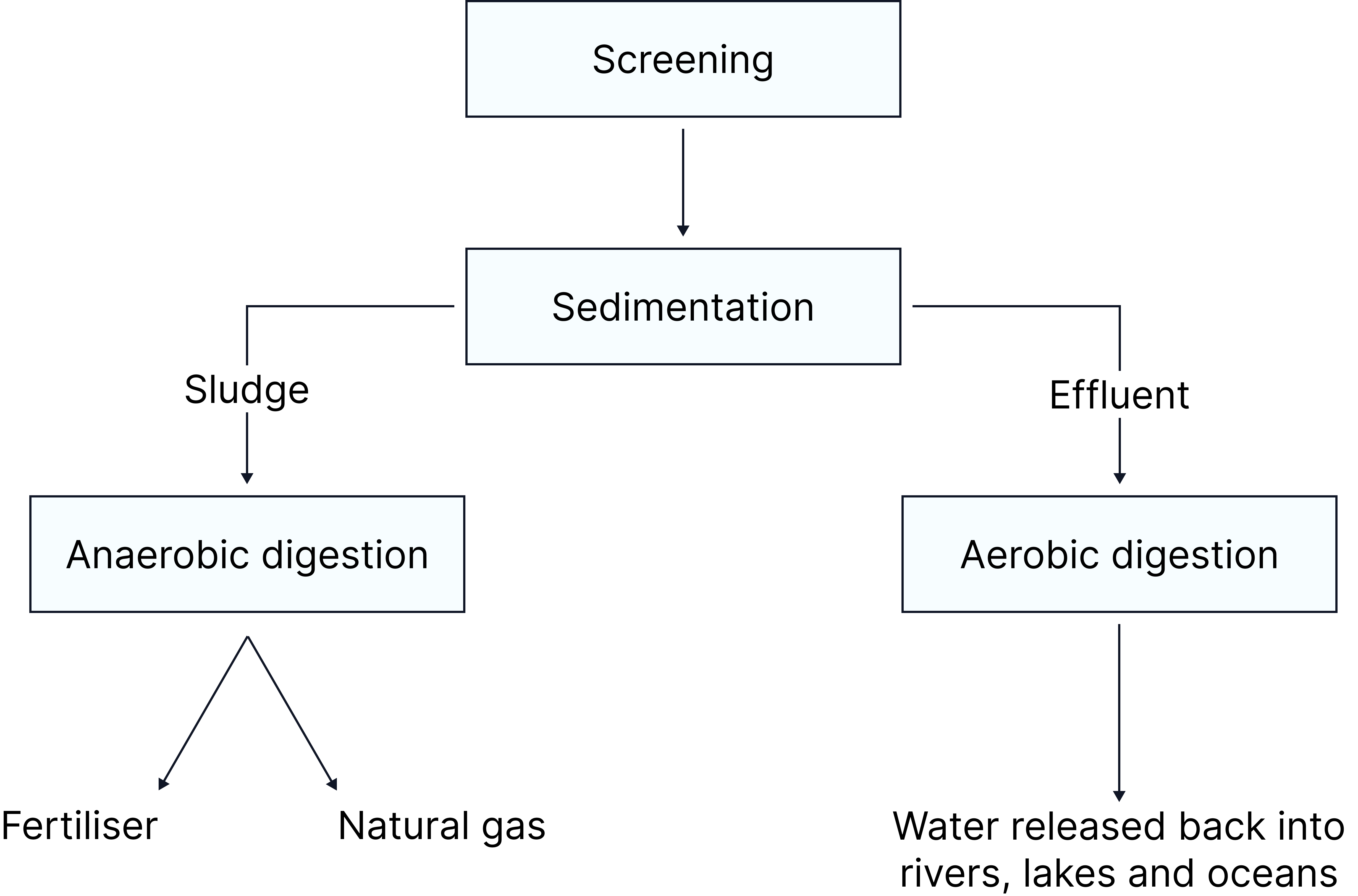
Stages Of Waste Water Treatment
1. Screening
- Large materials (twigs, plastic, grit) are removed using metal screens.
- Prevents damage to equipment in later stages.
2. Sedimentation
- Water stands in settlement tanks.
- Heavier solids (sludge) sink to the bottom.
- Lighter liquid (effluent) floats on top.
3. Aerobic Digestion (Effluent Treatment)
- The effluent is treated with aerobic bacteria using air pumped through the tank.
- Bacteria break down organic matter and kill harmful microbes.
- Clean water can then be released safely into rivers or reused.
4. Anaerobic Digestion (Sludge Treatment)
- The sludge from sedimentation is treated in anaerobic conditions (no oxygen).
- Anaerobic bacteria break down organic matter, producing:
- Methane gas → used as biogas for energy.
- Solid residue → used as fertiliser.
Some industrial waste water may need extra chemical or UV treatment before it’s safe for relase into the environment.
Potable Water From Waste Water
- TREATED WASTE WATER IS NOT POTABLE!
- Waste water can be further treated to produce potable (drinkable) water.
- This is used in places where fresh water is scarce (e.g. Singapore, parts of the Middle East).
- The process is energy-intensive but uses less energy than desalinating sea water.
Public perception can be a barrier - people may dislike the idea of “recycled sewage water.”
Check Your Understanding
Recall
Give two examples of waste water sources.
Answer:
Domestic (e.g. sinks, toilets) and agricultural (e.g. farm runoff)
Why must waste water be treated before release?
Answer:
To remove harmful microbes and chemicals that could pollute the environment or spread disease
State the four main stages of waste water treatment.
Answer:
Screening → Sedimentation → Aerobic Digestion → Anaerobic Digestion
What useful products can be obtained from anaerobic digestion?
Answer:
Methane gas (for energy) and solid residue (used as fertiliser)
What is the difference between effluent and sludge?
Answer:
- Effluent is the liquid part of waste water that remains after sedimentation and is treated by aerobic digestion before being released back into the environment.
- Sludge is the solid material that settles at the bottom during sedimentation and is treated by anaerobic digestion to produce biogas and fertiliser.
Apply
Explain why industrial waste water needs more treatment than domestic waste water.
Answer:
Industrial waste water may contain toxic chemicals or heavy metals that require additional treatment
Suggest why aerobic bacteria are important in sewage treatment.
Answer:
Aerobic bacteria decompose organic matter and remove harmful microorganisms in the effluent
Describe one advantage and one disadvantage of producing potable water from waste water.
Answer:
- Advantage: Conserves water in areas where fresh water is scarce.
- Disadvantage: Requires energy and advanced treatment; people may dislike the idea of recycled sewage water.
Challenge (HT Only)
Compare the energy use and process complexity of obtaining potable water from waste water, fresh water, and sea water.
Answer:
- Fresh water: Easiest — needs filtration and sterilisation only.
- Waste water: More complex — must remove solids, organic matter, and microbes.
- Sea water: Most energy-intensive — requires distillation or reverse osmosis.
Evaluate whether recycling waste water for drinking is a sustainable solution.
Answer:
Recycling waste water reduces demand for natural fresh water and supports sustainability,
but it’s costly and needs careful monitoring to ensure safety.
More Practice
Try to answer the practice question from the TikTok video on your own, then watch the video to see how well you did!