Potable Water
Emmanuel Opoku
Teacher

Potable Water
Potable vs Pure Water
- Pure water contains only H₂O molecules and no dissolved substances.
- Potable water is safe to drink but not chemically pure - it contains small, safe amounts of dissolved minerals and salts.
- To be potable, water must have:
- Low levels of dissolved salts
- pH between 6.5 and 8.5
- No harmful microbes or bacteria
Pure water ≠ drinking water - it’s chemically pure but not necessarily safe to drink!
Chemists say “pure water” in a chemical sense, not an everyday drinking sense!
Sources Of Water
- Fresh water (3%) : rainwater, rivers, lakes, reservoirs, and groundwater (from aquifers – water trapped underground).
- Seawater (97%): used in dry countries where fresh water is scarce.
Only a small percentage of the Earth’s water (≈ 3%) is fresh and available for human use.
Most of Earth’s water is salt water (≈ 97%) in oceans, and much of the rest is frozen in ice caps and glaciers.
Producing Potable Water from Fresh Water (e.g. in the UK – lots of fresh water)
Step 1 - Filtration:
Removes solid particles such as twigs, sand, and soil.
- Water is passed through mesh, then sand and gravel filters.
Step 2 - Sterilisation:
Kills harmful microbes and bacteria.
- Done using chlorine gas, ozone, or ultraviolet (UV) light.
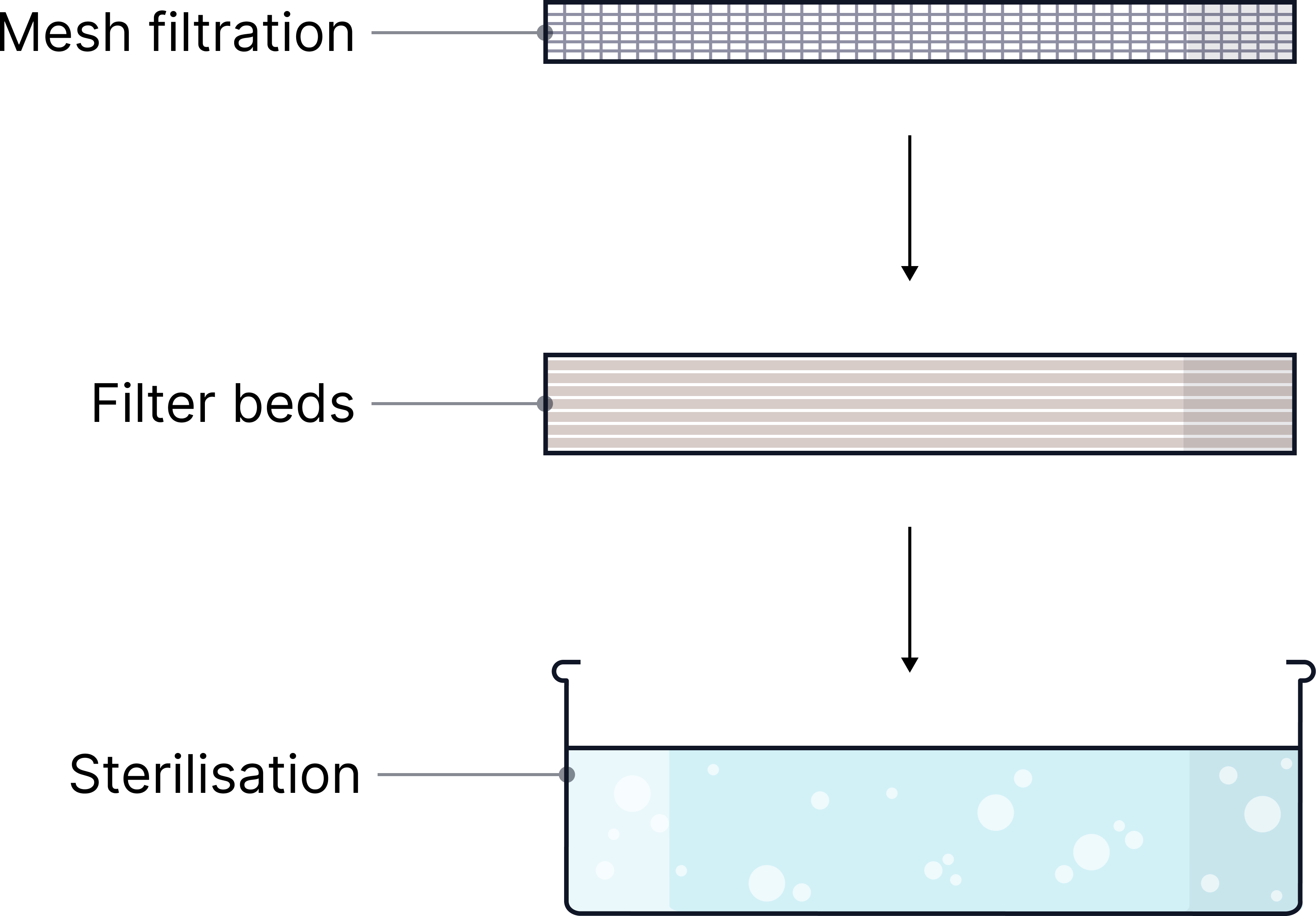
Most UK drinking water comes from filtered and sterilised fresh water.
Producing Potable Water from Seawater (Desalination – e.g. in the Middle East)
Used when fresh water supplies are limited (e.g. in desert countries).
Two main methods:
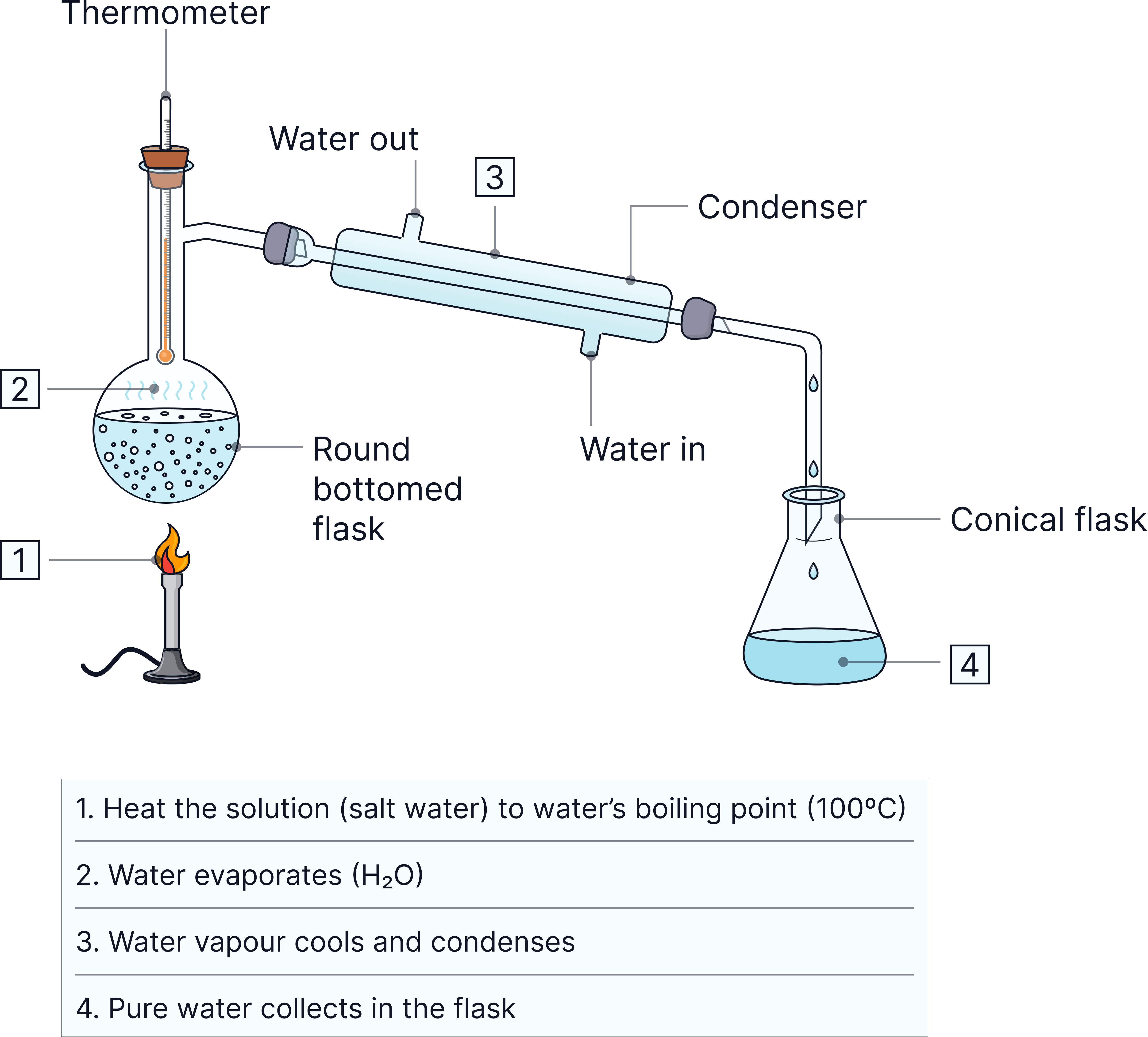
1. Distillation – heat seawater so water evaporates, then condense to collect pure water.
-
- Removes salt and impurities
- Expensive because it requires large amounts of energy
2. Reverse Osmosis – seawater is pushed through a membrane that only allows water molecules through.
-
- Requires high pressure and energy
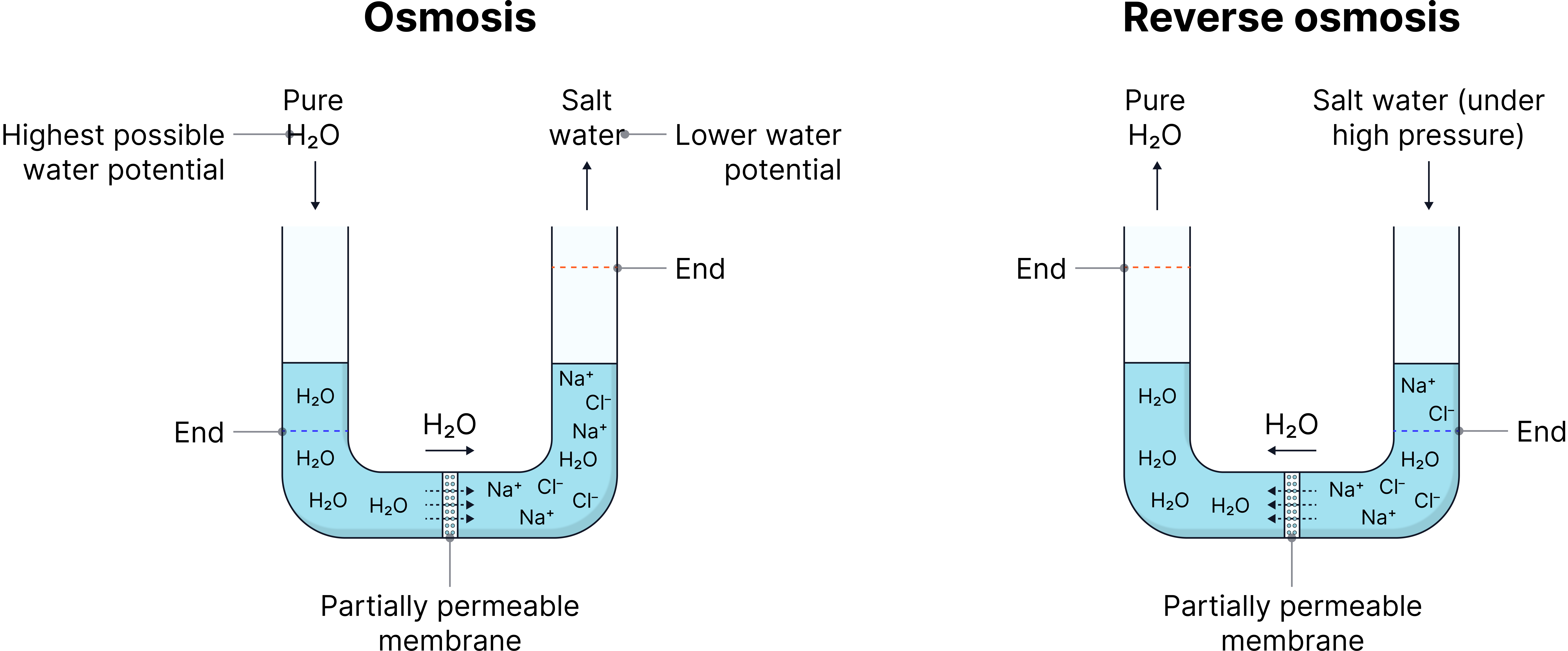
Both processes are effective but costly - best used where no fresh water is available.
Testing Potable Water (Lab Method)
- Check pH: use a pH meter - potable water should be 6.5 – 8.5.
- Test for dissolved solids:
- Evaporate a sample and check for residue - none should remain if water is pure.
Check Your Understanding
Recall
a) Define potable water.
Answer:
Water that is safe to drink and contains low levels of dissolved salts and microbes
b) State the difference between pure water and potable water.
Answer:
Pure water contains only H₂O molecules; potable water contains small amounts of dissolved substances but is safe to drink
c) Why is water sterilised before it is used for drinking?
Answer:
To kill harmful bacteria or microorganisms
d) Name two methods used to make seawater potable.
Answer:
Distillation and reverse osmosis
Apply
e) Describe how potable water is produced from fresh water in the UK.
Answer:
Filter water through sand and gravel to remove solids, then sterilise with chlorine or UV light
f) Explain why producing potable water from seawater is more expensive than using fresh water.
Answer:
Desalination requires large amounts of energy for heating or pressure, making it more expensive
g) Give one factor that affects the method chosen to produce potable water in different countries.
Answer:
Local climate, availability of fresh water, and cost of equipment
Challenge (HT Only)
h) Compare the process of reverse osmosis used in desalination with osmosis in living cells.
Answer:
- Osmosis is the movement of water molecules through a partially permeable membrane from an area of high water concentration to low water concentration
- Reverse osmosis uses high pressure to force water molecules in the opposite direction — from low water concentration (salty water) to high water concentration (pure water).
- This process removes salts and impurities, producing potable water.
- Unlike osmosis, reverse osmosis requires energy to overcome the natural flow of water.
i) Evaluate the advantages and disadvantages of using chlorine and ultraviolet light as sterilising agents.
Answer:
- Chlorine: cheap and effective but toxic in high doses and can leave taste or smell.
- UV light: no chemicals added but more expensive and less effective in cloudy water.
- Overall chlorine is better as long as low doses are used.
More Practice
Try to answer the practice question from the TikTok video on your own, then watch the video to see how well you did!