Contact and Non-Contact Forces
Brook Edgar & Hannah Shuter
Teachers


Contents
Explainer Video
Contact & Non-Contact Forces
A force is a push or a pull. It can be represented by an arrow where the length of the arrow represents the size of the force and the direction of the arrow shows the direction of the force.
Forces can be divided into contact and non-contact forces.
Contact forces act between objects that are physically touching:
Friction - opposes the motion between surfaces, for example, between the tyres and the road in a car. The faster the car goes, the more friction there will be.
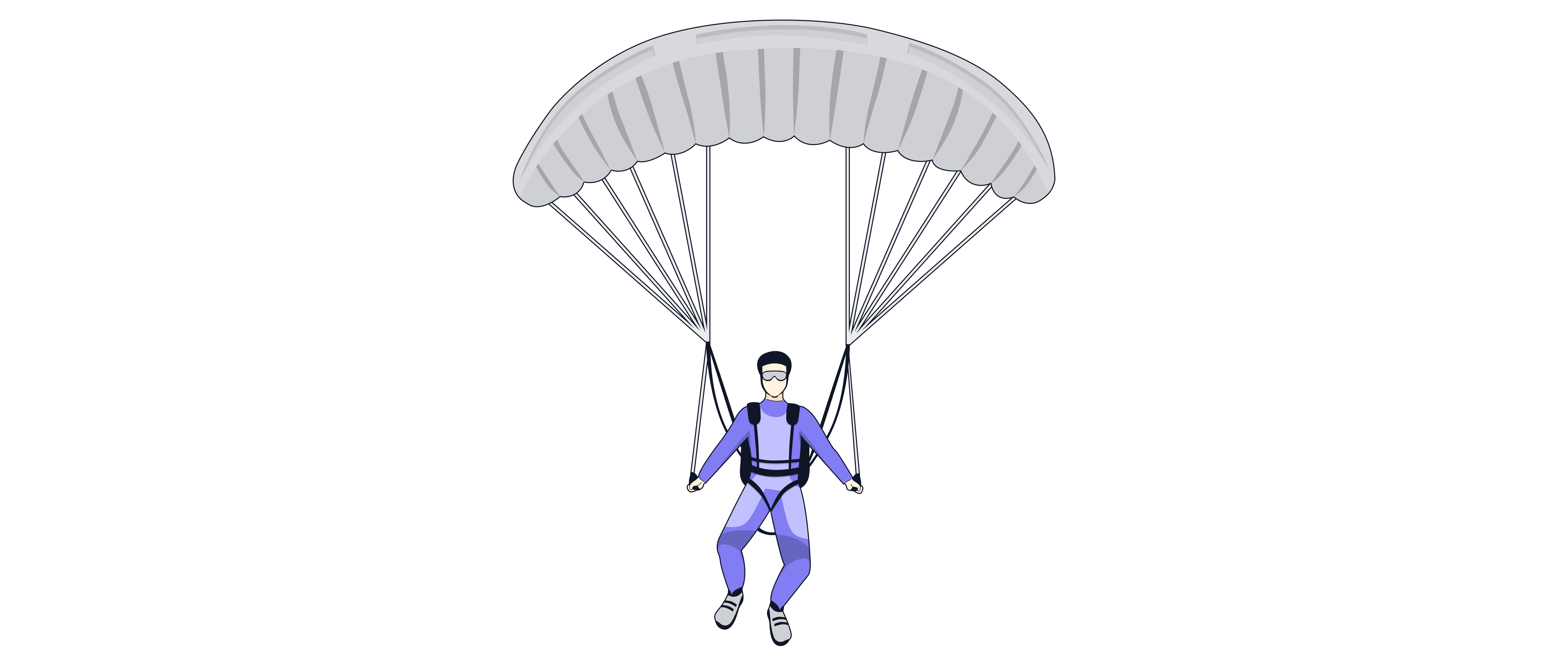
Air resistance/water resistance - the force of the particles in a solid or liquid acting against motion. For example, when you cycle really fast, you feel the air particles pushing against your face - even when there is no wind. The faster an object moves, or the larger the area, the larger the drag. This effect is used in parachutes - as the person is falling down, the air particles collide with the parachute, exerting a force upwards to slow the fall.
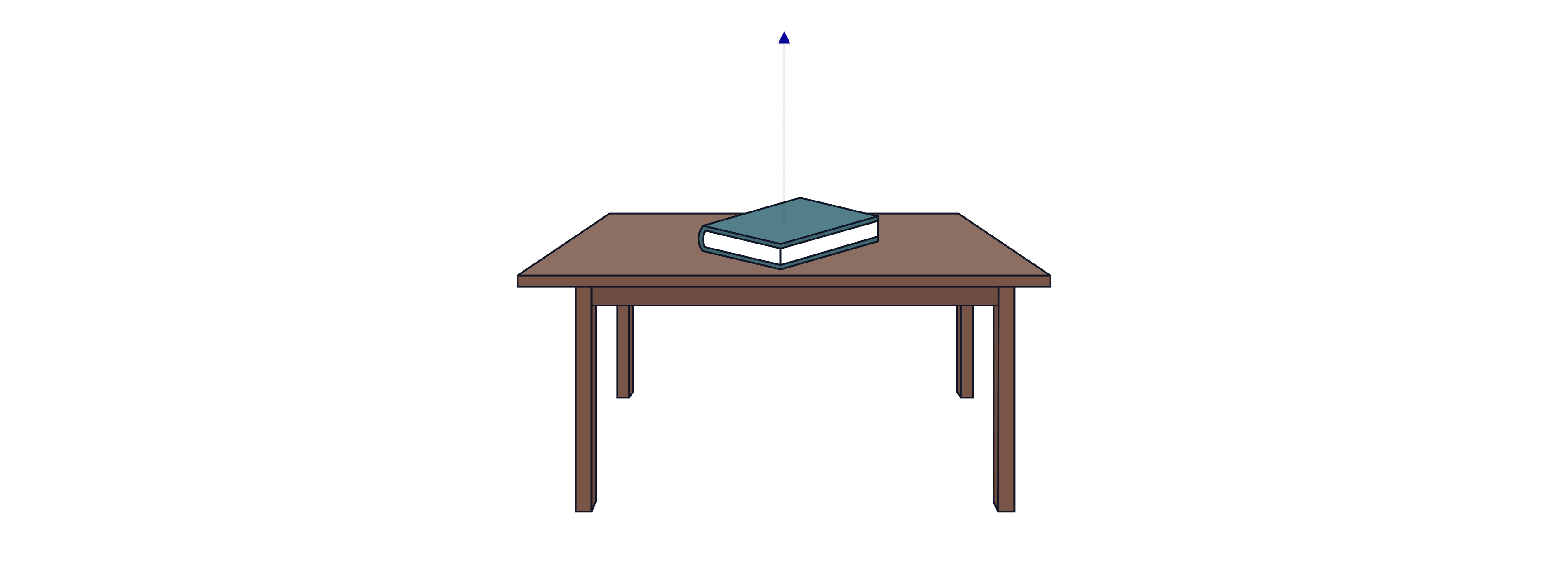
Normal contact force - acts at a right angle to a surface. When you place a book on a table, the weight of the book pushes down on the table. However, we know that the book doesn't fall through the table, so we know that there must be another force acting upwards on the book - that is the normal contact force.
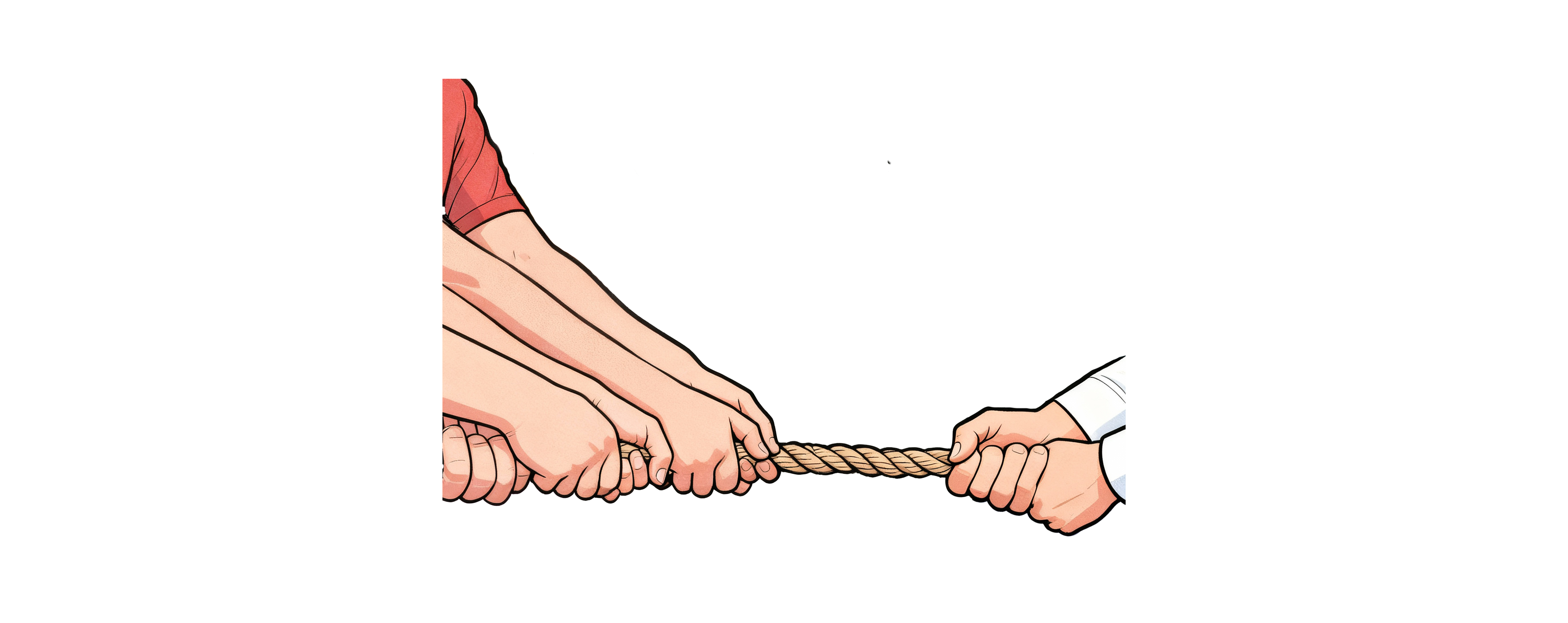
Tension - exists in ropes, cables or strings when they are pulled. For example, when a dog pulls on a lead or when people play tug of war.
Non-contact forces act between objects that are not touching:
Gravitational force - the attraction between masses. For example, when you jump up, you are pulled straight back down to the Earth due to the gravitational force of attraction between you and the Earth. This force is also known as your weight -> the downwards force of attraction on you. Another example of the gravitational force is between the Sun and the Earth; they exert a gravitational force on each other that causes the Earth to orbit the Sun, even though they aren't touching.

Electrostatic force - exists between charged objects. For example, the electrons in an atom orbit the positively charged nucleus, where the protons are, even though they are not touching, as they are attracted to each other.

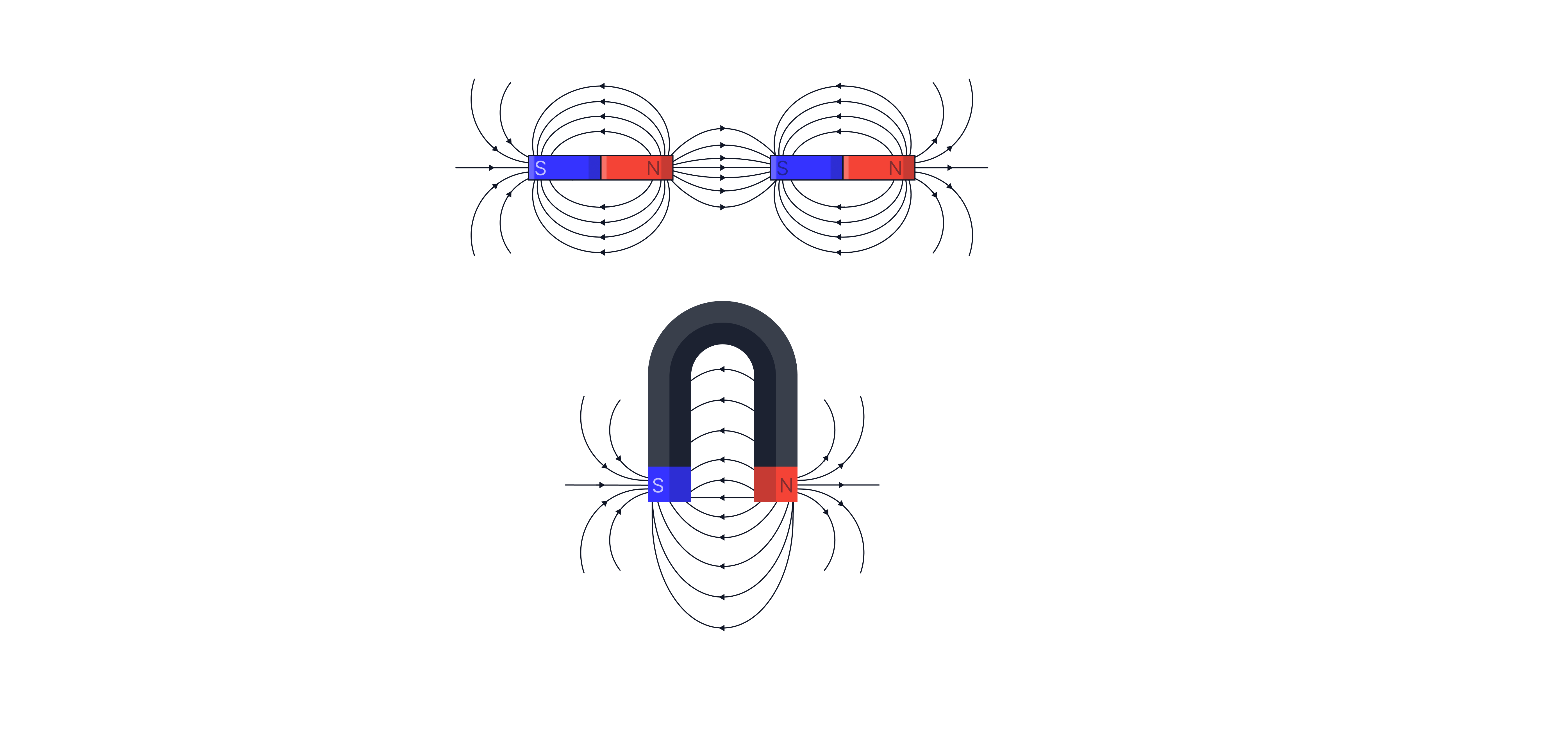
Magnetic force - occurs between magnets or magnetic materials, such as between a fridge and a fridge magnet. The fridge magnet will be attracted to the fridge before it touches the fridge. Magnets have two poles, a north pole and a south pole. When two north poles are facing each other, the two magnets are repelled, but when a north pole faces a south pole, they are attracted to each other, as shown below. The arrows show the direction of the magnetic field lines around the magnets; more on this in topic 7.
No matter if a force is contact or non-contact, its size can be measured using a newton-meter, in the unit Newtons ().
Worked Example:
Which statement is true?
Magnetism is a contact force.
Gravity is a force that acts on objects with mass.
Friction increases when an object moves slower.
Answer:
This is incorrect as magnetism is a non-contact force.
Gravity is a force that acts on objects with mass. B is correct.
This is incorrect because friction decreases when objects move slower.
Worked Example:
Two men are competing in a tug-of-war by pulling in opposite directions on the same rope.
Name the force in the rope when the men are pulling.
One of the men falls over and lets go of the rope. Name one other force acting on this man.
Answer:
Tension
Weight and normal contact force will still be acting on the man who has fallen over.
Scalars and Vectors
Forces are an example of a vector quantity.
Vector quantities have both magnitude (size) and direction.
We can think of vectors as being anything we could represent with an arrow. Examples of vector quantities include:
Velocity (speed in a straight line)
Force
Acceleration (rate of increase of velocity)
Displacement (distance in a straight line)
Scalar quantities have a magnitude only.
Examples of scalar quantities include:
Speed
Distance
Mass
Time
A girl is running a race around an athletics track. After , she has run a total distance of , from start to finish, however, she ends up North from her original starting point - this is her displacement. Displacement is a vector; it has both magnitude and direction. It is always the length of the shortest path between two points.
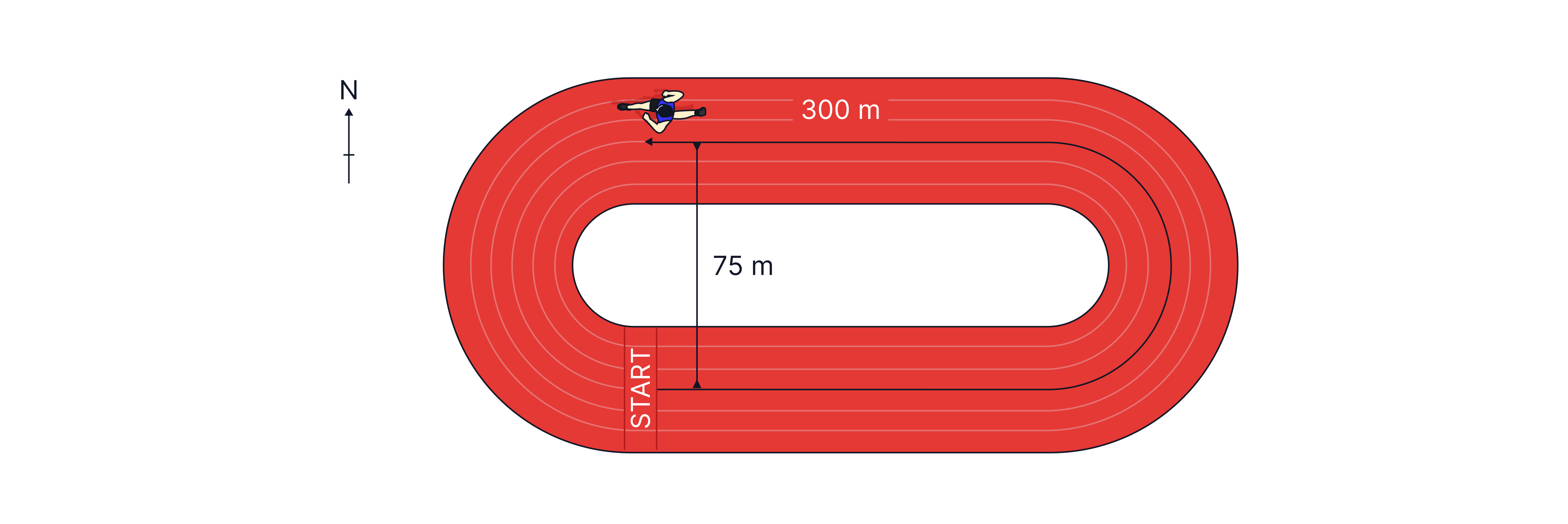
Speed is a scalar, :
Velocity is a vector, :
Remember, as velocity is a vector, we have to include the direction of where she ends up compared to where she started also.
Worked Example:
In a straight line, the station is from my house according to a map. However, when I cycle to the station, I can't go in a straight line because there are houses in the way, which I have to cycle around, so my fitness watch records a longer distance of for my journey.
State the displacement of the station from my house.
It takes me to cycle from my house to the station.
Calculate my speed.
Answer:
Displacement in the distance in a straight line - this will always be either the same size or smaller than the distance, so the displacement is .
The speed is a scalar, it is calculated from the distance which is -> :
Worked Example:
Six students are on a hike. They use a map to see that they need to get from their campsite to a point East in a straight line where the minibus will pick them up. However, there is a large river in the way, so the students can't go straight.
State whether the distance walked by the students is larger or smaller than .
It takes the students to walk from the campsite to the minibus.
Calculate the velocity of the students in .
Answer:
The distance walked by the students will be larger than as is the displacement so the distance walked by the students will be further, as they have to walk around the river, they can't go through it.
Velocity is a vector; it is calculated from the displacement. The question wants the answer in kilometres per hour, so we keep the displacement in kilometres and the time in hours.
Work Done
We learnt in Topic 1 that we can calculate the amount of energy transferred by a force by calculating the work done.
Formula:
Work done is the same as the energy transferred.
Example: A horse pulls a cart with a force of . If we want to find out how much energy is transferred, we can do so by calculating the work done by the horse to pull the cart:
The amount of energy transferred to the cart, is the same as the work done, .
Remember: Work done can only be calculated if the distance travelled is in the direction of the force - for example, if a cyclist was moving North but the wind was blowing East, the wind would not do any work on the cyclist. The wind would only do work on the cyclist if they changed direction and started moving east or west. In the same line of action as the force (parallel to the direction of the force).
Worked Example:
Calculate the work done on the box below if it is pushed right for .

Answer:
Worked Example:
If I push my car with all the force I have, but it doesn't move, am I doing any work?
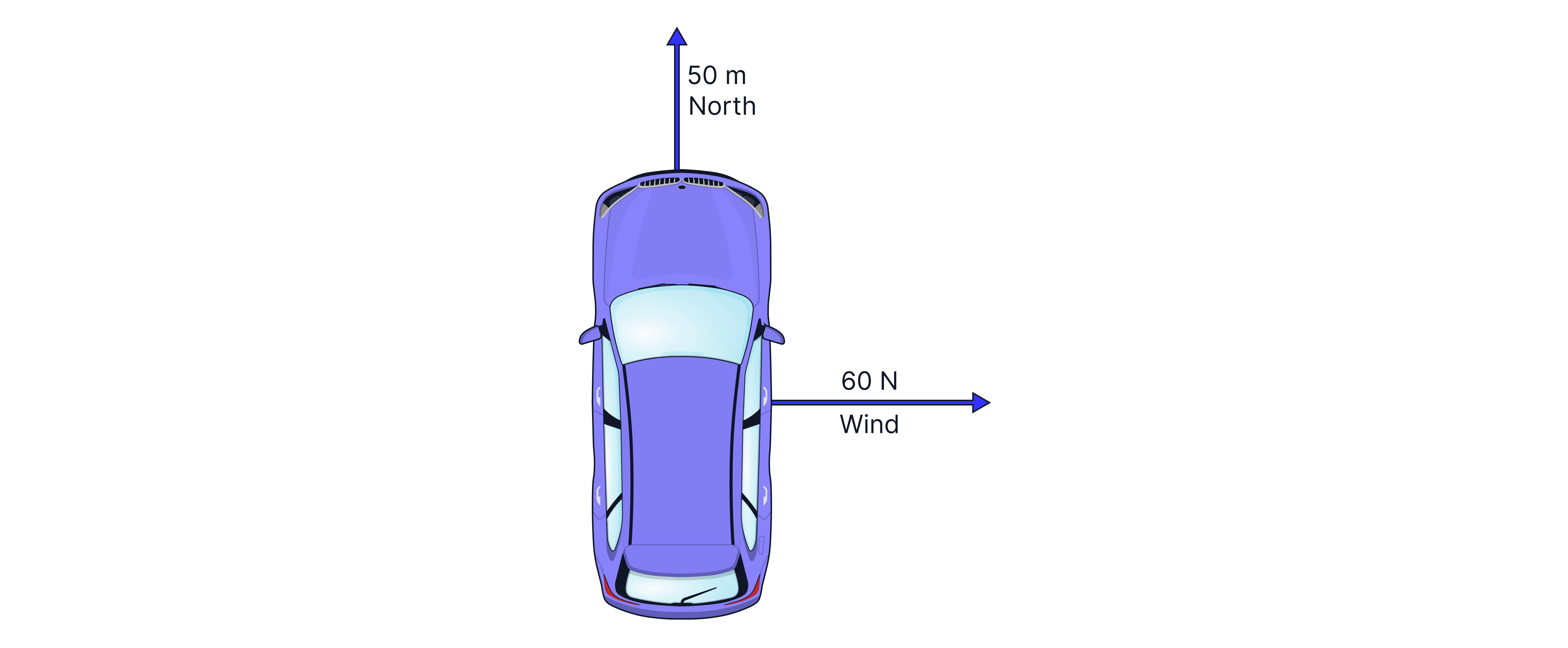
If my car moves north and the wind is pushing the car east with a force of , does the wind do any work on the car?
Answer:
No, because the car doesn't move, no energy is being transferred to the car.
, where the is distance in the direction of the force. The wind is acting at a right angle to the motion of the car, so the distance in the direction of the wind is . Therefore no work is being done on the car by the wind.
Worked Example:
Calculate the work done on the box below if it is pushed North for .

Answer:
The box is moving North, so we need to use the force that in that direction to calculate the work done. The force pointing Northwards is the force:
Practice Questions
A book rests on a table.
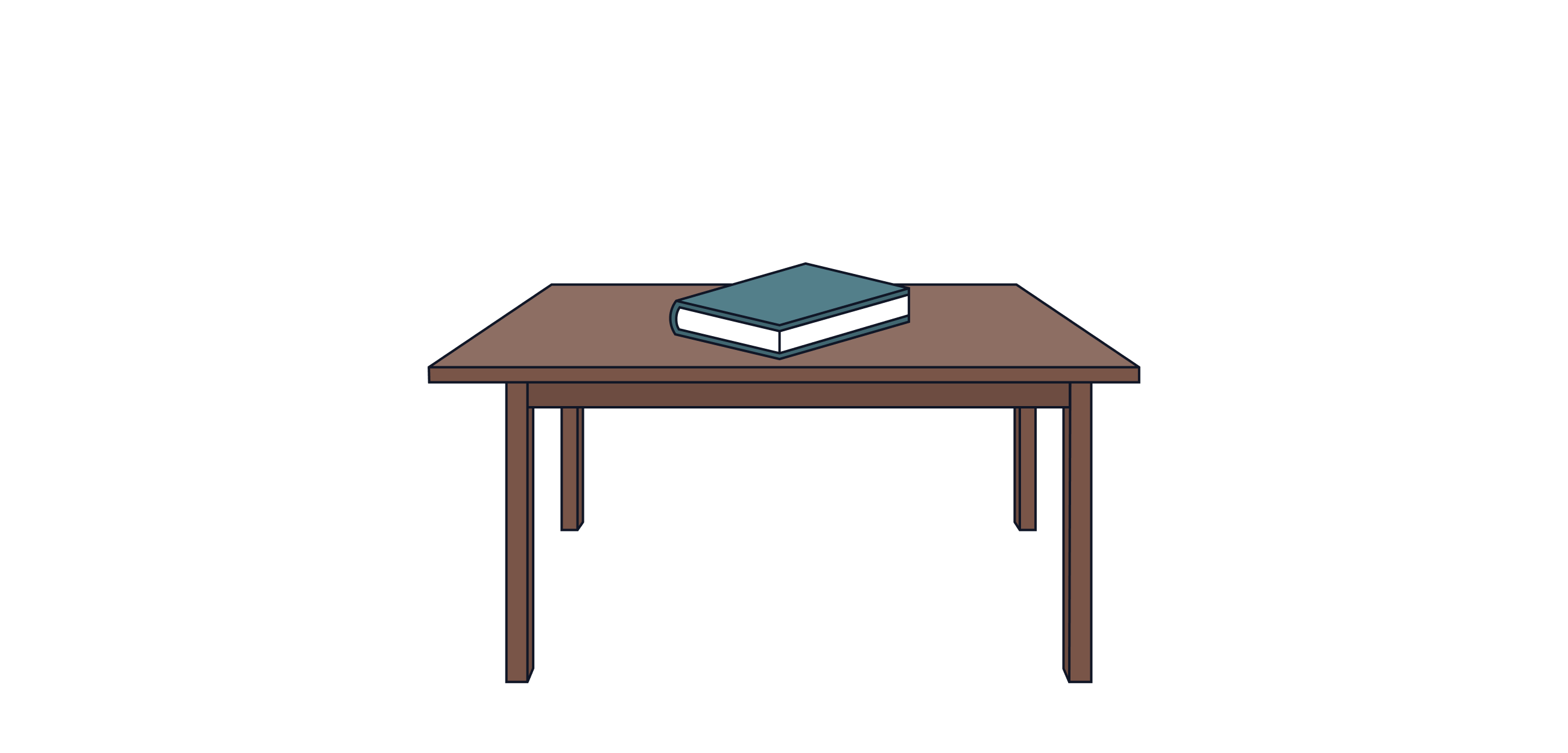
Identify one contact force and one non-contact force acting on the book.
State the difference between scalar and vector quantities.
-> Check out Brook's video explanation for more help.
Answer:
Contact: normal reaction. Non-contact: weight / gravitational force.
Scalars have magnitude only; vectors have magnitude and direction.
A cyclist experiences several forces while riding up a hill.
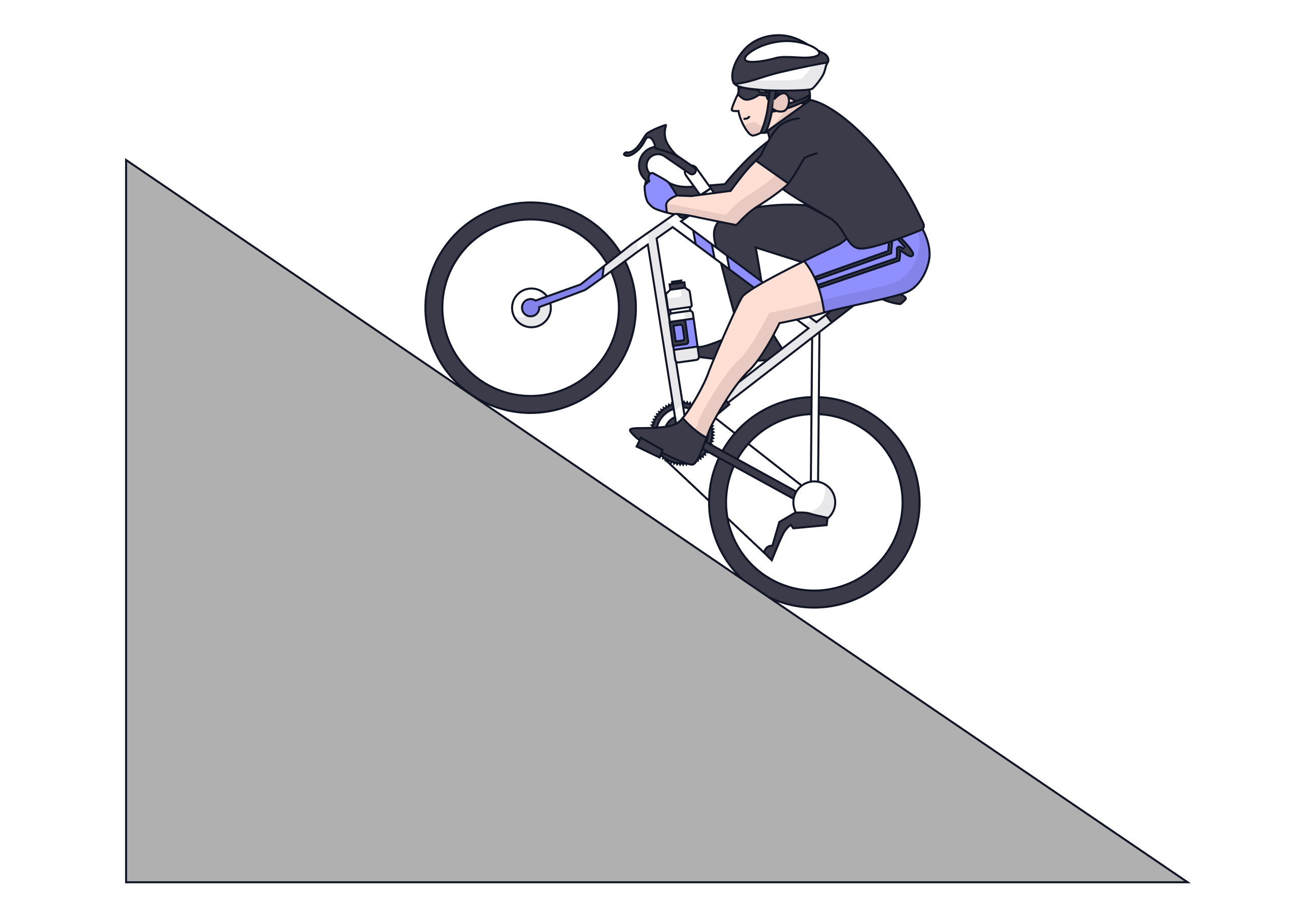
Name two contact forces that act on the cyclist and bicycle.
Name one non-contact force acting on the cyclist.
-> Check out Brook's video explanation for more help.
Answer:
Friction (tyres on road), air resistance, normal reaction from the ground.
Weight / gravitational force.