Newton's 1st and 2nd Law
Brook Edgar & Hannah Shuter
Teachers


Contents
Explainer Video
Resultant Force
When several forces act at once on an object we need to simplify them to work out what is going to happen to the object. We do this by working out the resultant force on an object. The resultant force is the single force that has the same effect as all the individual forces acting together. It can be thought of as the "overall" force on an object or the difference between the forces.
Forces in Straight Lines:
When forces act in a straight line (along the same direction/parallel), we can add or subtract them, depending on their direction, to find the resultant force.
When forces act in opposite directions, as shown below, we subtract them,
The resultant force to the right.
There is a bigger force of pulling the box to the right.
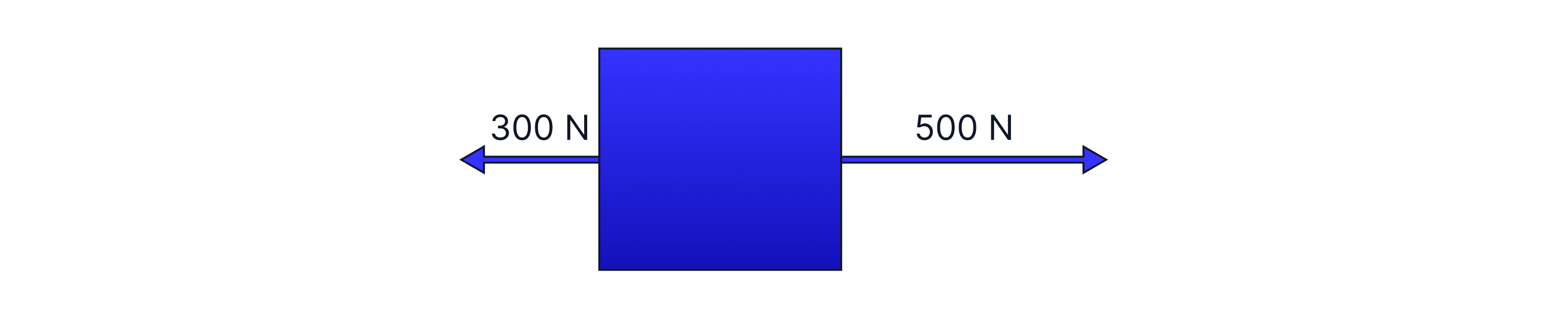
When forces are acting in the same direction, we add them as they are both pulling the box in the same direction,
The resultant force to the right.

We say the forces are balanced when the forces are of equal size but in opposite directions.
The box below has a force of pushing it to the right and a force of pushing it to the left,
Resultant force

Forces at Right Angles:
To find the resultant force of two forces acting at right angles to each other, we cannot just simply add or subtract them, as horizontal and vertical directions are completely independent.
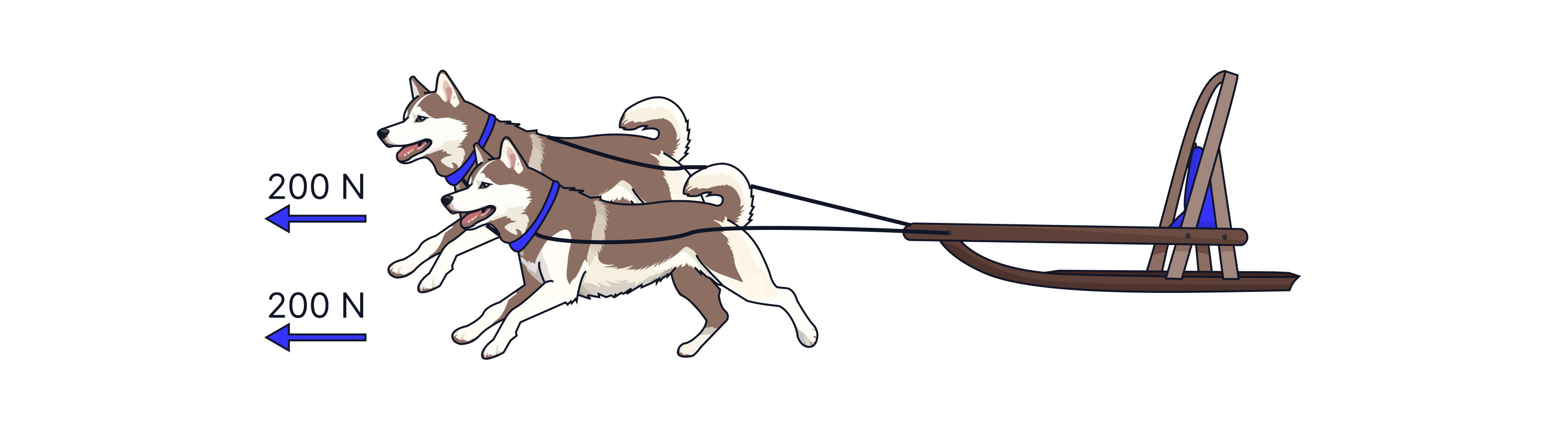
For example, if two huskies are pulling a sledge, each with a force of as shown below, the resultant force would be fowards on the sledge,
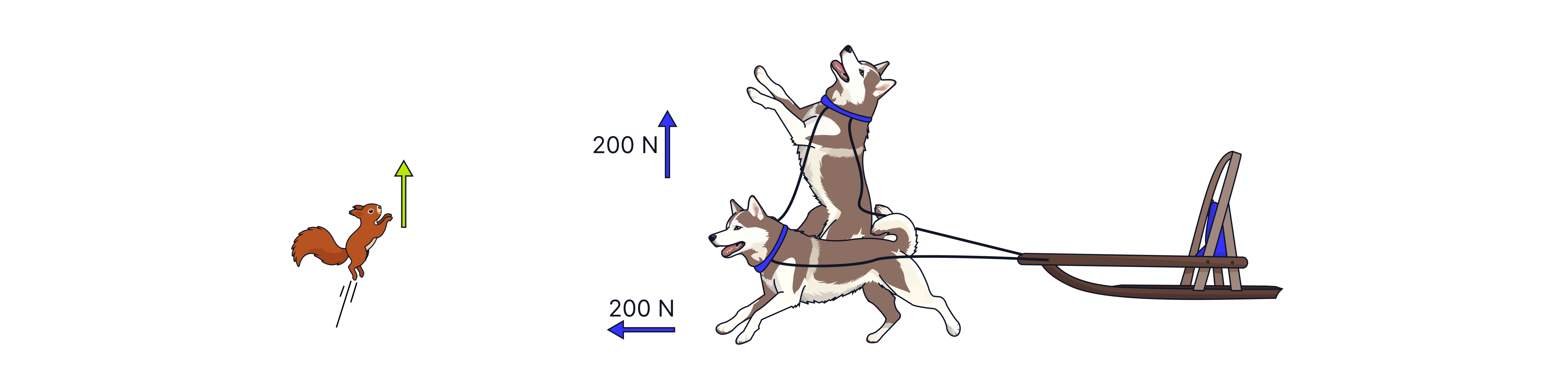
But if, suddenly, a squirrel ran out in front of the sledge and distracted one of the dogs, causing it to start pulling the sledge upwards, in the same direction the squirrel ran, the two forces are no longer in a straight line but act at right angles to each other. We know from everyday life that the sledge will start moving diagonally, to the left and upward, halfway between the two dogs' paths, but we now need to be able to calculate this resultant force.
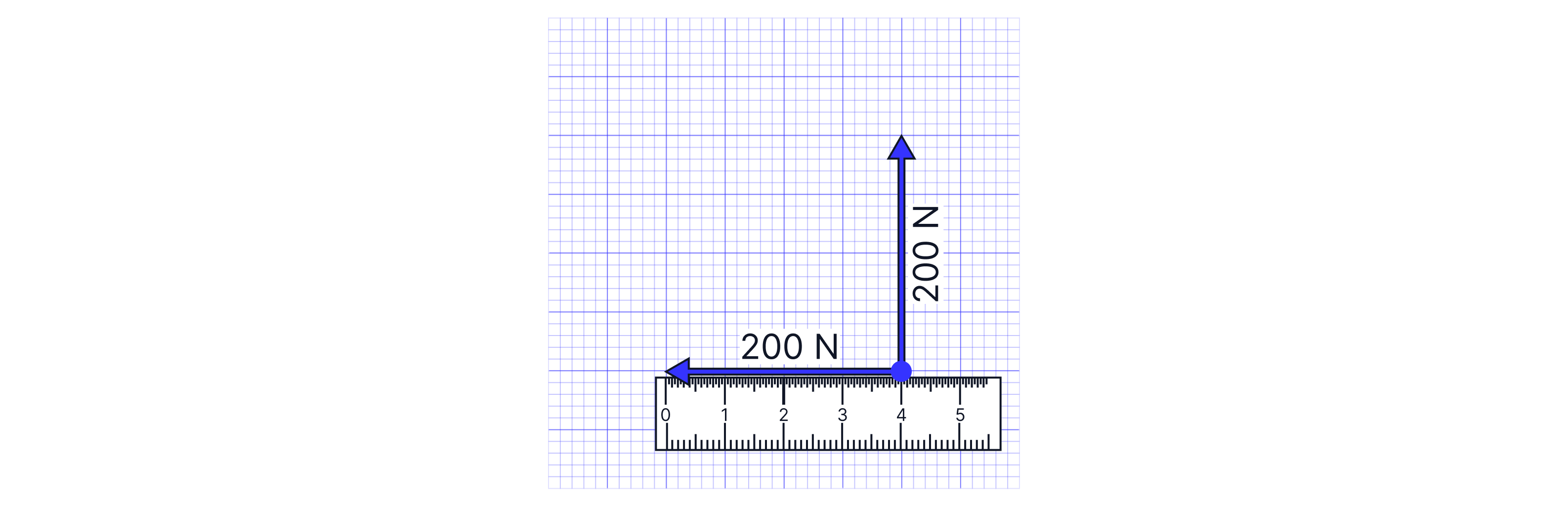
To work out the resultant force on the sledge, we first need to draw a scale diagram, as shown below. The sledge is represented as a dot (as we are not in art class), and using a scale of we draw two lines at right angles to each other each long.
.
However, we cannot add vectors unless they are tip-to-toe (remember forces are vectors). We need to move one of the arrows to do this, but we need to ensure that we don't change the size or direction of the arrows, just their arrangement. In this example, we are going to move the horizontal arrow up, so the tip of the vertical arrow is now against the toe of the horizontal arrow as shown below,
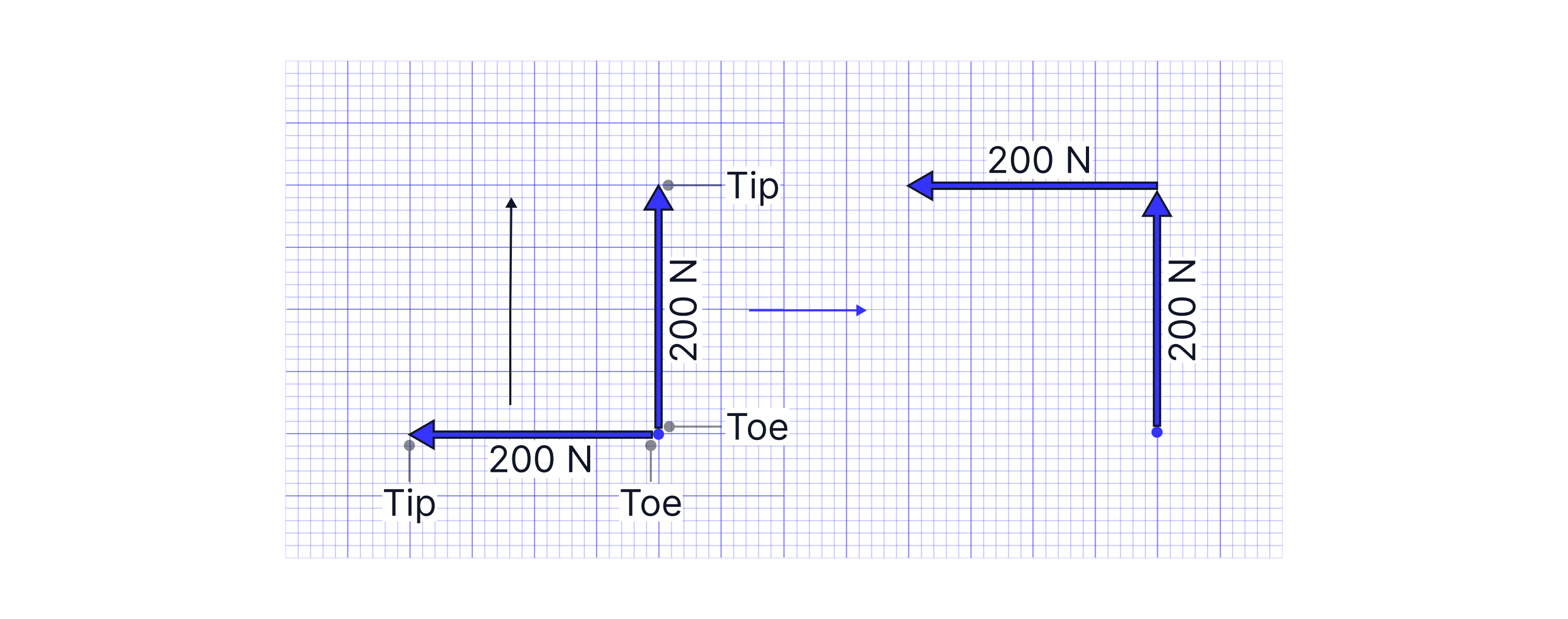
We now draw the resultant force on the diagram, going from the bottom (toe) of the vertical arrow to the head (tip) of the horizontal arrow, to complete the shape.
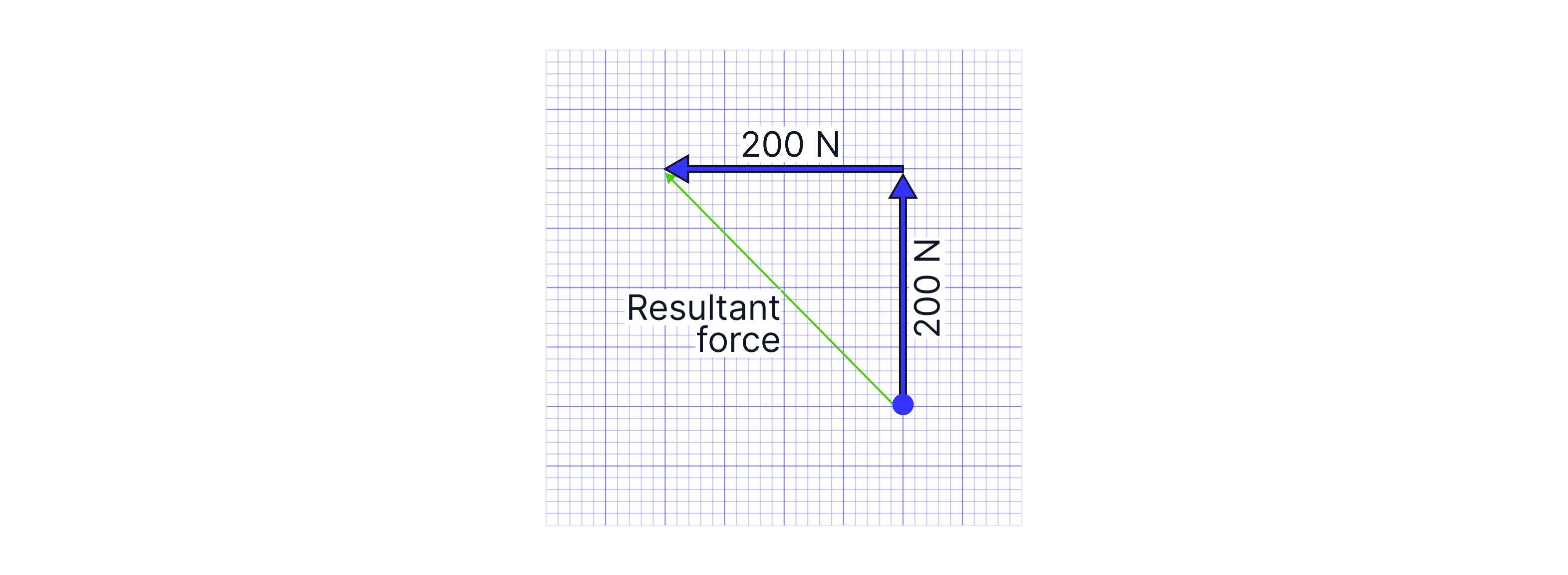
The direction of the arrow tells us the direction of the resultant force (the angle can be measured with a protractor), and the length of the arrow tells us the size of the force. To calculate the size of this force we need to use a ruler to measure its length and our scale again,
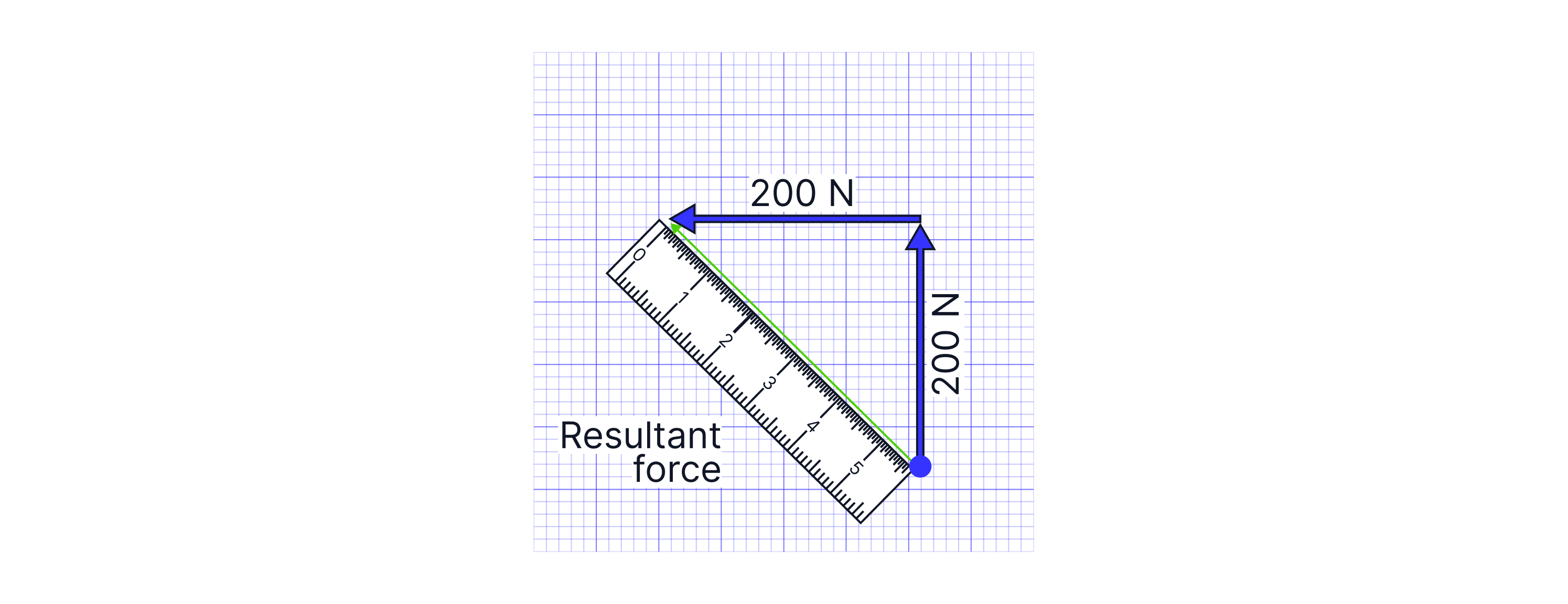
The line is long, so using our earlier scale of , the resultant force would be, .
Remember: Force is a vector quantity, so the direction of the forces on an object influence whether they need to be added or subtracted.
Worked Example:
A boat moves through the ocean. There is a force on the boat West, and a force towards South.
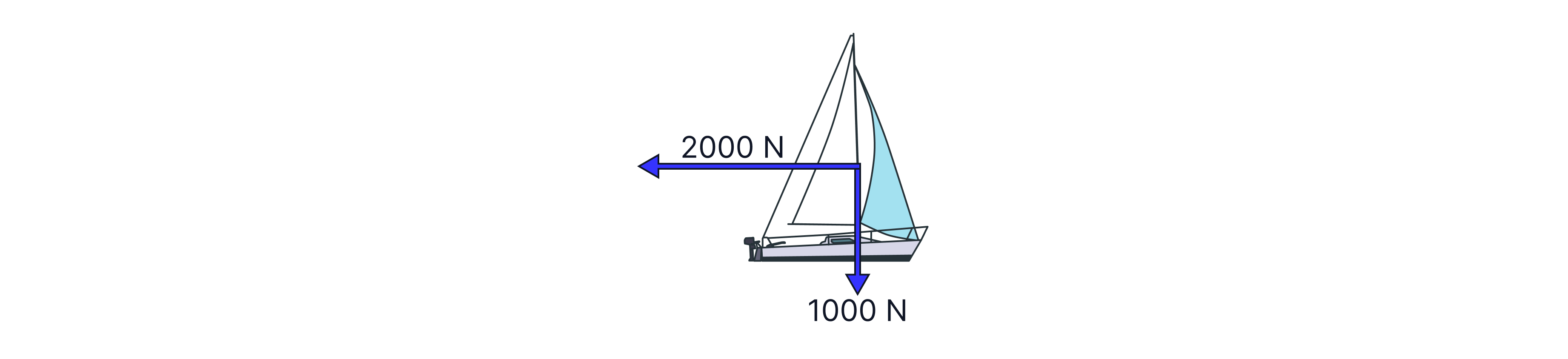
Find the magnitude of the resultant force on the boat using a scale diagram.
The force towards the South increases. What effect does this have on the resultant force on the boat?
Answer:
Start by working out a scale - for my diagram, I am going to use a scale of as we have to draw very large forces on our page,
We need to draw the vectors on the graph paper, ensuring to draw them, tip-to-toe as shown below,
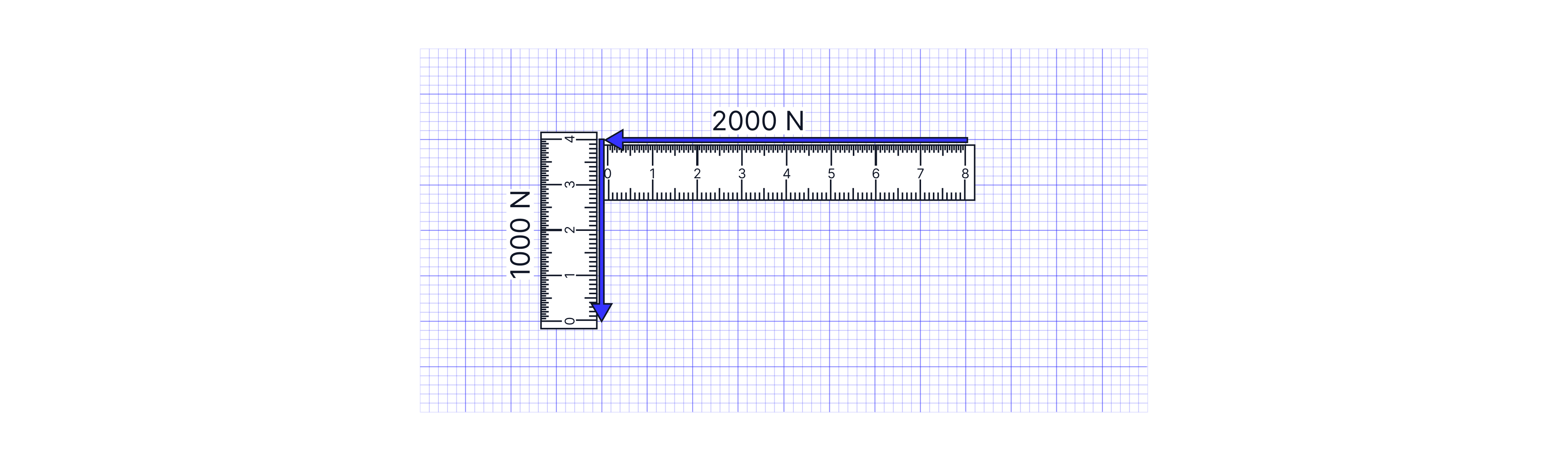
To find the resultant force, we complete the shape by joining the toe of the arrow to the tip of the arrow, and measuring the length of this line using a ruler to determine its size,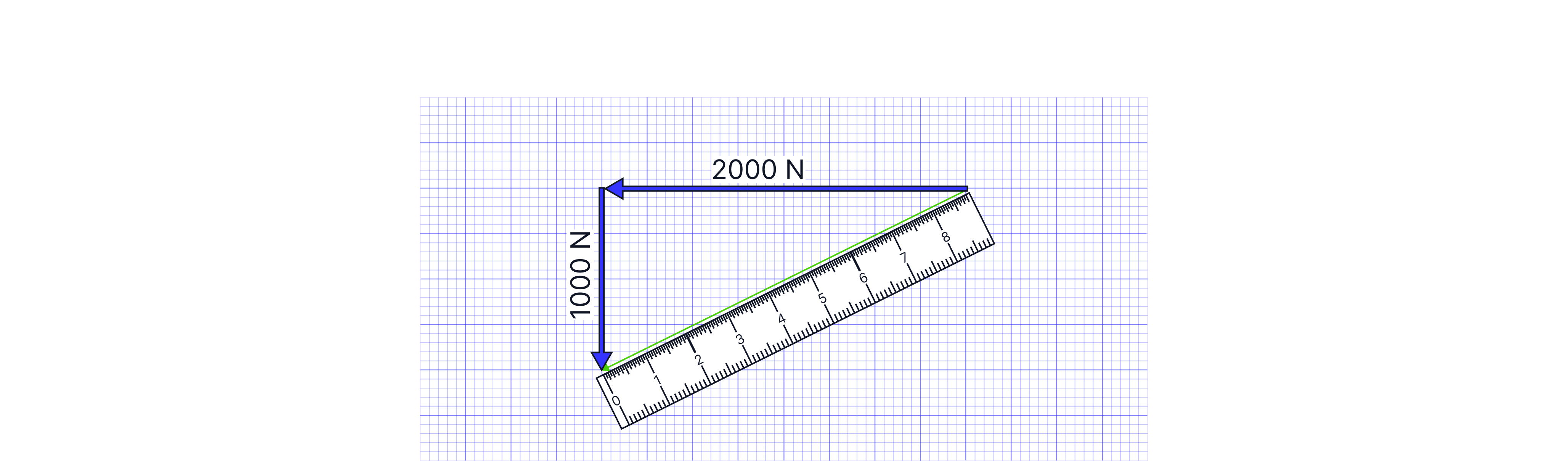
The length of the resultant force is , using our scale,
The resultant force becomes larger. The resultant force now tilts more towards the south, as the southward arrow will now be longer.
Worked Example:
A sailing boat is being pulled into harbour by a barge with a force of . The current is pushing the boat north with a force of . By using a scale diagram, calculate the resultant force on the boat.
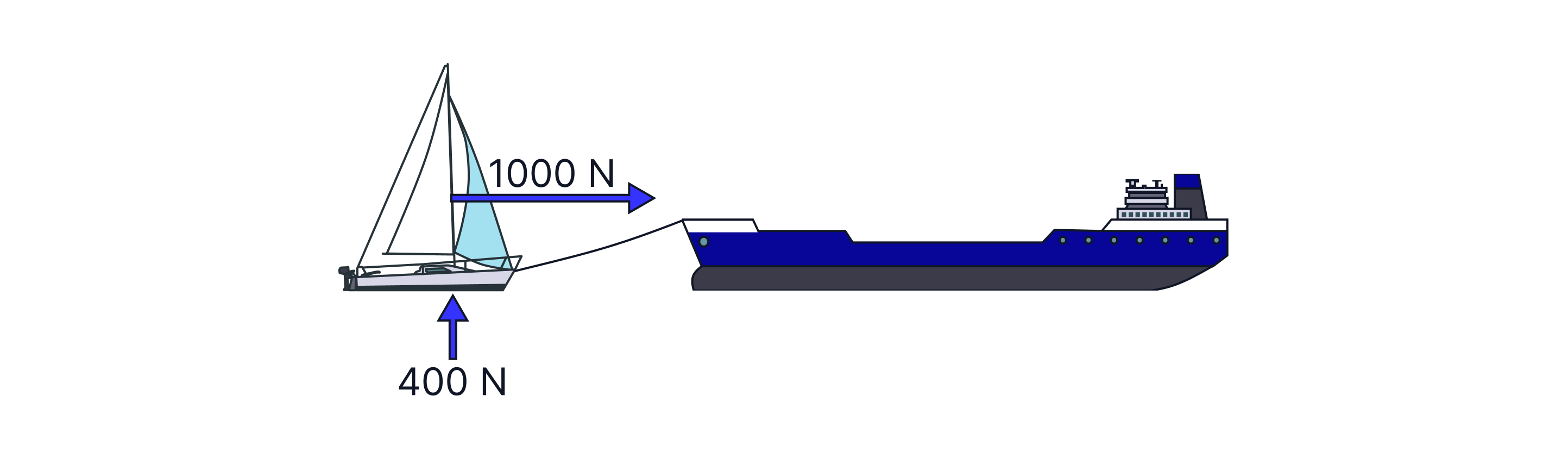
Answer:
First, we need to determine a scale. I have chosen a scale of , therefore a force will have a length of , and a force will have a length of . Ensure to draw the vectors tip-to-toe as shown in the diagram below,
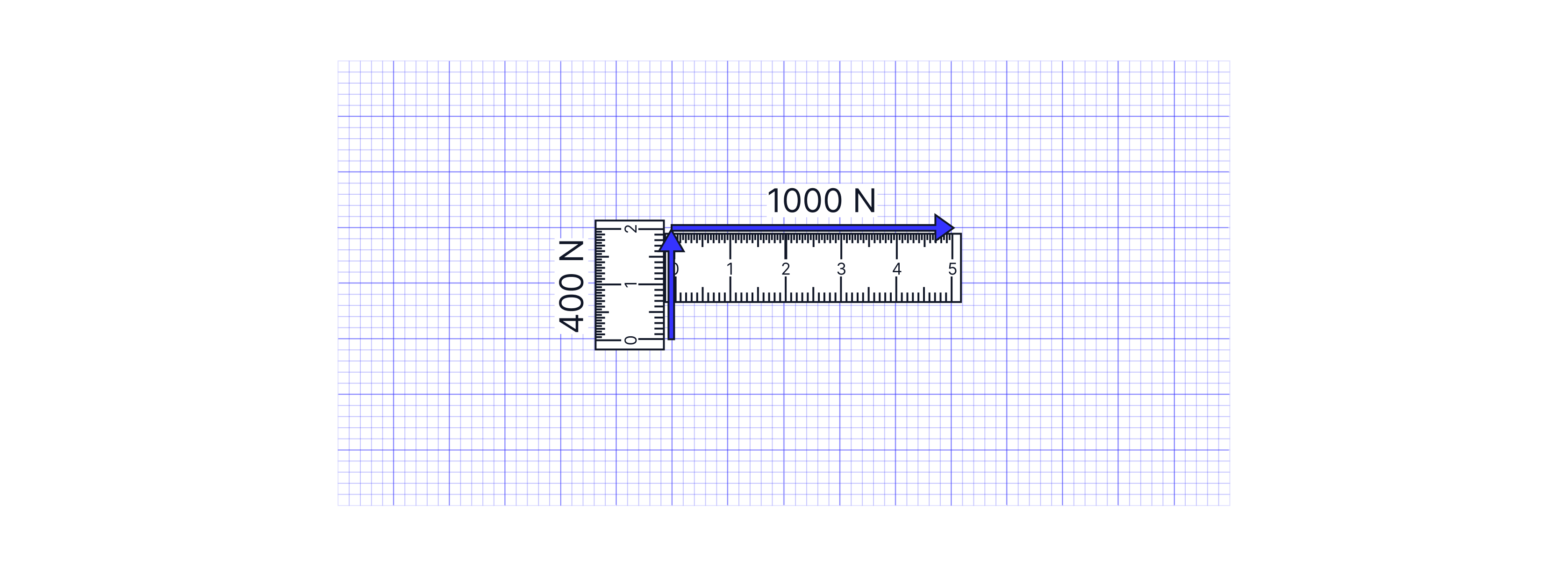
Draw the resultant force by joining the toe of the arrow to the tip of the arrow, as shown in the diagram below and measure the length of the line using a ruler,
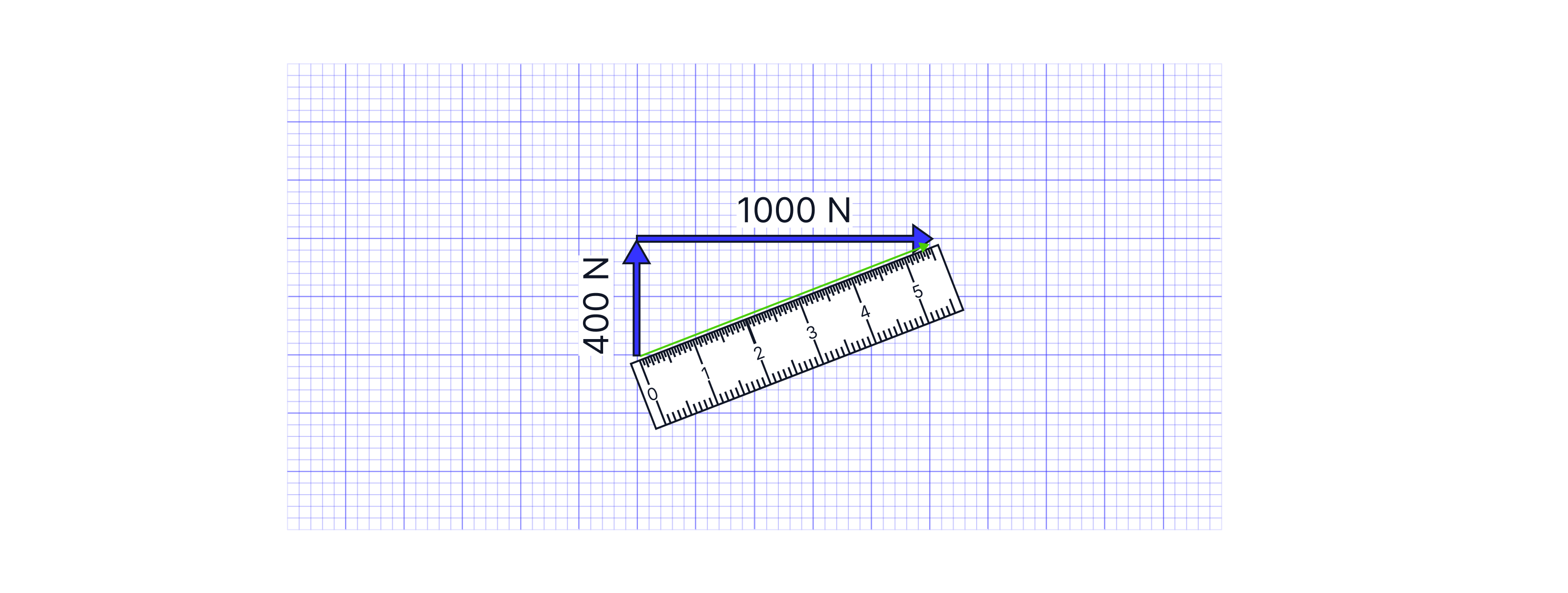
The length of the resultant force arrow is , so using our scale form before, where , our line has a force of, .
Newton's First and Second Laws
Newton’s Law tells us what happens when an object has no resultant force acting on it -when the forces on an object are balanced.
Newton’s Law states that if there is no resultant force acting on an object, it will either:
Remain at rest
Or keep moving at the same velocity if it was already moving
If a book is at rest on a table, the resultant forces on it are zero (weight = normal contact force), so it will remain at rest. If a car is moving at a constant speed, and the forces on it are balanced (thrust from the engine = friction), the car will continue to move at a constant speed.
Newton's Law tells us what happens when forces are unbalanced -> when there is a resultant force acting on an object.
Newton’s Law states that the resultant force on an object is directly proportional to its acceleration and inversely proportional to its mass.
Formula:
Example: A bicycle, person and all their camping kit has a mass of . The foward force on the bicycle from their legs is , and the resistive forces on the bicycle due to friction and air resistance combine to .
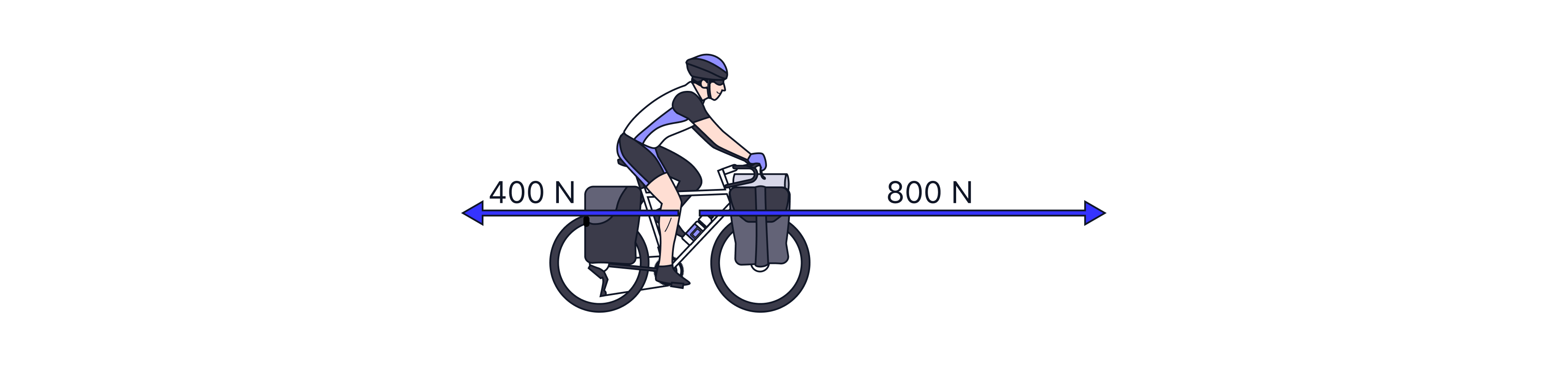
To calculate the acceleration of the bicycle, we use Newton's Second Law.
As acceleration is inversely proportional to the mass, , if you double the mass of an object but apply the same force, the rate of acceleration will halve. For example, a car filled with luggage will accelerate more slowly than an empty car. This can be referred to as inertial mass: a larger mass requires more force to achieve the same acceleration.
Inertia is a measure of how difficult it is to change the velocity of an object. The greater the inertial mass, the harder it is to accelerate or decelerate the object. For example, an elephant has a much greater inertial mass than a mouse. If you kick a mouse, it will change velocity very quickly - if you kick an elephant - not so much!
Formula:
This is just rearranged.
Worked Example:
The car was initially stationary, is the car now…

Stationary
Moving at a constant speed.
Speeding up (Accelerating)
Slowing down (Decelerating).
Answer:
The forces on the care are balanced, so it remains stationary.
Worked Example:
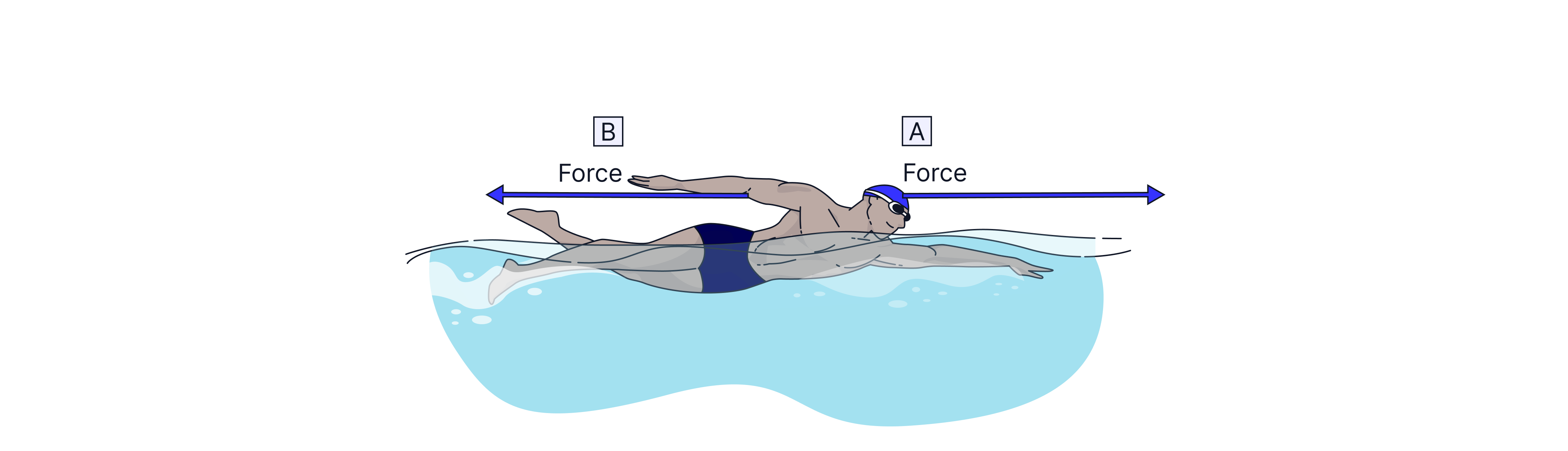
The swimmer is moving forward at a constant speed. If Force A is , state the size of Force B.
As Force A increases to , the swimmer accelerates. Calculate the resultant force on the swimmer.
Answer:
Resultant force must be for the swimmer to be moving at a constant speed, so force B is .
Worked Example:
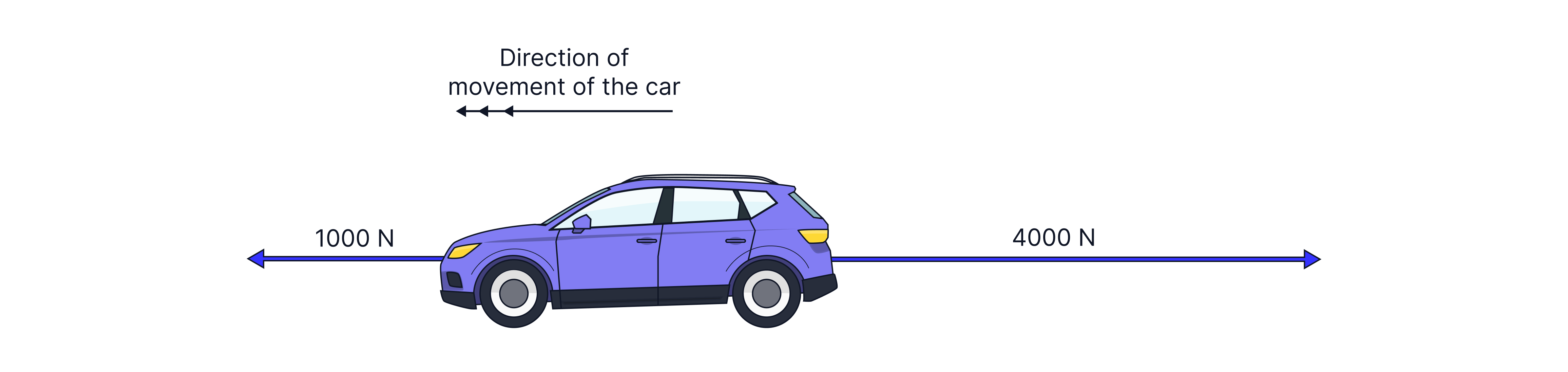
The car below has a mass of . Calculate the acceleration of the car and state how the motion of the car will change.
Answer:
The resultant force on the car is, backwards. There is a larger force pushing the car backwards, opposing its motion, so the car will slow down, it will decelerate. The magnitude of the deceleration is calculated in the same way as the acceleration,
The car decelerates at .
Resolving Forces
Sometimes forces don't act purely horizontally or vertically - they act at an angle. We need to break these forces down into their horizontal and vertical components. This process is called resolving forces.
The horizontal and vertical components are found by drawing a triangle around the resultant force, as shown below,
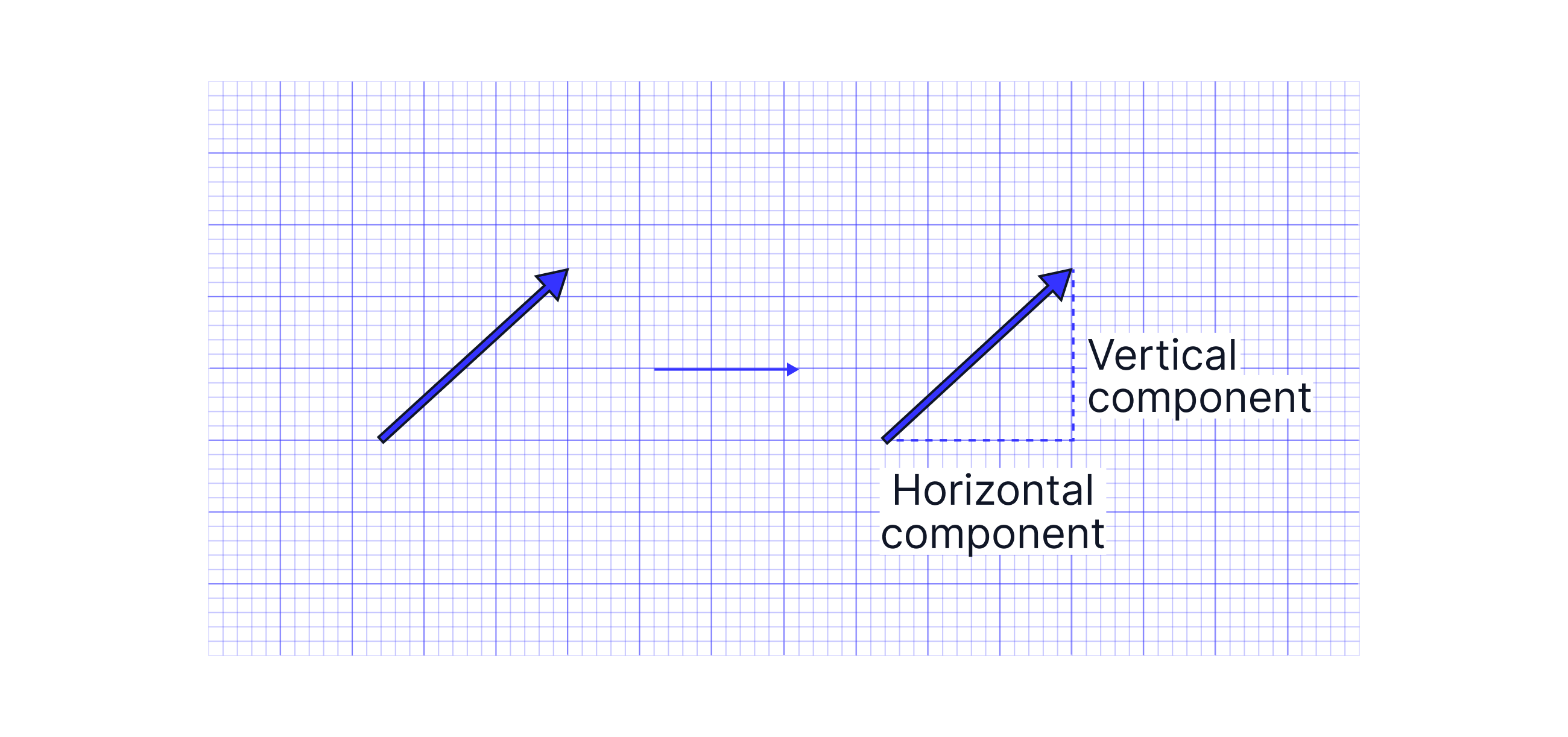
We then use scale diagrams to determine the magnitude of these forces as we did before.
Worked Example:
Resolve the resultant force below into its vertical and horizontal components:
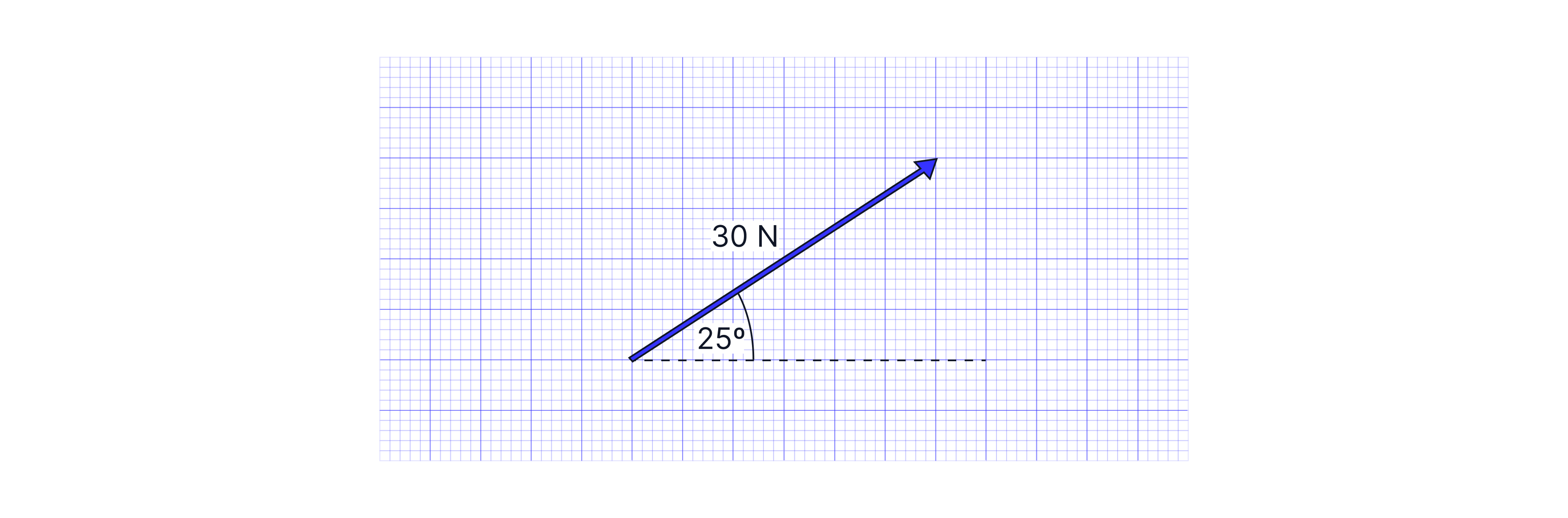
Answer:
First we measure the lenght of the arrow to determine our scale. The length of the arrow is measured to be , as shown below. As this arrow respresents our scale is,
We then draw on the vertical and horizontal components by drawing a triangle around the resultant force and measuring the lengths of these sides, as shown below,
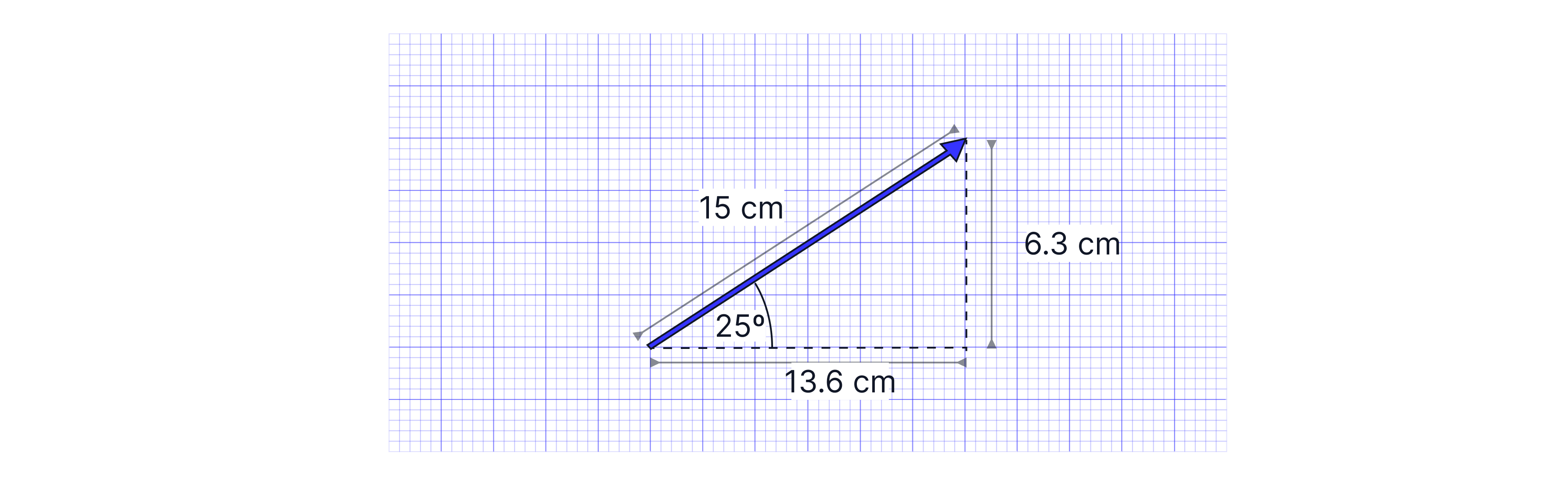
Horizontal Force:
The length of the horizontal line is when measured with a ruler. Using our scale this would give a force of:
Vertical Force:
The length of the vertical line is , using our scale the vertical force is:
Worked Example:
Use the vector diagram below to determine the size of the vertical component of the resultant force.
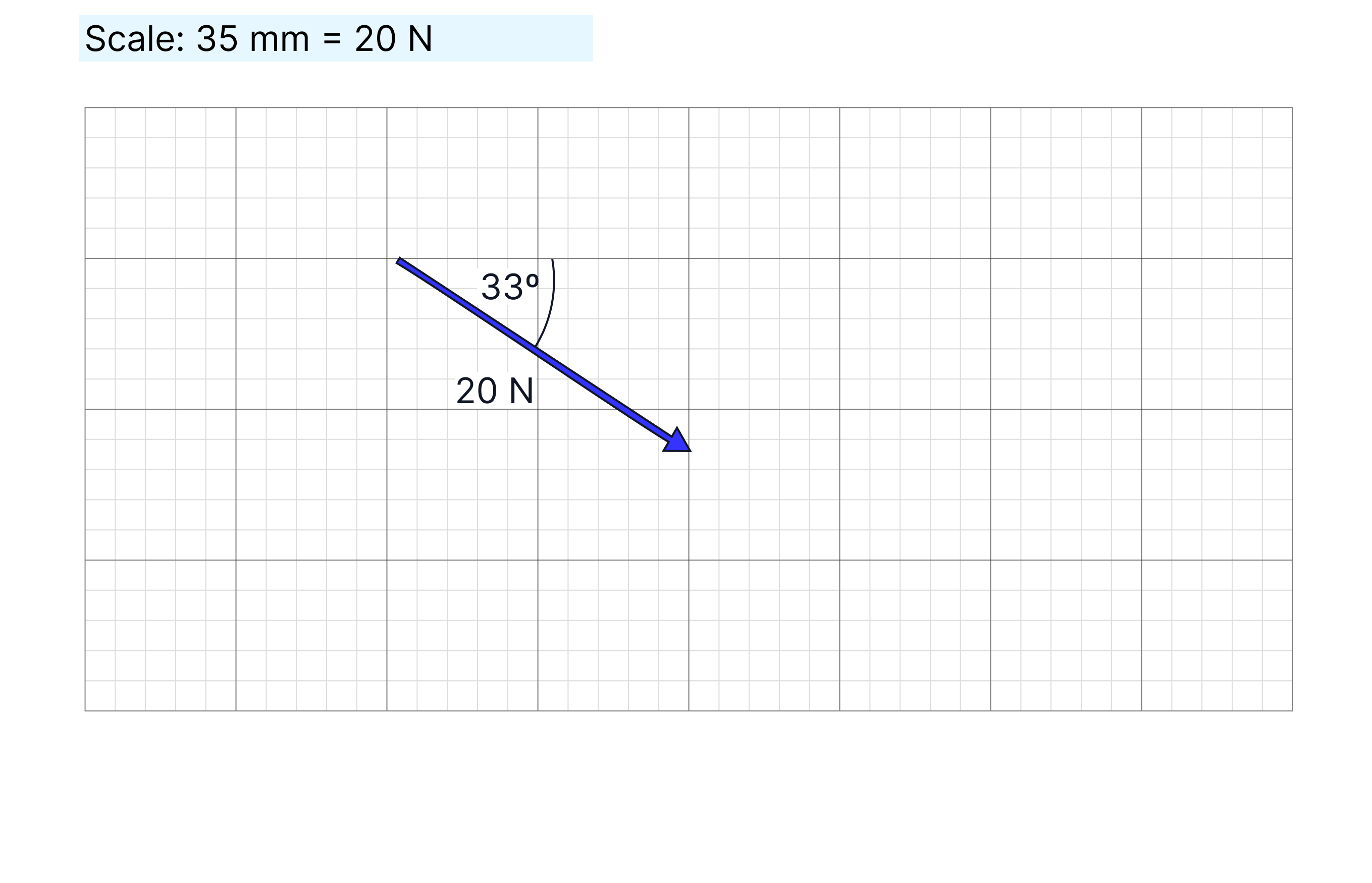
Answer:
We start by drawing the horizontal and vertical components by drawing a triangle around teh resultant force as shown below, and measure the lenght of the vertical component using a ruler,
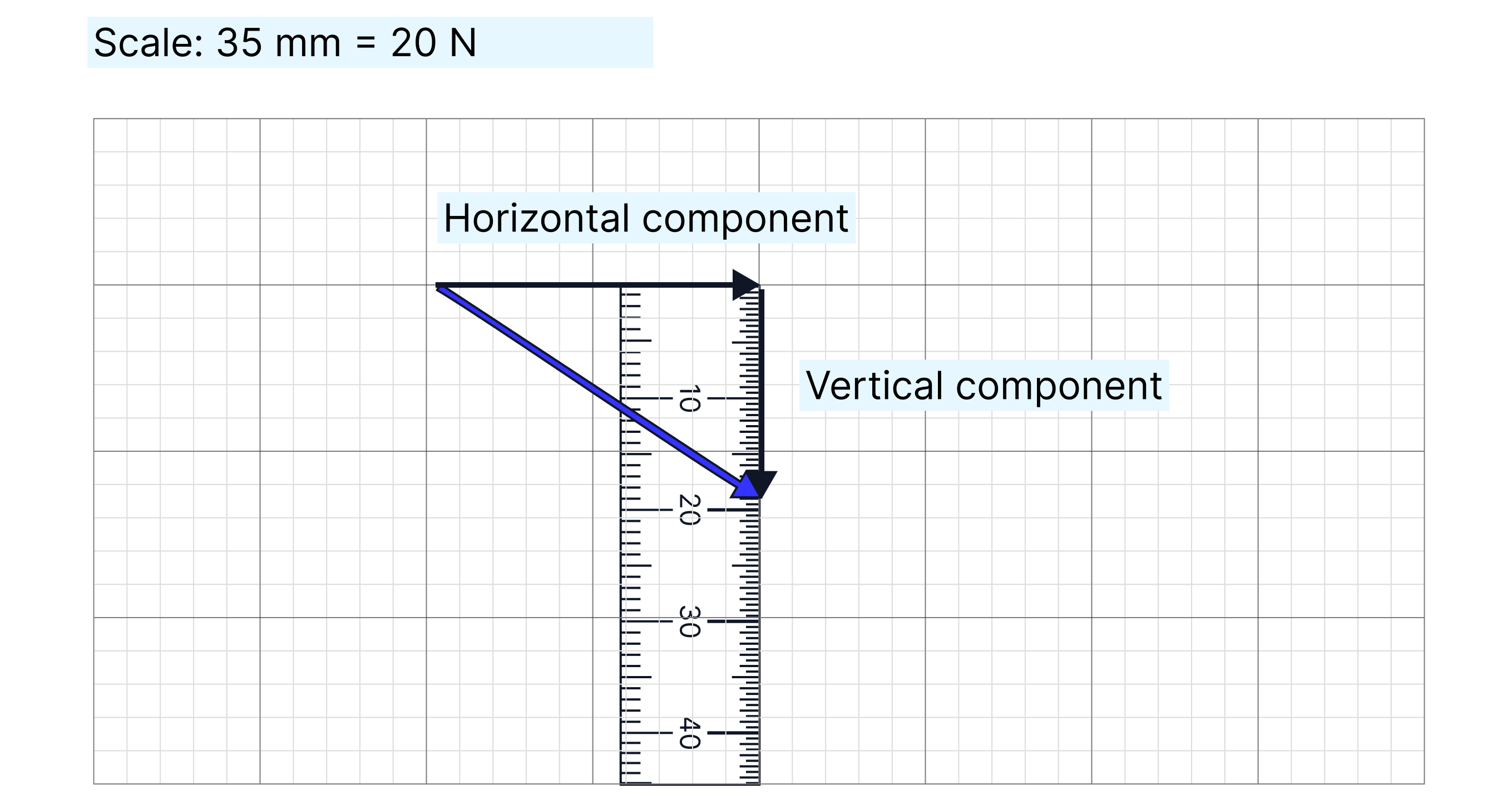
We then use the scale given to calculate the size of this force,
Practice Questions
A car travels along a straight road at a constant speed of .
State the resultant force acting on the car and explain your answer.
-> Check out Brook's video explanation for more help.
Answer:
The car is moving at a constant speed in a straight line, so resultant force is .
A small vehicle of mass accelerates when a horizontal force is applied.
A resultant force of acts on the vehicle. Calculate its acceleration.
The same force is applied to a second vehicle of mass . Explain how its acceleration compares to the first vehicle.
-> Check out Brook's video explanation for more help.
Answer:
The acceleration is smaller. Because for the same force, acceleration decreases when mass increases.