Kinetic Energy
Brook Edgar & Hannah Shuter
Teachers


Explainer Video
Kinetic Energy
Kinetic Energy is the energy an object has due to its motion.
Formula:
, so the equation can also be written
We can see from the equation above that the more speed an object has, the more kinetic energy an object has. We can see this below: the car has the same mass, but as its speed is increased, its kinetic energy increases.
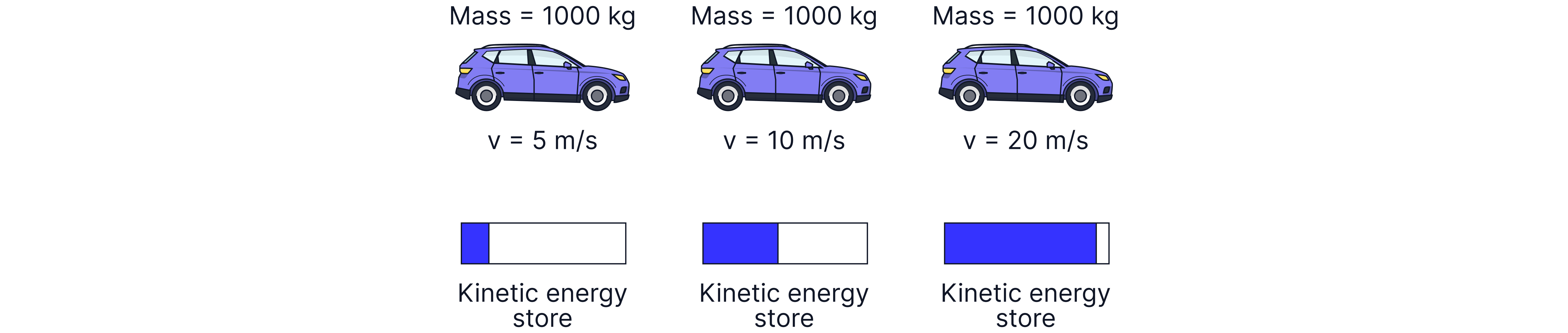
We can use the equation to calculate the kinetic energy of the first car, as we are told its mass is kilograms and that it is moving at metres per second.
We can simplify this equation by calculating five squared first,
We can also see from the equation that the more mass a moving object has, the more kinetic energy it has. We can see this below: the lorry is travelling at the same speed, but as its mass increases, its kinetic energy increases.
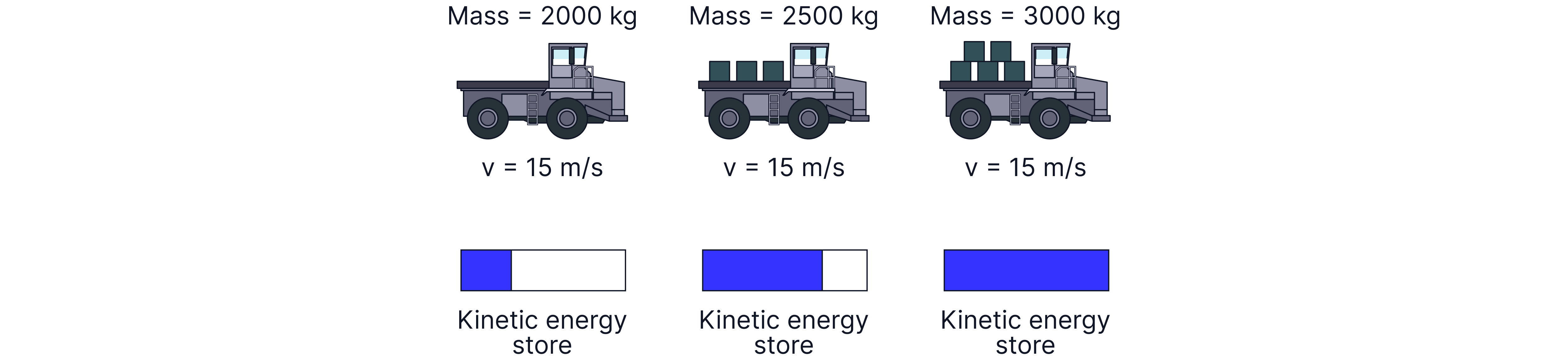
We can use the equation to calculate the kinetic energy of the first lorry, knowing that its mass is kilograms and that it is travelling at metres per second.
We can simplify this equation by calculating fifteen squared first,
Remember: Energy is measured in joules, J!
Worked Example:
Calculate the kinetic energy of the last lorry in the image above. The lorry has a mass of and is moving at .
Answer:
To calculate the kinetic energy, when given the mass and the speed we use the equation, and substitute the numbers given into the correct places. As mass is measured in kilograms, . As speed is measured in metres per second, .
We can simplify this equation by calculating fifteen squared first,
Worked Example:
Calculate how much kinetic energy a football has when kicked if it has a mass of and moves at a speed of .
Answer:
To calculate the kinetic energy we use the equation, .
We are given the speed -> 6 m/s, and we are given the mass . But we know that mass must be measured in kilograms!
Remember, of cash pounds, so .
Next, we fill in the numbers into the correct places,
We can simplify this equation by calculating six squared first,
Rearranging Equations
Sometimes we need to calculate the mass of a moving object or the speed it is moving at, so we need to rearrange the equation.
Always follow the same steps:
1. Write the equation.
2. Fill the numbers into their correct places using their units.
3. Calculate the final answer, remembering to include the final unit.
For example, let's say we want to calculate the speed a girl runs at. She has a mass of kilograms and has joules of energy.
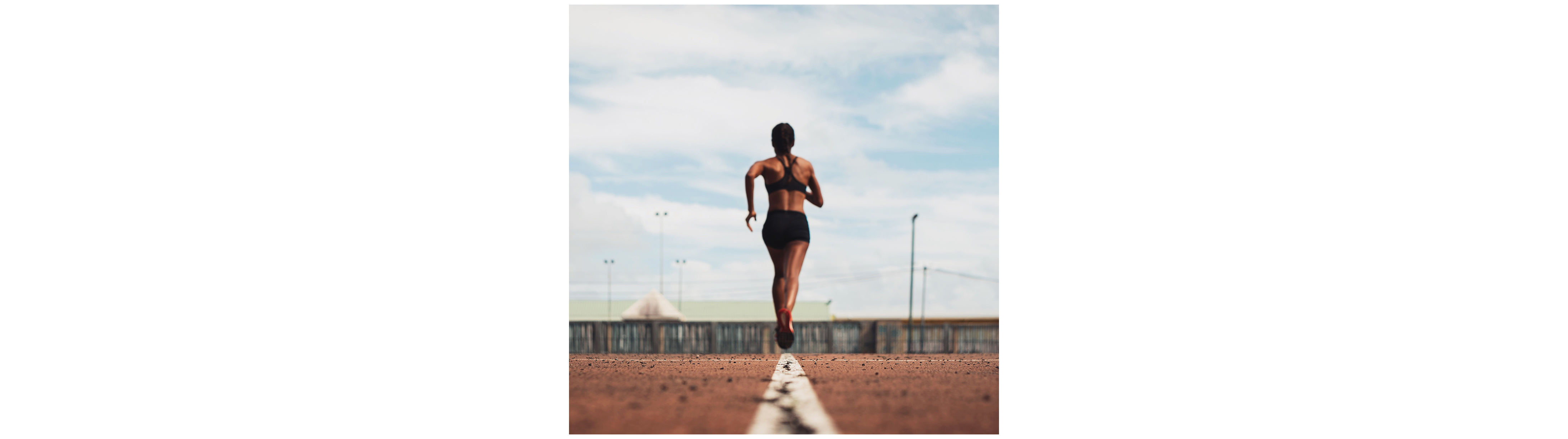
Here we are given mass, speed and an energy. We know the only equation that has all of these terms in it is, , which makes sense as she is running, so she has kinetic energy due to her motion.
We then fill the numbers into their correct places. Mass is measured in kilograms so the number we use for mass is . Energy is measured in joules, so the number we use for energy is .
Now we want to calculate the unknown term, speed.
To do this, we need to get the letter , by itself on the RHS of the equation.
First we should simplify the equation,
We then need to get rid of the '' from the RHS. To get rid of something from an equation, we do its opposite. The opposite of multiplying by is dividing by , and what we do to one side, we must do to the other.
However, we are not done yet; we have only found !
To get , the speed, we need to do the opposite of squaring to get rid of the which is square rooting.
The speed of the girl is metres per second .
Worked Example:
Calculate the mass of an object with of kinetic energy when its speed is .
Answer:
The question tells us the speed in metres per second and the kinetic energy in kilojoules, , but we know that energy is measured in joules, .
Remember, of cash = pounds, so .
The only physics equation with all these terms in it, that allows us to calculate the mass is . We then fill the numbers into the correct places.
Now we want to calculate the unknown term, mass.
To do this, we need to get the letter , by itself on the RHS of the equation.
First, we should simplify the equation,
We then need to get rid of the '' from the RHS. To get rid of something from an equation, we do its opposite. The opposite of multiplying by is dividing by , and what we do to one side, we must do to the other.
The mass is kilograms .
Worked Example:
Calculate the speed of a object with of kinetic energy.
Answer:
The question gives us the mass in kilograms, , and the kinetic energy in joules, . The only physics equation with all of these terms in it that allows us to calculate speed is, . We then fill the numbers into their correct places.
Now we want to calculate the unknown term, speed.
To do this, we need to get the letter , by itself on the RHS of the equation.
First we should simplify the equation,
We then need to get rid of the '' from the RHS. To get rid of something from an equation, we do its opposite. The opposite of multiplying by is dividing by , and what we do to one side, we must do to the other.
However, we are not done yet; we have only found !
To get , the speed, we need to do the opposite of squaring to get rid of the , which is square rooting.
The speed of the object is metres per second .
Practice Questions
How much kinetic energy does a car moving at with a mass of have?
-> Check out Brook's video explanation for more help.
Answer:
Calculate the speed a man runs at, if he has a mass of and of kinetic energy.
-> Check out Brook's video explanation for more help.
Answer: