Plug
Brook Edgar & Hannah Shuter
Teachers


Explainer Video
Plugs
Imagine you're late home from school, your MyEdSpace lesson starts in two minutes and your laptop has low battery. What would you do? You plug it in of course!
There are three brass pins in a UK plug, each connected to a different wire. Brass is used because it is hard and strong, but conducts electricity well. The image below is what a plug looks like if we take the cover off:
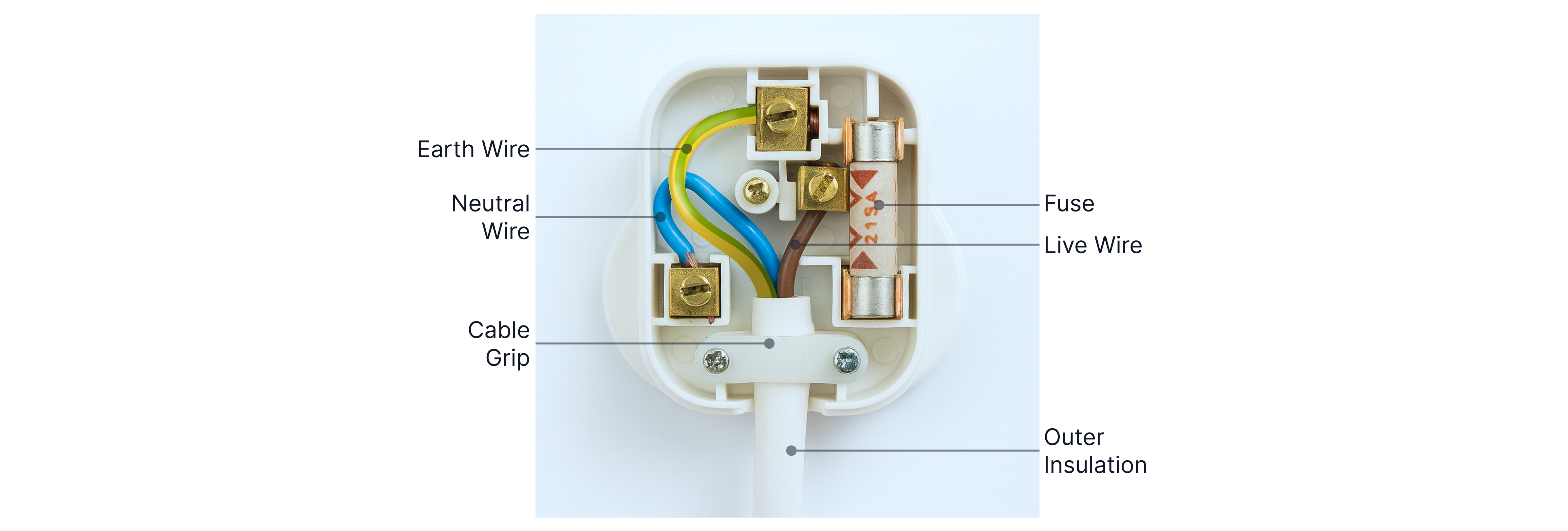
Live wire -> . Has a potential of . This wire brings the electricity to the device.
Neutral wire -> . At a potential of . This wire completes the circuit bringing back electricity.
Earth wire -> and stripe. At a potential of . This wire for safety in the plug and only carries current if there is a fault (problem in the circuit which could cause an electric shock).
When you plug your phone in, the current flows from the live wire, through your phone battery to the neutral wire. This is because current will flow from a high potential difference to a low potential difference.
However, the ground that you're standing on also has a potential of , so if we accidentally provide a connection between a live wire and the ground, current will flow. The human body is a good electrical conductor, so this can be done by touching a live wire, allowing current to flow through you to the ground you are standing on. This is called electrocution.
To prevent electrocution, we wrap each individual copper wire in coloured insulation (coloured so each wire is easily identified), then wrap the whole bundle in another layer of plastic. Copper is used for wires because it is malleable (can be hammered into shape), ductile (can be drawn into a thin wire), and highly conductive (metals conduct electricity well due to their free electrons). Plastic is used for the insulation as it is an insulator, so current will not flow through it.
When wiring plug sockets in a house, we connect them in parallel so that if one stops working, the others will continue to work.
Worked Example:
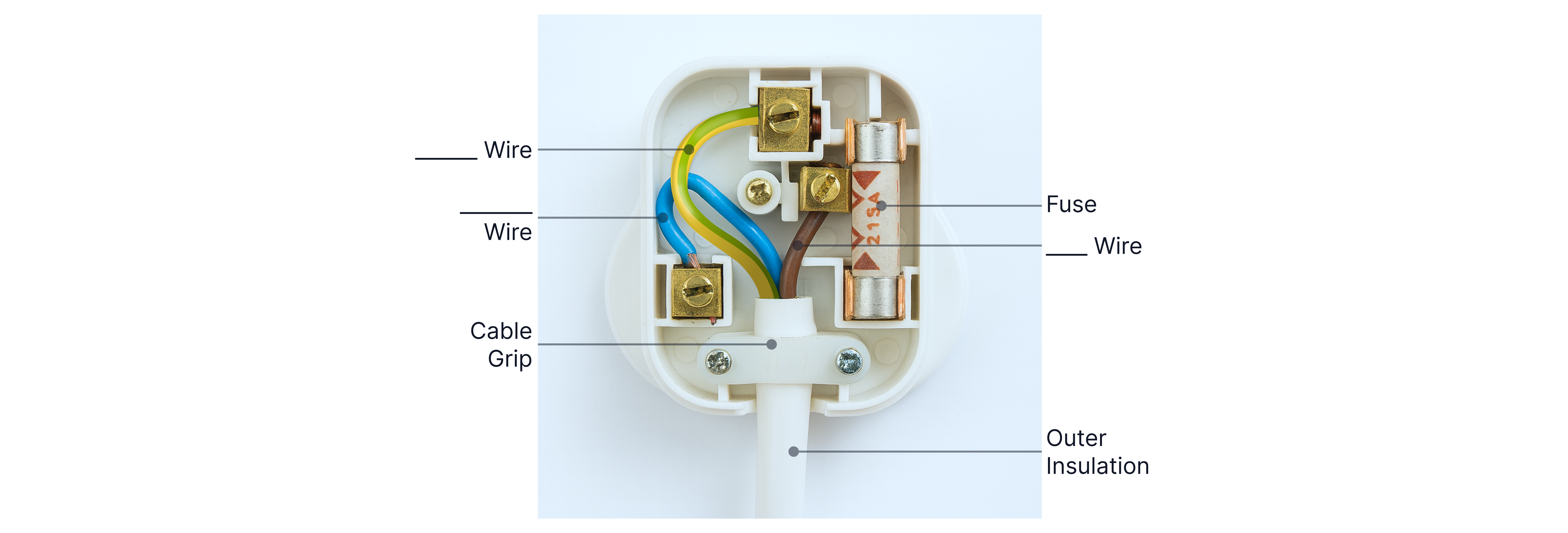
Label the three wires and their potentials on the diagram below:
Answer:
Blue = neutral ()
Green and yellow stripe = Earth ()
Brown = live ()
Worked Example:
Three little birds are sitting on a wire between two pylons. The potential difference across this wire is . Explain why the birds are not being electrocuted.
Answer:
The birds are not electrocuted because there is no connection between the high potential difference wire and the ground, therefore no current can flow. Both of the birdie's feet are sitting at the same potential.
Safety Features in a Plug
To reduce the dangers of electrocution, there are several safety features in all plugs:
Fuse
The fuse is always connected to the live wire. It consists of a thin wire in a ceramic casing that melts when too much current flows through it. Large currents can damage devices and cause fires, so the melting fuse breaks the circuit, preventing current from flowing. Standard fuses in the UK are rated to , and .

For example, if my toaster malfunctions and blows the fuse, it is because too much current was being drawn to it from the mains. The wire in the fuse melted, breaking the circuit and preventing me from being electrocuted. I should buy another toaster, as something is clearly wrong with this one, but as a quick fix, I could replace the fuse in the plug. If the toaster was bought in the UK and has a known resistance of , I can use the equation, , to figure out which fuse to buy.
*Remember the potential difference of all UK mains is .
My toaster needs 2.3 amps of current to work, so I need to buy a fuse that allows this much current to flow but will break if too high of a current flows. From my choices of a , or fuse I would buy the fuse as it allows the current I need to flow, but will melt if the current exceeds .
Earth Wire
Devices with metal casings, like toasters or hair dryers, require an Earth wire for safety. If a fault occurs and the live wire touches the metal casing, the casing becomes live. Anyone who touches it could complete the circuit to the ground and receive a dangerous electric shock.
To prevent this, the Earth wire is securely connected to the metal casing. It provides a low-resistance path for the current to flow safely from the live toaster through the wire to the ground. Because this path has very low resistance, a large current flows, which quickly melts the fuse in the plug. This breaks the circuit and cuts off the electricity, protecting the user from harm.

Not all devices require earth wires; for example, the plastic casing on a tumble dryer will prevent current from flowing if the live touches the casing anyway, as plastic is an insulator.
Circuit Breakers
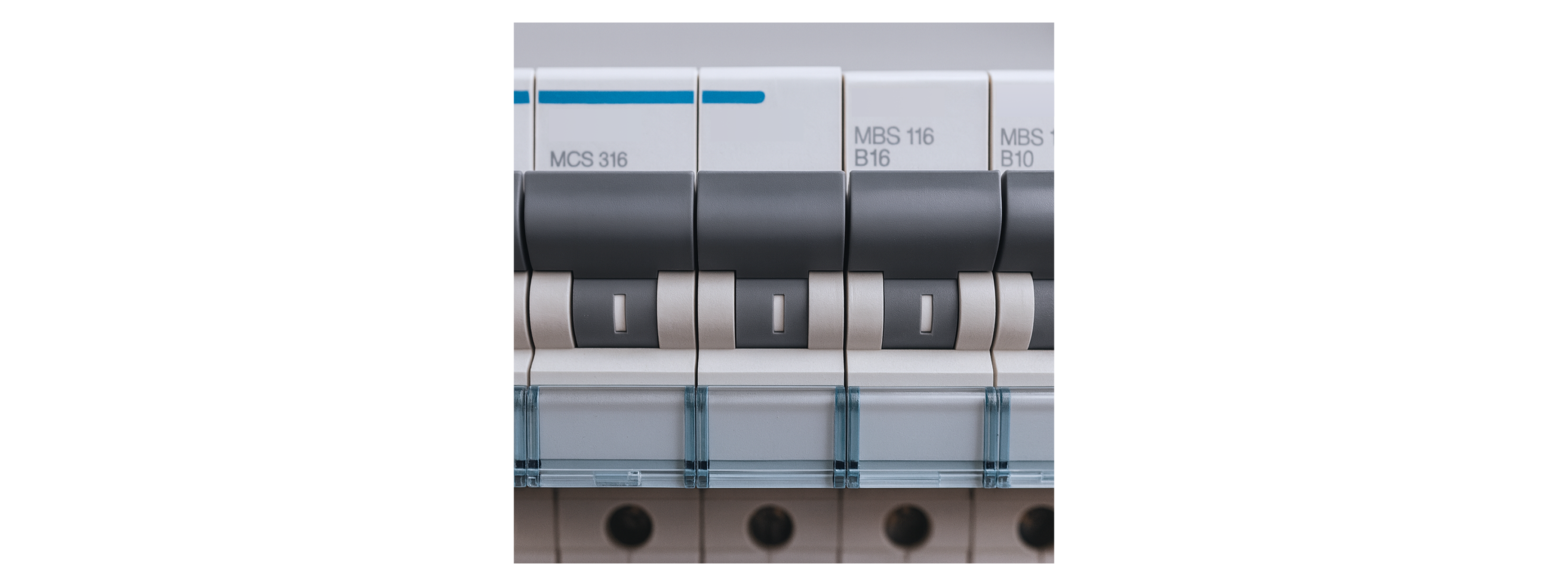
Circuit breakers are the switches found in your home's fuse box. Like fuses, they break the circuit if too much current flows through them. However, instead of melting a wire, circuit breakers have an electromagnet inside them. If too much current flows, the electromagnet (a magnet made using electricity) becomes strong enough to pull a switch mechanism, breaking the circuit (learn more about electromagnets in topic seven).
The major advantage of a circuit breaker compared to a fuse is that they can be reset. They can also react more quickly, and are more sensitive.
Worked Example:
Explain the purpose of a fuse and state one other device that does the same thing.
Answer:
A fuse melts if too much current flows through it. It prevents devices from being damaged by too much current and causing fires. A circuit breaker also performs the same function.
Worked Example
A metal hair straightener develops a fault and the live wire touches the casing. Explain, with reference to the Earth wire and the fuse, the safety features that prevent someone being electrocuted if they touch the hair straightener.
Answer
The Earth wire is connected to the metal casing. This provides a low resistance path for the current to flow from the hair straightener to the ground. This low resistance causes the current to increase and melt the fuse. This breaks the circuit, so if someone were to pick up the hair straightener there would be no current flowing.
Practice Questions
My toaster is not working. I open the plug to find the fuse is missing. The label for the toaster tells me it has a resistance of . What type of fuse should I place in the plug?
-> Check out Hannah's video explanation for more help.
Answer:
Why do electricians wear boots with rubber soles?
-> Check out Hannah's video explanation for more help.
Answer:
To provide insulation between themselves and the Earth. This means if they accidentally touch a live wire, current won't flow through them and electrocute them.