Space Physics
(Triple Only)
Brook Edgar & Hannah Shuter
Teachers


Explainer Video
Our Universe
Our Universe contains trillions of galaxies, and each galaxy contains billions of stars. There are far more stars in the night sky than we can imagine, as the universe is infinite in size. The image below from NASA shows many galaxies in the sky.
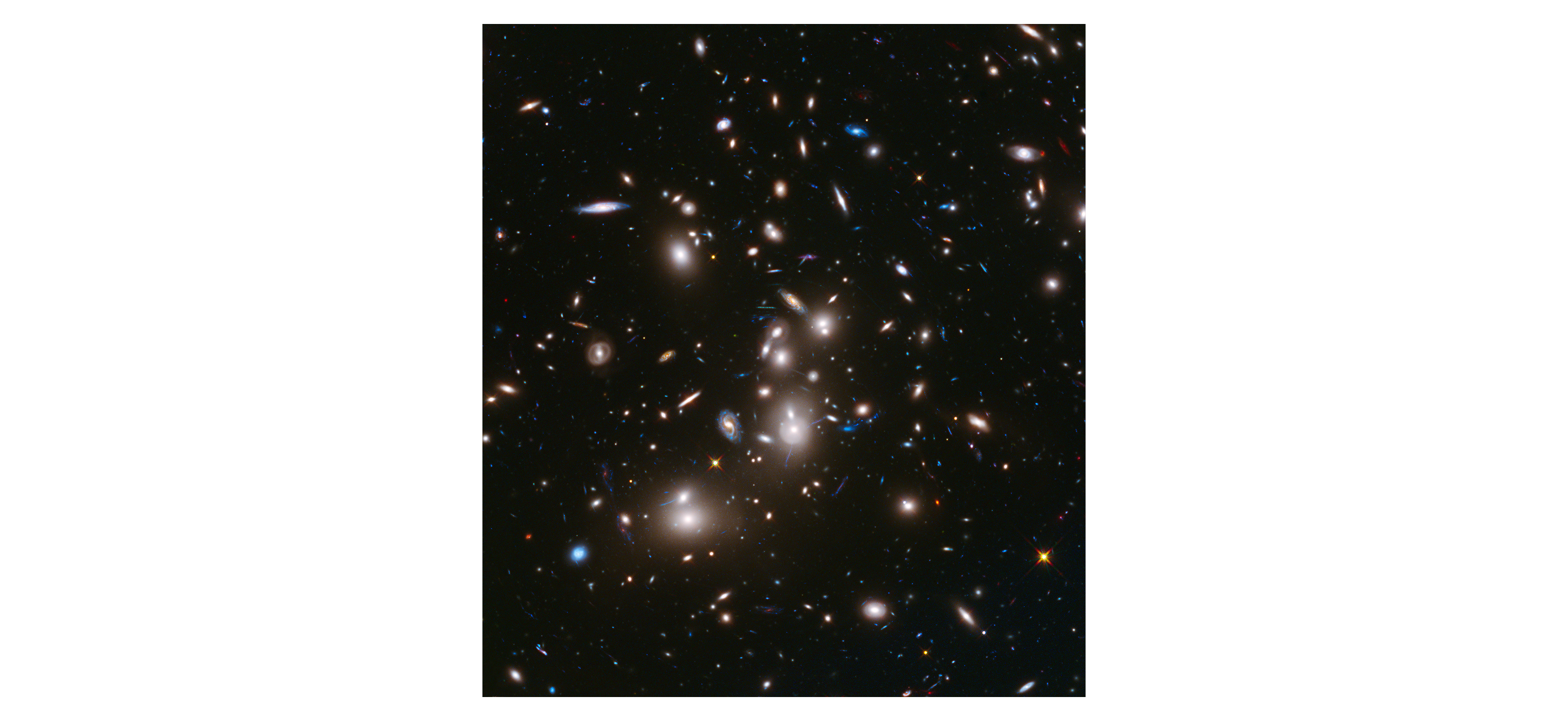
https://science.nasa.gov/asset/webb/abell-2744-hubble/
Our galaxy is called the Milky Way, and our star, the Sun, is one of the billions of stars in the Milky Way galaxy.
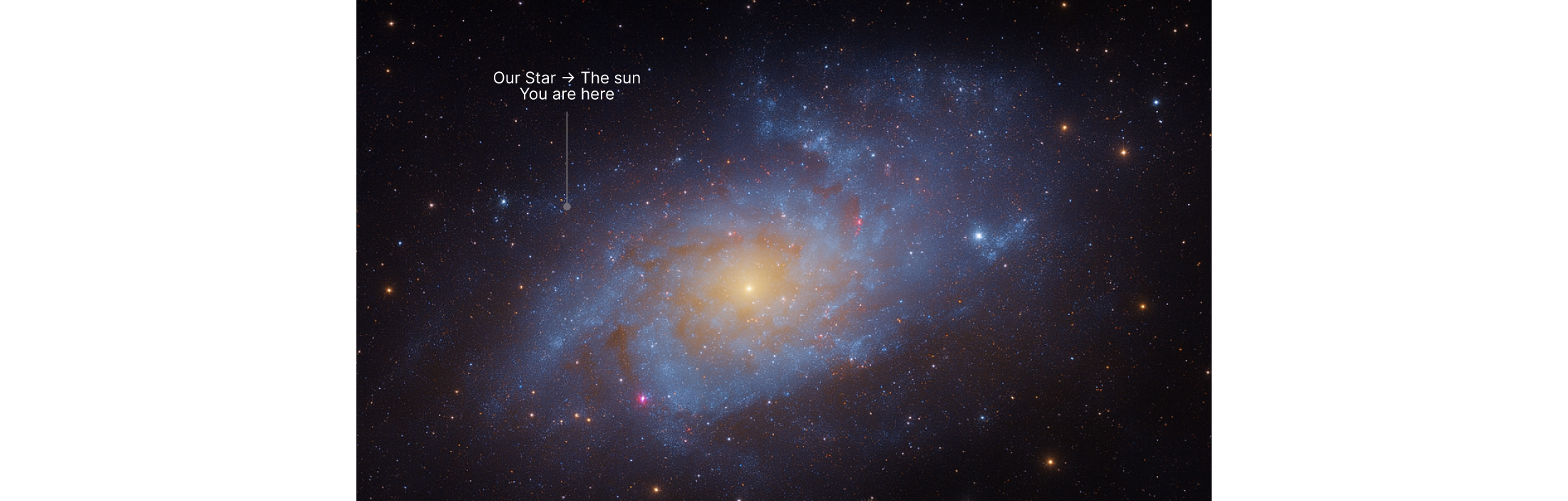
The Solar System consists of the Sun and all the objects that orbit it, including planets, moons, asteroids, and comets, held together by the Sun's gravitational force of attraction.
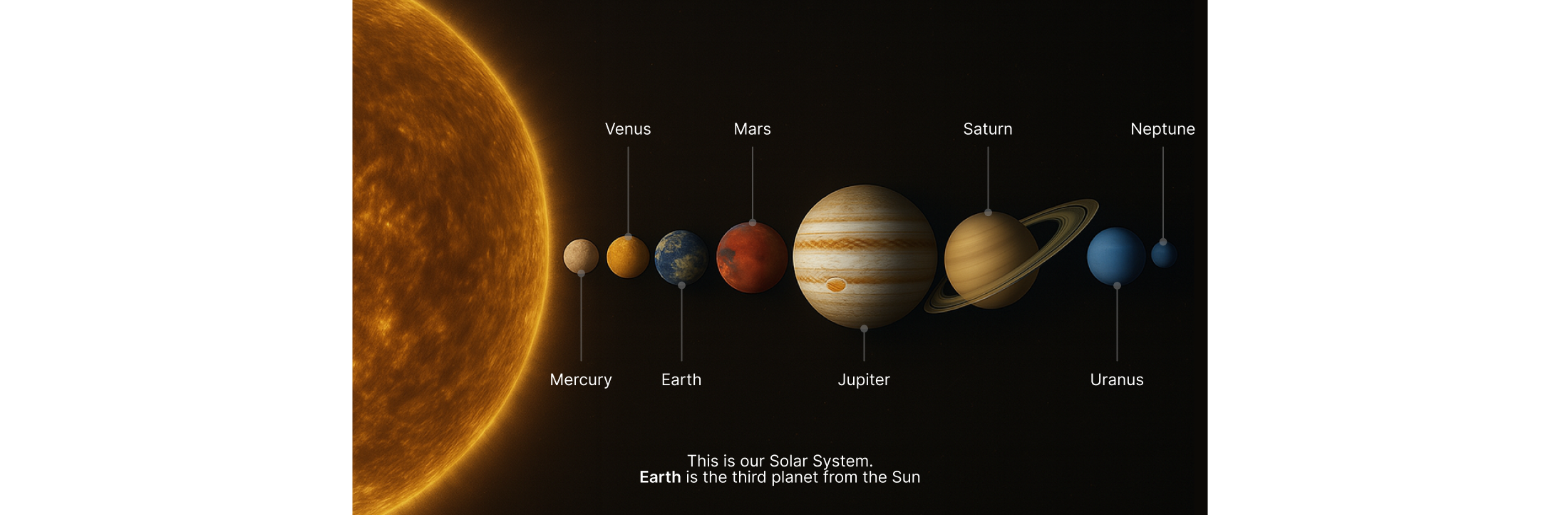
A planet orbits a star. There are eight planets in our solar system, listed below in order of distance from the Sun:
Mercury
Venus
Earth
Mars
Jupiter
Saturn
Uranus
Neptune
There used to be a ninth planet called Pluto, but observations of other bodies in our solar system led to its reclassification as a dwarf planet, as it is too small to be a planet.
The asteroid belt separates the inner and outer planets. It lies between the planets Mars and Jupiter and contains millions of asteroids - small rocky objects that orbit the Sun (they are too small to be called planets).
Meteors are the bright streaks we see in the sky, commonly known as "shooting stars". They come from places like the asteroid belt, where two asteroids might collide, sending fragments flying towards the Earth. These fragments burn up in the atmosphere due to friction, and if any part of them reaches the ground, it becomes a meteorite.
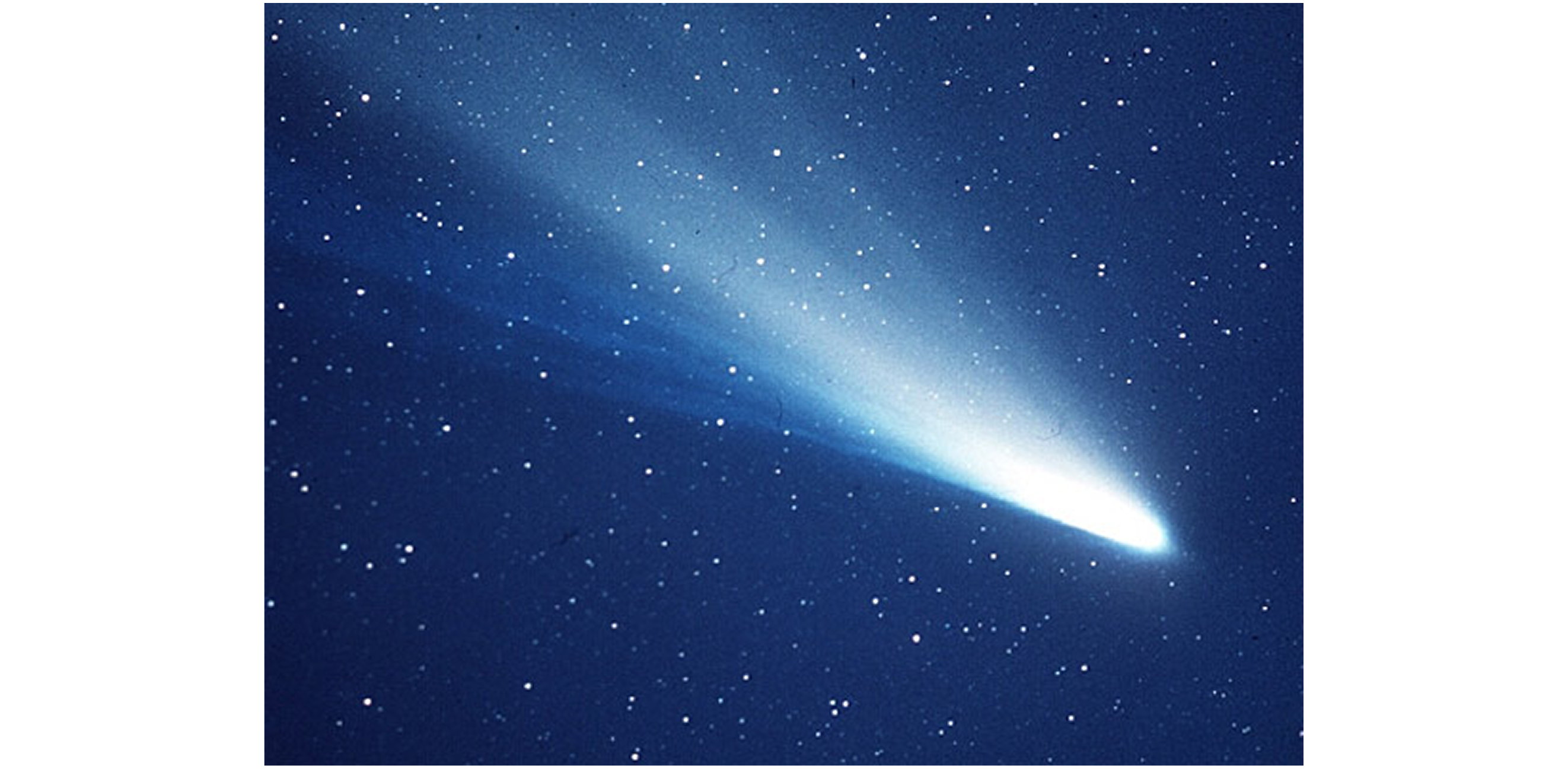
A comet is a small icy object that orbits the Sun. As the comet approaches the Sun, it heats up, and the ice sublimates into gas, which we see from Earth as the comet's tail. A known comet is Halley's comet, which we can see from Earth roughly every 76 years.
Satellites
Satellites are objects that orbit planets. A natural satellite is one that formed naturally, such as the Moon -> Earth's natural satellite.
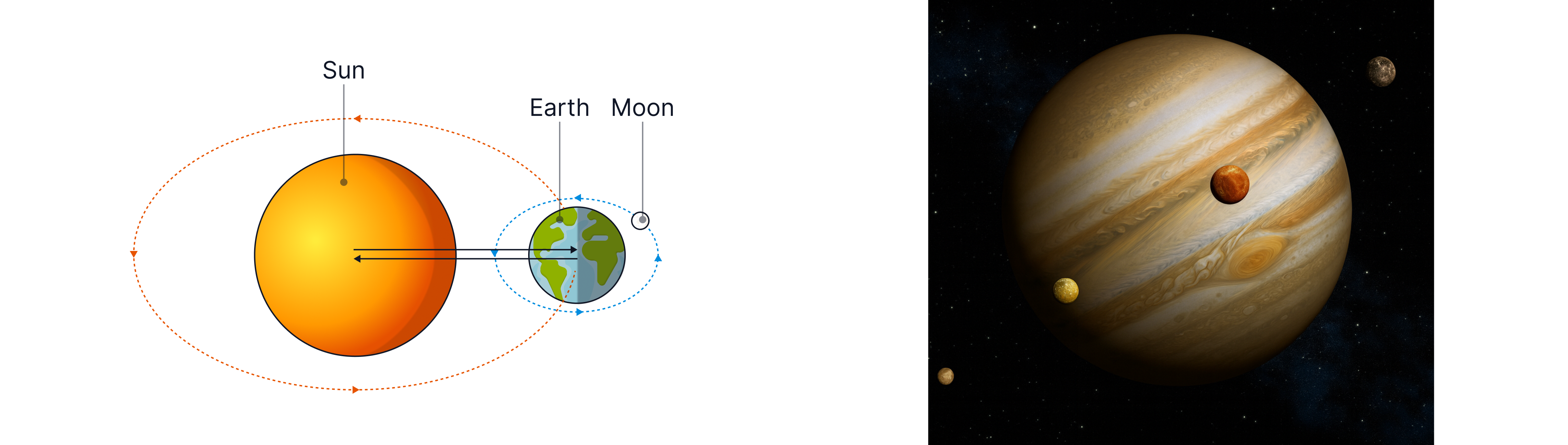
Satellites are objects that orbit planets. A natural satellite is one that formed naturally, such as the Moon -> Earth's natural satellite. The Moon is attracted towards the Earth by gravity, and the Earth is attracted to the Moon with an equal but opposite force (Newton's third law). It is the Moon that ends up orbiting the Earth, as its mass is much smaller. The same effect is seen between the Earth and the Sun, they have equal and opposite forces of attraction but because the mass of the Earth is much smaller than the Sun, the Earth orbits the Sun. Other planets also have moons; Mars has two natural satellites, Phobos and Deimos, and Jupiter has 97, four of which are imaged below. It was Galileo's observation of these moons that proved that not everything in the Solar System orbited the Earth like previously thought.
An artificial satellite is an object made by humans that is launched into space to orbit a planet. The International Space Station (ISS) is an artificial satellite orbiting Earth. It orbits the Earth around times a day. There are currently three people on the ISS, as of this writing, conducting scientific experiments in space and observing the effects of space on the human body.

As mentioned earlier, satellites are kept in orbit by the force of gravity. Gravity is a non-contact force that acts on objects with mass.
As the satellite has a resultant force on it towards the planet, it accelerates towards the planet ().
The speed of the satellite in orbit does not change.
But as its direction of motion continually changes, so its velocity is constantly changing, as velocity is a vector.
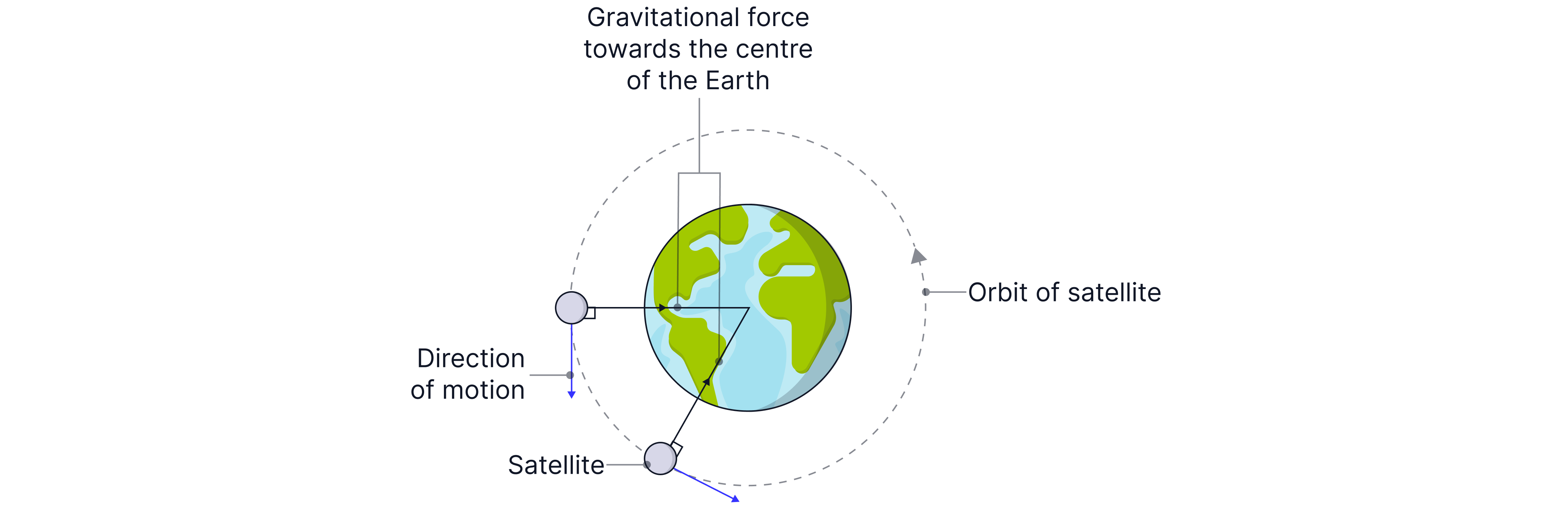
No work is done by the force of gravity on the satellite, as the direction of the resultant force on the satellite and its direction of motion are at right angles to each other. And as we learned when we studied work done, (), work is done only on an object if the force is parallel to the direction of motion. The kinetic energy of the satellite, therefore, does not change, which is why the satellite does not spiral in and crash into the planet it orbits. Satellites that orbit closer to the planet orbit at greater speeds.

The Earth takes hours to spin on its axis, with the side of the Earth facing the Sun in daytime and the side facing away in nighttime. A satellite that orbits the Earth in this same time period ( hours) is known as a geosynchronous satellite and is useful for communications.
Life Cycle of the Sun
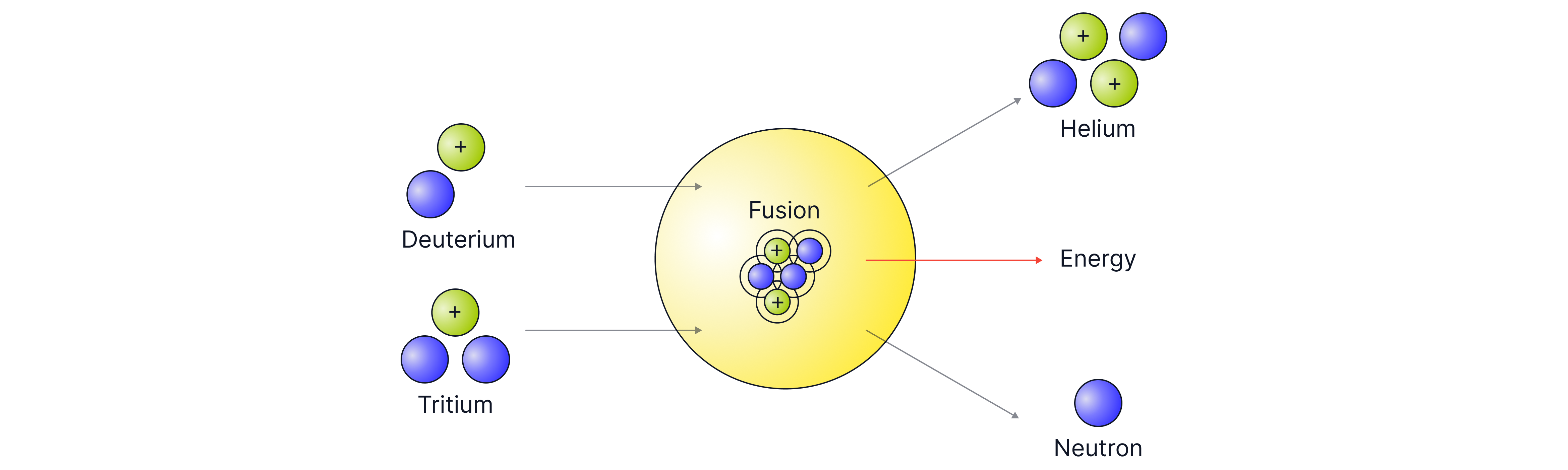
Stars like the Sun are formed from a nebula - a cloud of gas and dust that is pulled together by gravity. The density, temperature, and pressure increase until a protostar is formed. When nuclear fusion begins, the star enters its main-sequence stage. Fusion occurs when the temperature and pressure are high enough to allow the hydrogen nuclei (deuterium and tritium, isotopes of hydrogen) to come close enough to overcome the repulsive force between them and join to form a heavier nucleus, helium. A lot of energy is released in this process, but the star is stable as the outward forces from fusion balance the inward gravitational forces. The Sun is currently in the main-sequence stage.
When hydrogen fusion to helium stops, the star contracts as the gravitational forces will be greater than the outward forces. This causes the pressure and temperature to increase, allowing fusion of heavier elements up to iron. The star expands and becomes a red giant or a red supergiant, depending on its mass. Tron cannot be fused, so a star that has a similar mass to that of the Sun will collapse under the force of gravity when fusion stops forming a white dwarf. Eventually, it will cool after a very long time to form a black dwarf. If the star is much larger than the Sun, it explodes in a supernova once fusion has stopped, scattering elements heavier than iron made in the explosion throughout space. Depending on its mass, the star ends its life cycle as either a neutron star (smaller mass) or a black hole (larger mass).
Eventually, new stars form as gravity pulls the debris left over inwards, and planets form from the debris surrounding the star. This is why we find uranium on Earth: it was made in the supernova of a previous star.
Worked Example:
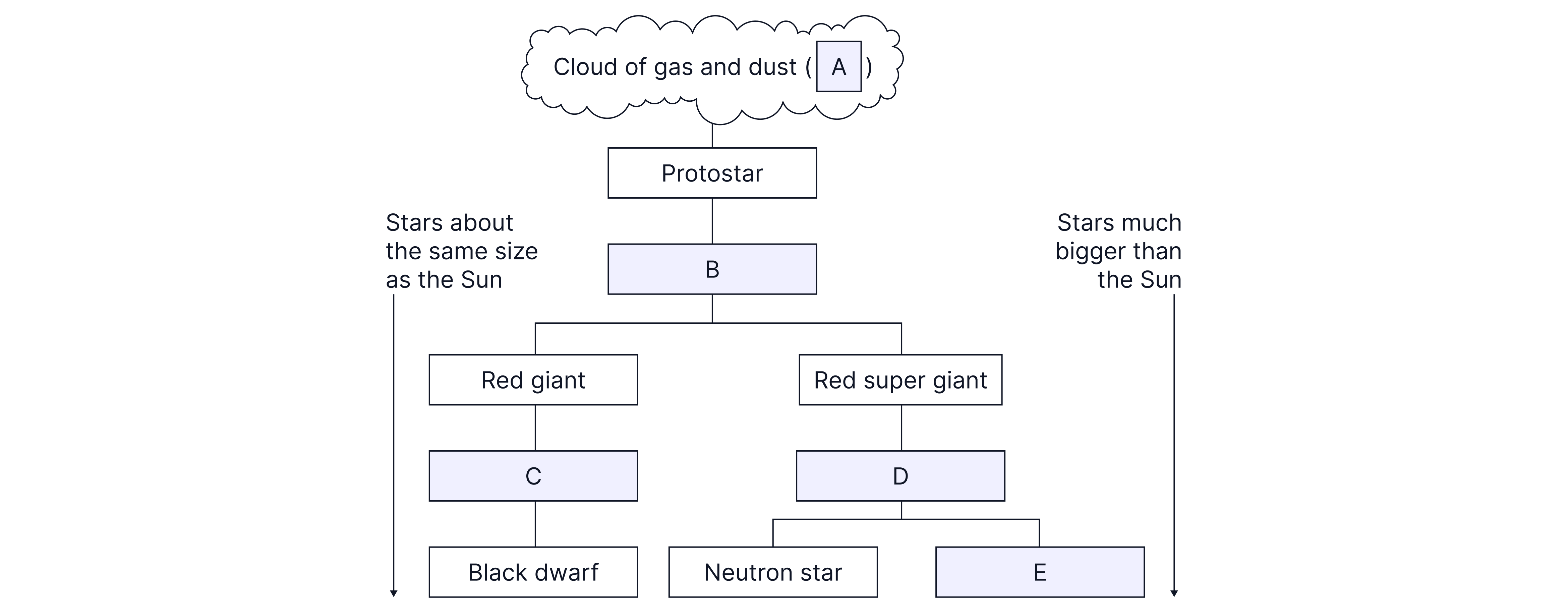
Fill in the missing gaps in the flow diagram below of a star's life cycle.
Answer:
A - nebula
B- main-sequence star
C- white dwarf
D- supernova
E - blackhole
Practice Questions
The Sun formed from a collapsing cloud of gas and dust. It is currently in the main sequence stage. Explain how gravity and fusion were involved in the formation of the Sun.
-> Check out Brook's video explanation for more help.
Answers:
Gravity caused the nebula to collapse, increasing temperature and pressure.
Fusion of hydrogen nuclei began, releasing energy and creating an outward expansion force balancing the inward force of gravity.
A satellite orbits the Earth at a constant speed, but its velocity is continually changing. Explain why the satellite’s velocity changes even though its speed remains constant.
-> Check out Brook's video explanation for more help.
Answer:
The direction of motion is always changing in a circular orbit.
Changing direction means changing velocity, because velocity is a vector quantity.