Units in Physics and Conversions
Brook Edgar & Hannah Shuter
Teachers


Explainer Video
Units
Units are important in physics as they make measurements meaningful and comparable.
For example, if you were a builder and told to cut wood to five, the builder would respond, ''Five what?''. The builder doesn't know whether to cut the wood to centimetres, feet, or something completely different.
If everyone uses the same standard units for length, mass, time, etc., then scientists can compare results from different experiments and collaborate on projects from around the world. Units provide a universal language, so physicists everywhere understand each other.
A drastic example of this not happening was when NASA lost a spacecraft that cost million pounds, the Mars Climate Orbiter. The two engineering teams working on the project used different units without realising it. One team used the unit Newton, , the standard unit for force, named after the scientist Sir Isaac Newton, whilst the other team used the unit pound-force, which is much larger. The spacecraft drifted off course as the navigation system received data in a different unit than expected, causing it to plunge into Mars' atmosphere, overheat, and be destroyed. This highlights the importance of consistent units in physics.

Units are also important, as equations will only work if the units on both sides match.
For example, when calculating someone's running speed, we need to know the distance they travelled and the time it took them to finish the race. If we want to know their speed in metres per second,, in order to compare their speed to Usain Bolt's record of we need to record the distance they ran in metres and the time they too in seconds.
Remember: The same way that , can be written as in physics and maths, distance measured in metres time measured in seconds -> , can be written as or .
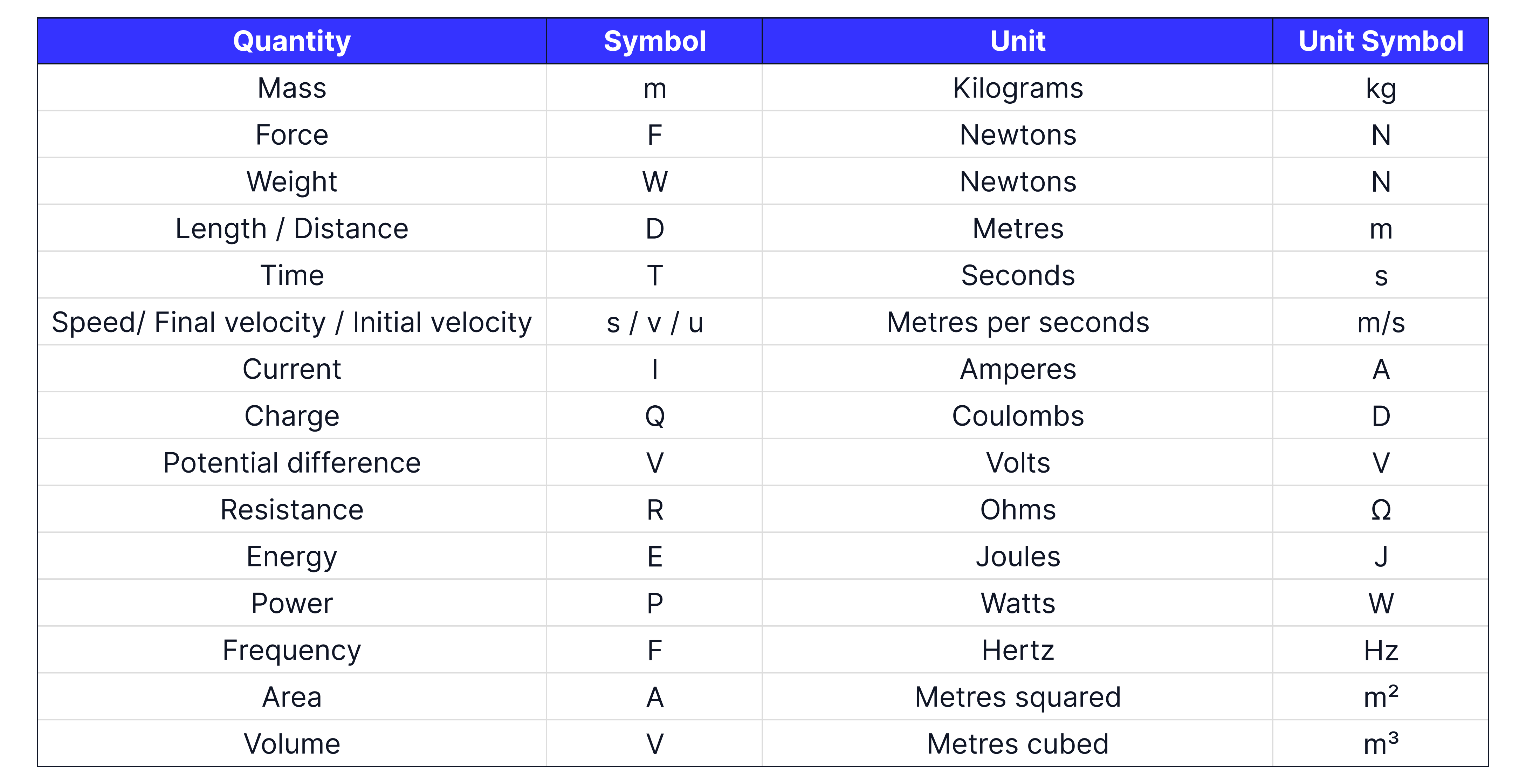
The standard units you need to know are listed in the table below. We will review all of these in detail through GCSE physics. Many you should be already familiar with from lower school, such as time measured in seconds, , energy measured in joules, and area measured in metres squared, .
Worked Example:
1. State the unit used for distance.
2. State the unit used for mass.
Answer:
1. Metres, .
2. Kilogram, .
Teacher Tip: Take care here, as in chemistry, mass is measured in grams, g, as they deal with very small things like atoms.
Unit Conversions
Distance is measured in the standard unit metres, , in physics, but we can record distances in centimetres, , or in kilometres, , for large distances. The 'centi-' and 'kilo-' in front of the metre are known as prefixes. They make it easier to write very small or very large numbers. For example, instead of saying I ran a race, I can say I ran a race.
The 'k' in physics, which represents the kilo, means that the unit is multiplied by . For example, if you were to win in the lottery, you know that you won . If I ran a race, I ran . To convert from kilometres into metres you multiply by .
'Centi-' is another easy-to-remember prefix: a century is , so there are in . To convert from centimetres into metres, you divide by .
The millimetre is easy to remember also, we use it to reference really small things, such as the thickness of a piece of paper. A millipede is an insect with legs, so there are in . To convert from millimetres into metres, you divide by .
Worked Example:
1. Convert to .
2. Convert to .
3. Convert to .
4. Convert to .
5. Convert to .
Answer:
1. .
2. .
3. .
4. Here we are converting kilonewtons into newtons, the same rules apply, multiply by to get out of kilo = .
5. Here we are converting milliseconds into seconds, the same rules apply, divide by to get out of milli = .
Standard Form
Another way to write prefixes in physics is in standard form, which saves time when dealing with very large or very small numbers and makes them easier to read and compare.
For example, can be written as which can be written even easier as -> nanometres.
can be written as which can be written even easier as -> gigametres. You have seen giga before; it represents one billion, or, in this case, billion. It is often seen when referring to storage on a phone, for example, some phones can hold up to of storage, which equals bytes of storage or bytes.
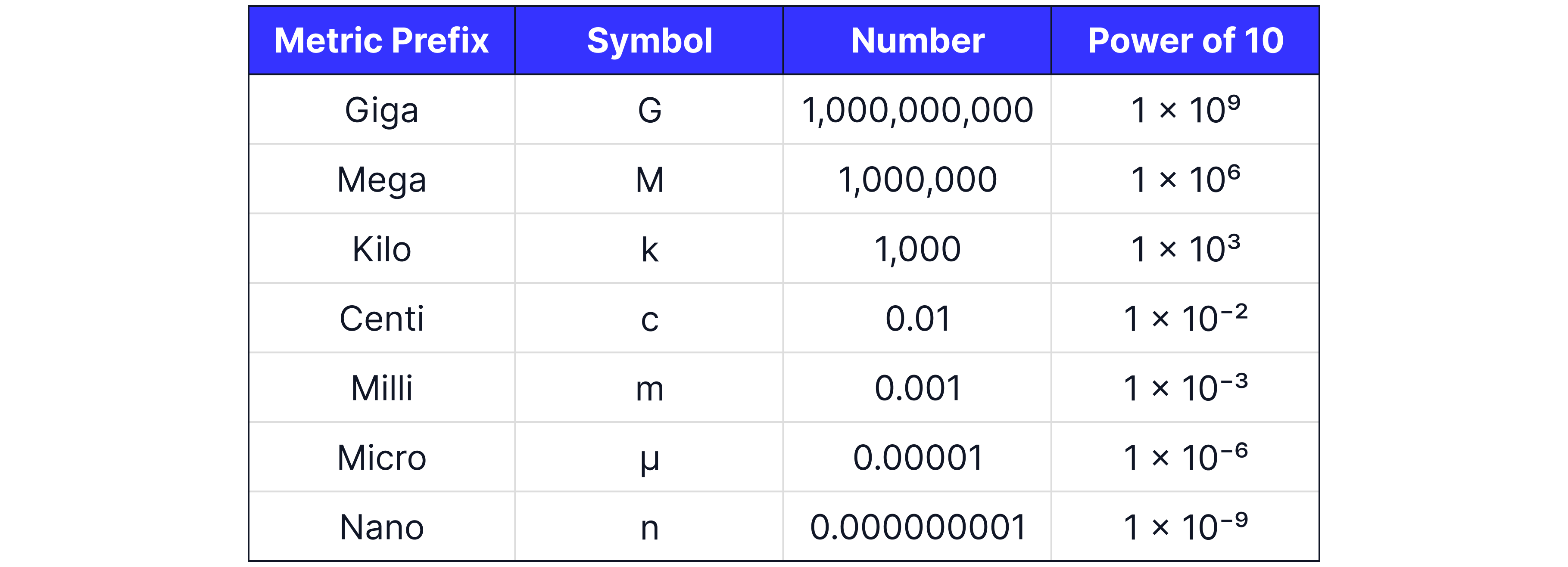
The other prefixes written in standard form are shown below:
Worked Example:
A human hair is in length. Is this larger or smaller than a virus that is in size.
Answer:
Therefore, a human hair is larger than a virus.
Worked Example:
Which is larger or ?
Answer:
is larger.
-> megajoules =
-> gigajoules =
Practice Questions
Which is equal to 4 microseconds?
-> Check out Brook's video explanation for more help.
Answer:
B
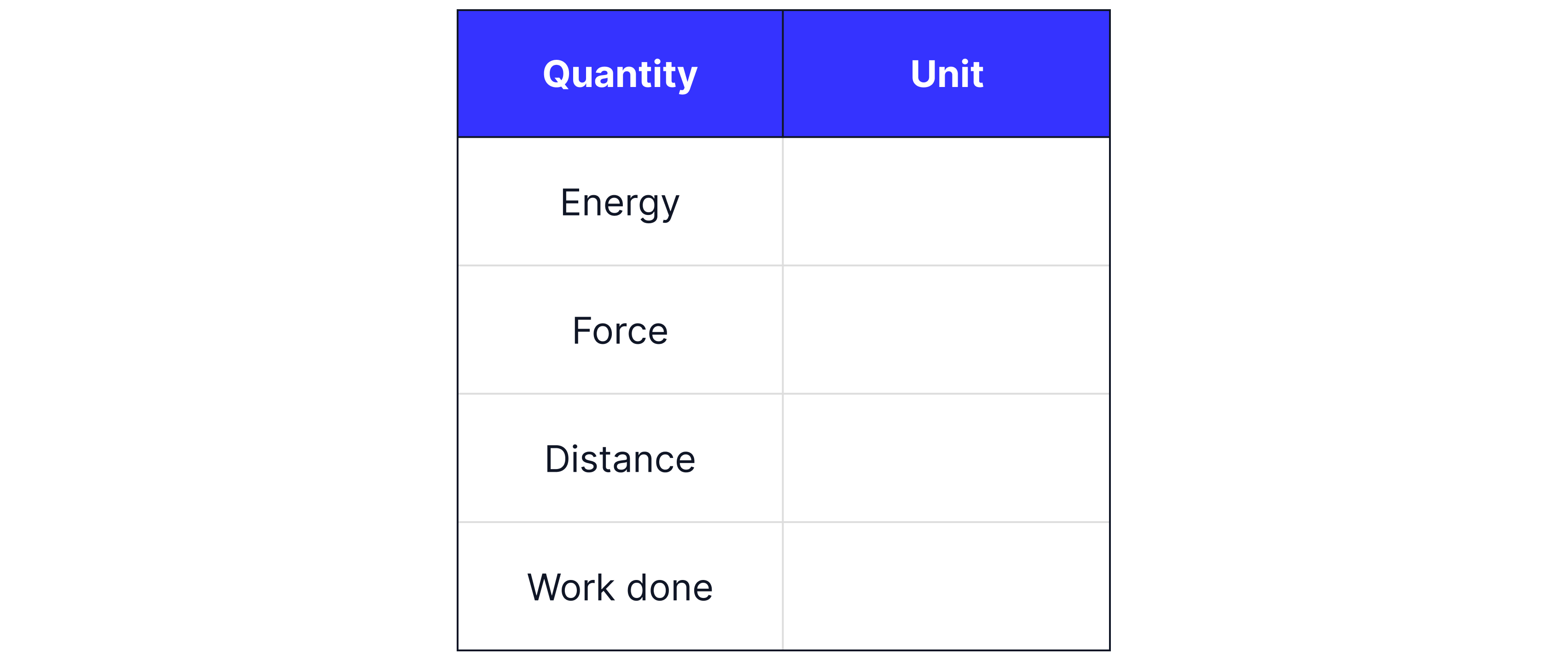
Complete the table with the correct Units:
-> Check out Brook's video explanation for more help.
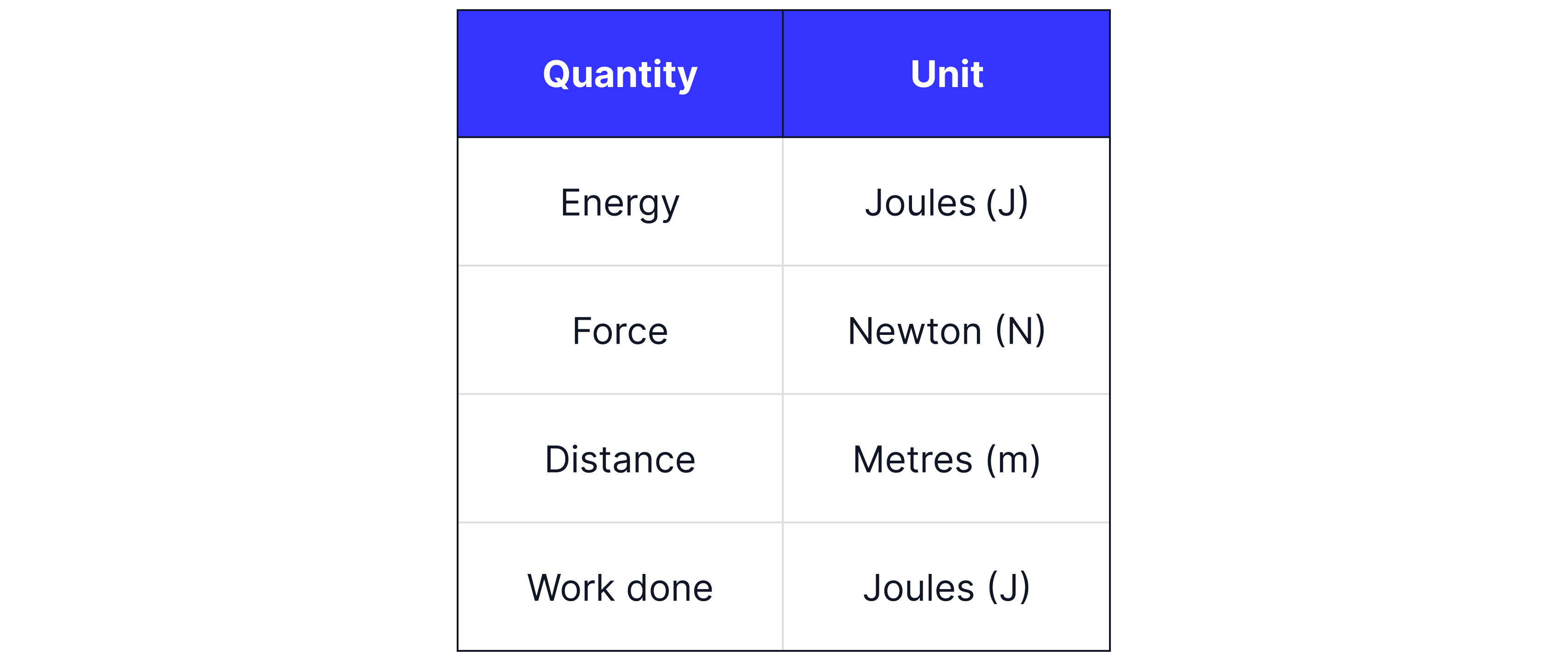
Answer: