Approximating the Binomial Distribution
Neil Trivedi
Teacher

Approximating the Binomial Distribution
Let's look at a sketch of the following binomial distributions:
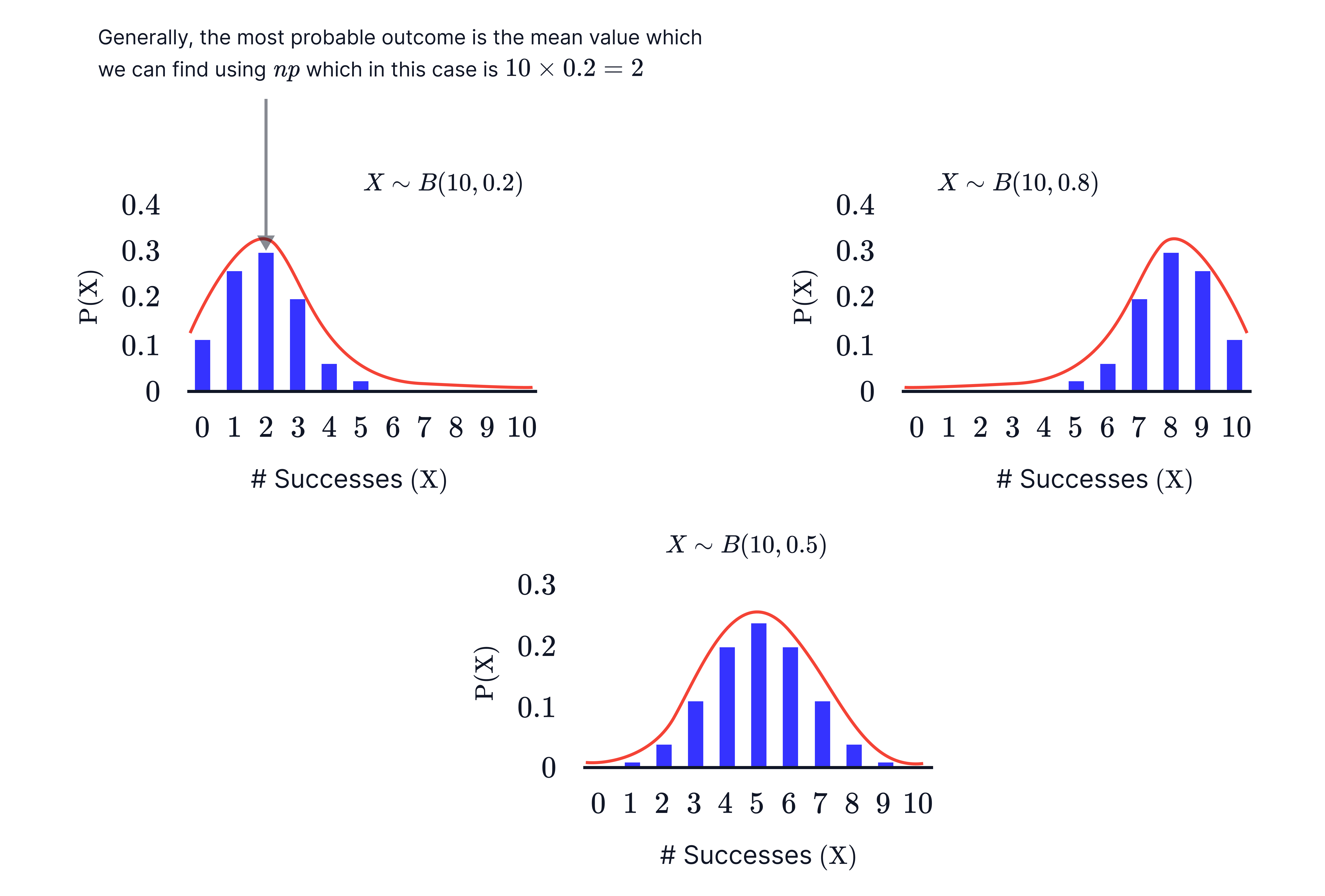
The bottom graph of looks like a normal distribution as the distribution is symmetrical.
If is large and is close to , then the binomial distribution can be approximated by the normal distribution where:
and
Note: The mean of a binomial distribution is introduced in Year 12 and the formula for the variance is proved in Further Mathematics.
Continuity Correction
We must be careful when approximating the binomial distribution using the normal distribution, as we are moving from discrete variables to continuous variables.
Just like with continuous data, there can be no gaps (like histograms) in our independent variable.
Let’s zoom into the distribution from above and focus on , , and . We must make the bars “wider” so that there are no gaps anymore.
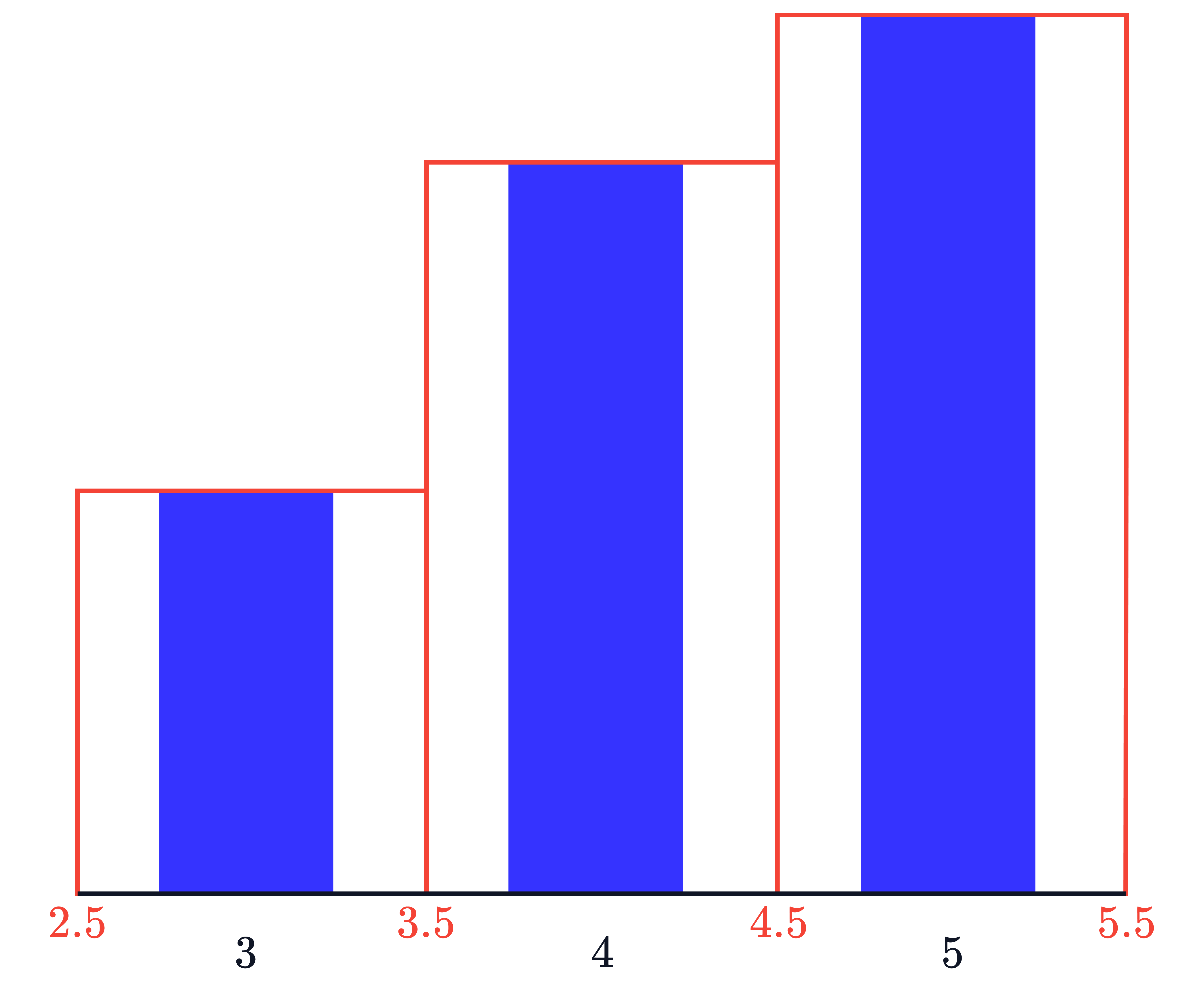
Given that is the continuous variable given the discrete variable , we can see that the bar for becomes . We can also observe this fact on a number line
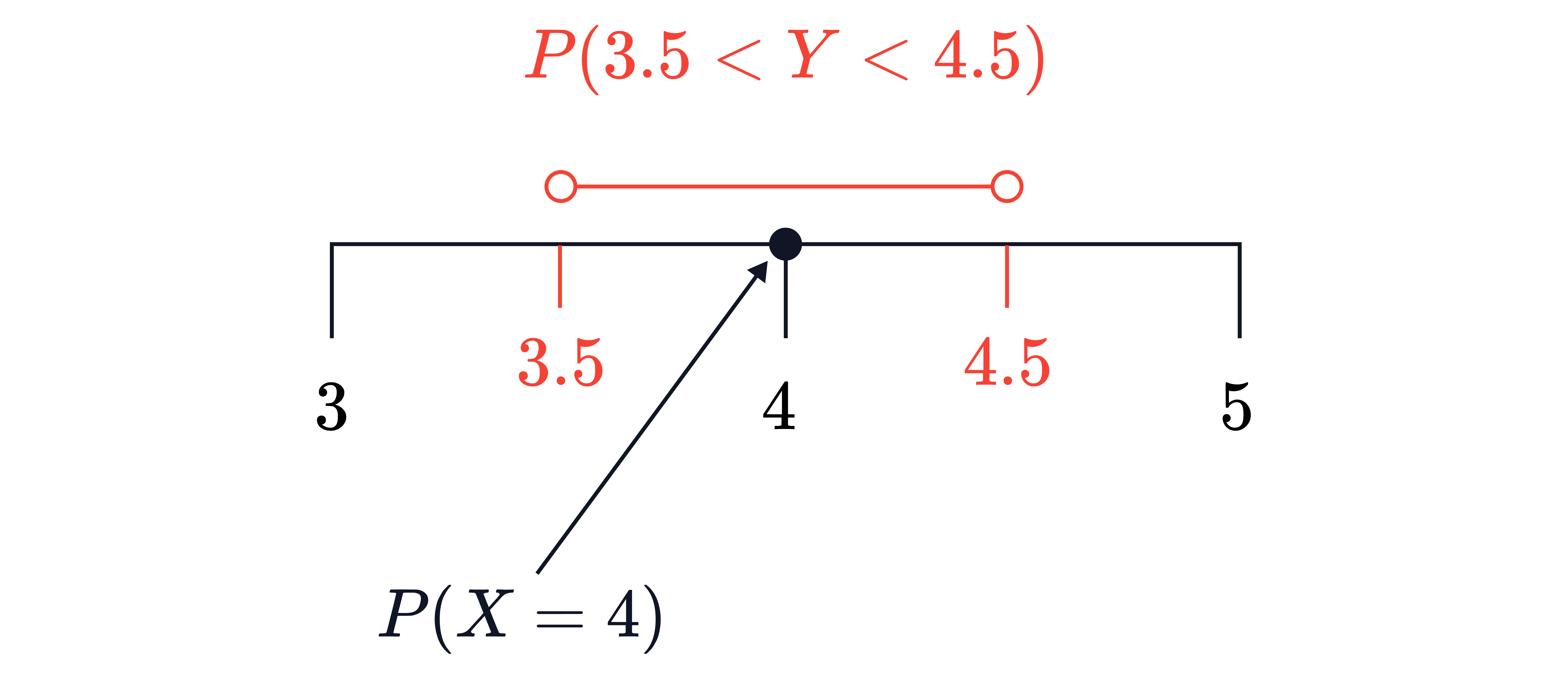
One thing to remember is that if is the continuous variable, then , and , as explored already in our normal distribution notes.
However, this is not the case for the binomial distribution. For example, and are not the same.
Therefore, it is very important that before we apply a continuity correction, all of our probabilities are equal to and not just a strict inequality.
This ensures we are observing the correct bar which we are “widening”. So, instead of , we know that is equal to , which is what we will apply a continuity correction to.
Example 1:
Apply a continuity correction to the following discrete variables.
a)
Single Step: Using a number line, convert the sign to a sign and apply a continuity correction.
Firstly, we can state that .
is discrete, so the bars will not connect. After a continuity correction, we increase the width of the bars so that they touch, almost like a histogram.
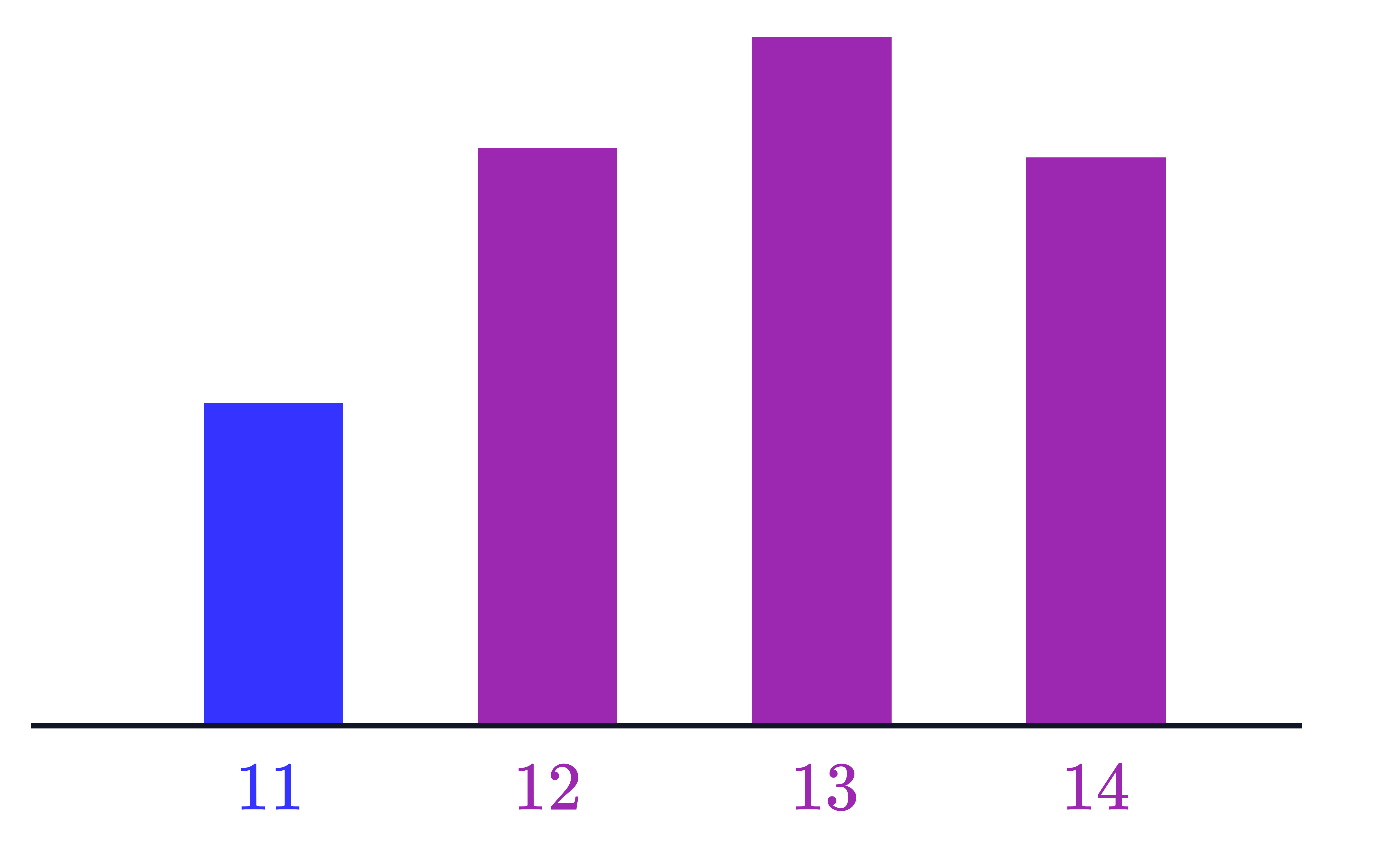
“Widening” our bars,
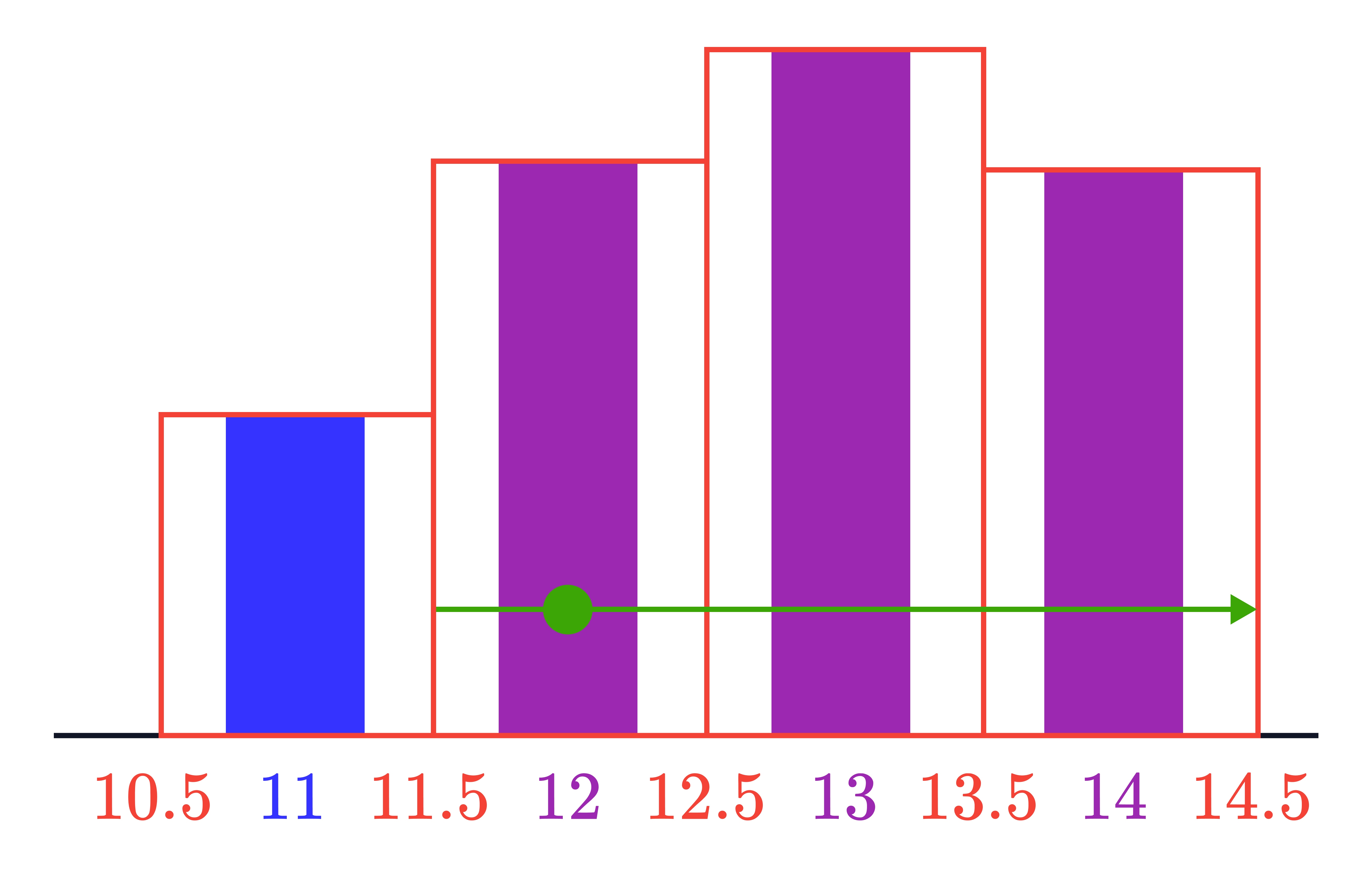
Note: Since we are not given the distribution, each bar's height relative to each other is not accurate.
b)
Single Step: Using a number line, convert the sign to a sign and apply a continuity correction.
Firstly, we can state that
is discrete, so the bars will not connect. After a continuity correction, we increase the width of the bars so that they touch, almost like a histogram.
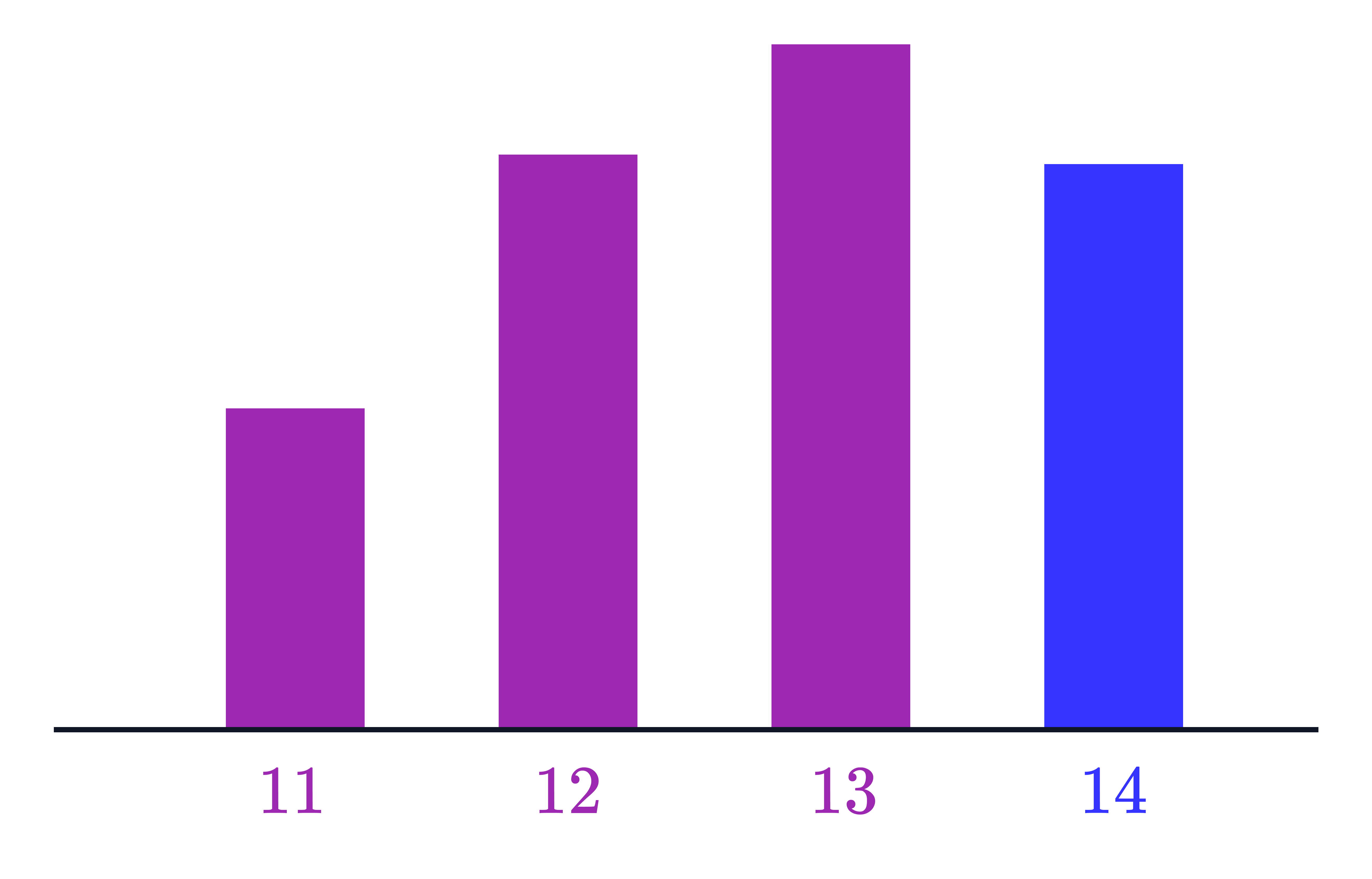
“Widening” our bars,
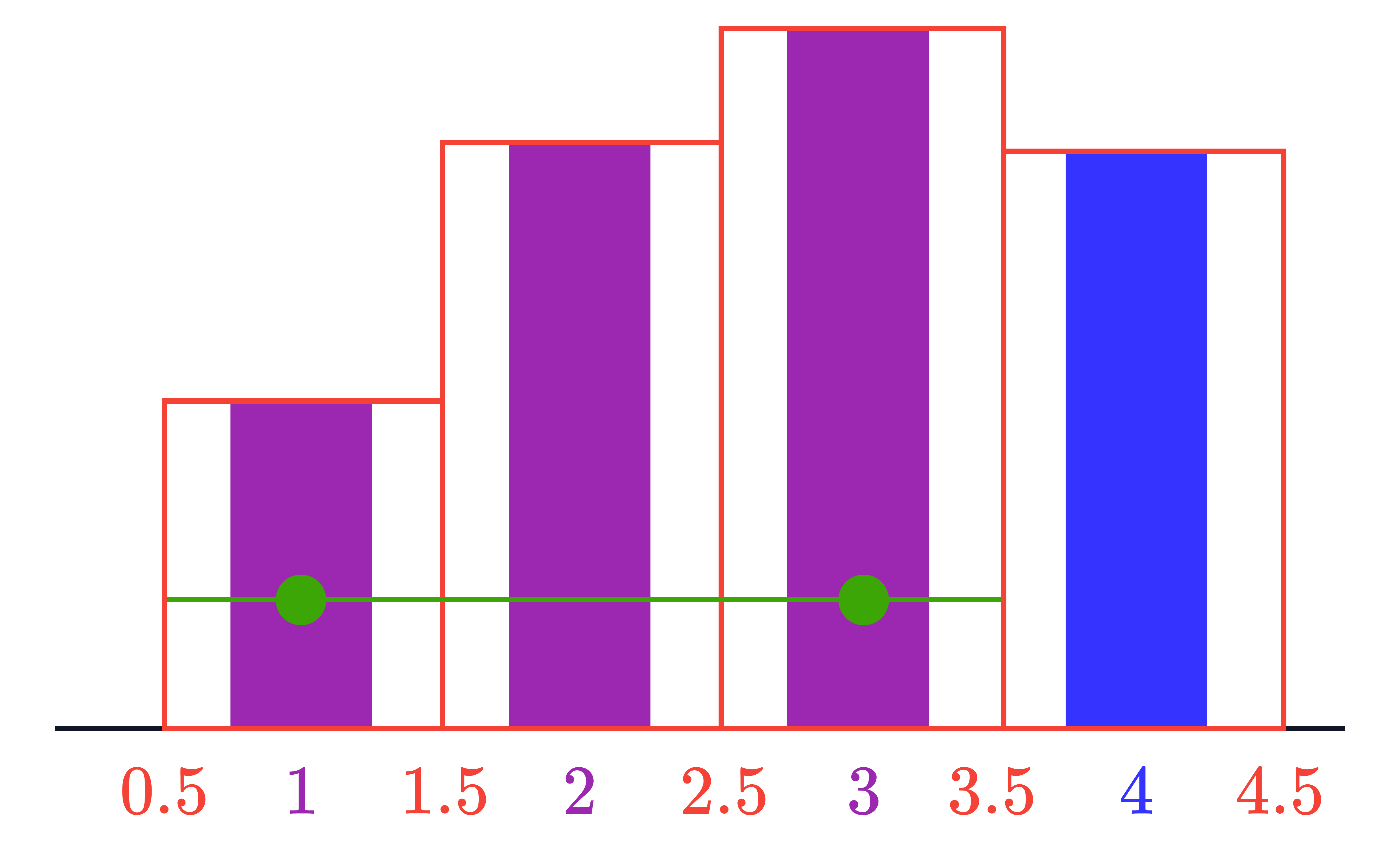
Note: Since we are not given the distribution, each bar's height relative to each other is not accurate.
No answer provided.
Example 2:
An exam has a pass rate of . A total of students took the exam.
a) Find the probability that exactly students pass the exam.
Single Step: By letting , find the probability that is exactly .
Let be the number of student passes out of students. So, . Using the calculator and the function Binomial PD, we can set , , and to find
dp
b) Use a normal approximation to find an estimate that exactly students pass the exam.
Step 1: Find the mean and variance of the normal approximation.
Let be the normal approximation of .
So, we have the normal approximation .
Step 2: Apply continuity correction to rewrite the discrete probability as a continuous one.
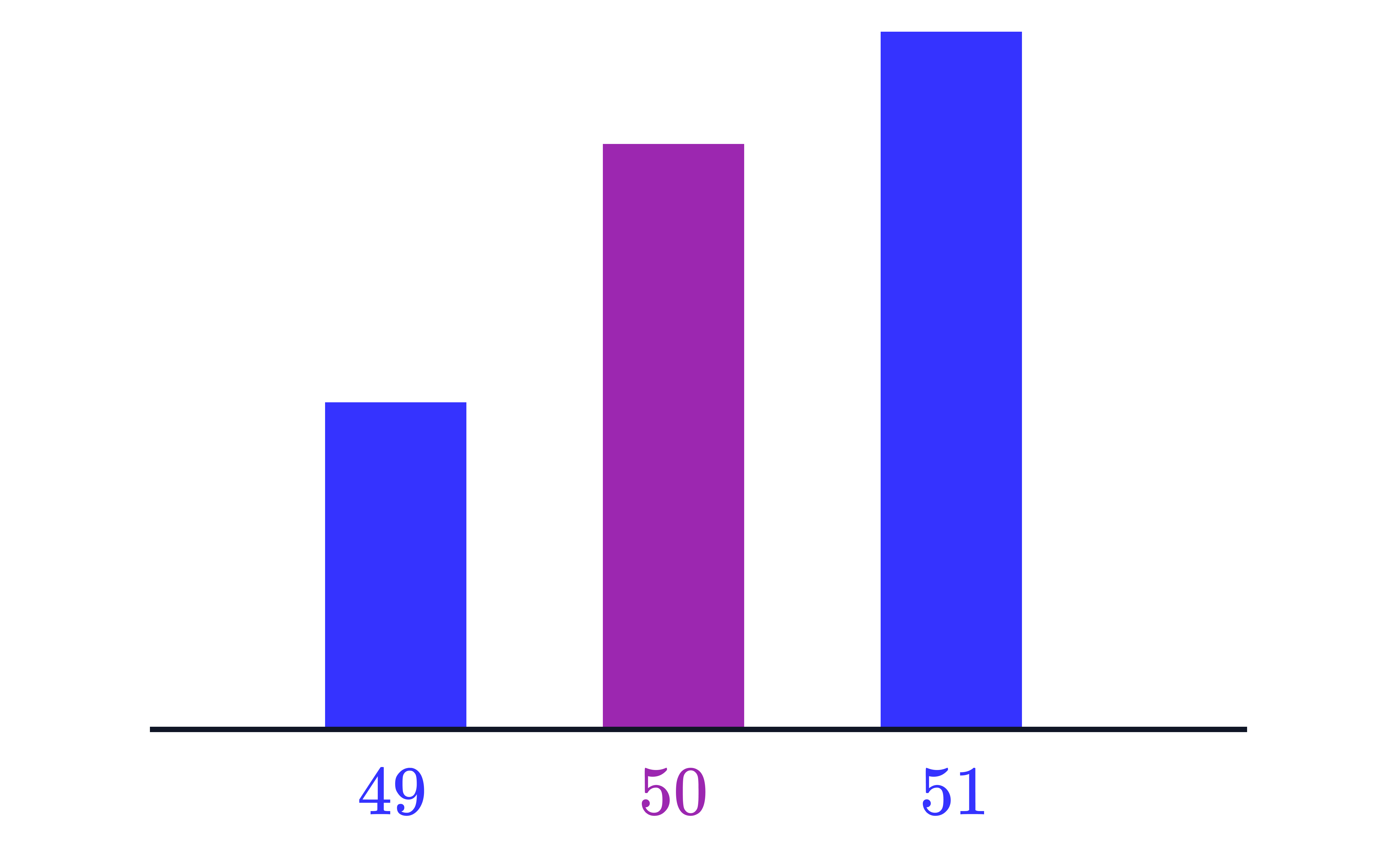
“Widening” our bars,
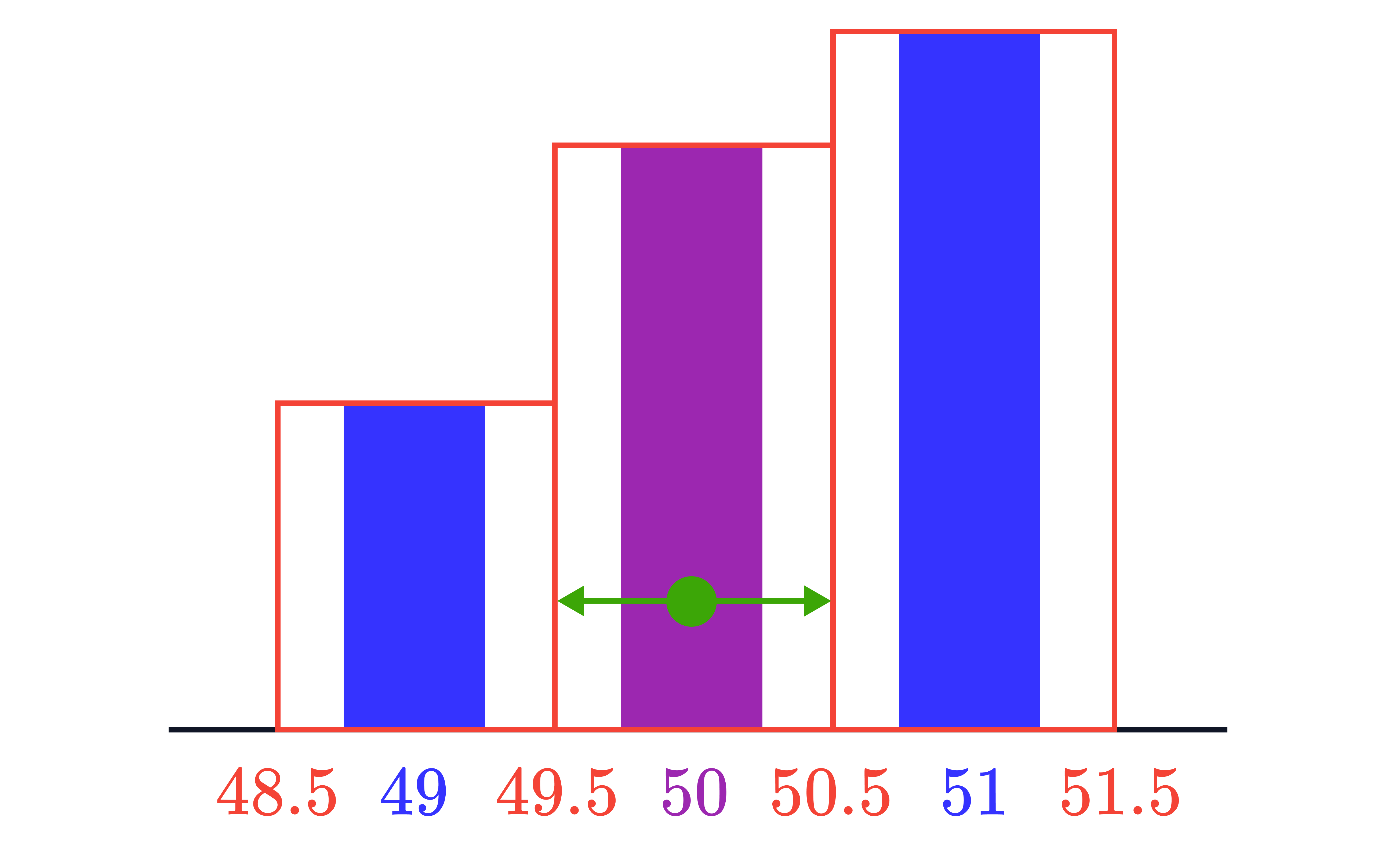
So, when we apply continuity correction, becomes .
Step 3: Use the calculator and the function Normal CD to find the probability.
Remember to root your variance. , so .
dp
c) Hence, determine the percentage error of using the normal approximation.
Single Step: Compute the percentage error using its formula.
Percentage error sf
No answer provided.
The probability may not always be close to , but if is sufficiently large, using a normal approximation is still suitable.
Example 3:
A football club sells jerseys everyday across England. It is known that of the jerseys will be faulty and will be returned.
a) Using a normal approximation, estimate the probability that at least jerseys will be faulty in a given day.
Step 1: Find the mean and variance of the original binomial distribution for normal approximation.
Let be the number of faulty jerseys out of . So, .
Let be the normal approximation of .
So, we have the normal approximation .
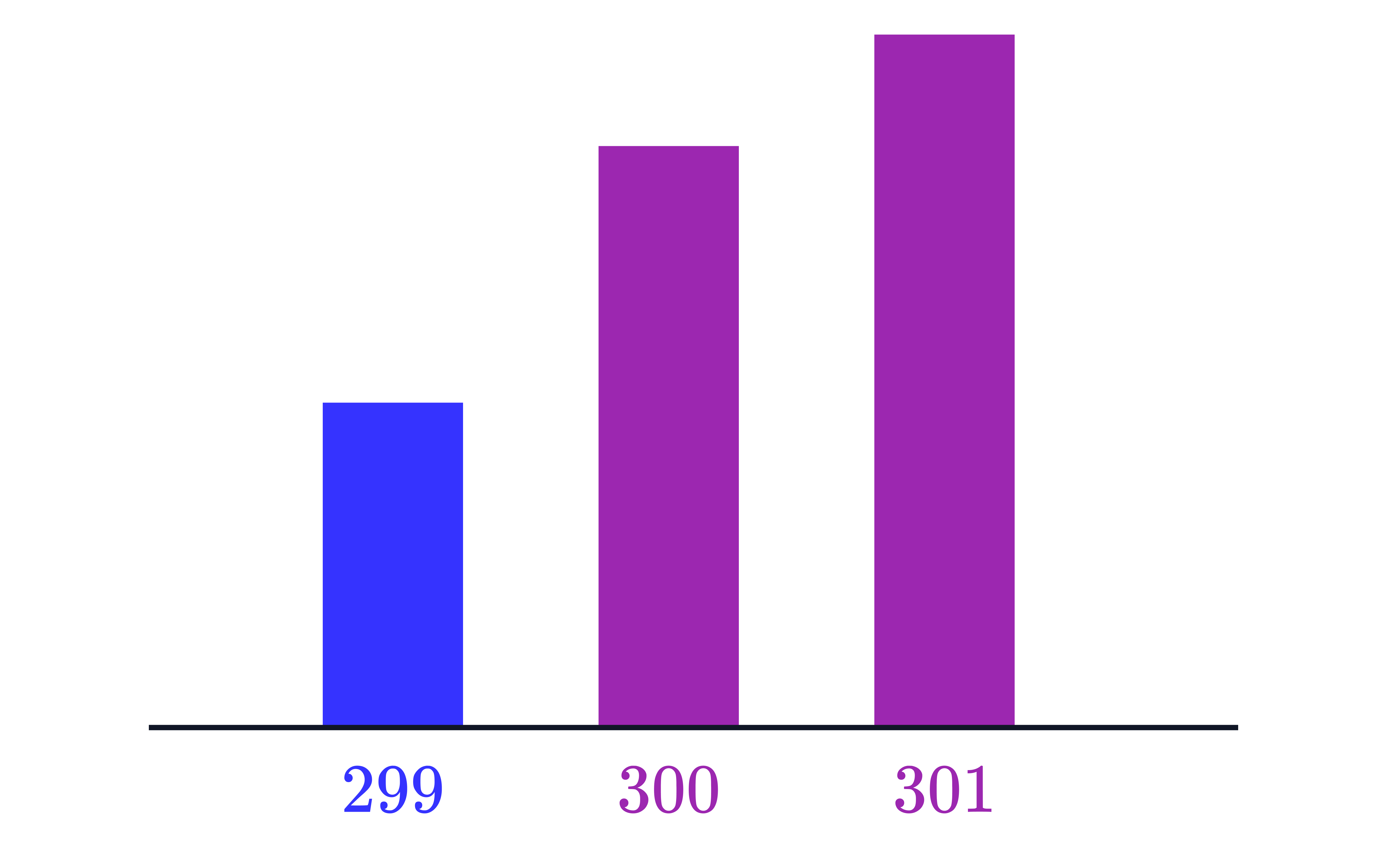
Step 2: Apply continuity correction to find the approximated probability.
Here is a number line showing .
“Widening” our bars,
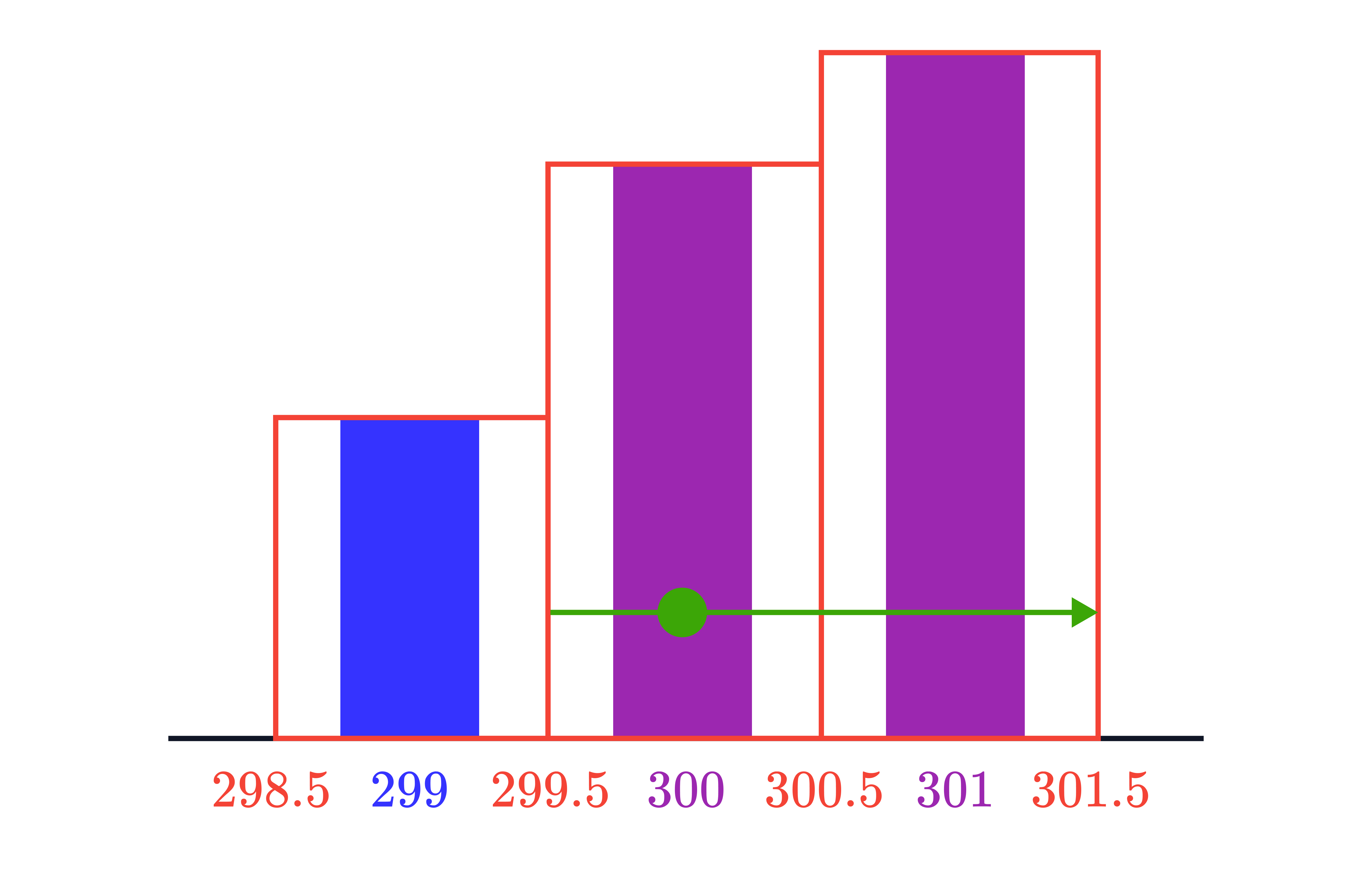
So, when we apply continuity correction, becomes .
sf
The quality control staff of the club identify and destroy all jerseys which are faulty before they make it to the club stores. It costs to make a jersey, and it is sold for .
b) What is the expected profit for the club from selling jerseys each day?
Single Step: Find the expected profit by taking the difference between cost and expected revenue of total jerseys.
The cost is fixed each day. It is always
However, the revenue is an expected value as some of the jerseys are faulty and get destroyed.
We expect jerseys will be faulty (the mean of in our binomial distribution), which implies that the store is expected to sell non-faulty jerseys. This means the revenue is expected to be
The expected profit is
per day
No answer provided.
Challenging Questions