Equilibrium of Forces
Neil Trivedi
Teacher

Equilibrium of Forces
When an object is in equilibrium, it means there is no resultant (net) force and no resultant moment acting on it. In this section we will be focusing on particles which are dimensionless so will have no moment forces acting on it.
The way to tackle questions like this is to resolve all forces into their horizontal and vertical components, equate them and then solve them either individually or simultaneously.
When setting up the horizontal equation, we equate the leftward and rightward forces, and for the vertical, we equate the upward and downward forces.
Example 1:
A particle of mass kg is attached to one end of a light inextensible string at . The other end of the string is attached to a fixed point . A horizontal force N is applied to the particle at . The particle is held in equilibrium under gravity. Find the tension in the string and the value of .
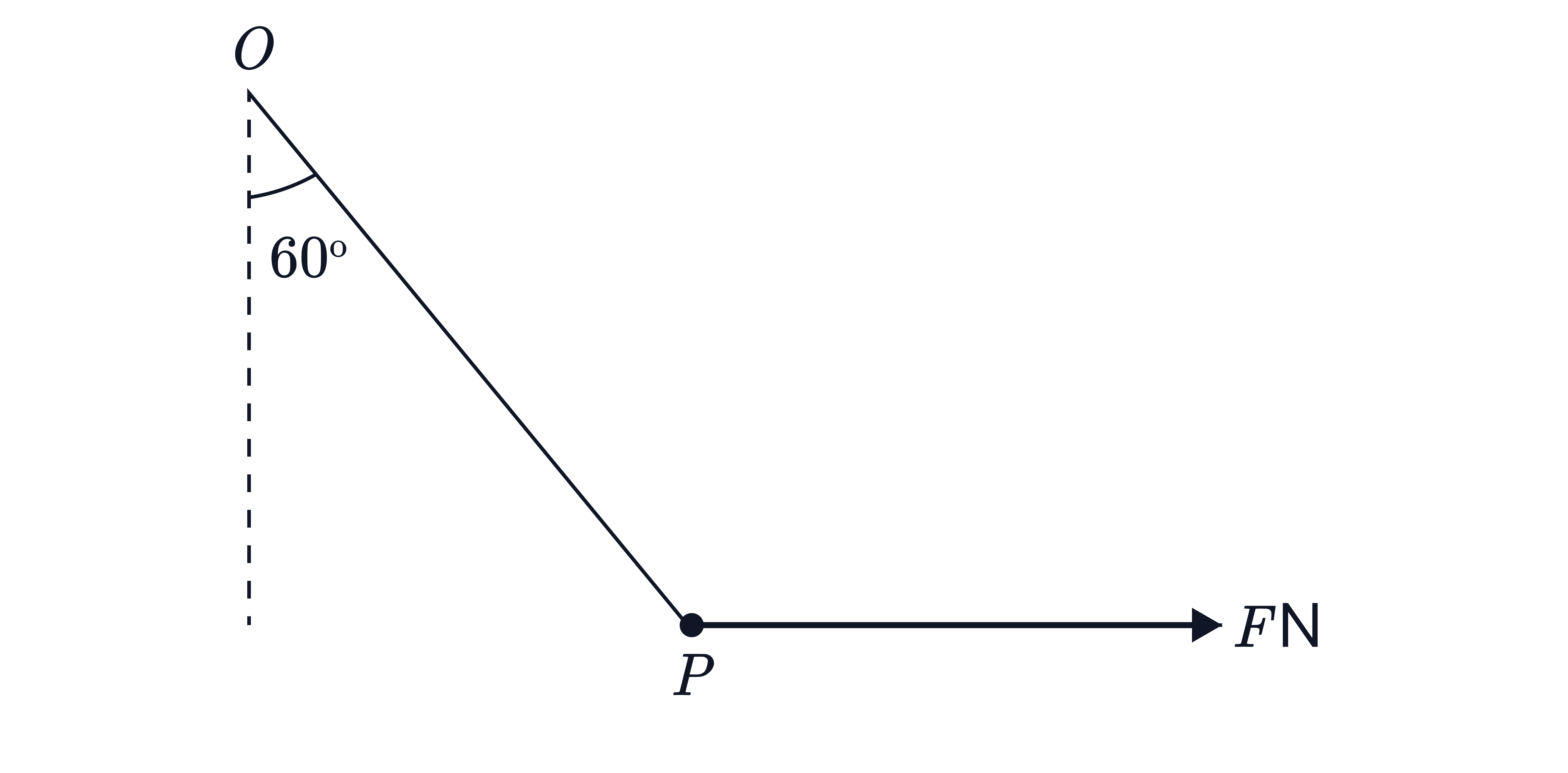
Step 1: Draw a force diagram.
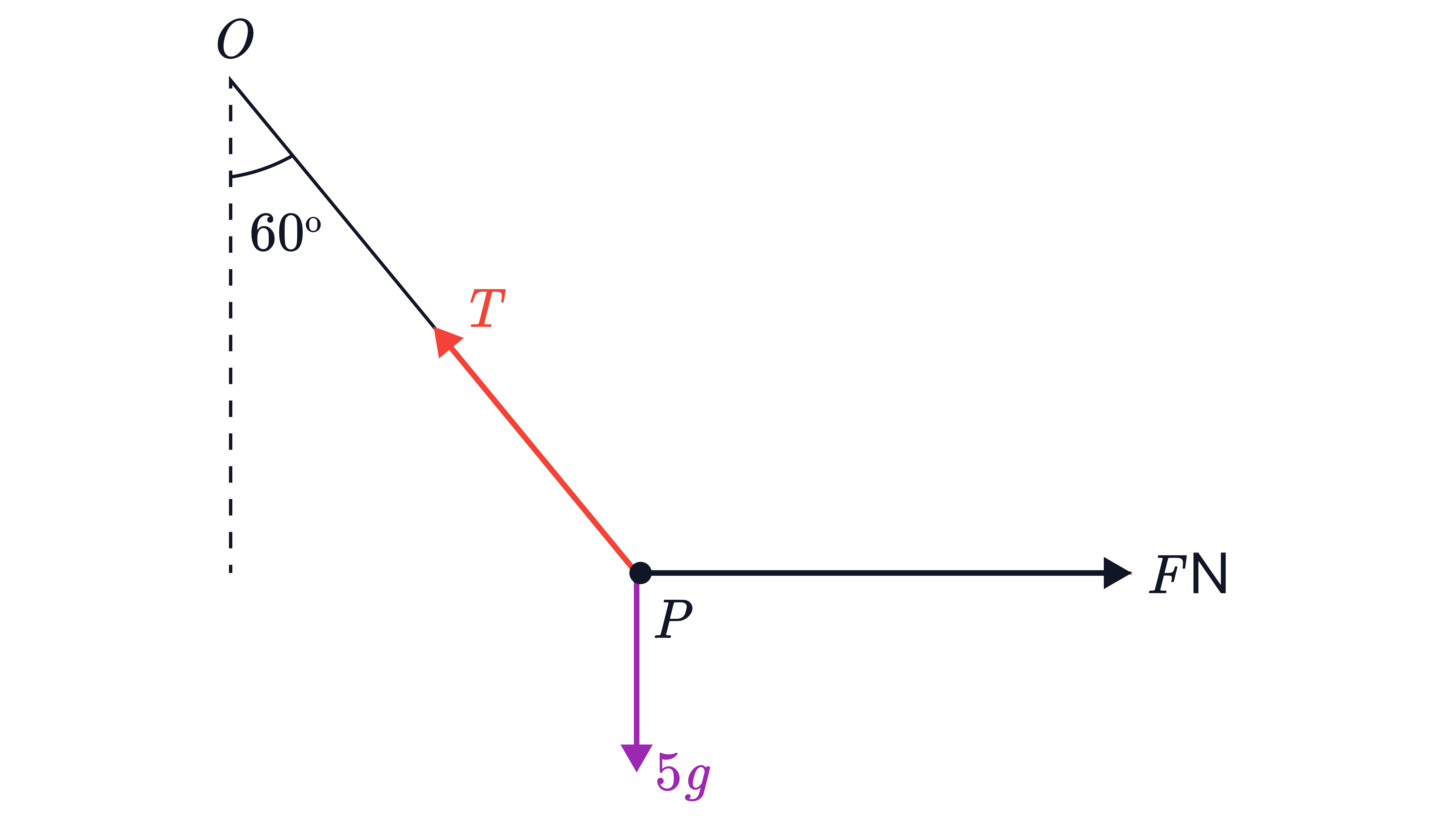
We break down the tension to its horizontal and vertical components and add the weight of .
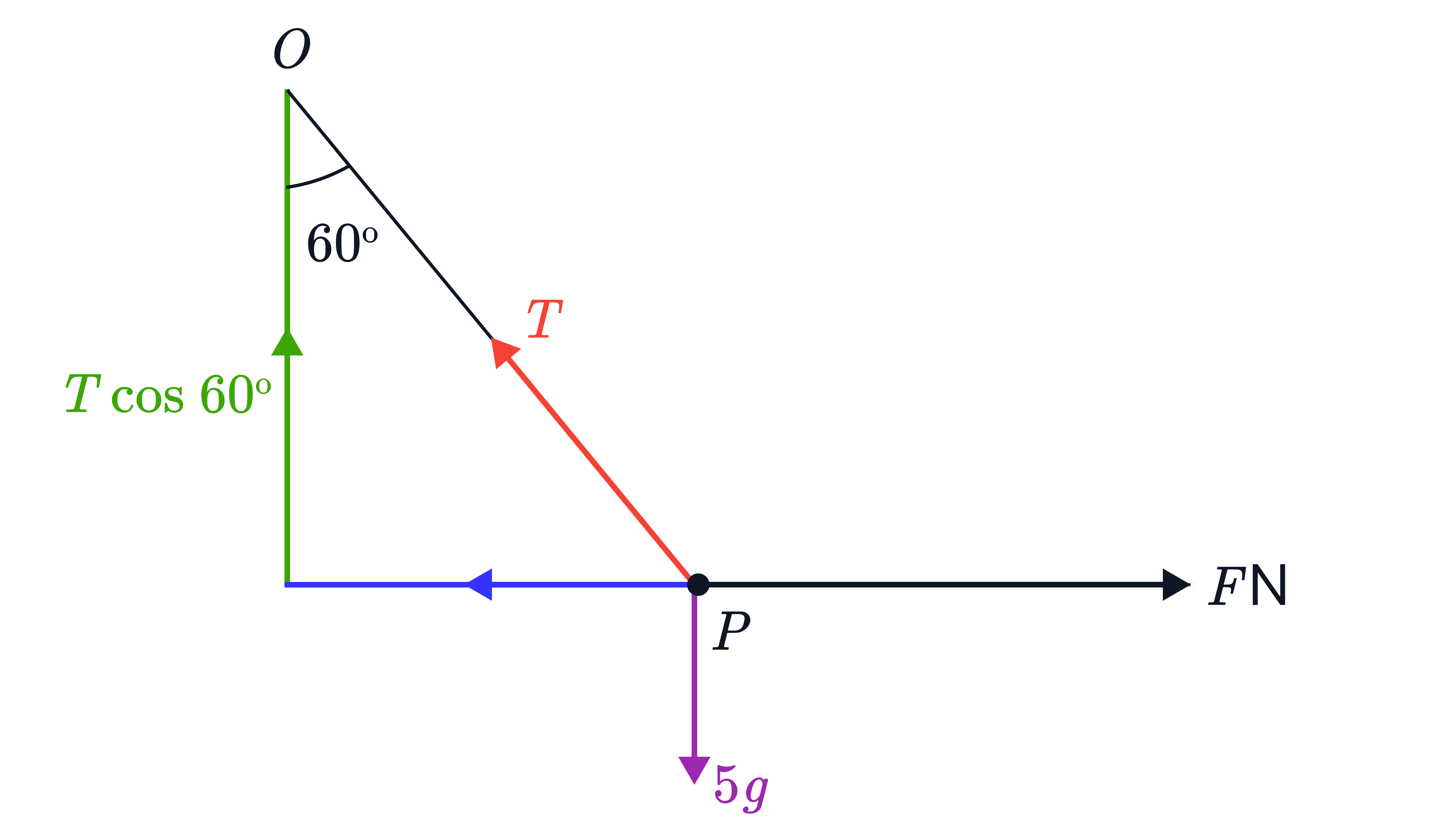
Step 2: Resolve the vertical force.
The only two forces are the weight and the vertical component of the tension.
N
Step 3: Resolve the horizontal force.
Here we have the horizontal component of tension and .
N
No answer provided.
Example 2:
A particle of weight N is suspended by two strings from a fixed horizontal ceiling. The particle hangs in equilibrium. The strings are light and inextensible and are inclined at and to the ceiling, as shown in the figure.
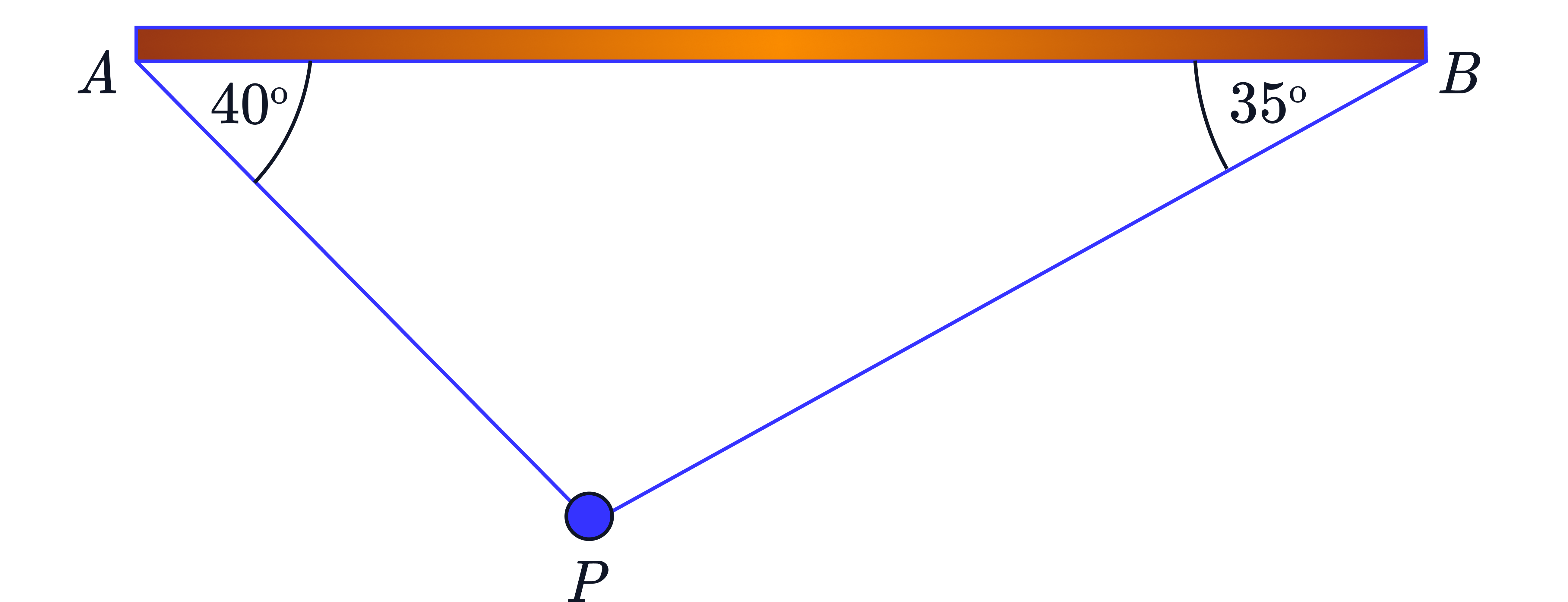
Find the tension in each of the two strings.
Step 1: Draw a force diagram.
Since we have two strings, we label them individually as and instead of just and break them down to their horizontal and vertical components. We also add in the weight of . Due to alternate angles being equal ( angles), the angles in blue are equal to their respective angles at the ceiling.
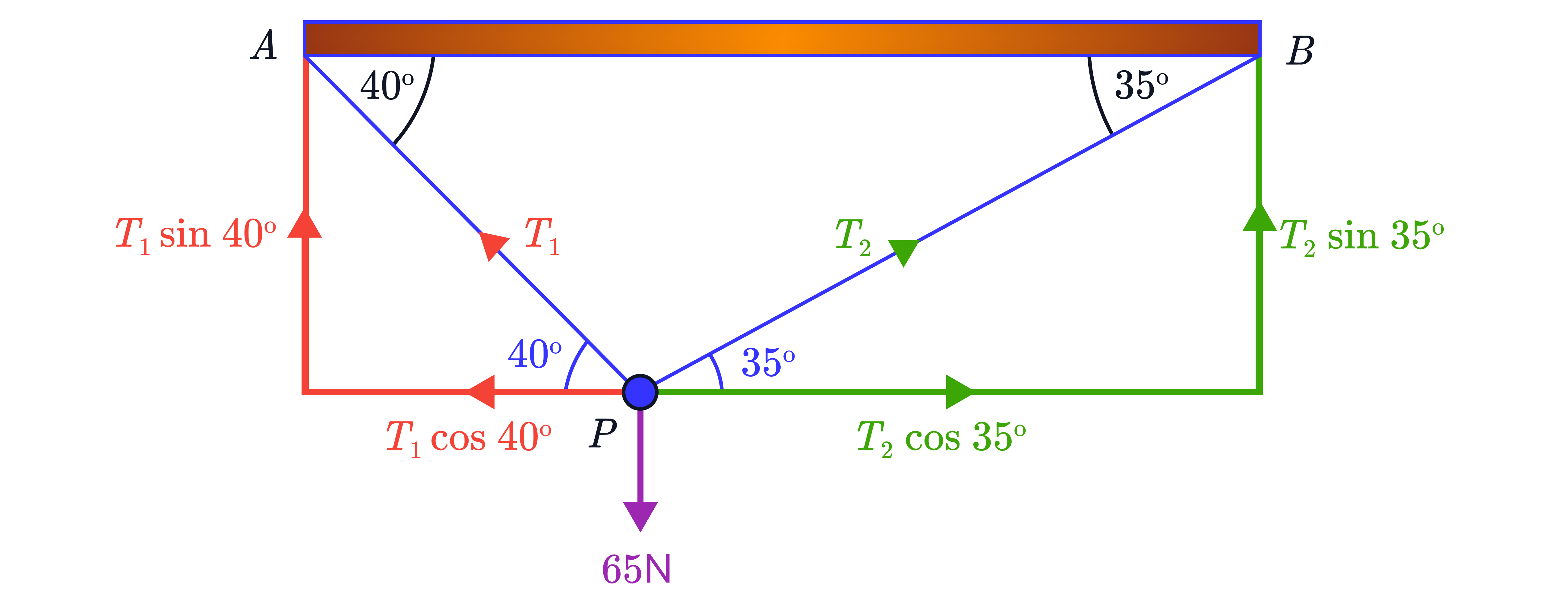
Step 2: Resolve the horizontal force.
The only two horizontal forces are the horizontal components of the tensions.
Step 3: Resolve the vertical force.
Here we have the vertical components of the tensions and the weight.
Substituting ,
N
We take the exact value of when we calculate .
N
No answer provided.
Challenging Question