Newton's 2nd Law in 2D with Friction
Neil Trivedi
Teacher

Newton's 2nd Law in 2D with Friction
Newton’s Second Law is
Where is the resultant (net) force on the particle or object, is the mass of the object and is the acceleration of the object.
We need to apply Newton’s Second Law in the correct direction. It is not always parallel to the horizontal or vertical like we have seen in previous topics, it can also be parallel to inclined planes.
Example 1:
A block of mass kg is on a rough plane inclined at to the horizontal. A constant frictional force of N is acting up the plane as the block slides down the plane.
a) Find the normal reaction force.
Step 1: Draw a force diagram.
– the normal reaction force (contact force)
– the weight of the particle.
N – the frictional force acting up the plane.
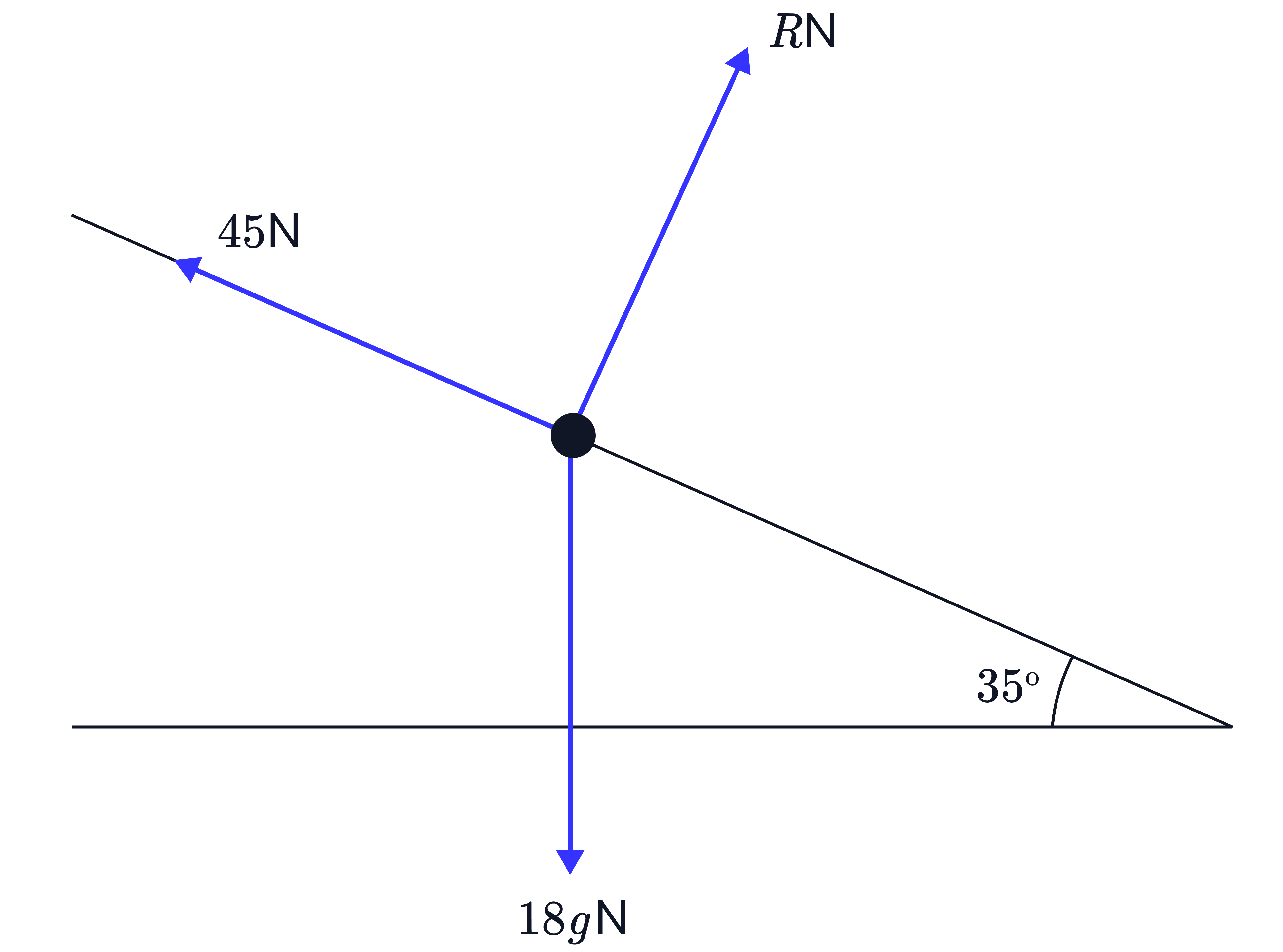
The weight of the particle is not pointing parallel or perpendicular to the plane so we must resolve it. We form a triangle of forces where the weight of the particle is pulling it into the ground and wants to pull the particle down the plane .
The angle at the top of the triangle is always equal to the incline of the plane and can easily be shown through angles in a right-angle triangle (see Resolving Forces Study Note for more detail if you are curious).
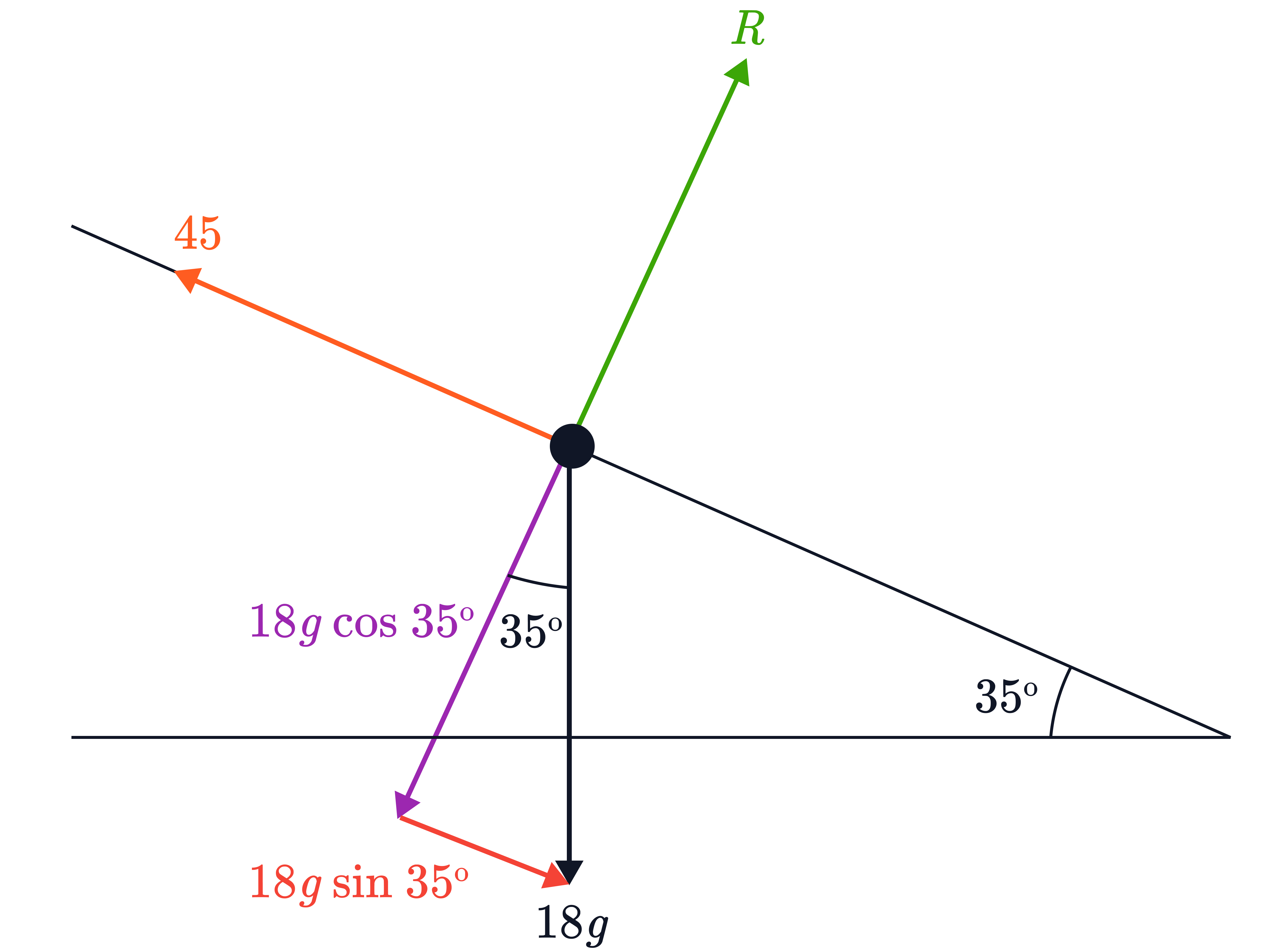
Step 2: Resolve the force perpendicular to the slope.
The only two forces are the component of weight perpendicular to the slope and the reaction force . Since the particle remains in contact with the ground, the force pulling it off the ground, , is equal to the force pulling into the plane, .
sf
b) the acceleration of the block
Single Step: Apply Newton’s Second Law on forces parallel to the slope.
We take the direction down the slope as the positive direction. Since the particle is moving parallel to the plane, the forces pointing up the plane versus down the plane are not balanced. Clearly, the force pointing down the plane is greater than the force pointing up the plane since the particle is moving down the plane.
Net force
Positive force Negative force mass acceleration
ms sf
Note that we are using ms, so we are rounding to significant figures.
No answer provided.
Example 2:
Two points and are m apart on a rough plane inclined at to the horizontal. A particle of mass kg is held at rest on the plane at . The coefficient of friction between and the plane is . The particle is released.
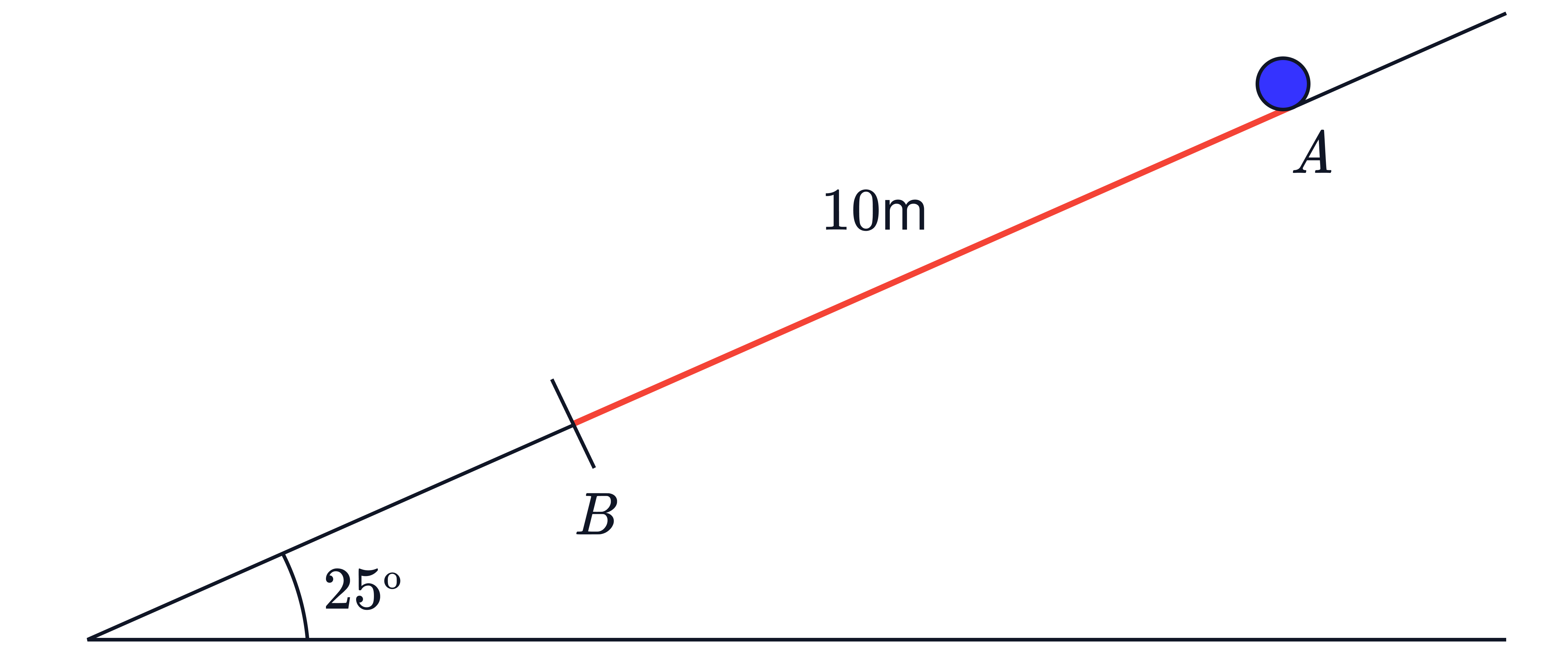
a) Find the acceleration down the plane.
Step 1: Draw a force diagram.
We resolve the weight of the particle so it is pointing into the ground and down the plane. The direction of motion is down the slope, so friction is applied up the slope. And hence we set the direction down the slope to be positive.
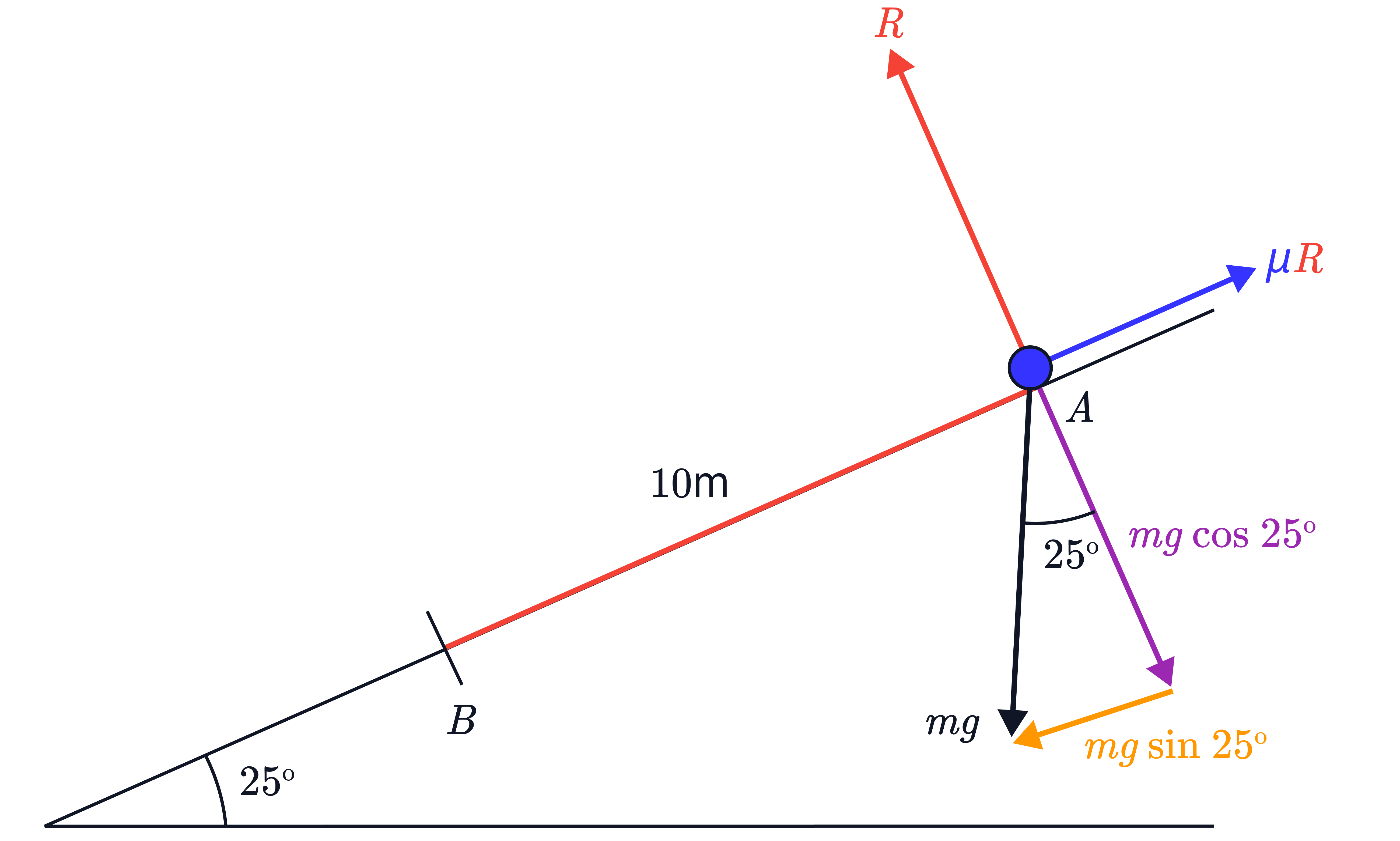
We will always use in questions where the particle is moving as friction is not able to withstand the opposite force, hence why the object is moving.
Step 2: Resolve the forces perpendicular to the slope.
The only two forces are the component of weight perpendicular to the slope and the reaction force.
Step 3: Apply Newton’s Second Law on forces parallel to the slope.
Here we have the weight of the particle pointing down the slope and friction.
Net force
Positive force Negative force mass acceleration
ms sf
b) Find the speed of at .
Single Step: Find the speed using SUVAT.
Here we are finding the final velocity, and we have:
neither given nor want
So, we pick
ms sf
No answer provided.
Challenging Question