Energy Resources and the Environment
Brook Edgar & Hannah Shuter
Teachers


Contents
Explainer Video
Where do we get electricity?
In the UK, most electricity used to come from coal-fired power stations. However, most now comes from wind turbines (more on this later) and natural gas. Natural gas is cheaper and cleaner than coal.
When you turn on your computer to study or charge your phone, the electricity you use is supplied to your home via the National Grid. The National Grid transports electricity from power stations to homes and businesses across the UK. It consists of pylons - tall metal towers that keep high-voltage electricity cables high above the ground for safety, and of transformers (more on this later).
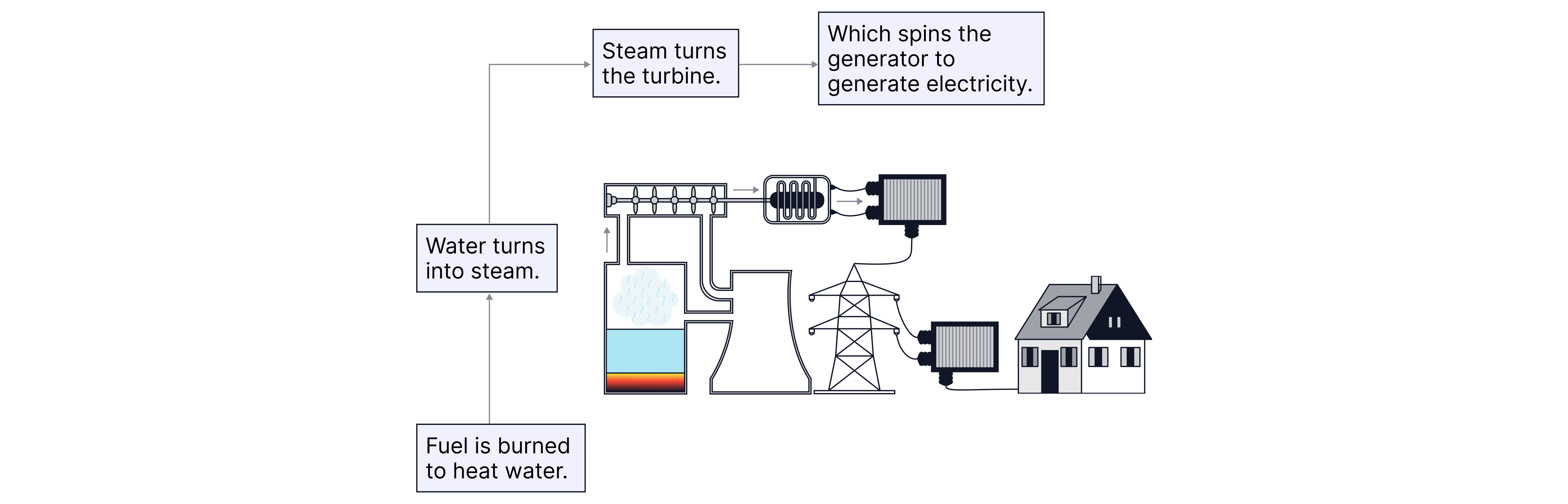
Power stations are not located in cities because of the harmful emissions they release. The fuel (coal, oil or gas) is burned to heat water, which turns into steam. Steam is used to drive turbines, which spin generators to produce electricity that is transmitted via cables to our homes. When the fuel (coal, oil or gas) is burned, in the power station, carbon dioxide gas, , is released. Carbon dioxide is a greenhouse gas as it contributes to global warming.

Remember: Another reason power stations are not located in cities is due to the pollutants (harmful gases) and dust they release, which is harmful to humans as it can irritate lungs, causing or worsening asthma.
Global Warming
Carbon dioxide is known as a greenhouse gas.
Greenhouses are glass structures used to grow plants and vegetables. The glass traps heat from the Sun, keeping the inside hotter than the outside so that the plants can grow. This is similar to what carbon dioxide gas does to the Earth. The Sun emits infrared radiation (IR) towards the Earth. All objects emit infrared radiation (a wave), but the hotter an object is, the more IR it emits. Some of this IR is absorbed by Earth, keeping it warm enough for liquid water, and the rest is reflected back into space. The increase in the amount of carbon dioxide gas in our atmosphere from the burning of coal and gas in power stations, combined with the increase in the number of cars and factories, has meant that more IR from the Sun is being absorbed and less reflected into space. This causes the Earth's temperature to increase, a phenomenon known as global warming.
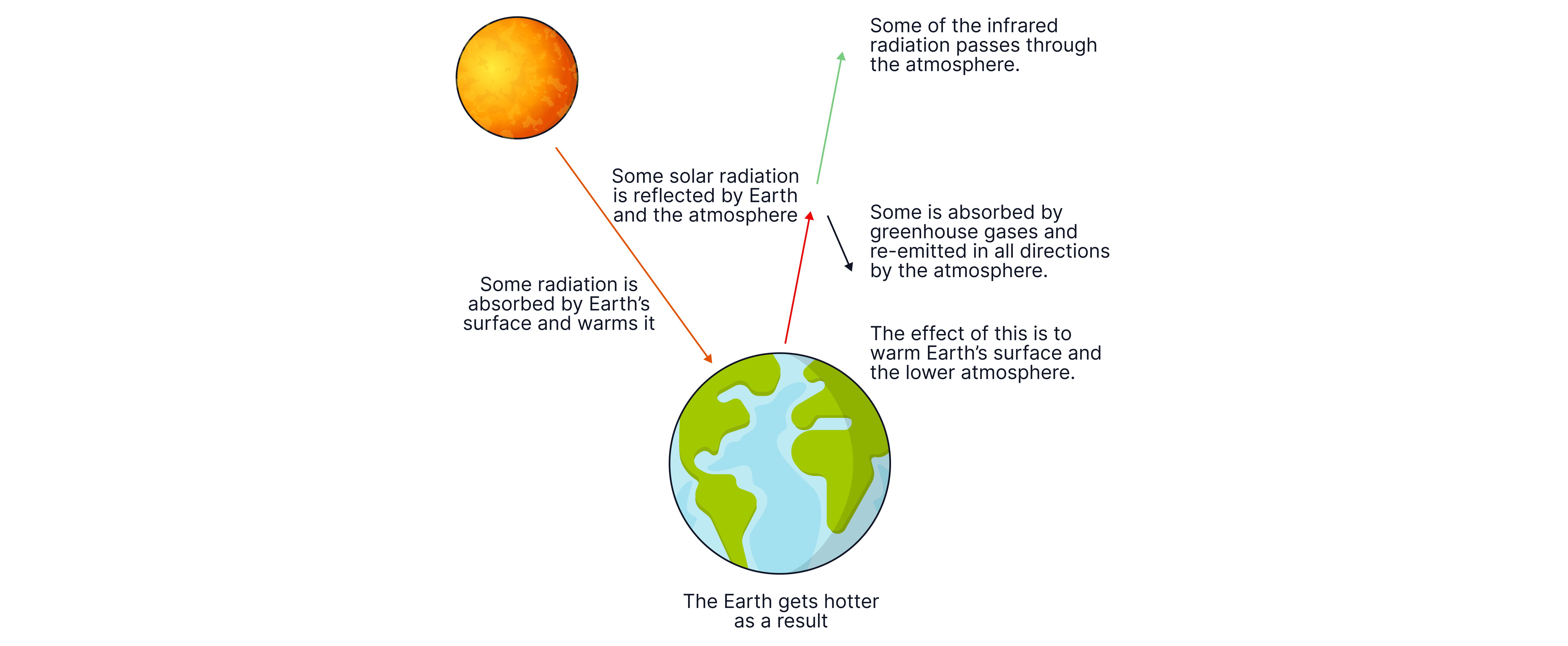
The Earth's increasing temperature is detrimental (although those living in the UK might think otherwise), as it melts polar ice caps, leading to rising sea levels and flooding, damaging housing. Animals also suffer due to changing weather conditions. For example, polar bears, whose habitat is being destroyed by melting ice, are losing living space, and rising water temperatures are affecting fish populations (the polar bears' primary food), causing them to starve.

Although coal, oil and gas-fueled power stations harm the environment, we continue to use them because they provide a cheap and reliable source of electricity. Humans are greedy, and we want to have access to electricity at all times of the day, which coal, oil and gas-fueled power stations provide.
Non-renewable Energy
Fossil fuels (coal, oil and gas) are formed over millions of years. They are known as non-renewable energy resources as they cannot be replenished as they are being used (they can not be replaced quickly).
They form when marine fish and plants die, sink, and become mixed with mud on the seabed. Layers upon layers build up, causing the bottom layers to be compressed, and after millions of years, fossil fuels form. These fossil fuels are then dug out of the ground by drilling to be burned in power stations to heat water to form steam, which turns a turbine and spins a generator to generate electricity.
As burning fossil fuels is so harmful to the environment, due to the carbon dioxide released, an alternative energy resource is nuclear fuel. The fuel used in nuclear power stations is uranium. Uranium is found naturally in rocks. Uranium is a radioactive metal; its nucleus splits into lighter nuclei, releasing vast amounts of energy as heat. This heat is used to boil water into steam, which drives a turbine that spins a generator to produce electricity. Nuclear fuel is non-renewable because it is a finite resource on Earth; once it is mined from the ground, it is used up and cannot be replaced. Nuclear power produces much more energy per kg of fuel than fossil-fueled power stations, but they produce dangerous radioactive waste that needs to be disposed of carefully. If not disposed of carefully, the radioactive waste emits radiation that can damage living cells, possibly leading to cancer.
Worked Example:
Explain why has the UK is trying to stop using coal-fired power stations.
Answer:
Coal is a fossil fuel that takes millions of years to form. It is a non-renewable energy resource because it cannot be replenished as it is being used; it is a finite resource. Burning coal in power stations to generate electricity releases greenhouse gases, such as carbon dioxide, into the atmosphere. This gas traps infrared radiation from the Sun, causing the Earth to warm. This is known as global warming. This causes ice to melt at the poles, leading to increased flooding and habitat destruction for animals.
Practice Questions
Coal is a fossil fuel. Explain why it is non-renewable.
-> Check out Brook's video explanation for more help.
Answer:
Non-renewable energy resources are used up faster than they can be replenished; they are finite resources. Coal is a fossil fuel, and fossil fuels take millions of years to form. Fossil fuels such as coal are used up quickly, so they are non-renewable.
Describe and explain the harmful effects of carbon dioxide emissions on the environment.
-> Check out Brook's video explanation for more help.
Answer:
These emissions can cause asthma in humans as the pollutants damage the lungs. Carbon dioxide is a greenhouse gas that absorbs IR/thermal energy from the sun. This heats up the Earth, causing global warming, melting ice caps, destroying habitats, and raising sea levels.