Properties of Waves
Brook Edgar & Hannah Shuter
Teachers


Contents
Explainer Video
Amplitude and Wavelength
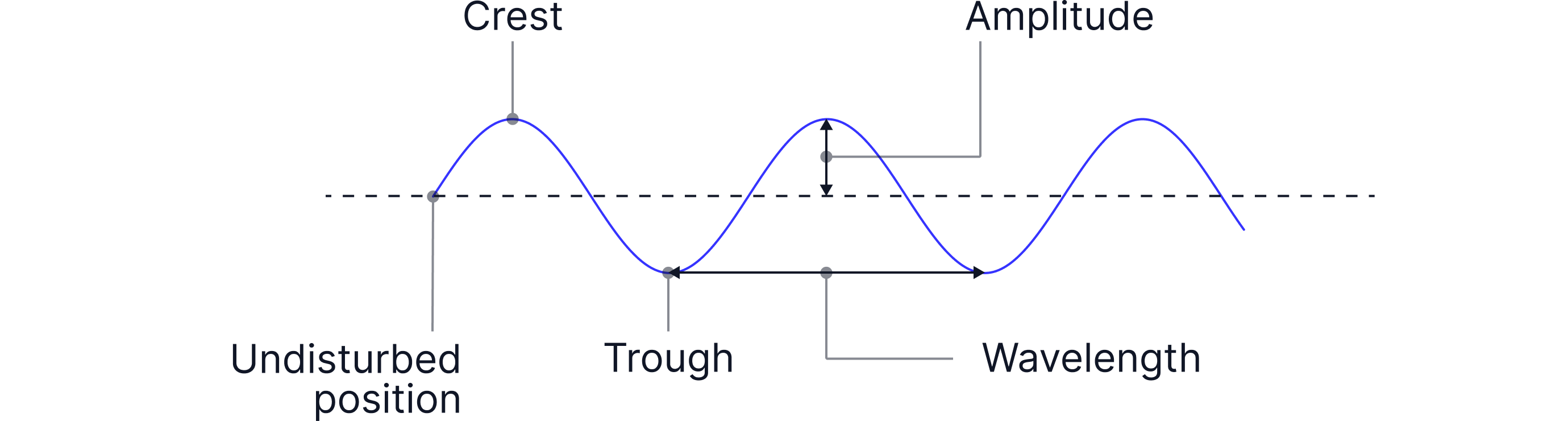
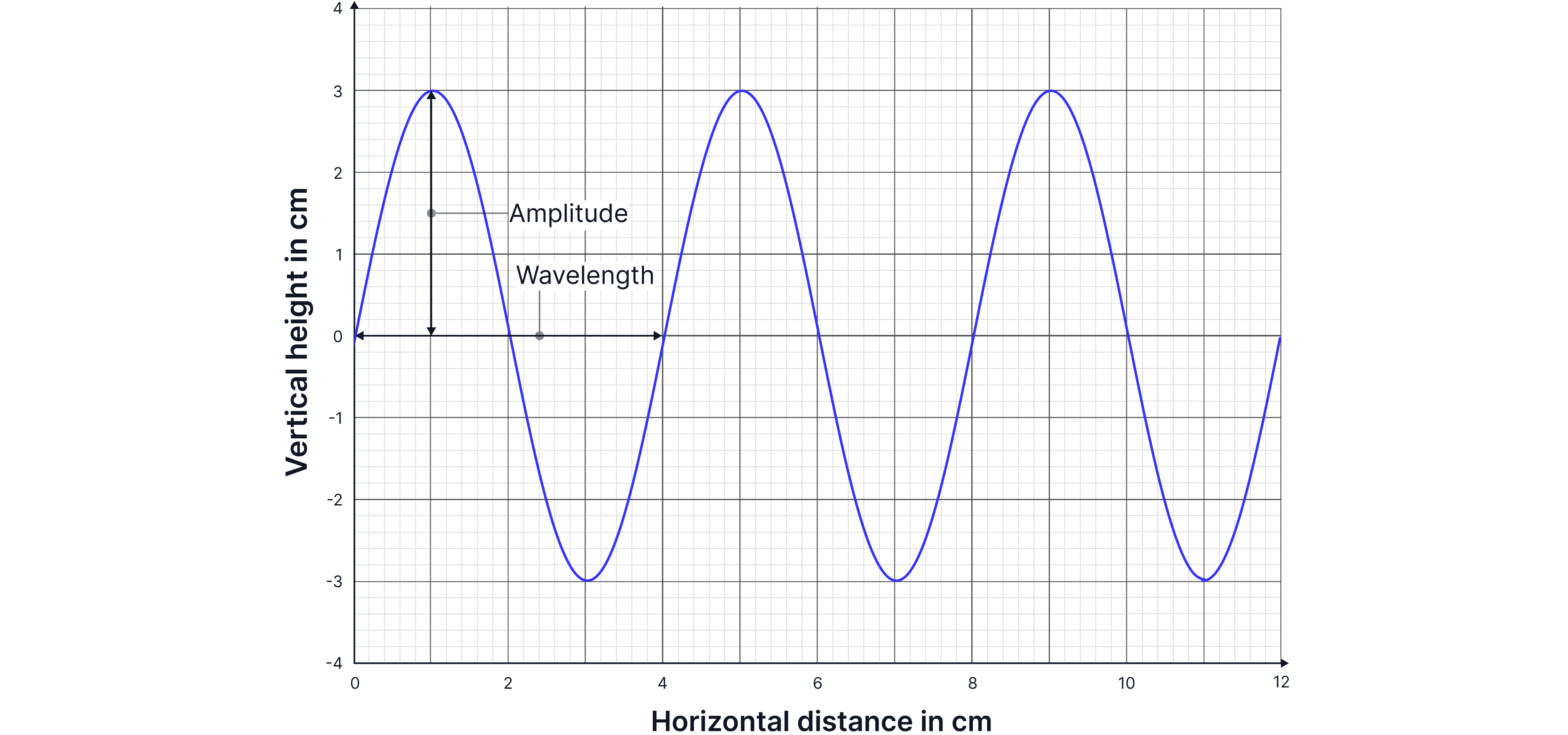
Waves can appear in many different forms, but they all share common features that we can describe. For example, consider a water wave. On a wave diagram, a straight line drawn across the middle of the wave is called the undisturbed position (or equilibrium position). This shows where the water would be if there were no waves. The y-axis shows the water particles' vertical motion - it shows the vibration of the water particles, up and down , perpendicular to the direction of energy transfer. The maximum height of the vibration from the undisturbed position is known as the amplitude.
Key wave features:
Crest/peak – the highest point of the wave
Trough – the lowest point of the wave
Amplitude – the maximum displacement from the undisturbed position (the distance from the middle to a peak or to a trough). Measured in metres, m.
Wavelength – the distance between two identical points on consecutive waves (the distance from one point on a wave to the equivalent point on an adjacent wave, such as from the peak of one wave to the peak of another). Measured in metres, m.
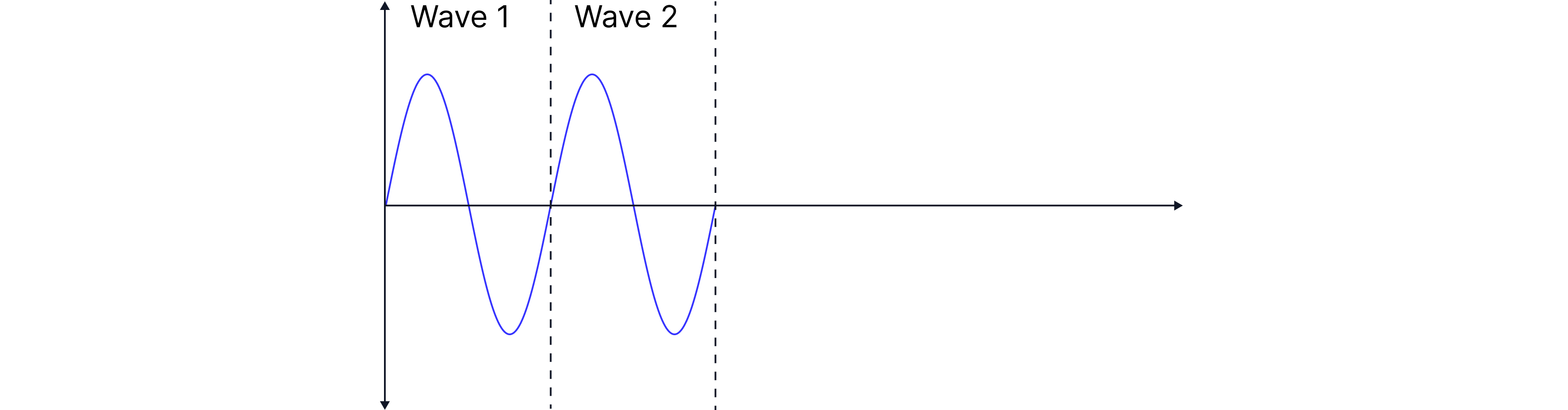
A full wave is a wavelength. One full wave is from peak->peak, or trough->trough or from the middle position through a peak, trough and back to the middle. In the diagram below, there are two waves. It is easier in the example below to count the waves starting at the middle and following through the peak and trough, back to the middle, which is repeated twice as the image starts at the middle.
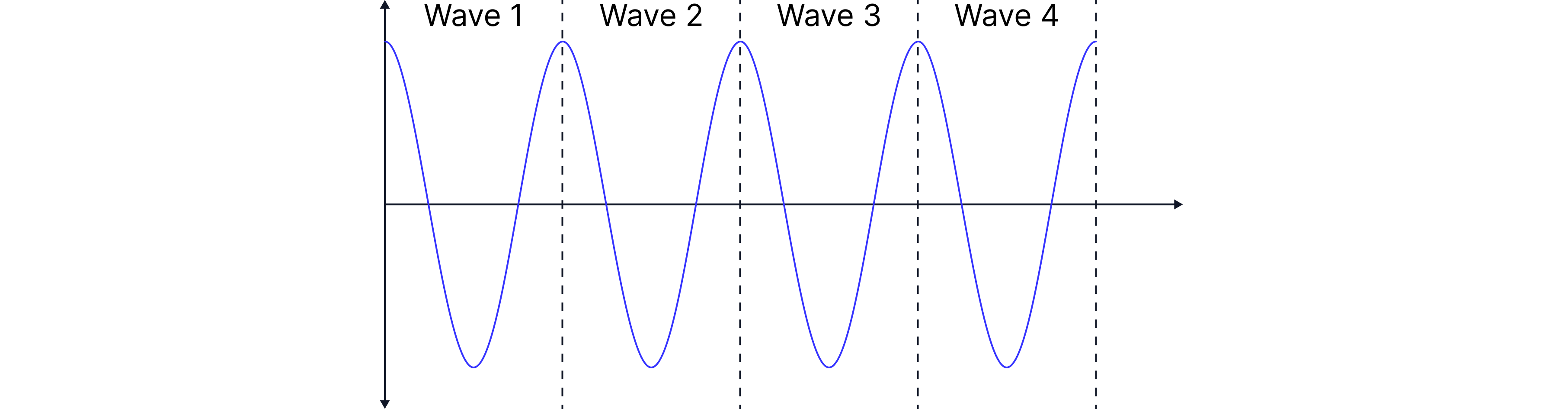
 In the image below, there are four waves. It is easier here to count the waves from peak->peak, which is repeated four times, because the image starts at a peak.
The amplitude (height of the wave about the undisturbed position) represents the energy of the wave.
Large amplitude -> more energy. If it were a sound wave, more energy means that the sound will be louder.
Small amplitude -> less energy. If it were a sound wave, less energy means the sound will be lower, quieter.
Worked Example:
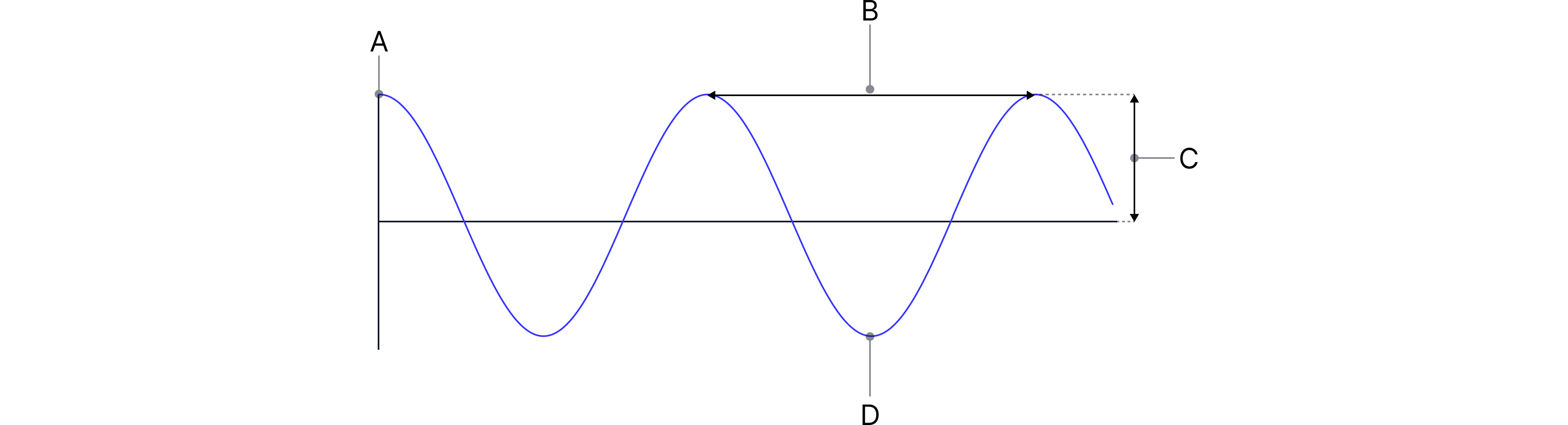
The letters A - D represent different parts of a wave. State the parts of the wave these letters represent.
Answer:
A = crest/peak
B = wavelength
C = amplitude
D = trough
Worked Example:
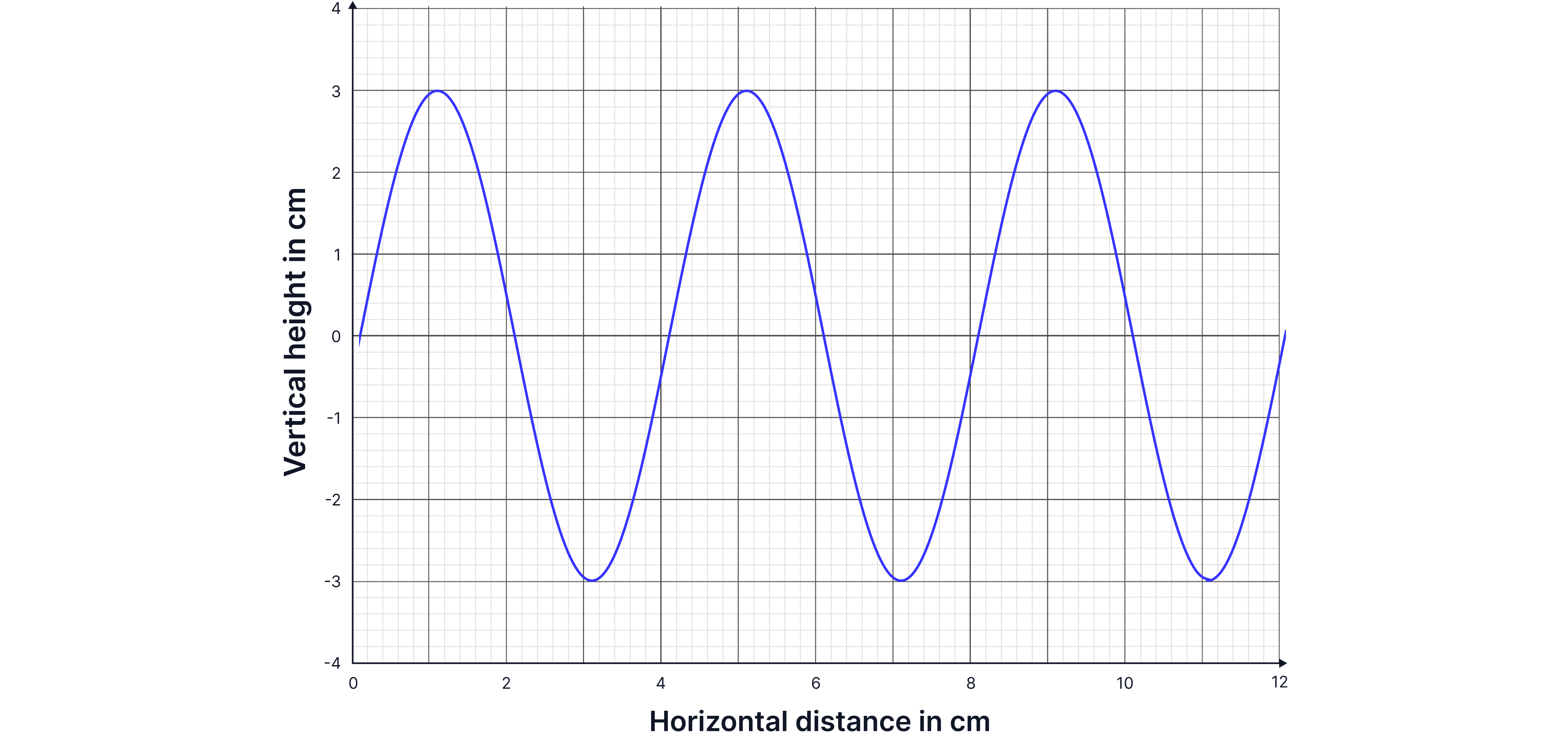
State how many waves are in the diagram.
Calculate the amplitude and the wavelength of the wave in the diagram
Answer:
3 complete waves
The amplitude of the wave is the height about the undisturbed position, so would be . The wavelength of the wave is the length of a complete wave, which would be .
Frequency and Time Period
The frequency of a wave is the number of waves that pass a point every second. Measured in Hertz,.
If you were on a boat, and two waves passed you every second, this would be a frequency of .
If you were on a boat and waves passed you in seconds, to find the frequency, we need to know how many waves pass you in second.
Formula:
The time period is the time it takes for a full wave to pass. Time period and frequency are the inverse of each other -> if we know one we can calculate the other.
In the wave shown below, we can calculate the frequency of the wave by first finding the time period of the wave - the time taken for one full wave to pass (from peak to peak) , and then calculating the frequency using the equation, .
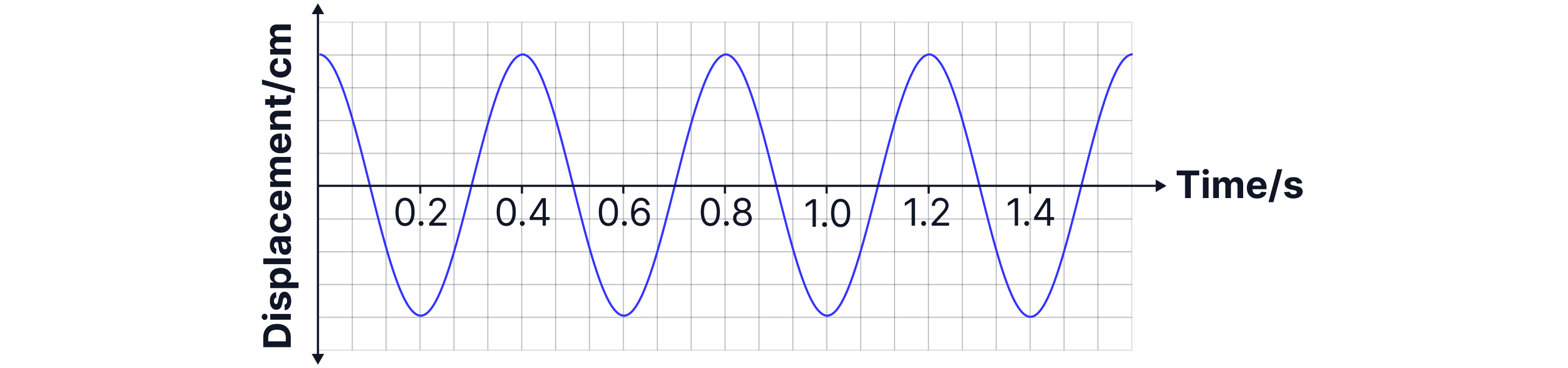
The trick here when using this equation is to just swap the places of the time period and frequency, .
The frequency of the wave tells us how fast the wave oscillates/vibrates.
High frequency -> more waves per second (more squished together). If it were a sound wave, a high frequency would be a very high-pitched sound.
Low frequency -> fewer waves per second (more spaced out). If it were a sound wave, a low frequency wave would be a very low-pitched sound.
Worked Example:
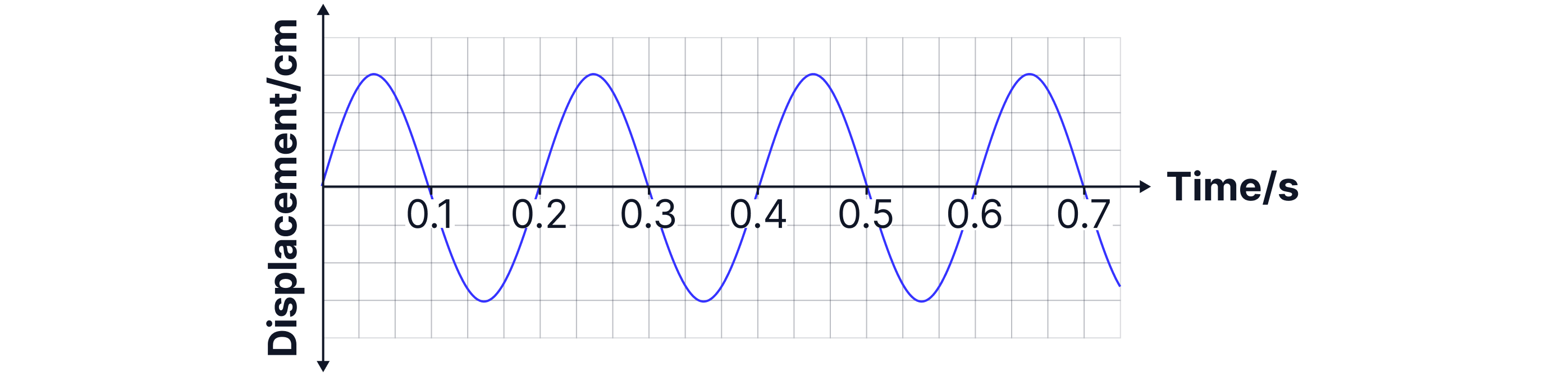
State the frequency and time-period of the wave shown below:
Answer:
The time period of the wave is as that is how long one complete wave takes to go past a point. Then to find the frequency, we can use the equation:
Worked Example:
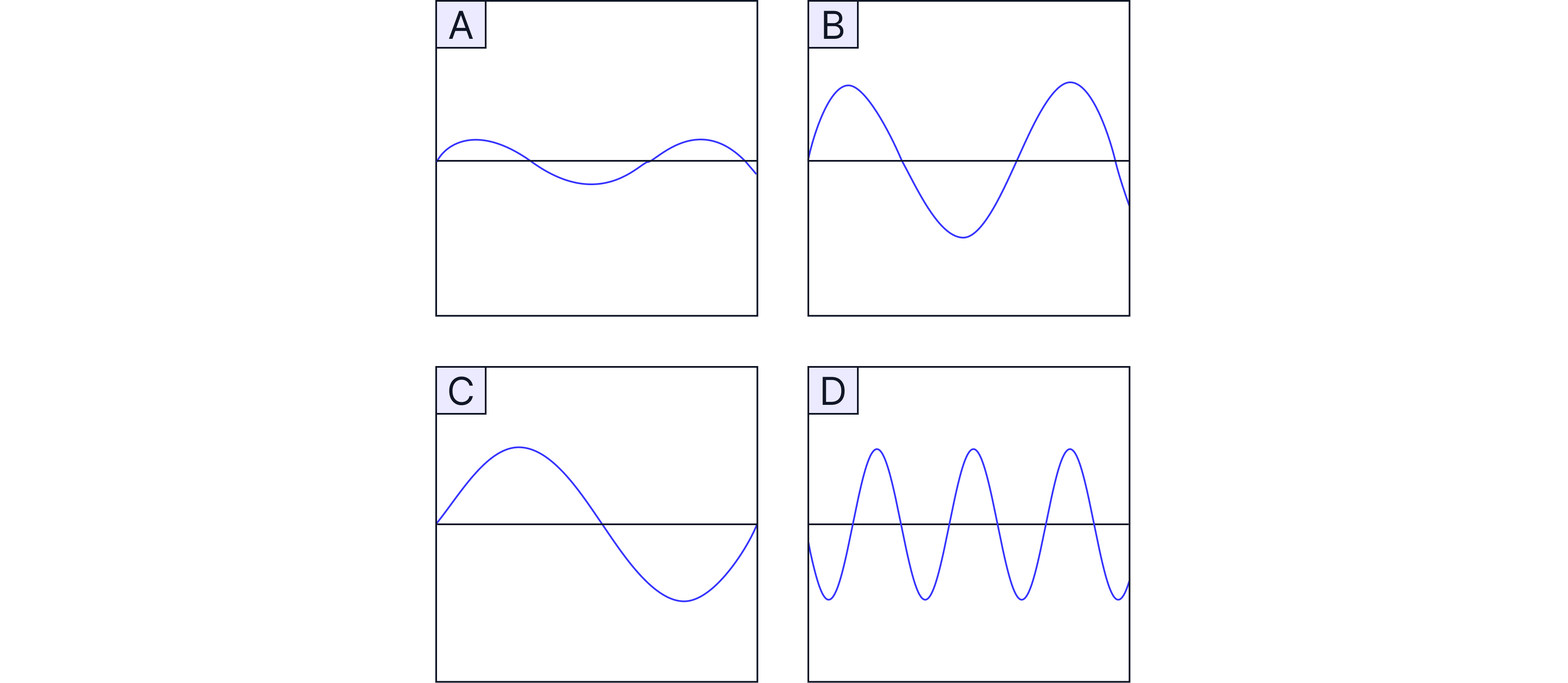
Which sound wave shows:
The highest pitch sound
The quietest sound
Answer:
The highest pitched wave will have the highest frequency. The highest frequency wave will have the peaks most bunched together, so the highest pitched wave would be .
The quietest sound is the one with the smallest amplitude, which would be .
Wave Speed
There are two main equations we can use to calculate wave speed. One uses distance and time, and the other uses frequency and wavelength. The equation we choose depends on which quantities are given in the question.
Wave Speed, Distance and Time
In some situations, we can measure how far a wave travels in a given time. For example, if we drop a pebble into a pond, it causes ripples to spread outwards across the water. By measuring the distance the ripples travel, say and time how long it takes, say , we can calculate the wave speed using the equation below.
Formula:
Note: Above is how the equation looks on your formula sheet, but from lower school, you may be used to using the equation, speed = distance time, written as, , which is also fine to use.
First, we need to convert centimetres into metres, .
We can also use this equation to calculate the speed of sound in air.
To carry out this experiment accurately, two people should stand a large distance apart. A distance of around is ideal, as this makes the time between the sound being emitted and detected longer and thus easier to measure, improving accuracy.
One person produces the visible sound, such as clapping wooden blocks above their head or hitting a drum. The second person starts a stopwatch when they see the sound being made and stops the stopwatch when they hear the sound. The speed of sound can then be calculated using,.
This experiment relies on human reaction time. There is a delay due to the person's reaction time between seeing the signal that the sound is produced and starting the stopwatch, and another delay between hearing the sound and stopping it. This makes the measured time slightly longer than the true value, reducing accuracy.
This experiment can be improved by:
Increasing the distance between the two people, so that the time the sound wave is travelling is much longer, so the person's reaction time will be a much smaller fraction of the total time.
Repeating the experiment several times and calculating the mean time to reduce random errors.
Using electronic equipment, such as microphones and data loggers, to remove human reaction time.
Ensuring the experiment is carried out in a quiet environment to make the sound easier to hear.
Wave Speed, Frequency and Wavelength
Sometimes waves move too fast for us to accurately measure their distance and time, so we use another equation that links the frequency and wavelength to the speed the wave is travelling at. This is known as the wave equation.
Formula:
Example: I want to calculate the speed of a water wave, that has a wavelength of and a frequency of .
Worked Example:
A sound wave travels at a speed of . Two students want to measure this speed experimentally. After carrying out some preliminary tests, they find that the smallest time interval they can measure accurately is .
What is the minimum distance apart the students should stand in order to measure the speed of sound accurately?
Answer:
If the shortest time they can accurately measure is , then this must be the time between seeing the sound being made and starting the stopwatch. We need to calculate distance, and are given the time and speed, so we use the equation:
The minimum distance the students should stand apart is .
Worked Example:
Two children make a wave on a slinky in the playground. The wave is moving at and the length of the wave is long. How many times per second are the children moving their hands up and down?
Answer:
How many times the children are moving their hands up and down will be the frequency of the wave, so we can use the wave equation to find this:
Practice Questions
The diagram shows a transverse wave on a rope:
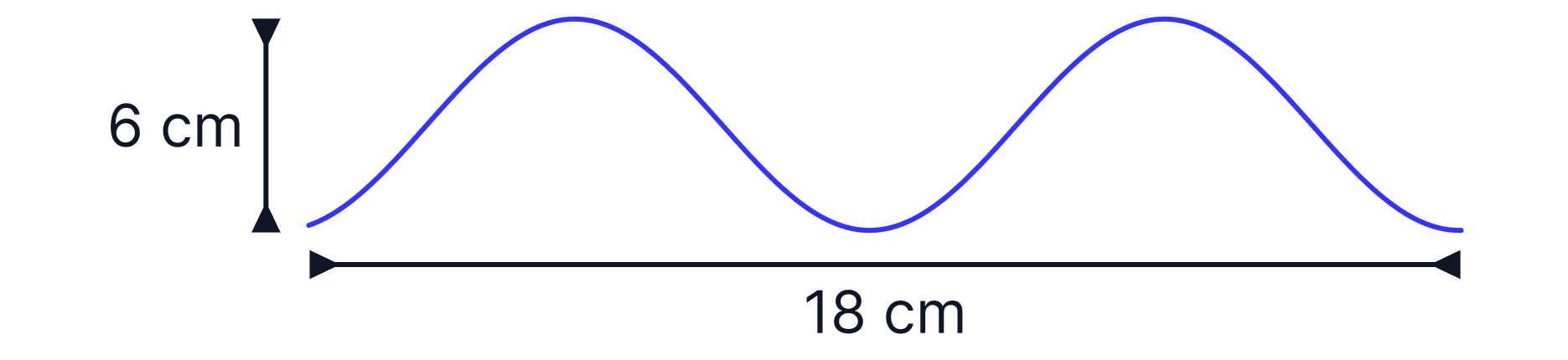
Explain what is meant by the amplitude of a wave and determine the amplitude and wavelength of the wave shown.
→ Check out Hannah's video explanation for more help.
Answer:
A wave travels through air with a frequency of and a wavelength of .
Calculate the wavespeed.
Calculate the period of the wave.
→ Check out Hannah's video explanation for more help.
Answer: