Refraction RP and Lenses
(Triple Only)
Brook Edgar & Hannah Shuter
Teachers


Explainer Video
Refraction Core Practical
Reminder: Refraction is the change in direction of light as it enters a different medium. We can prove this by setting up the practical below:
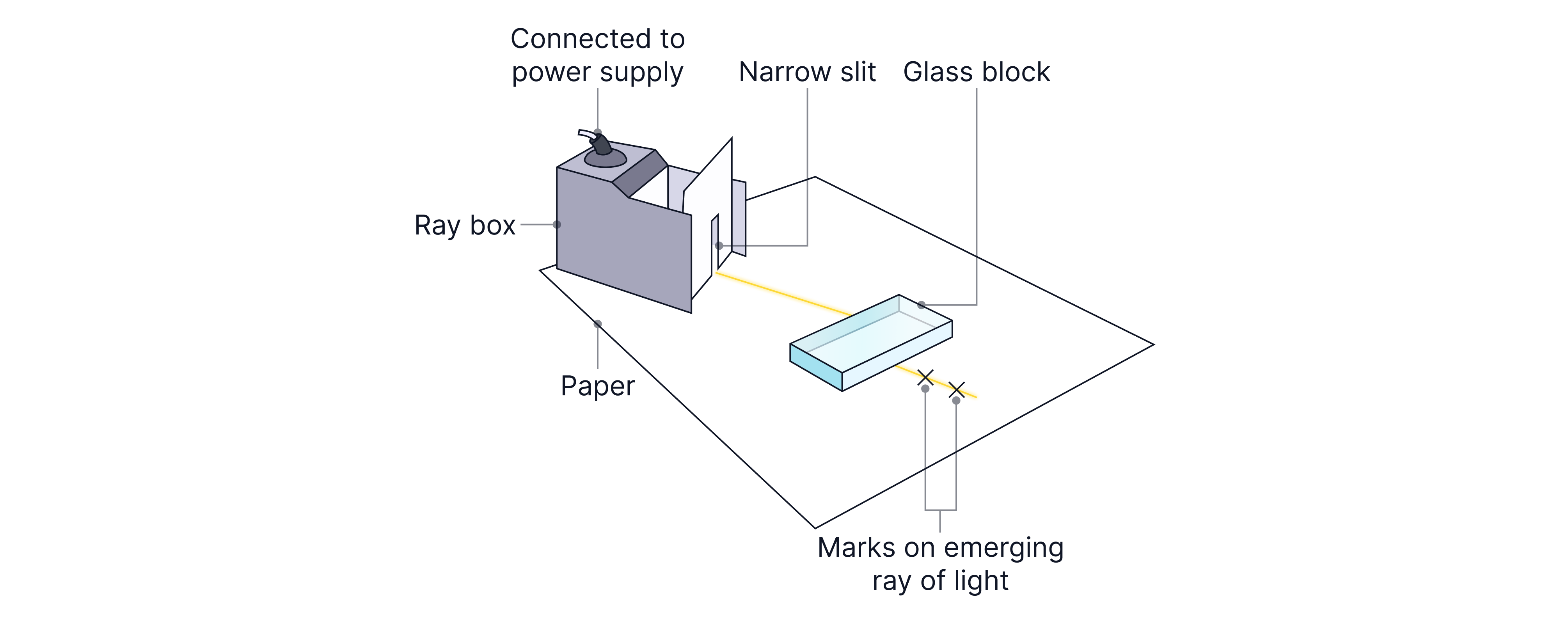
Method:
Place a glass block on paper and draw its outline in pencil
Direct a thin ray of light into the block at an angle using a ray box
Mark the incident ray and the ray coming out of the block (the emergent ray) using crosses, so that when the light is turned off and the glass block removed, you can connect the crosses using a ruler to show the path of the two rays, and connect them to see their path through the block
Draw a normal at to the point where the ray enters the block
Use a protractor to measure the angle of incidence, between the incident ray and the normal, and the angle of refraction between the normal and the ray inside the block
Worked Example:
A student uses a rectangular glass block to investigate refraction.
Describe how the student could measure the angle of refraction.
Explain why the ray changes direction when it enters the glass at an angle.
State one improvement the student could make to increase the accuracy of the results.
Answer:
Place the glass block on paper and draw around it.
Shine a ray of light into the block at an angle, and mark its paths with crosses.
Remove the block, use a ruler to connect the crosses to mark the paths of the incident and emergent rays and join them together to show the path of the ray through the block
Draw a normal at the point where the ray enters the glass.
Measure the angle between the refracted ray and the normal using a protractor.
Light travels more slowly in glass than in air. When the ray enters the glass at an angle, one part of the wavefront slows down before the rest. This causes the ray to bend towards the normal.
Use a narrow beam of light to make the rays easier to trace.
Lenses
Lenses are pieces of glass or clear plastic used to change the direction of light rays and to focus them at certain points. They are used to refract light rays. They are used in glasses, cameras and projectors. For example, the lens in your eye focuses light rays onto the back of your retina for sight.
There are two types of lenses: converging and diverging.
Converging Lenses
Converging lenses are thicker in the middle than at the edge. Parallel rays of light will all get refracted to the same point on the opposite side of the lens, known as the focus or focal point. They bring light rays together; they converge light rays. These lenses are used in glasses to correct long-sightedness. They are also known as convex lenses.
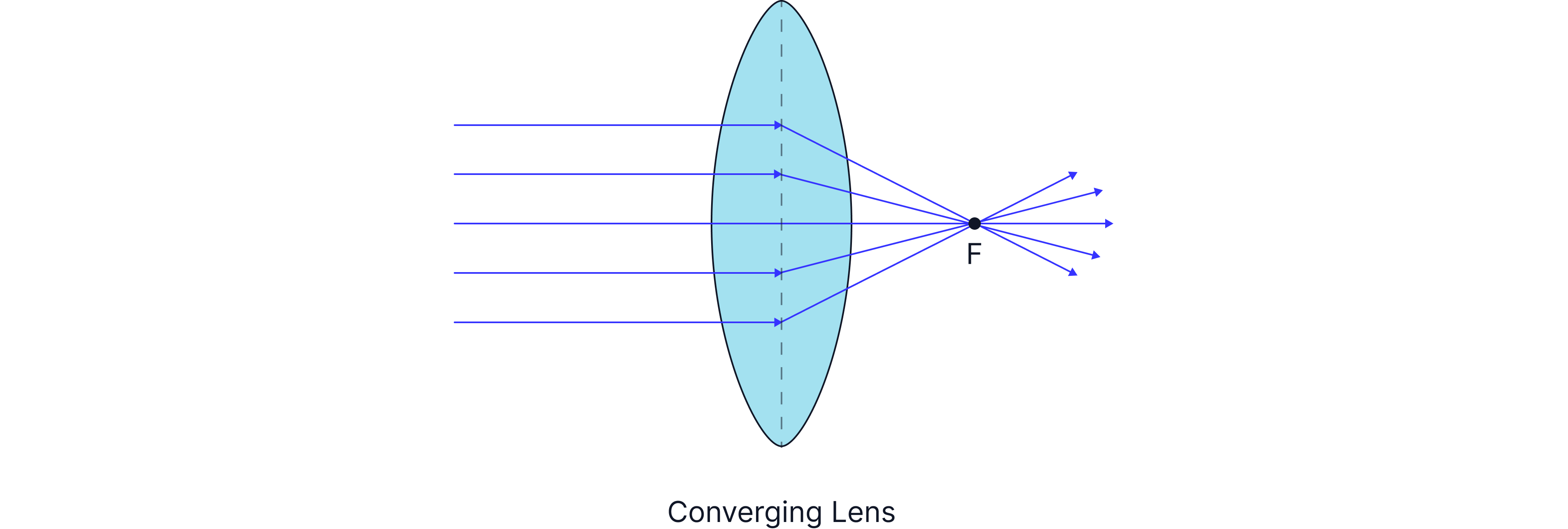
In lens diagrams, we draw convex lenses, with arrows pointing outwards, like this:

Diverging Lenses
Diverging lenses are thicker at the edges than in the middle. Rays of light parallel to each other all diverge and spread out on the opposite side of the lens. These rays can be traced back to "appear" to have come from a point behind the lens, known as the focal point. Diverging lenses are used in glasses to correct short-sightedness. These lenses are also known as concave lenses.
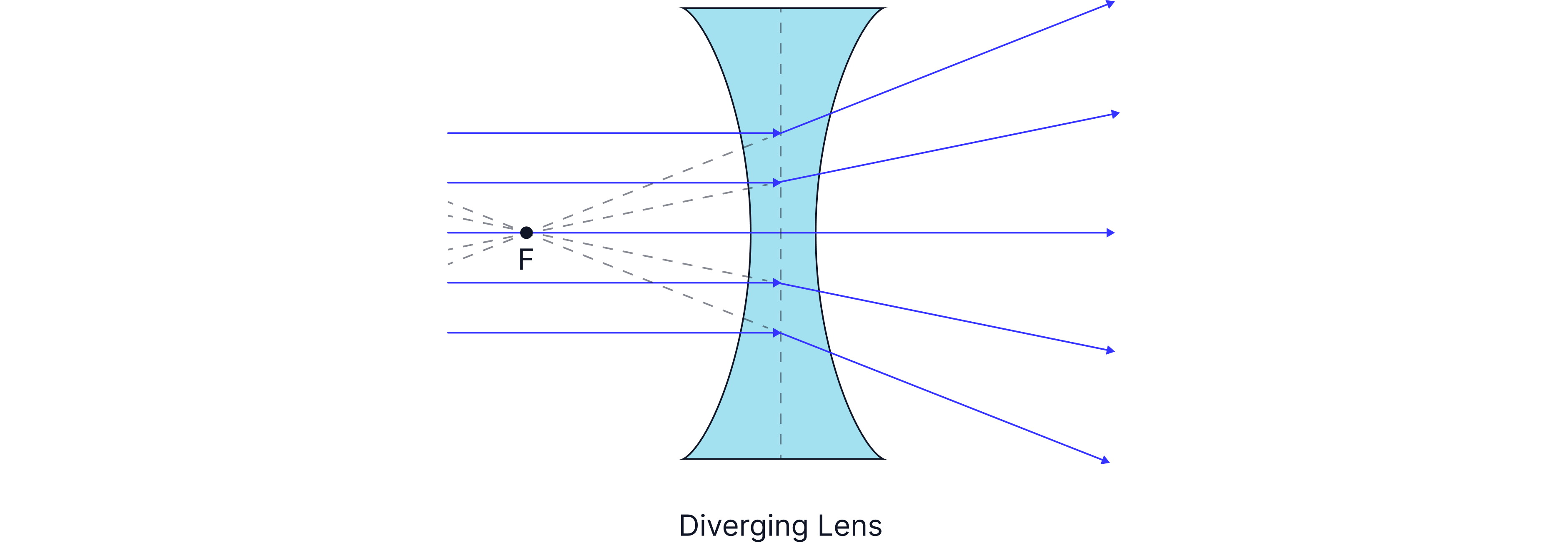
In lens diagrams, we represent concave lenses with inward facing arrows, like this:

Drawing Ray Diagrams
You need to be able to draw ray diagrams for your GCSEs, showing how an image is formed through a lens. We always represent the object as a single arrow drawn on the optical axis (a line through the centre of the lens) - this makes it easier to determine whether the image is upright, inverted, magnified, or diminished. Images can also be real or virtual. Real images are ones that can be projected onto a screen. Virtual images cannot be projected onto a screen. Diverging lenses always form virtual images.
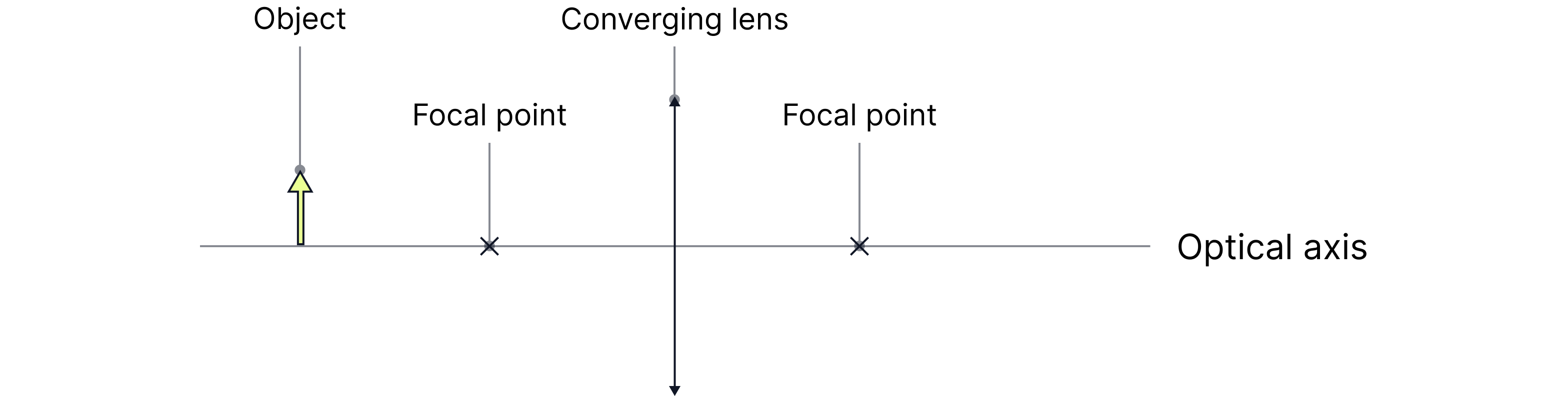
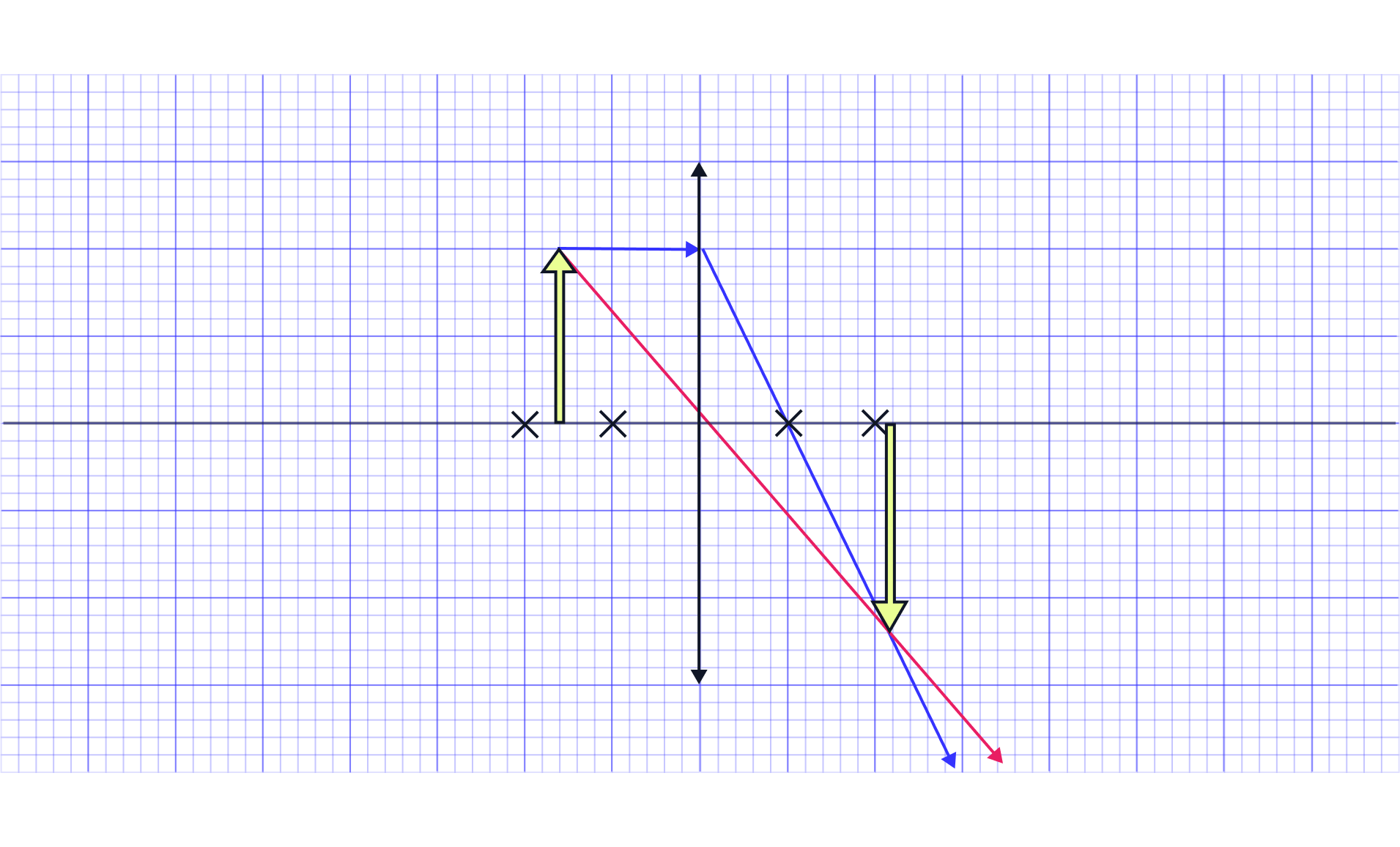
To show where the image is formed, we only need to draw two light rays coming from the top of the object. The first ray is drawn from the top of the object, parallel to the optical axis (also known as the principal axis), to the lens. It is then refracted through the focal point on the other side.
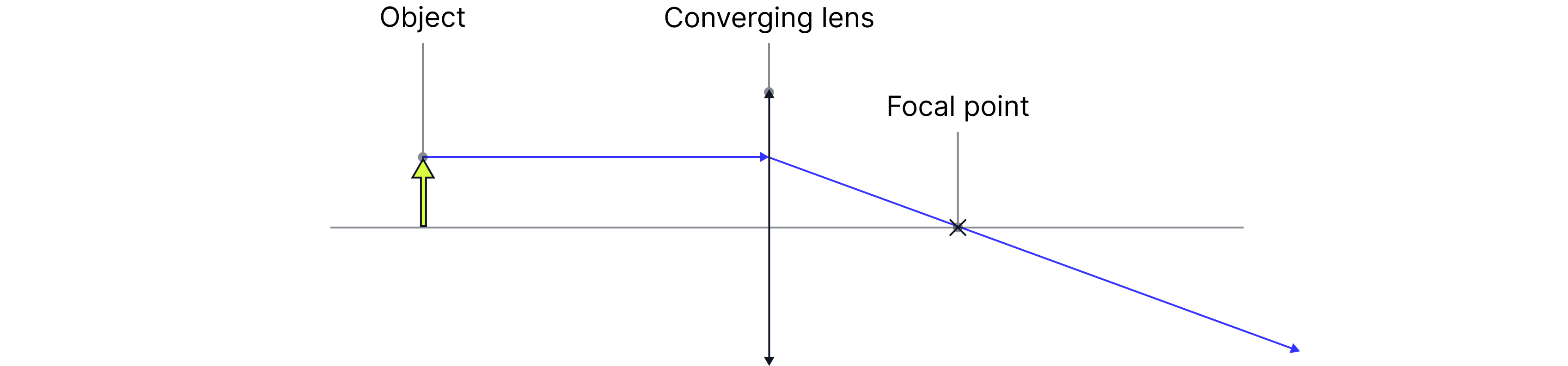
The second ray passes from the top of the object straight through the centre of the lens.
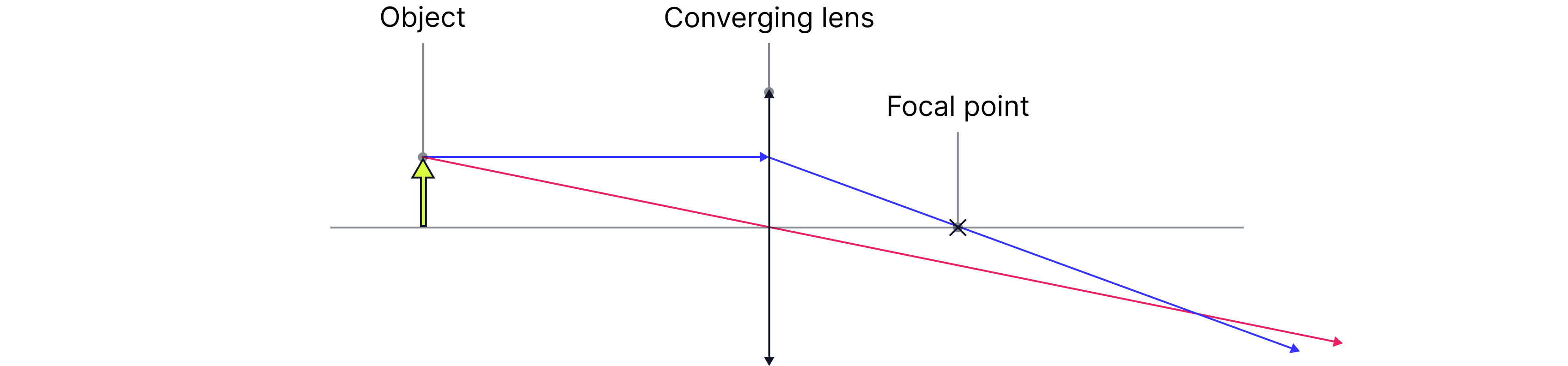
Where the two rays of light meet is the top of the image formed. The bottom of the image will always be formed on the optical axis - this is important!
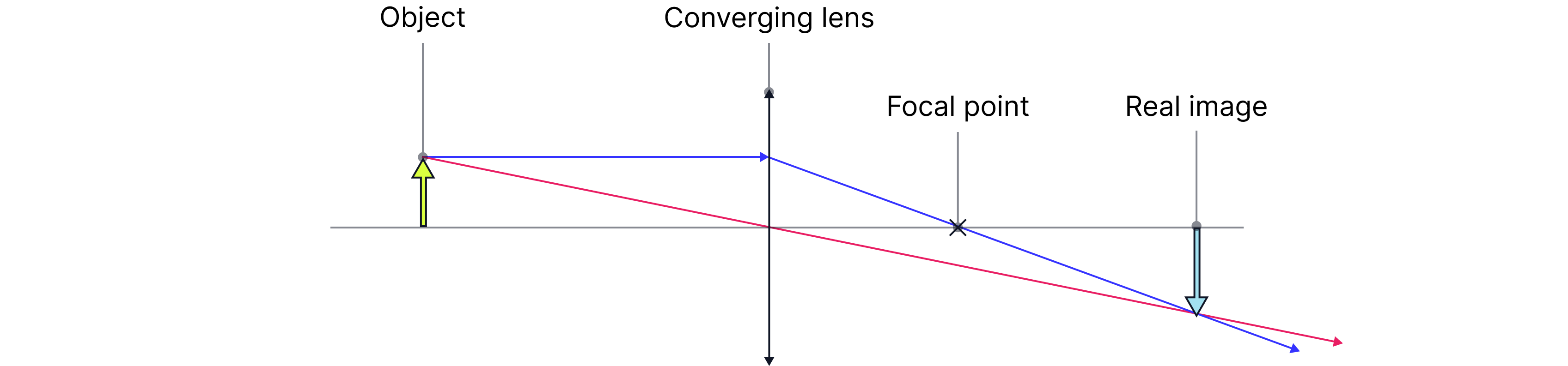
The image produced, as shown above, is inverted (upside-down), magnified (bigger than the object), and real (as the image is formed on the opposite side of the lens to the object) from rays of light actually touching.
We can calculate the magnification of this image by measuring the object and image sizes with a ruler, using the following equation.
Formula:
For example, in the diagram above of the object was measured to be long and the image long, the magnification would be:
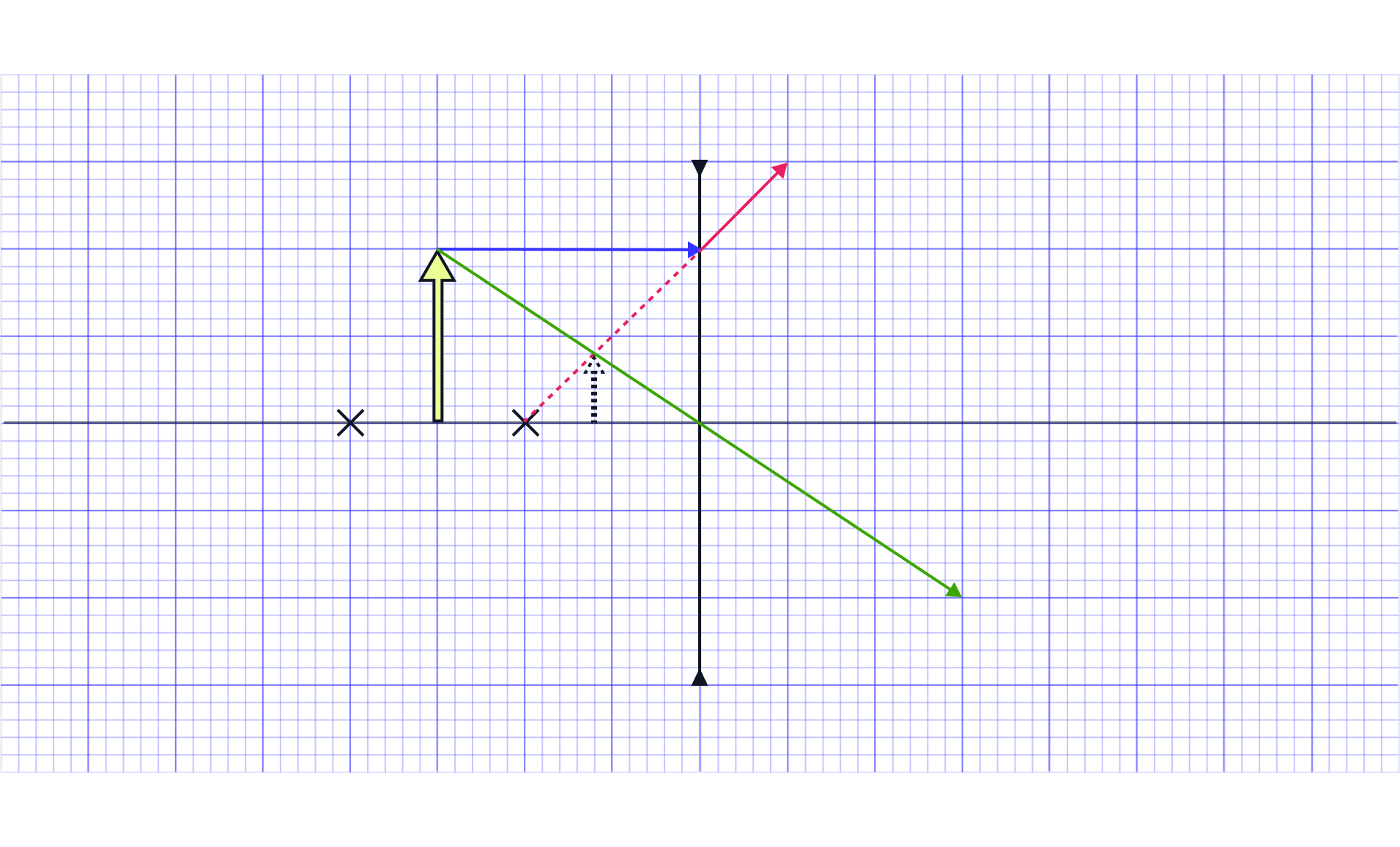
If the object is very close to the converging lens, the light rays will not cross on the other side of the lens, as shown below:

To find where the image is formed, we must trace the rays of light backwards to see where they appeared to come from. Since these are virtual rays of light (they don't actually come from there), we draw them as dashed lines. The image is also virtual, as real rays of light did not actually meet.

The image formed is upright, magnified, and virtual.
Diverging Ray Diagrams
In diverging lenses, the rays of light are spread out and appear to come from the focal point. To know how they diverge, we draw a ray parallel to the optical axis that hits the lens. We then draw on an dotted line coming from the focal point to the same point of the lens:

The light ray refracts in this same direction on the opposite side of the lens, as shown below in red. The second ray of light comes from the top of the object straight through the centre of the lens.

The image is drawn where the rays cross. It is a virtual image as two real rays of light did not actually meet.

The image formed is upright, diminished, and virtual as shown above.
Worked Example:
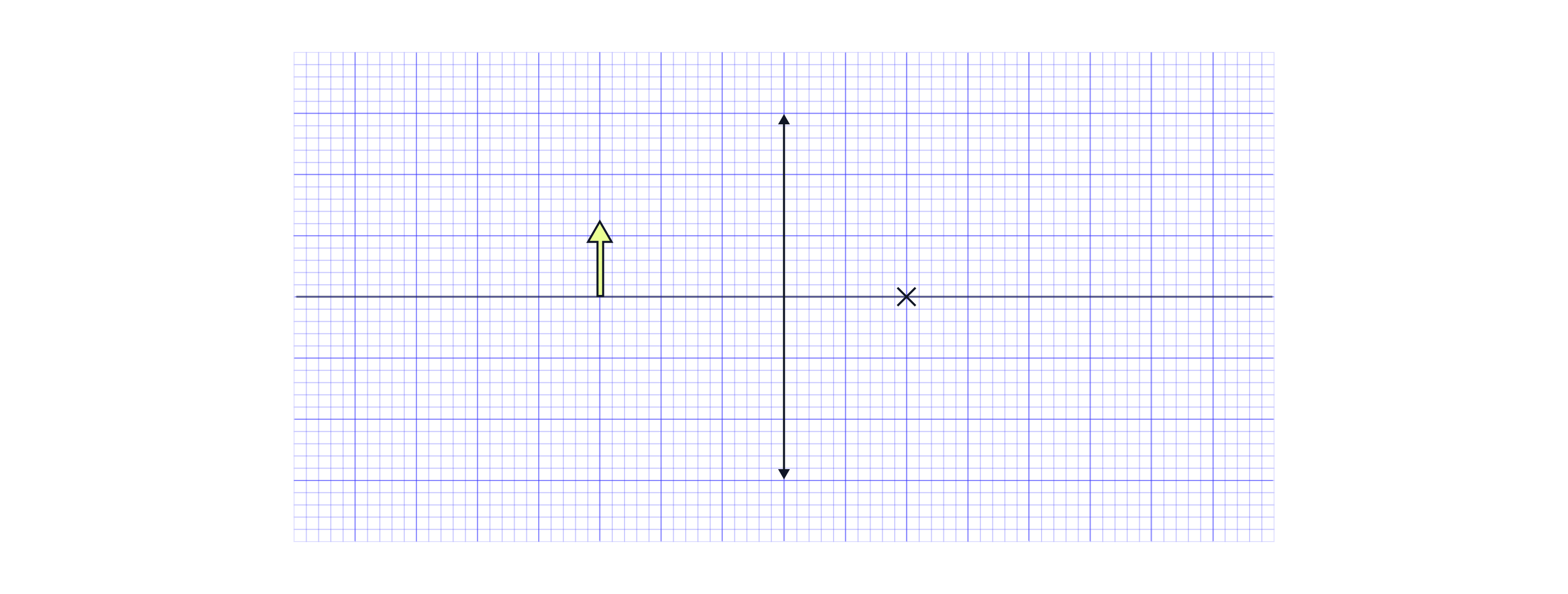
Complete the following lens diagram. State whether the image is upright or inverted, magnified or diminished and real or virtual.
Answer:
This is a converging lens, as the arrows point outward, so we draw a ray of light through the centre of the lens and a ray parallel to the optical axis that refracts through the focal point.
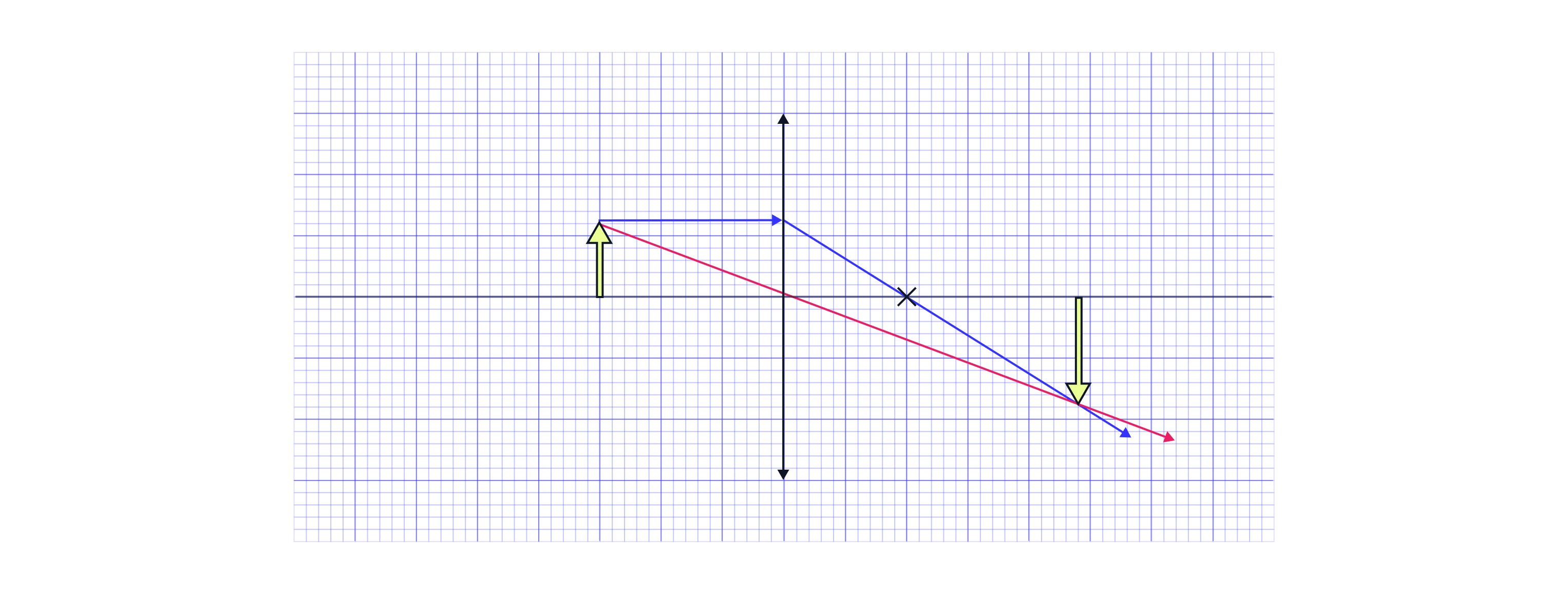
The image formed is real, inverted and magnified
Worked Example:
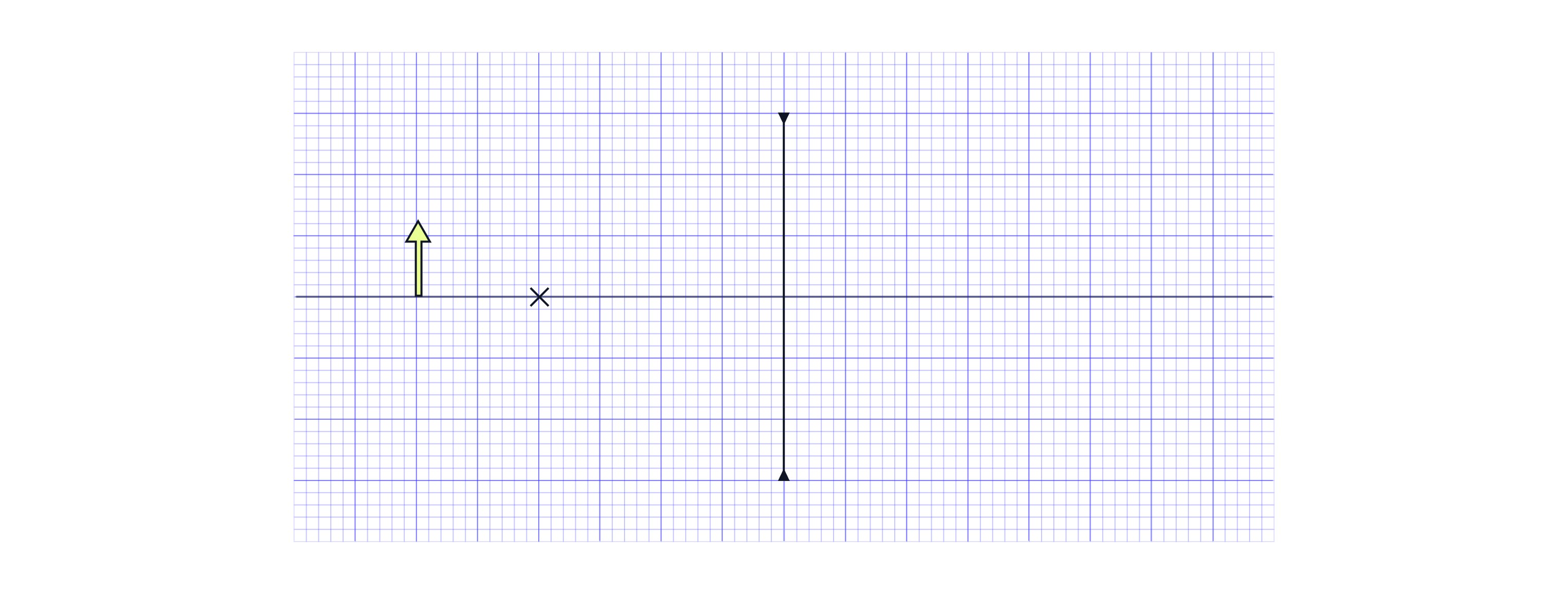
Complete the following lens diagram. State whether the image is upright or inverted, magnified or diminished and real or virtual.
Answer:
This is a diverging lens as the arrows point inwards. One light ray is drawn through the centre of the lens, and the other is parallel to the optical axis that appears to come from the focal point.
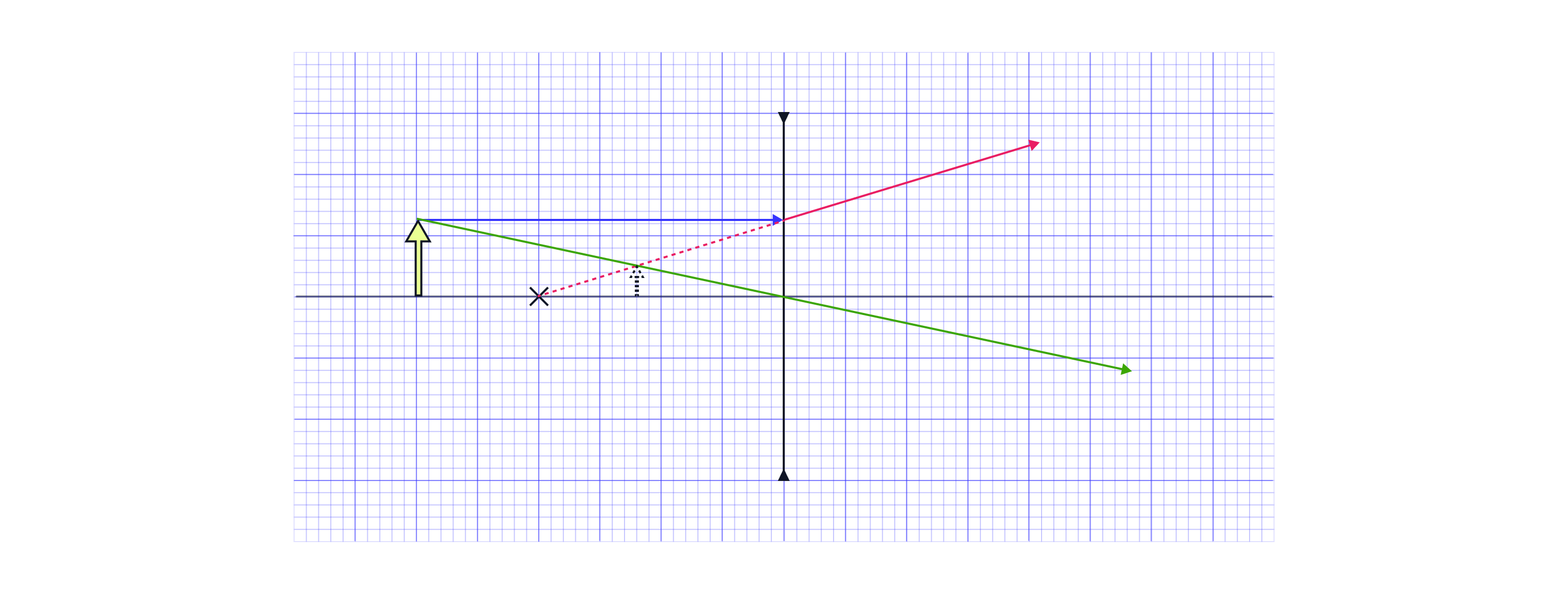
The image formed is upright, diminished and virtual.
Practice Questions
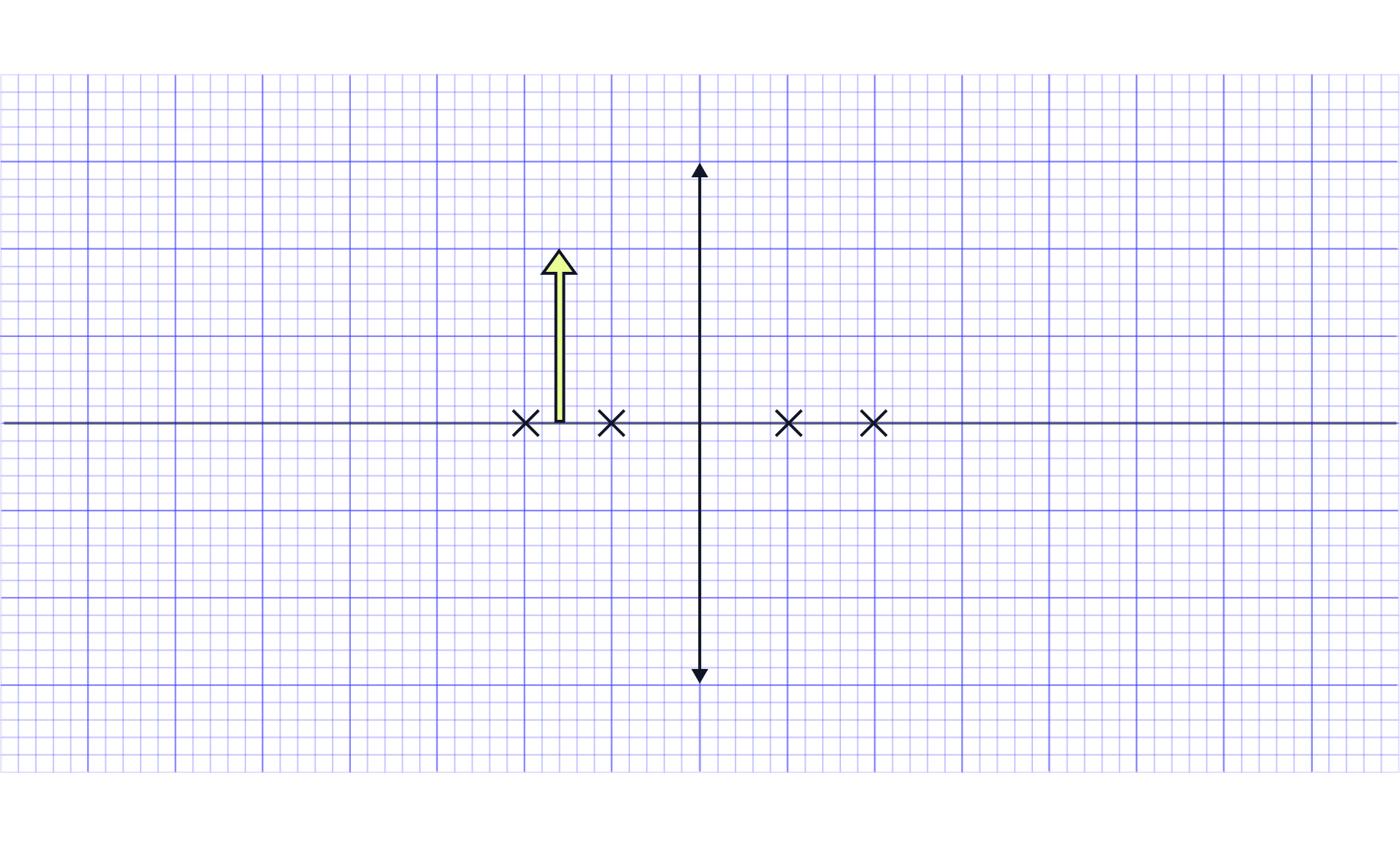
Complete the lens diagram below. State whether the image is magnified or diminished, upright or inverted, and real or virtual.
-> Check out Brook's video explanation for more help.
Answer:
The image is inverted, magnified and real
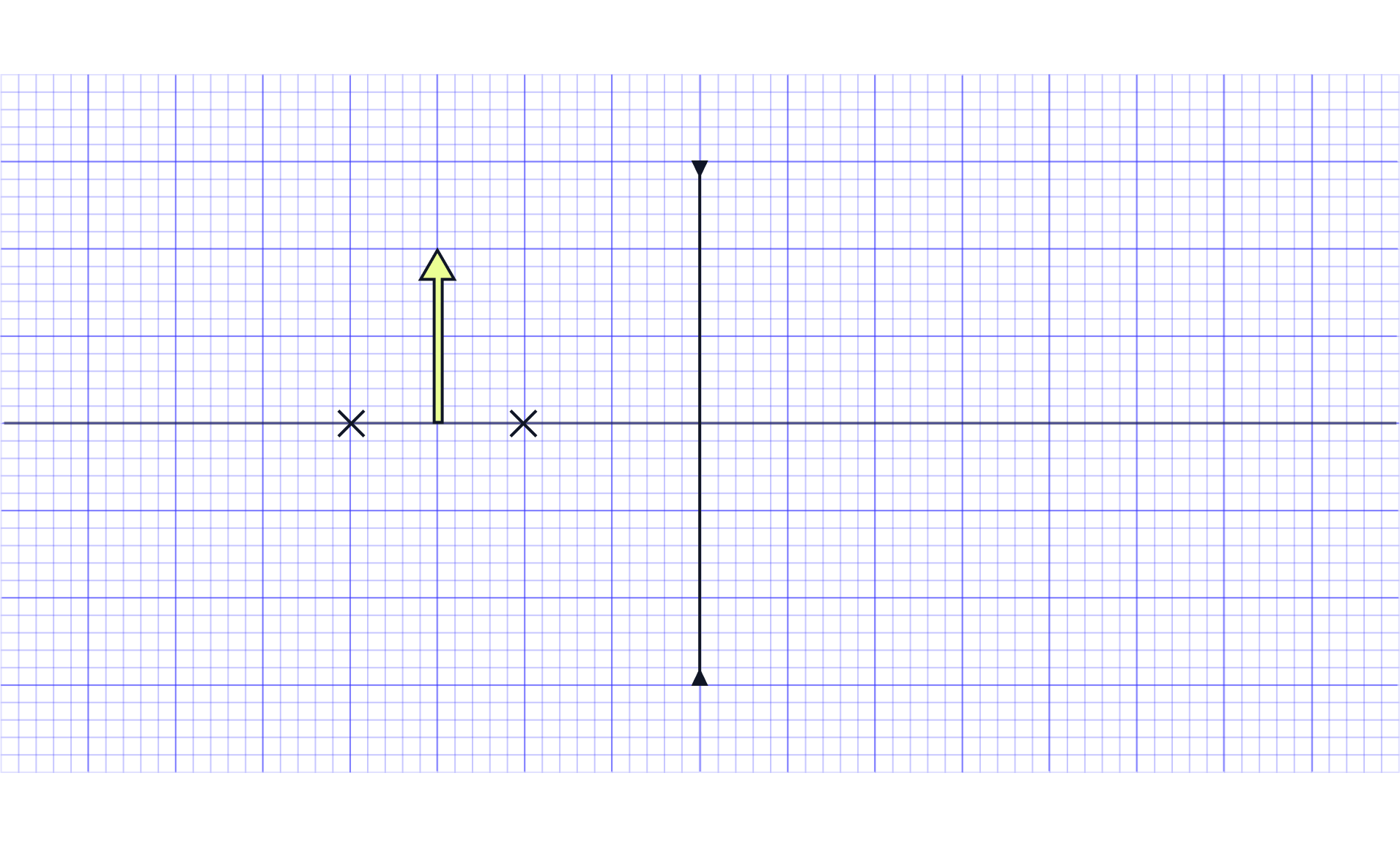
Complete the ray diagram below and state whether the image is real/virtual, magnified/diminished, upright/inverted.
-> Check out Brook's video explanation for more help.
Answer:
The image in upright, diminished and virtual.