Velocity-time Graphs
Brook Edgar & Hannah Shuter
Teachers


Contents
Explainer Video
Velocity-Time Graphs
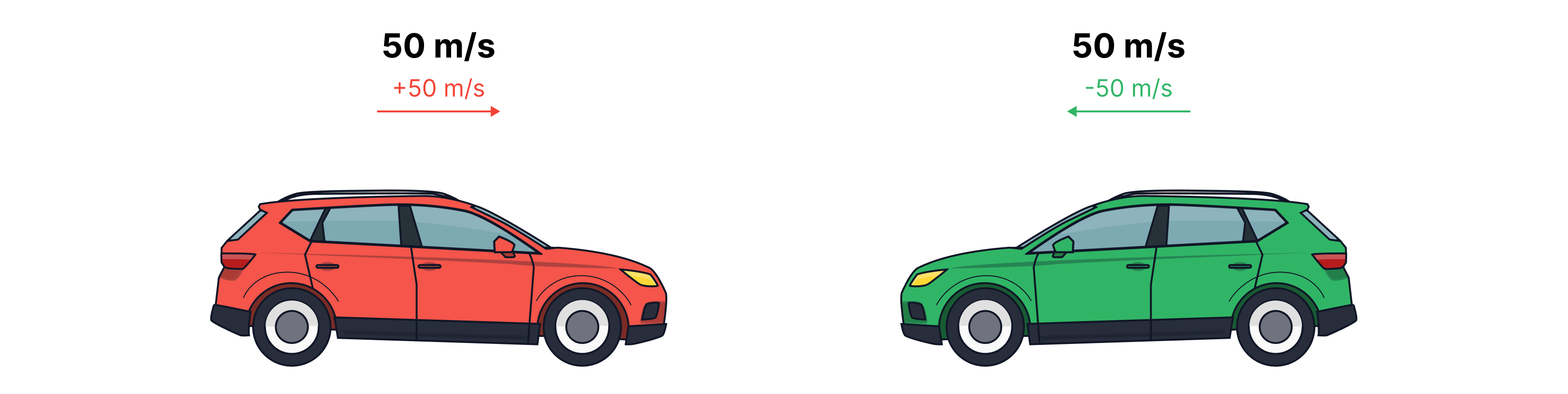
Velocity-time graphs show how an object's velocity changes over time. Remember, velocity is speed in a given direction (a vector quantity), so these graphs can show you not just how fast something's going, but also when it changes direction -> positive velocities mean travelling fowards, , whereas negative velocities mean travelling backwards/in the opposite direction, .
Quick Reminder: Acceleration
Acceleration is the rate of change of velocity.
Formula:

The gradient of the velocity-time graph tells us about the acceleration of the object. The steeper the gradient, the greater the acceleration.
A horizontal line means the object is travelling at a constant velocity - the object is moving at a steady speed in one direction. The velocity isn't changing, so acceleration = 0, as the gradient of the line is zero.
A straight diagonal line going upwards means the object is travelling at a constant acceleration - the object is speeding up at a steady rate. The steeper the line, the greater the acceleration.
A straight diagonal line going downwards means the object is travelling at a constant deceleration - the object is slowing down at a steady rate. This is a negative gradient.
Worked Example:
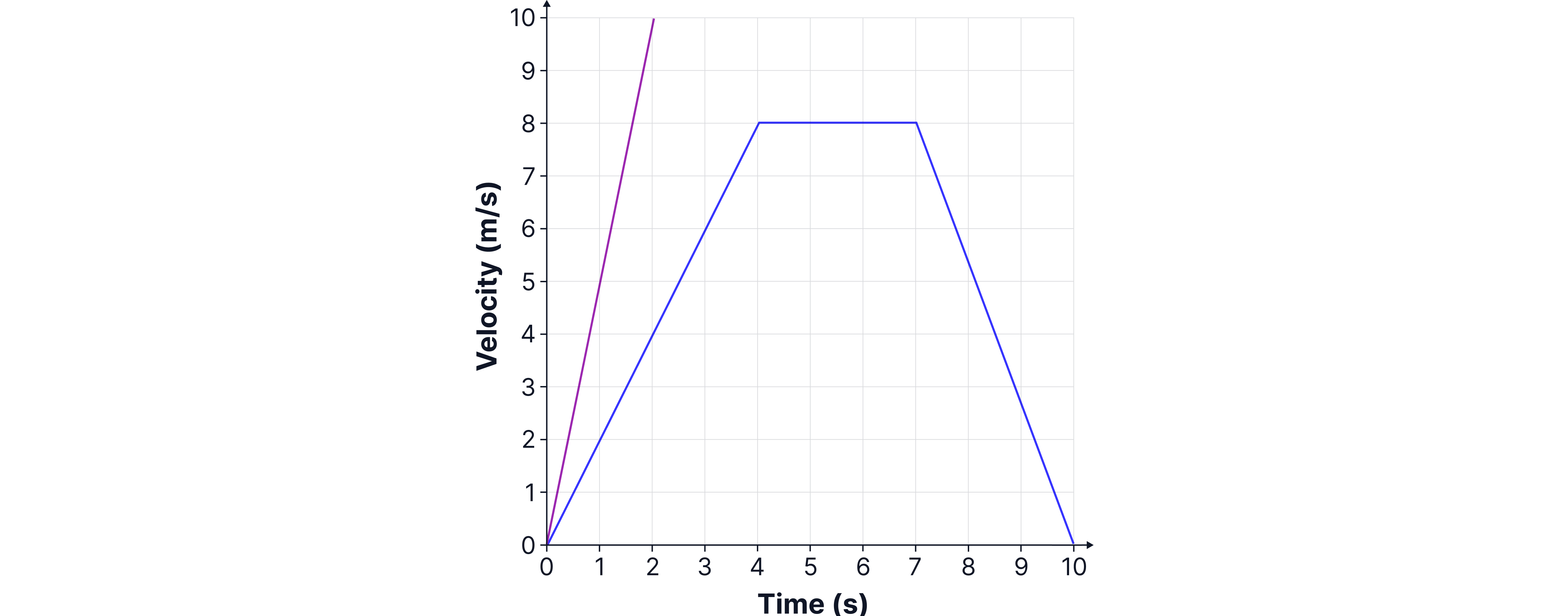
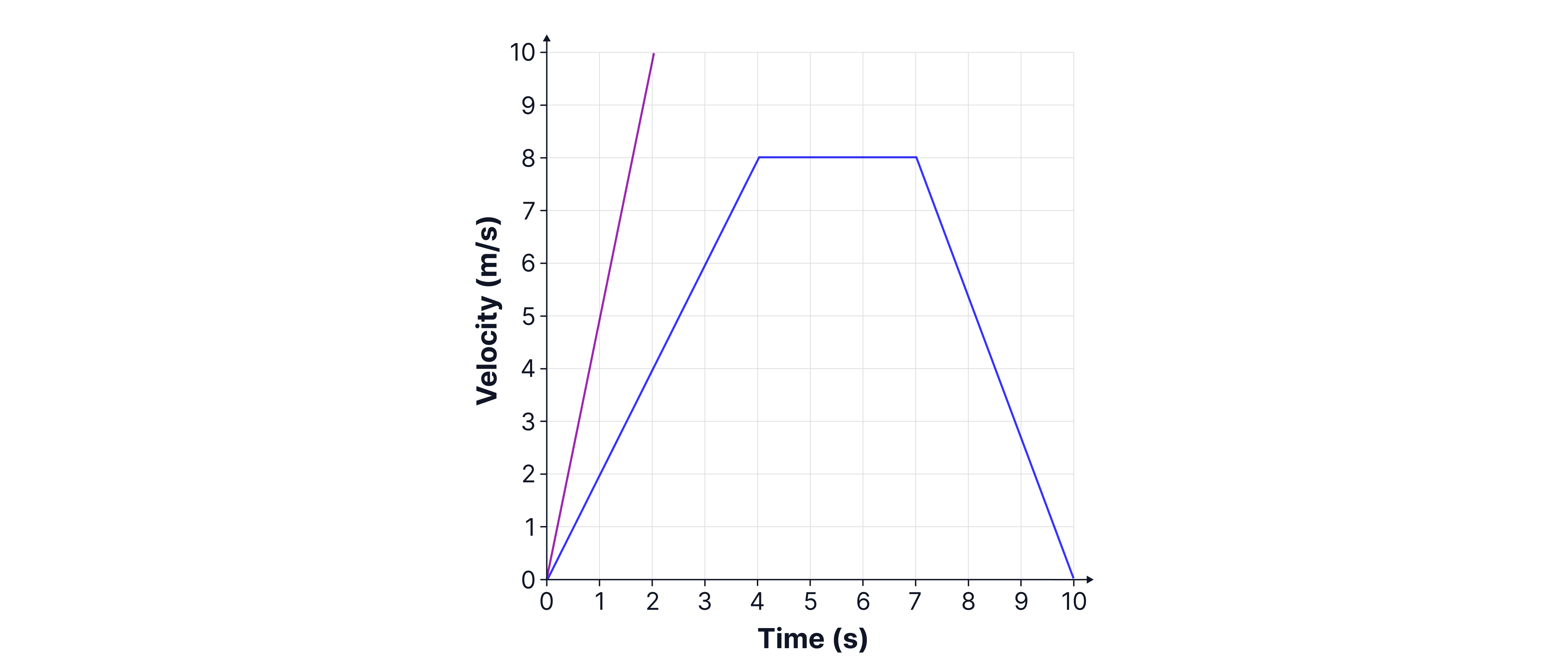
Calculate the acceleration for each section of the blue graph
State which line has a greater initial acceleration, blue or purple.
Answer:
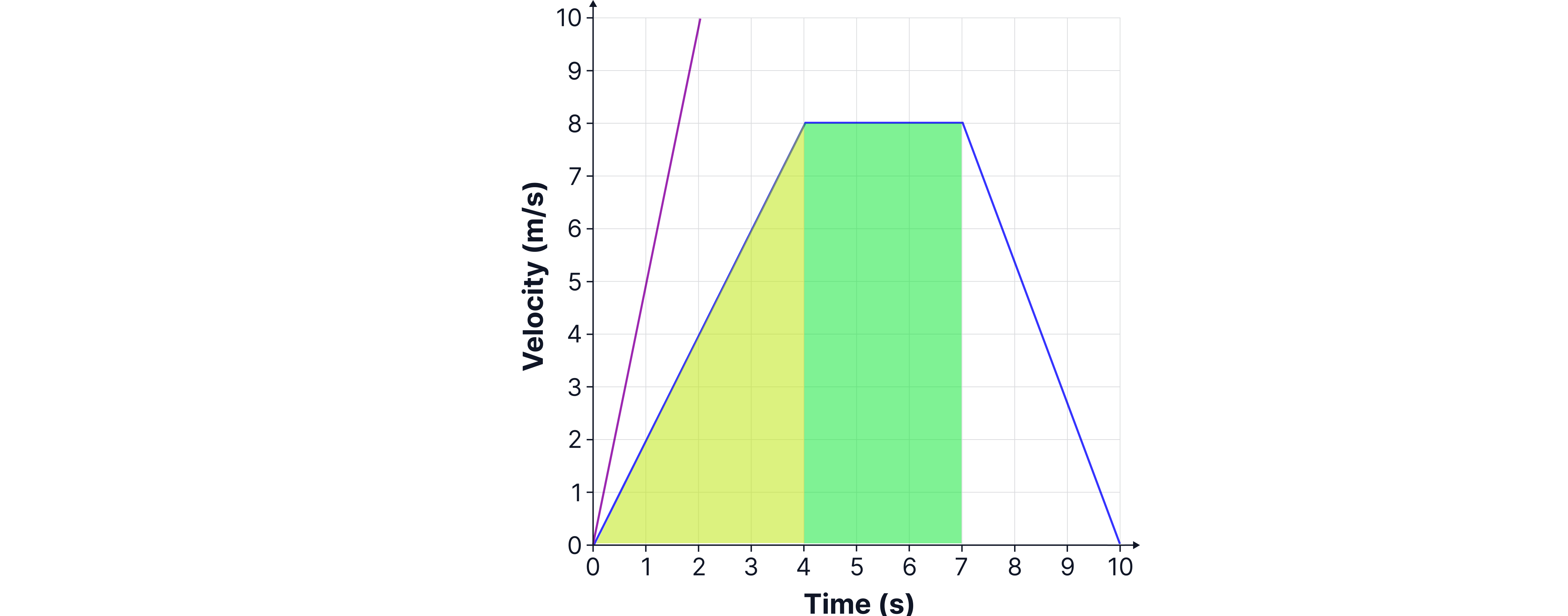
Gradient = acceleration.
On the blue line from the velocity increases from
On the blue line from the velocity stays the same at -> the object is travelling at a constant speed.
On the blue line from the velocity decreases from
The initial acceleration of the purple line is greater than that of the blue line, as it has a steeper gradient.
We can also prove this using maths,
On the purple line from the velocity increases from
Calculating Displacement (HT only)
Area under the graph = displacement, if it is a velocity-time graph
Area under the graph = distance travelled, if it is a speed-time graph.
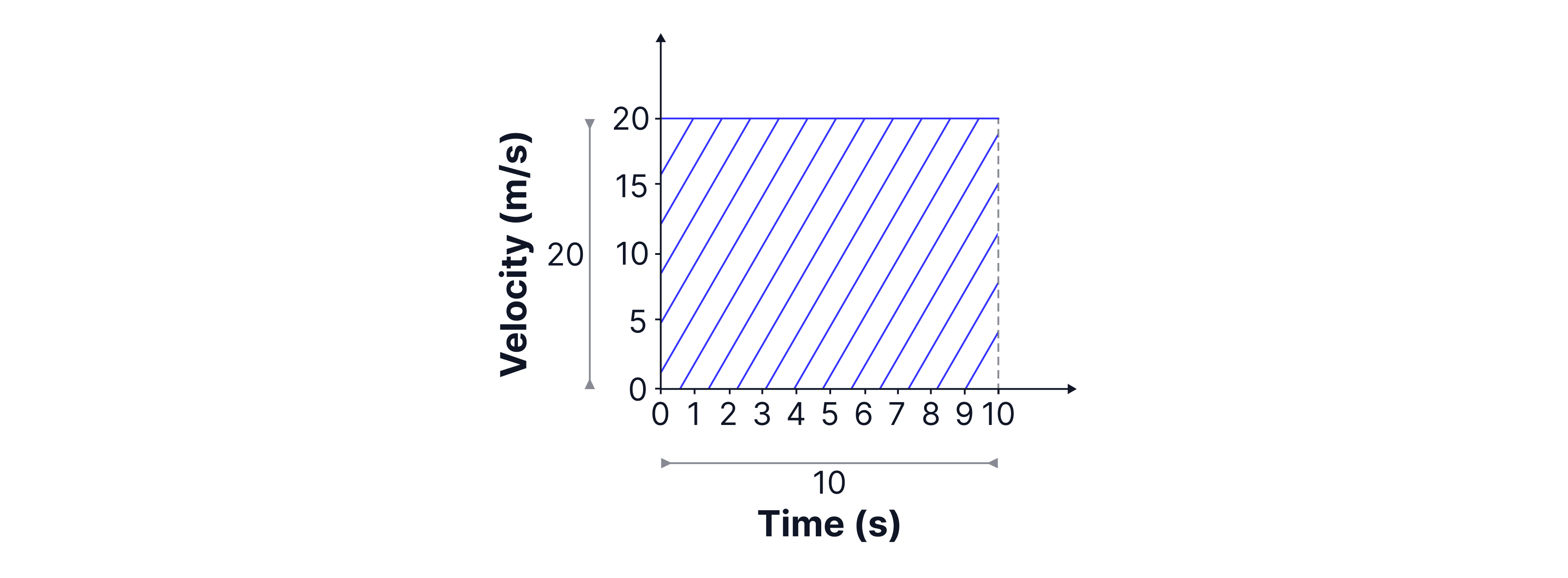
This is because area = base height. The base of the graph is time and the height of the graph is velocity, so, time velocity = displacement.
In the graph above, the area under the graph represents the displacement, forward (since the numbers are positive).
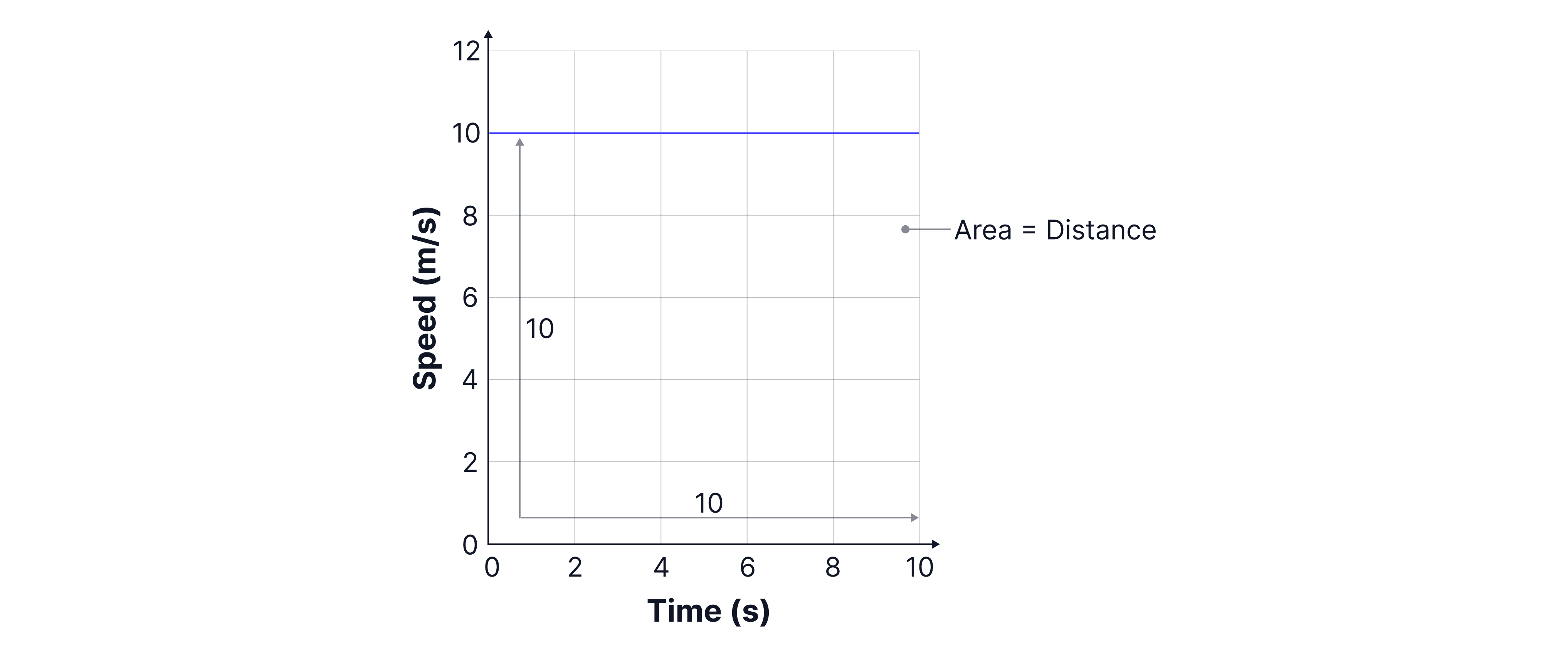
In the graph above, the area under the graph represents the distance travelled because it is speed (a scalar) on the y-axis, not velocity. The distance would be . Remember, distance is also a scalar so has a magnitude only.
Worked Example:
Calculate the displacement in the first seven seconds of the blue graph
Calculate the displacement in the first two seconds of the purple graph.
Answer:
Displacement = area under the graph.
For the blue line, we can either solve this problem by finding the area of a trapezium or we can separate the area into two shapes, a triangle from and a rectangle from .
Area of a triangle =
Area of a rectangle =
Total area =
For the purple line, the area under the graph is a triangle only,
Area of a triangle =
Counting squares and Drawing tangents
Counting Squares Method
When the graph isn't made up of neat triangles and rectangles, we cannot calculate the area under the graph easily. If they give you large boxes, count the squares under the graph and calculate the area of one large box.

We can see in the speed-time graph above that the area under the graph cannot be found by splitting the shape into triangles and rectangles easily. But we can find the area of one large box and count the number of boxes beneath the graph.
There are boxes roughly below the graph (the exam will have a range they will let you use, boxes could be accepted also here). One box has an area of, , so eight boxes will have a total area of .
Drawing Tangents on Velocity-Time Graphs
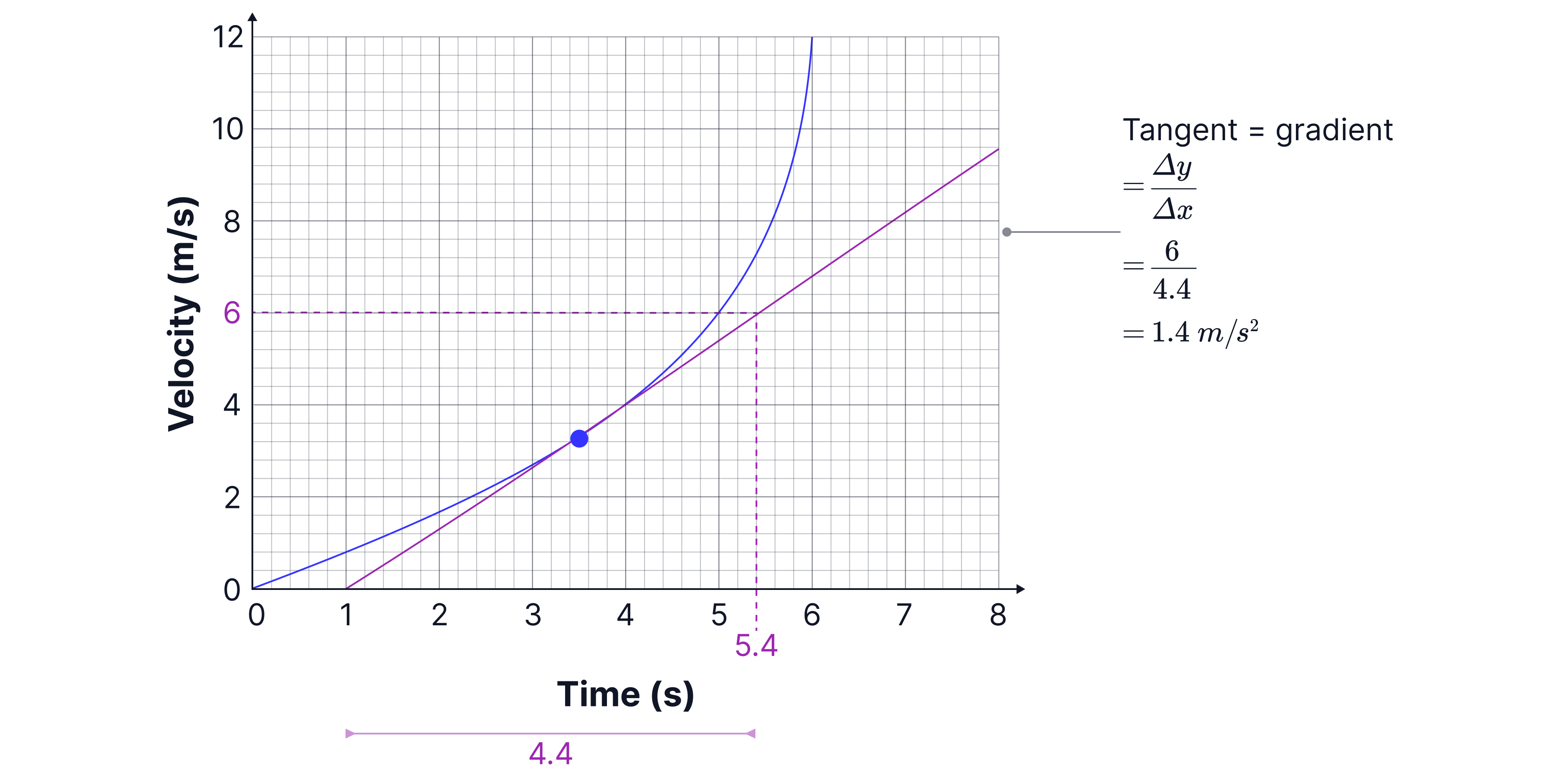
Sometimes you'll see a curved velocity-time graph where the acceleration itself is changing. To find the instantaneous acceleration at a particular moment, you need to draw a tangent to the curve at that point and calculate its gradient.
A tangent is a straight line that just touches the curve at one point. It should have the same slope as the curve at that exact spot.
We can see in the example below how to find the instantaneous acceleration at . Note that the purple line starts at , so the change in the x-axis would be .
Practice Questions
The velocity–time graph below shows the motion of a sprinter during a short run.
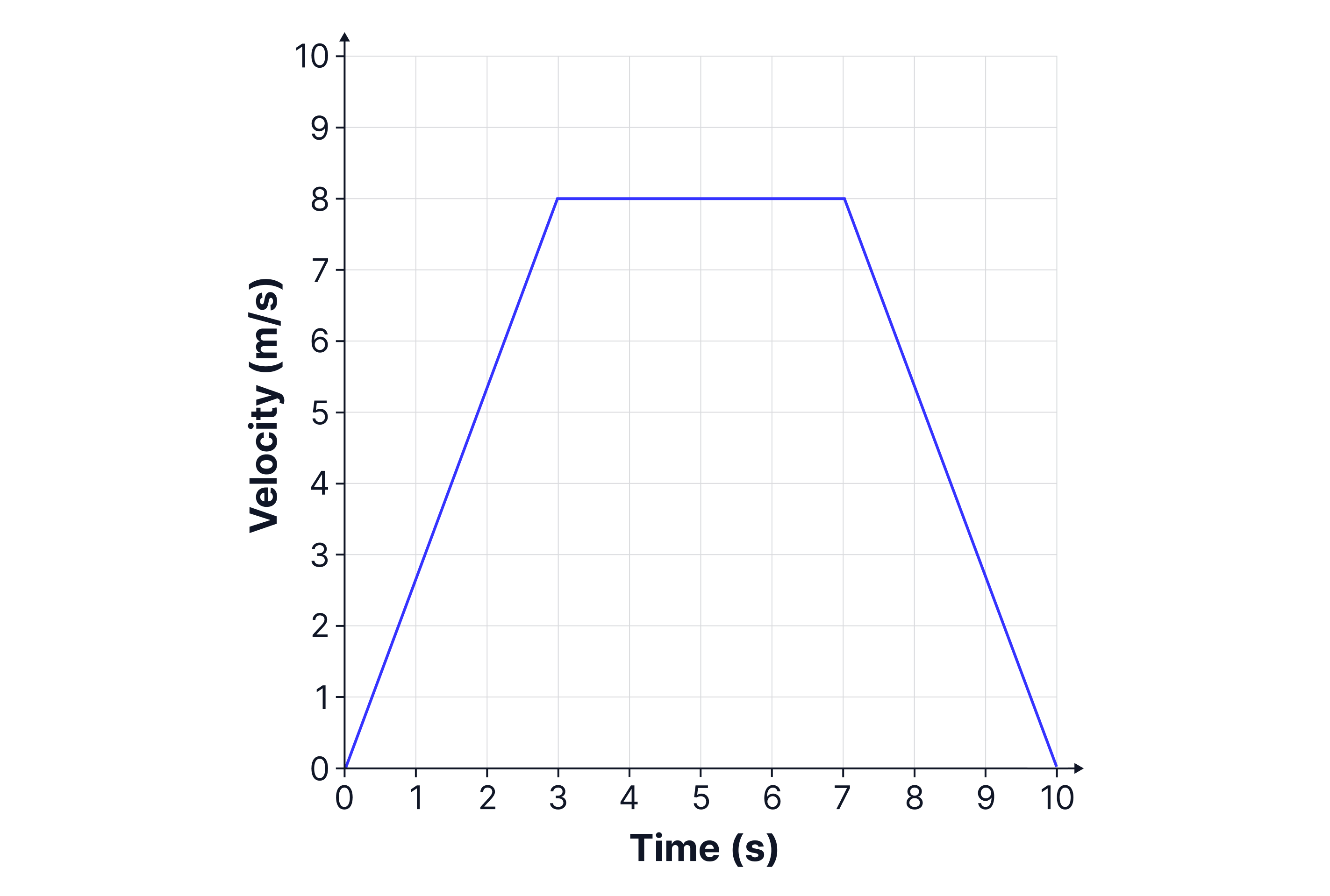
Describe the motion of the sprinter between and seconds.
Calculate the sprinter’s acceleration during the first seconds.
-> Check out Brook's video explanation for more help.
Answer:
Horizontal line means velocity is not changing, the sprinter is running at a constant velocity.
A cyclist travels along a straight road. The velocity–time graph for part of the journey is shown below.
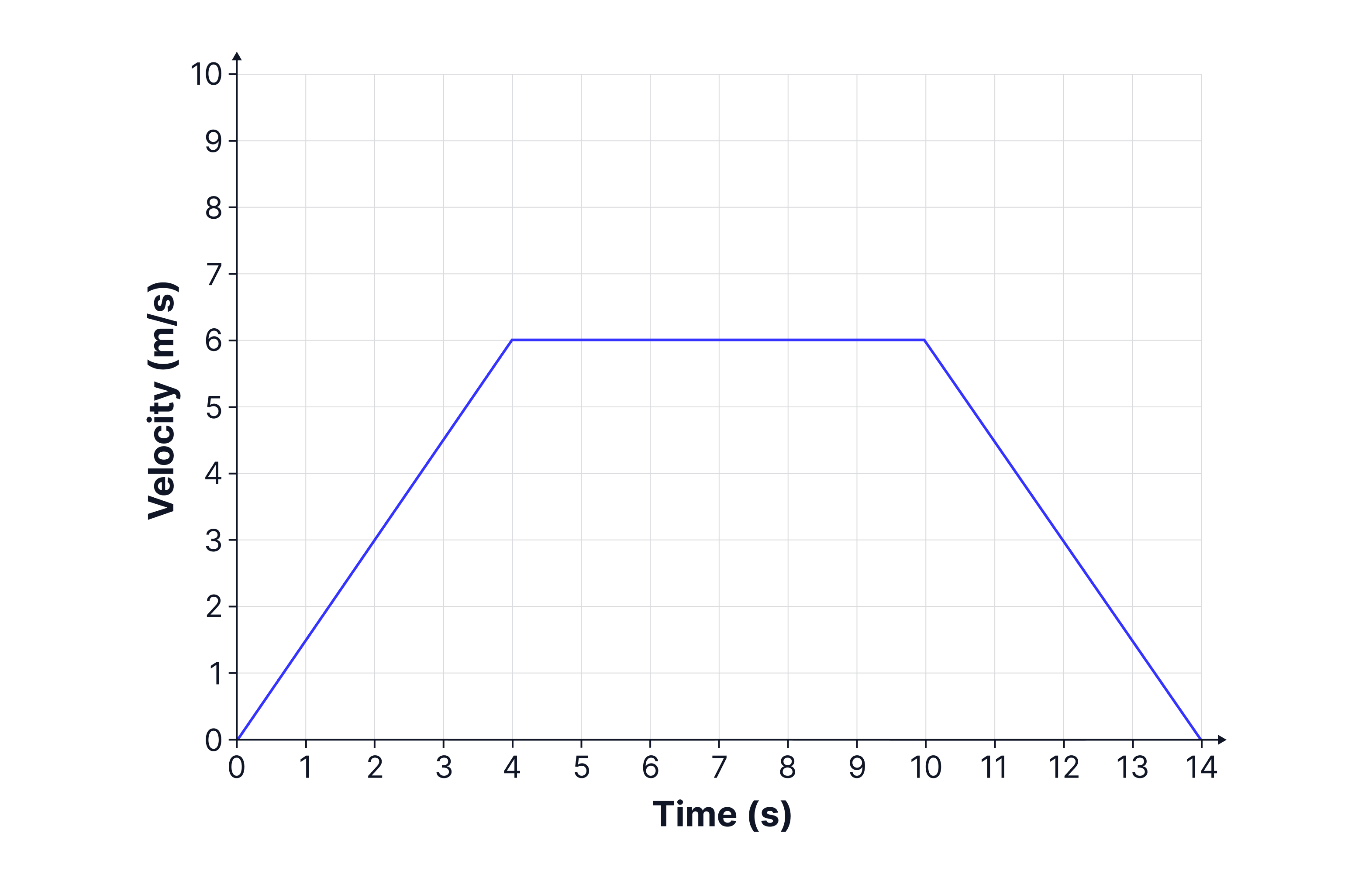
Calculate the total distance travelled between and seconds.
-> Check out Brook's video explanation for more help.
Answer:
Displacement = area under velocity-time graph.
Area =
Distance as the direction never changes.