Exam Questions Practice
Brook Edgar
Teacher

Explainer Video
Exam Tips
Top exam tips:
Always justify your choices for equipment used (we use light gates rather than a stopwatch when timing to avoid random errors due to distractions or to remove the effect of human reaction time from the results).
When recording values, always note the resolution of the equipment to determine the uncertainty (however, if multiple results are recorded, the uncertainty will be half of the range of results).
If asked how to improve the experiment, always consider repeating measurements to minimise the effect of random errors and consider using more suitable equipment (such as a vernier calliper to measure fringe separation, as it has a better resolution). To improve accuracy, check that the equipment is properly calibrated.
Quote the final value to the least number of significant figures in your data.
Always make measurements as large as possible to reduce the percentage uncertainty in your results (time multiple oscillations or record the distance across multiple fringes, rather than just one).
Look at the units on the axis of the graph and note the starting point of the scale on the axis; it is not always zero.
Always ignore anomalous results in your calculations (they will be obvious).
When trying to prove that objects are at right angles, use a large set square.
To prove that objects are vertical, use plumb lines (a weight attached to the end of a string).
Ensure that you use switches in circuits to avoid overheating of wires, as this can affect your results.
Ensure wires are taut, as kinks in the wires will affect your results (the wire will be longer than recorded).
Use fiducial markers as reference points to improve accuracy (when timing oscillations on a pendulum or measuring the change in length of a wire when determining Young’s modulus).
Worked Example
Young’s Slit Experiment
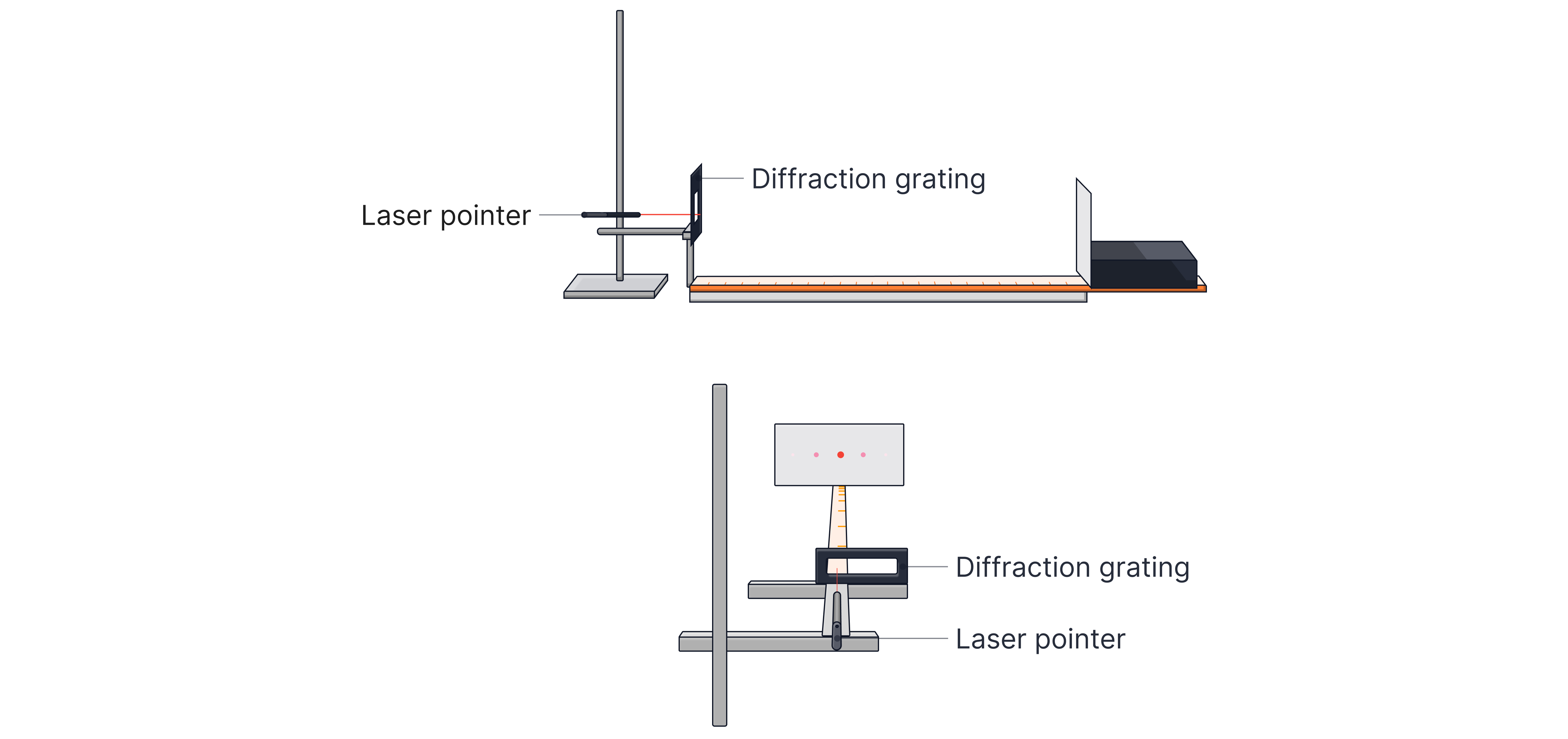
Describe how to ensure that the laser is parallel to the table.
State why it is better to measure the distance across many fringes and not just the separation between two bright fringes.
State a safety precaution you should take.
State how to make the fringes brighter.
State how to increase the separation between the fringes.
Describe how to ensure the screen is perpendicular to the ruler.
State the piece of equipment we use to measure the separation of the fringes.
Describe why the light source needs to be coherent.
Sketch and describe the graph to plot to determine slit separation if we know the wavelength of the laser light used.
Answer:
Measure the beam height near the laser and the screen using a ruler; if the heights are the same, the laser is parallel to the table. Ensure the ruler is perpendicular to the table when recording heights using a set square.
It reduces the percentage uncertainty, improving precision.
Do not point lasers at eyes.
Decrease the distance between the diffraction grating and the screen (Light intensity decreases with increased distance, as light tends to spread out)
We want fringe separation,, to be as large as possible and from the equation, , we can see to do this we can either increase the wavelength of light used or increase the distance between the diffraction grating and the screen, or decrease slit separation.
Use a large set square to ensure that the screen is perpendicular to the ruler.
Vernier calliper, as it has better resolution than a ruler.
Coherent waves have a constant phase difference and the same frequency and wavelength; this is required for an observable interference pattern to appear on the screen.
, plot against . Gradient = . So .

Worked Example
Measuring by Free Fall
An object released from rest. The distance it falls in a set time is determined using a pendulum. The time for the pendulum to fall from its maximum position to its equilibrium position is when the distance the ball has dropped is recorded.
The experiment is repeated several times. The distance the ball falls is recorded in the results table below:
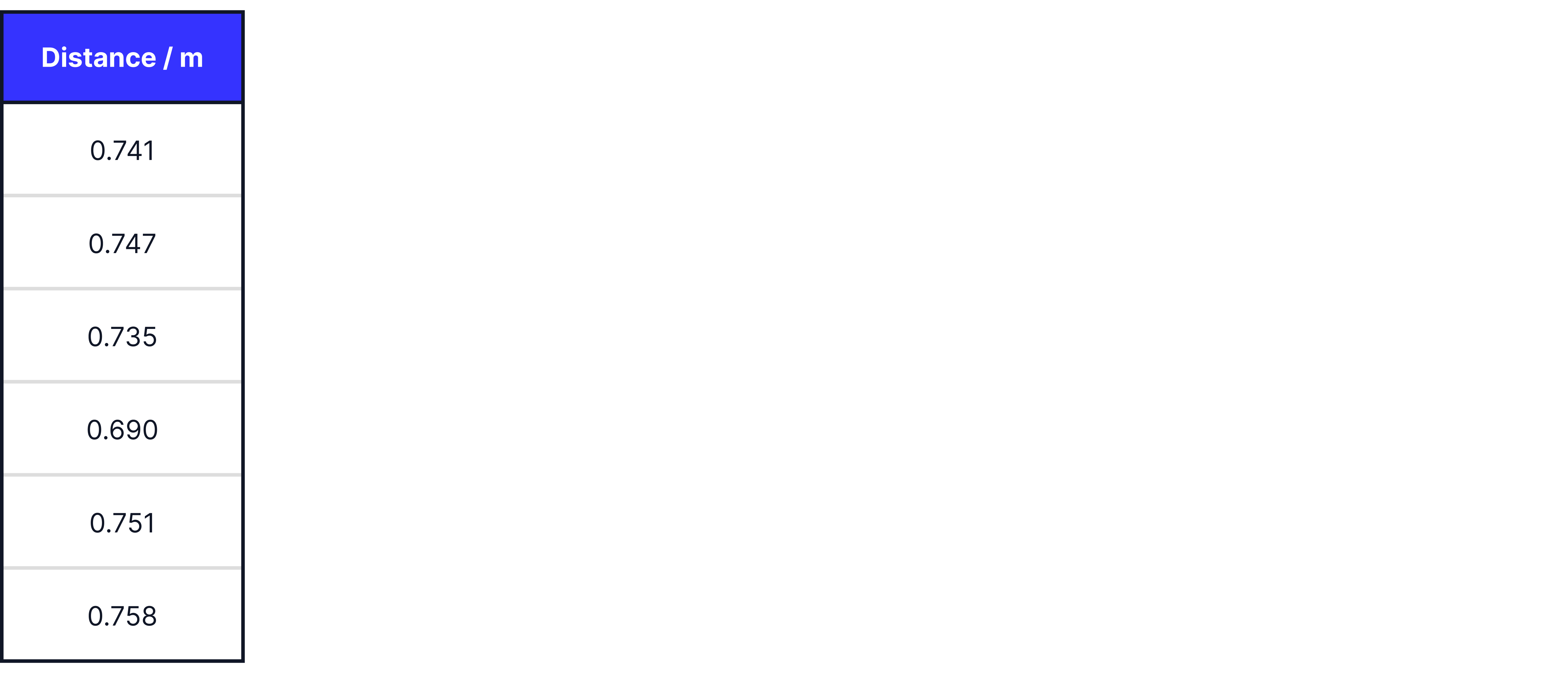
The time taken for ten oscillations of the pendulum is recorded as seconds.
Calculate the percentage uncertainty in the time, using the precision of the equipment.
Calculate the distance the object falls and its absolute uncertainty.
Calculate a value for and its absolute uncertainty.
Answer:
The time recorded is , therefore the equipment has an uncertainty of .
percentage uncertainty
percentage uncertainty
is an anomalous result so is ignored.
absolute uncertainty
absolute uncertainty
time to fall determined by the time for one quarter of an oscillation. distance object fell.
time for one oscillation
time from amplitude to equilibrium
uncertainty in uncertainty in uncertainty in
uncertainty in
uncertainty in
absolute uncertainty
Teacher Tips: The percentage uncertainty in a quantity raised to a power is always the percentage uncertainty of the quantity multiplied by the power. The final absolute uncertainty after calculations is always quoted to one decimal place.
Practice Questions
A student uses a sealed source to investigate the inverse square law for radiation.
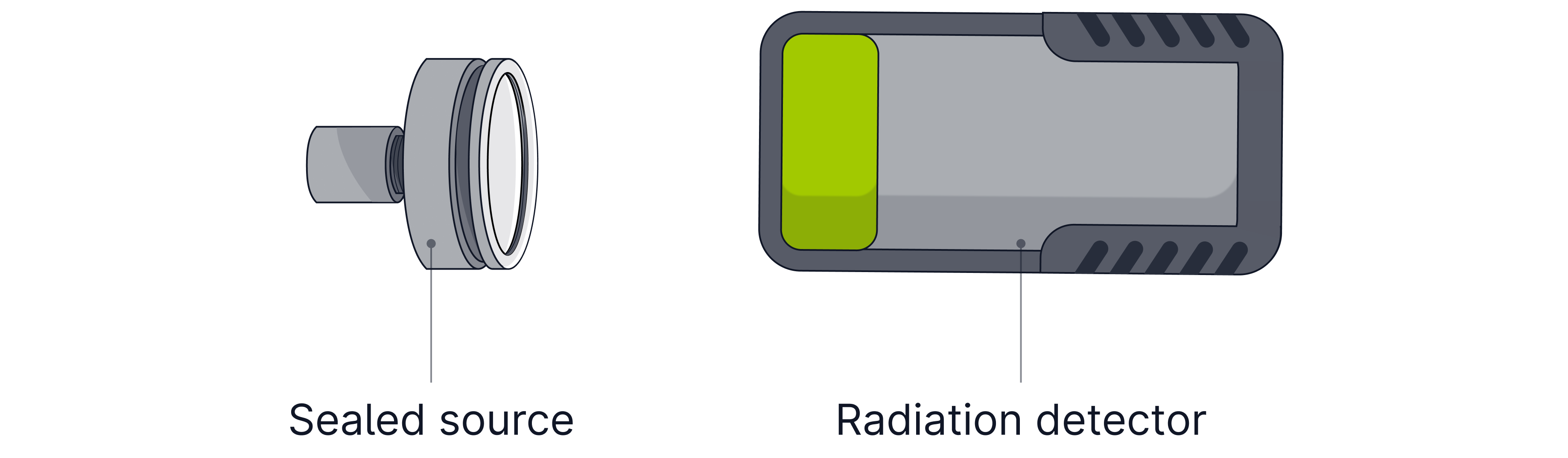
State why the count rate might be recorded wrong and discuss safety measures.
-> Check out Brook's video explanation for more help.
Answer:
Radioactive decay is a random process; many decays may occur in a second, or none at all. Due to the dead time in the detector (the time that no other ionisation events can be recorded, due to the time it takes for one ionisation event in the chamber to be detected). If two ionisation events occur at one time or within a very short interval, only one will be recorded. The source may not emit gamma radiation only. It may be an alpha source that doesn't reach the detector, so the ionisation will not be recorded, as alpha particles have a short range.
Safety measures:
Ensure the source is only present in the room when recording readings.
Never point an open source at a person.
Stand behind a lead screening.
Use tongs when handling the source.
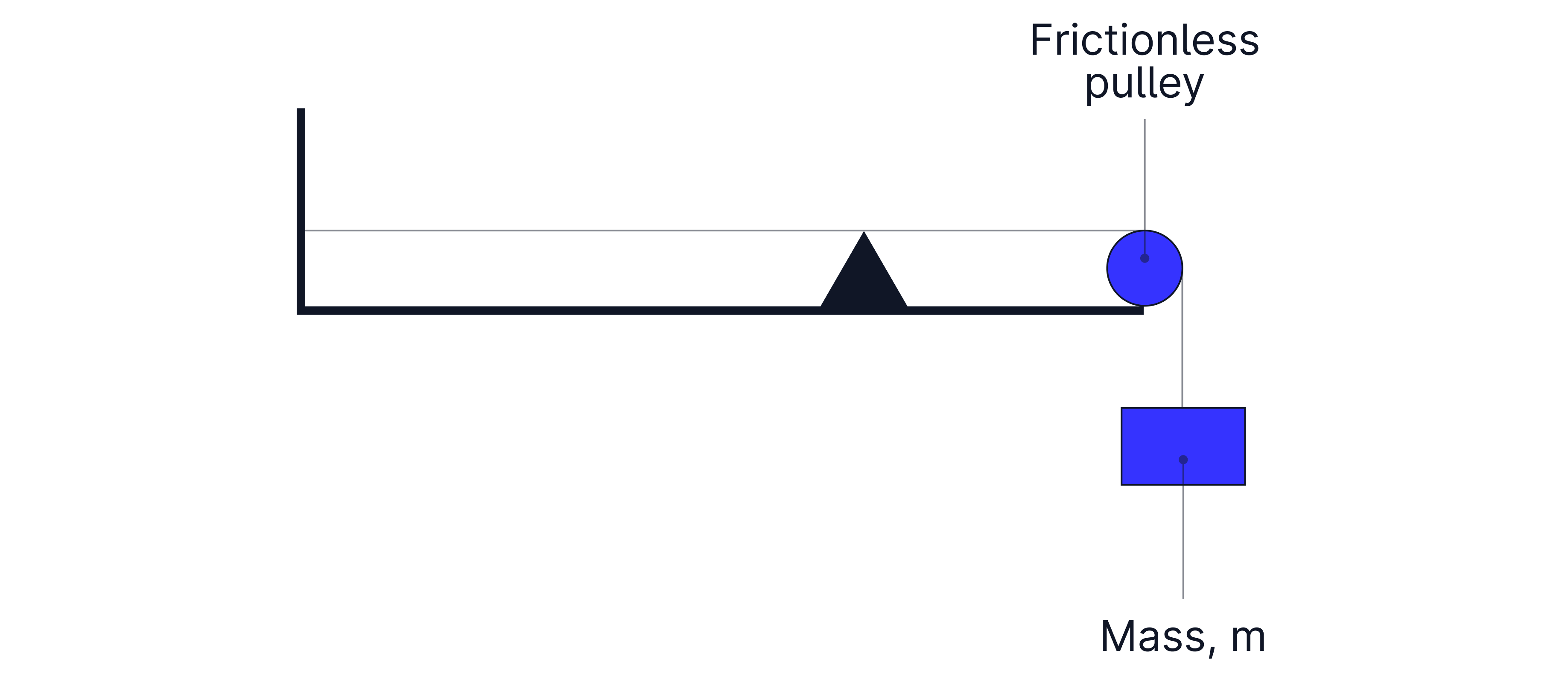
Show that the data in the table is consistent with the relationship .
-> Check out Brook's video explanation for more help.
Answer:
Use all three data values to show that , a constant. Tension , mass times .
Constant