Magnetic Fields
Brook Edgar
Teacher

Explainer Video
Magnetic Fields
A magnetic field is a region where magnetic materials—such as iron, steel, cobalt, and nickel—experience a force. Moving charges, such as electric current in a wire, also experience a force in this region.
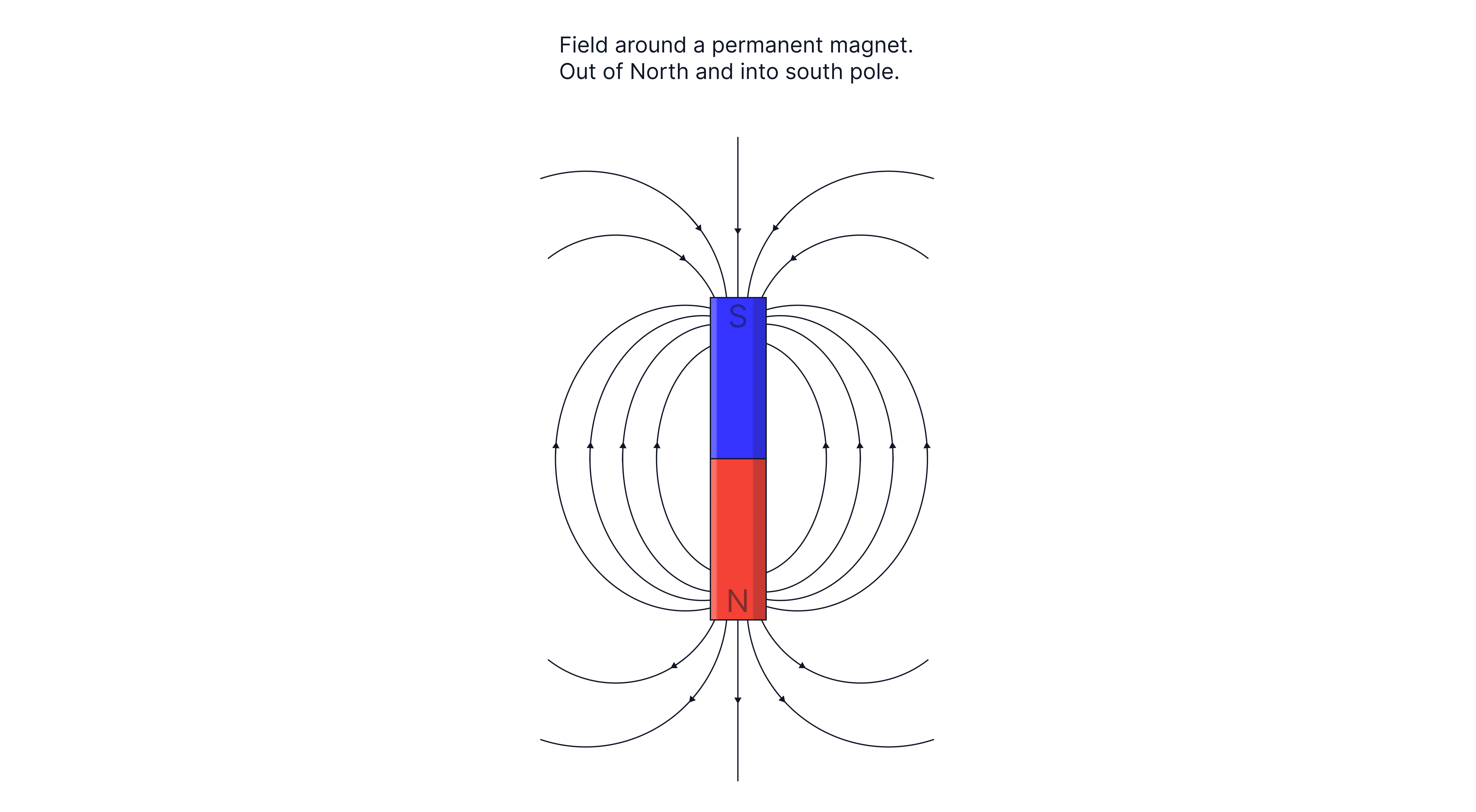
Magnetic field lines show the direction of force on a North pole. The force is strongest at the poles, where the field lines are most densely packed.
Remember: Steel can become a permanent magnet due to its internal structure; once magnetised, it tends to retain its magnetism. Permanent magnets have fixed poles; they experience both attraction and repulsion with other magnets. However, iron, cobalt, and nickel are induced magnets as they temporarily become magnetic when placed in a magnetic field. Induced magnets always experience a force of attraction when placed in a magnetic field, as the region of the material closest to the magnet becomes the opposite pole. When removed from the magnetic field, the pole disappears.
Field lines around a permanent magnet
Magnetic field lines around a permanent magnet always travel from the North pole to the South pole in continuous closed loops.
Field lines around a current-carrying wire
When current passes through a wire, a magnetic field is induced. Field lines form as concentric rings around the wire. The right-hand grip rule can be used to determine the direction of this field.
-> Point your thumb in the direction of the current (i.e positive to negative), and your fingers will curl in the direction of the magnetic field lines.
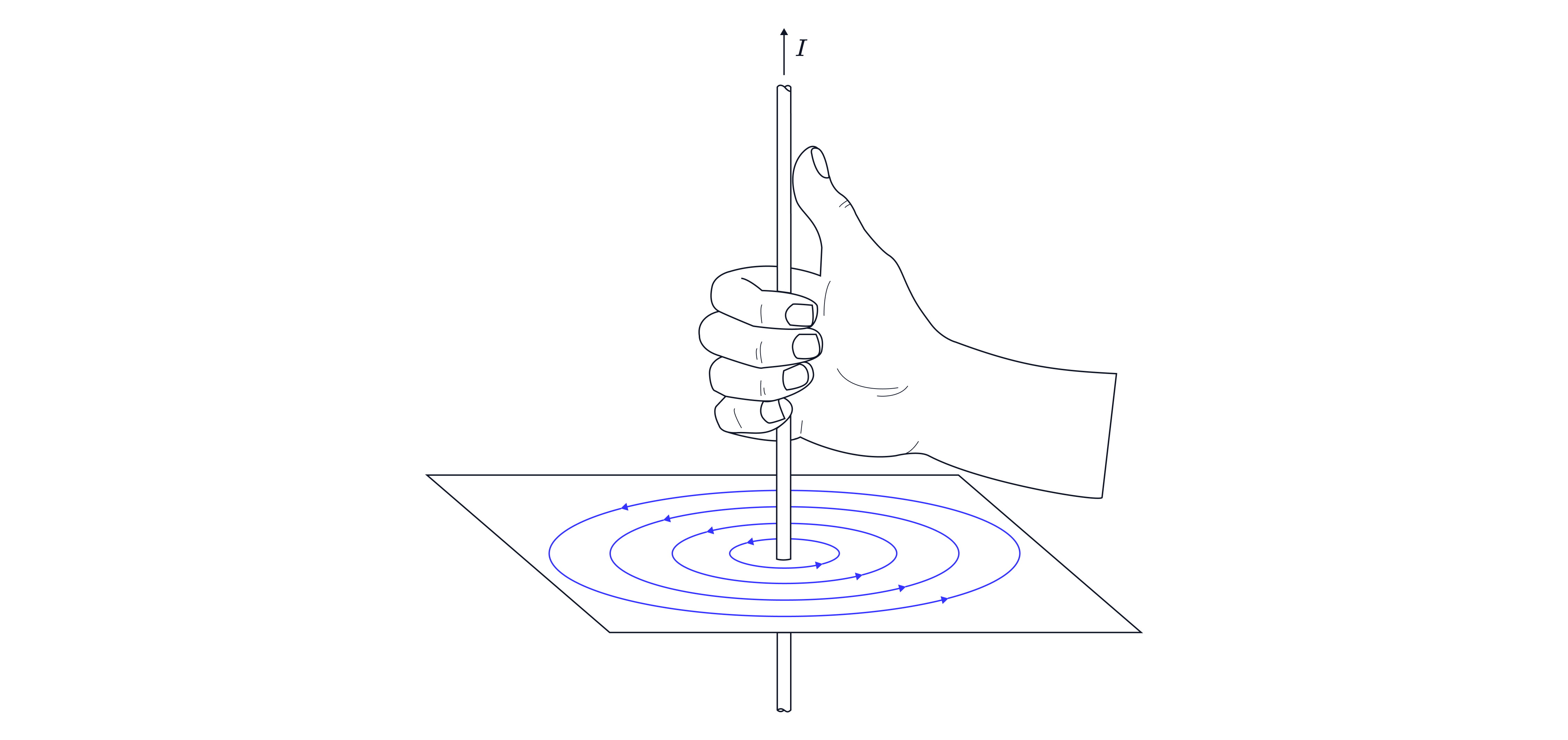
Increasing the current increases the strength of the magnetic field, while the magnetic field strength decreases with distance from the wire.
Electromagnets
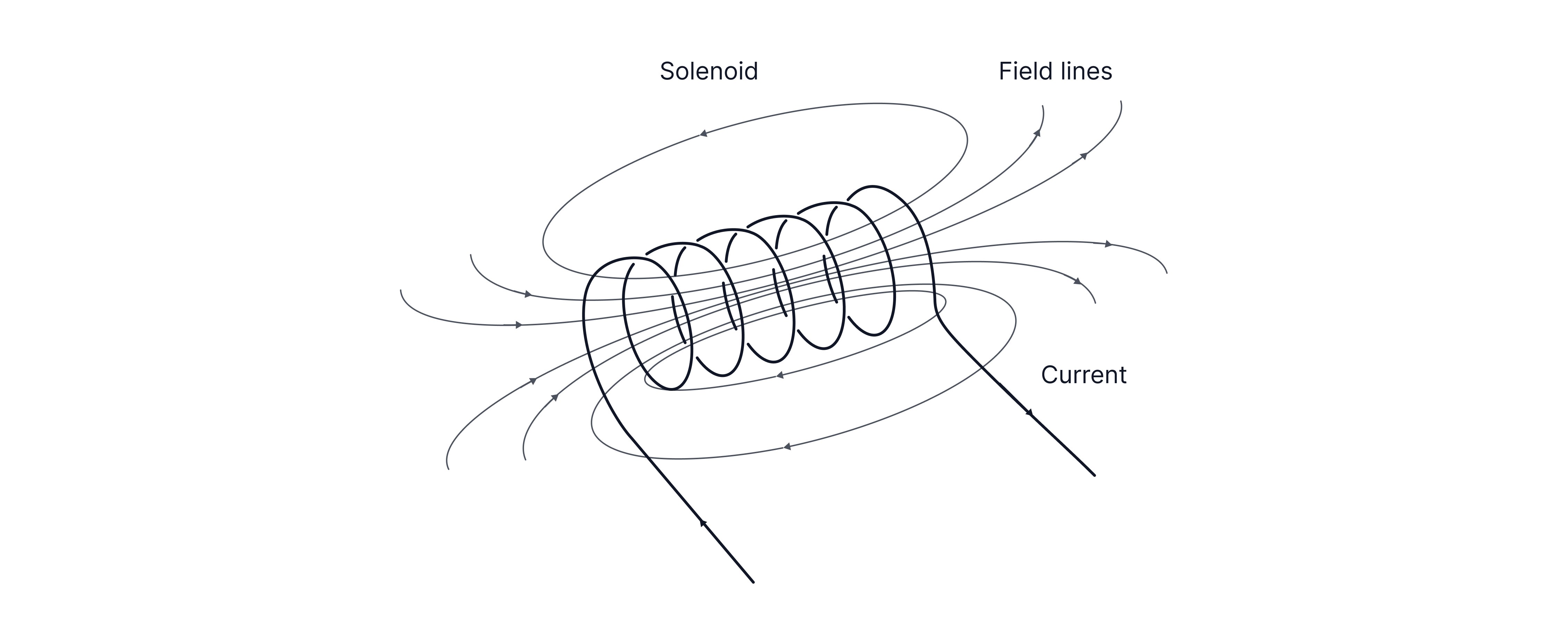
When the wire is wrapped into a coil, known as a solenoid, the magnetic field strength is increases. The field lines around a solenoid resemble those of a bar magnet. Inside the solenoid, the field is strong and uniform, and outside the solenoid, the field lines spread out and loop back.
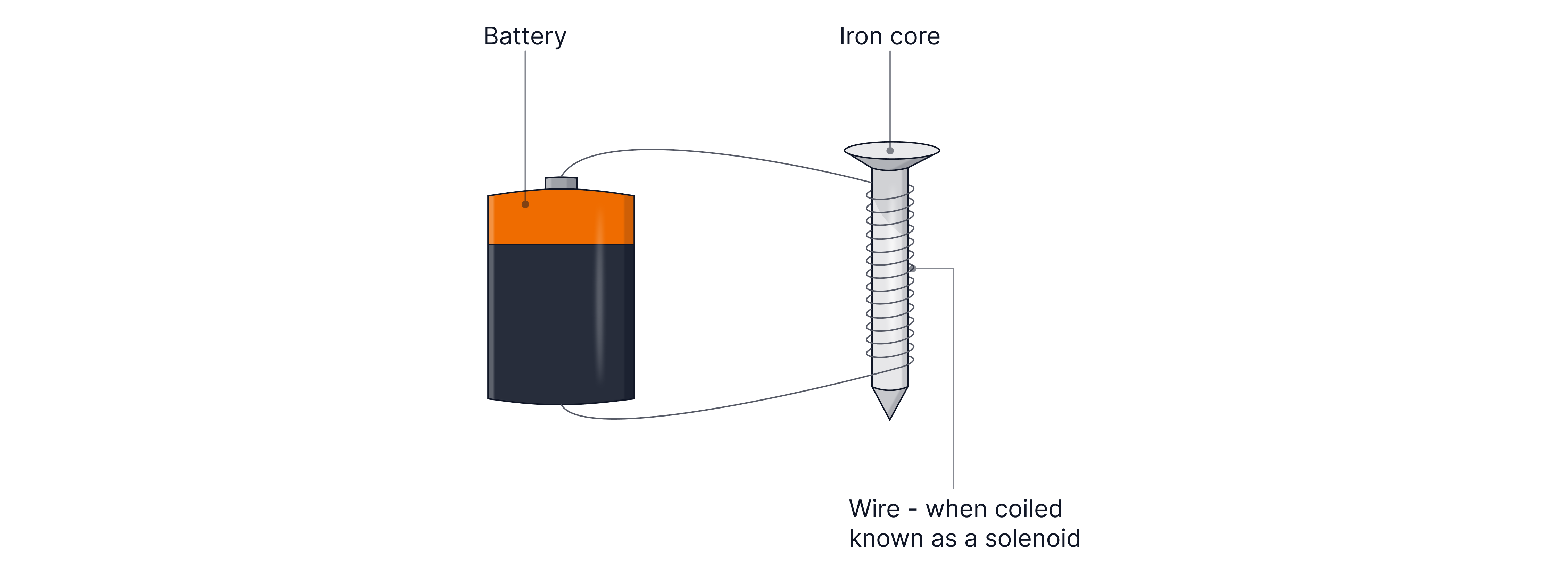
Iron can be placed inside the solenoid to increase the magnetic field strength, as iron is an induced magnet (becomes magnetic in the presence of a magnetic field), it reinforces the original magnetic field produced by the current in the wire, turning the solenoid into a stronger electromagnet.
Electromagnets are more useful than permanent magnets because a switch can be added to the circuit, allowing the magnetic field to be turned on and off.
The Motor Effect
A current-carrying wire placed in a magnetic field experiences a force. The maximum force is observed when the wire is perpendicular to the field. This occurs when the current in the wire induces its own magnetic field, which interacts with the magnetic field from the permanent magnet.
The magnetic field lines combine—adding together when they are in the same direction, and subtracting when they are in opposite directions—producing a resultant force.
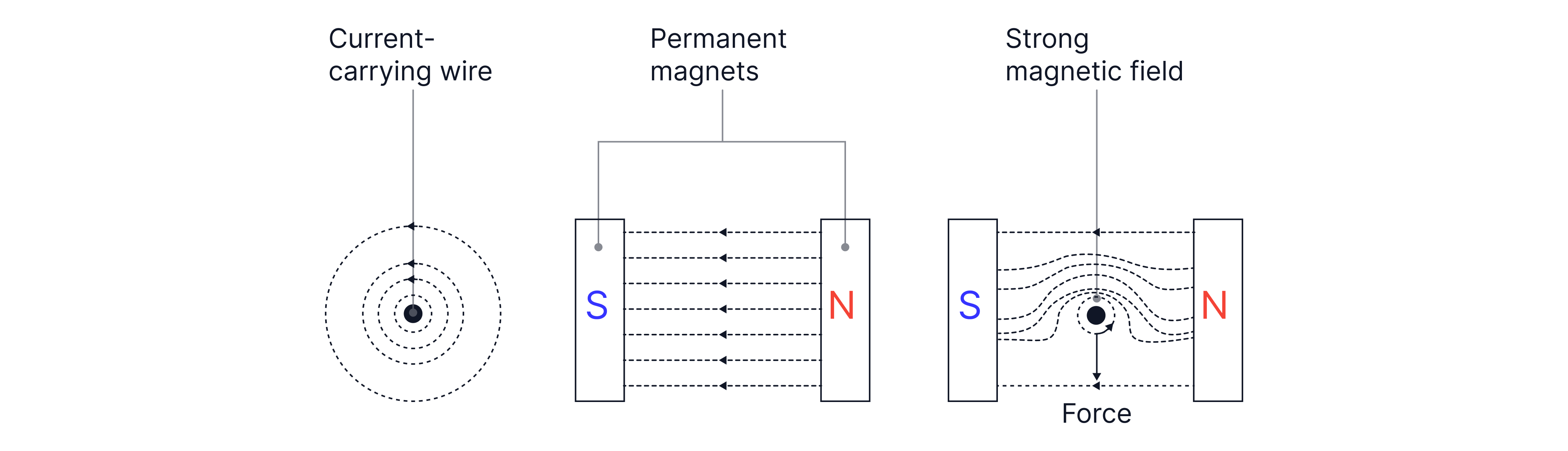
The direction of the resultant force is determined by using Fleming’s left-hand rule.
-> Your first finger points in the direction of the magnetic field (N to S) , and your second finger points in the direction of the current (conventional current, + to -). Your thumb then points in the direction of the resultant force.

The magnitude of the force is determined using the equation below and is a maximum when the wire is perpendicular to the magnet, as is a maximum at .
Formula:
Worked Example
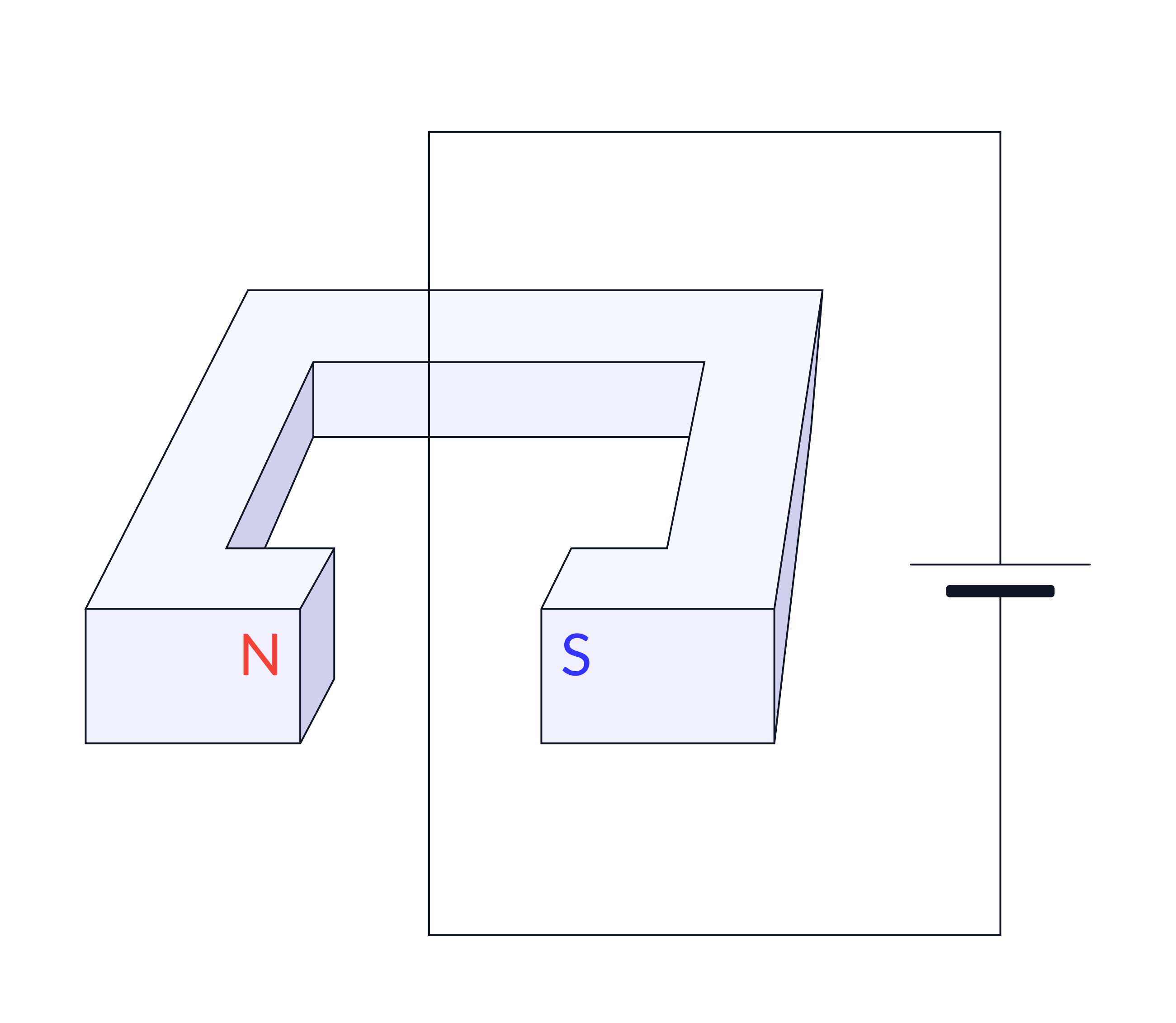
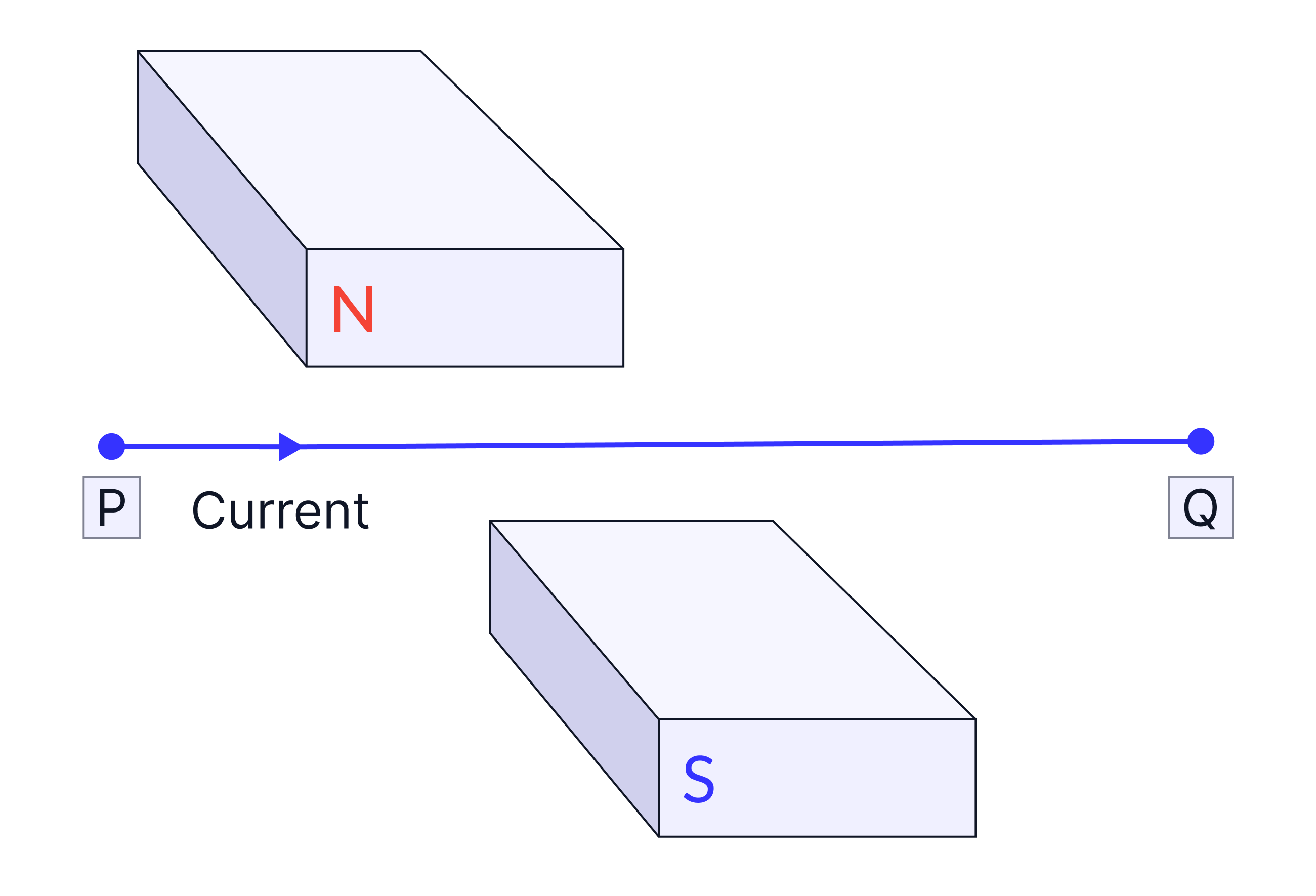
Determine the direction of the force in each image.
Up/Down/Left/Right/Out of the page/Into the page
Answer:
Force is Out of the page
Force is Downward
Teacher Tip: Current flows from the positive to the negative terminal of the cell. The section of wire passing through the magnetic field in the first image has current flowing downwards. Use Fleming's right-hand rule to determine the direction of the force.
Worked Example
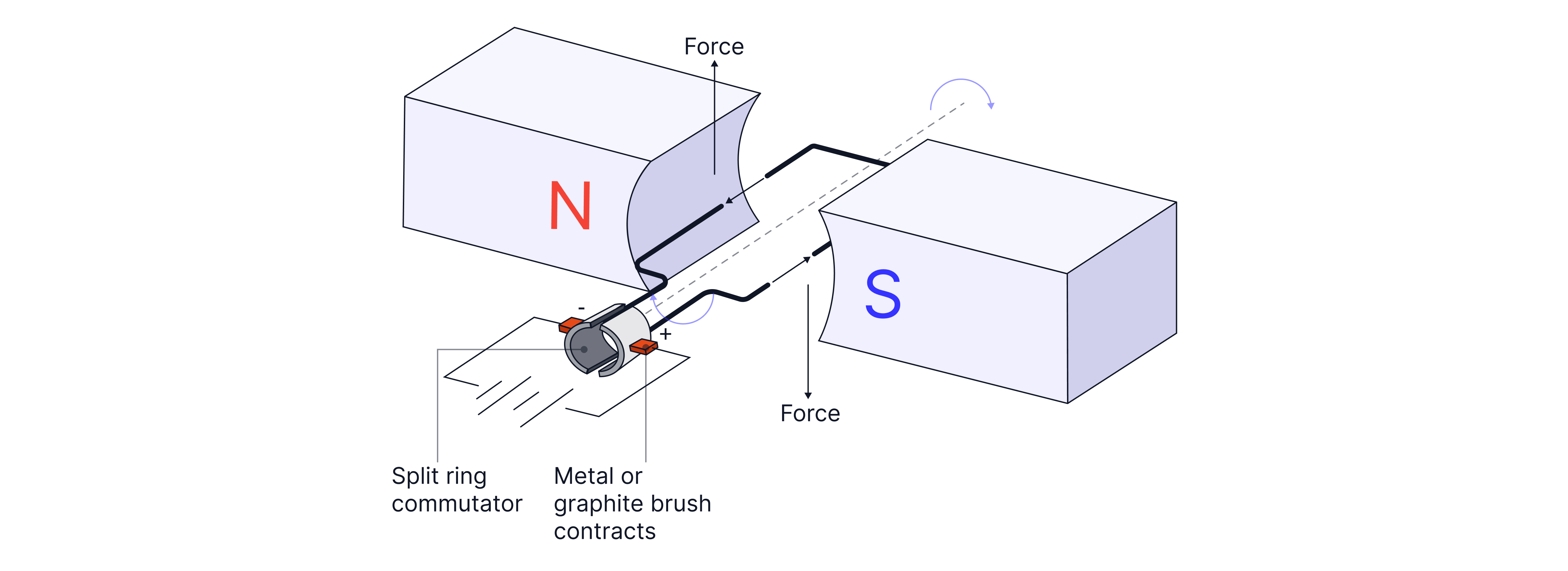
Explain the function of the split ring commutator.
Answer:
The direction of the current around the coil is reversed by the split ring commutator each time the coil rotates through a half turn. This ensures that the current along an edge of the loop changes direction when it moves from one pole face to the other, allowing continuous rotation.
Without the commutator, the coil would rotate through a half turn and then experience a force in the opposite direction, causing it to be pushed back.
Worked Example
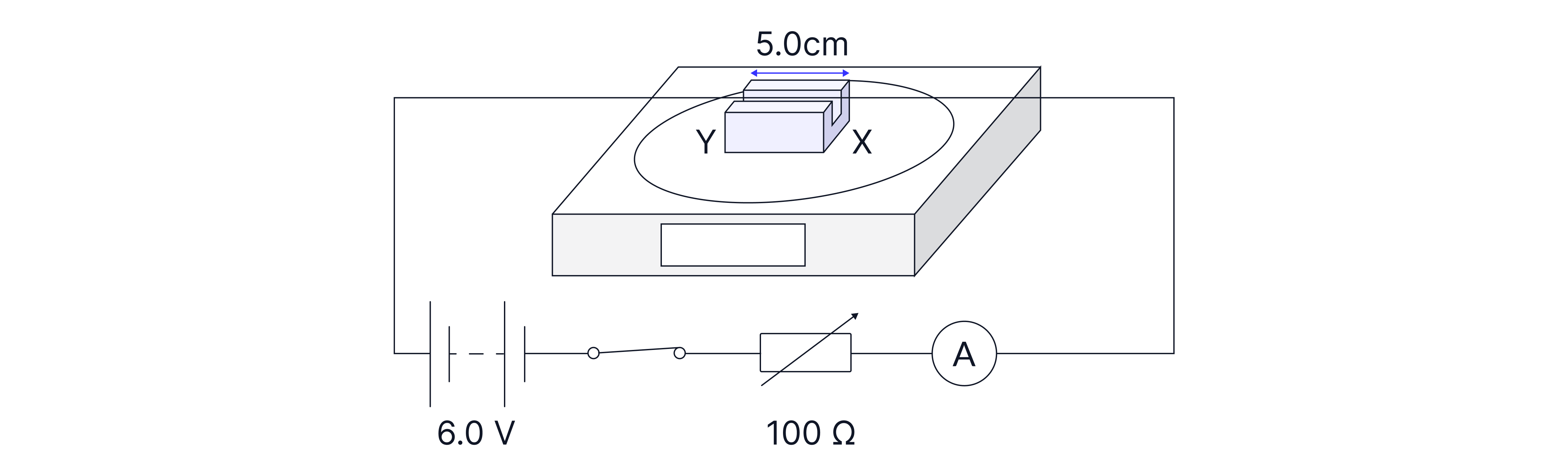
A wire is placed perpendicular to the permanent magnet on the scale and clamped in place so it can not move. When the switch is closed the reading on the scale increases by . Determine the direction and magnitude of the magnetic flux density of the magnet.
Another student attempts to set up the equipment as shown, but the reading is only . Suggest why.
Answer:
Direction: If the scale reading increases, there must be a downward force on the magnet. Due to Newton's 3rd law, we know that if the wire exerts a force on the magnet downwards, the magnet exerts an equal but opposite force on the wire upwards. Therefore, the force on the wire is upwards. Using Fleming's left-hand rule, as the force is upwards and the current is towards the right (conventional current) in that section of wire, we find that the magnetic flux density acts into the page.
Magnitude: First, find the current using :
Next, equate the downwards force on the magnet, to the magnetic force using as the wire is perpendicular, ,
The wire may not be perfectly perpendicular to the magnet’s field lines; therefore, the force on the wire from the magnet is not a maximum, and due to Newton's 3rd law, the force on the magnet due to the wire is also less, so the scale reading is less.
Practice Questions
Determine the direction of the force on the wire.
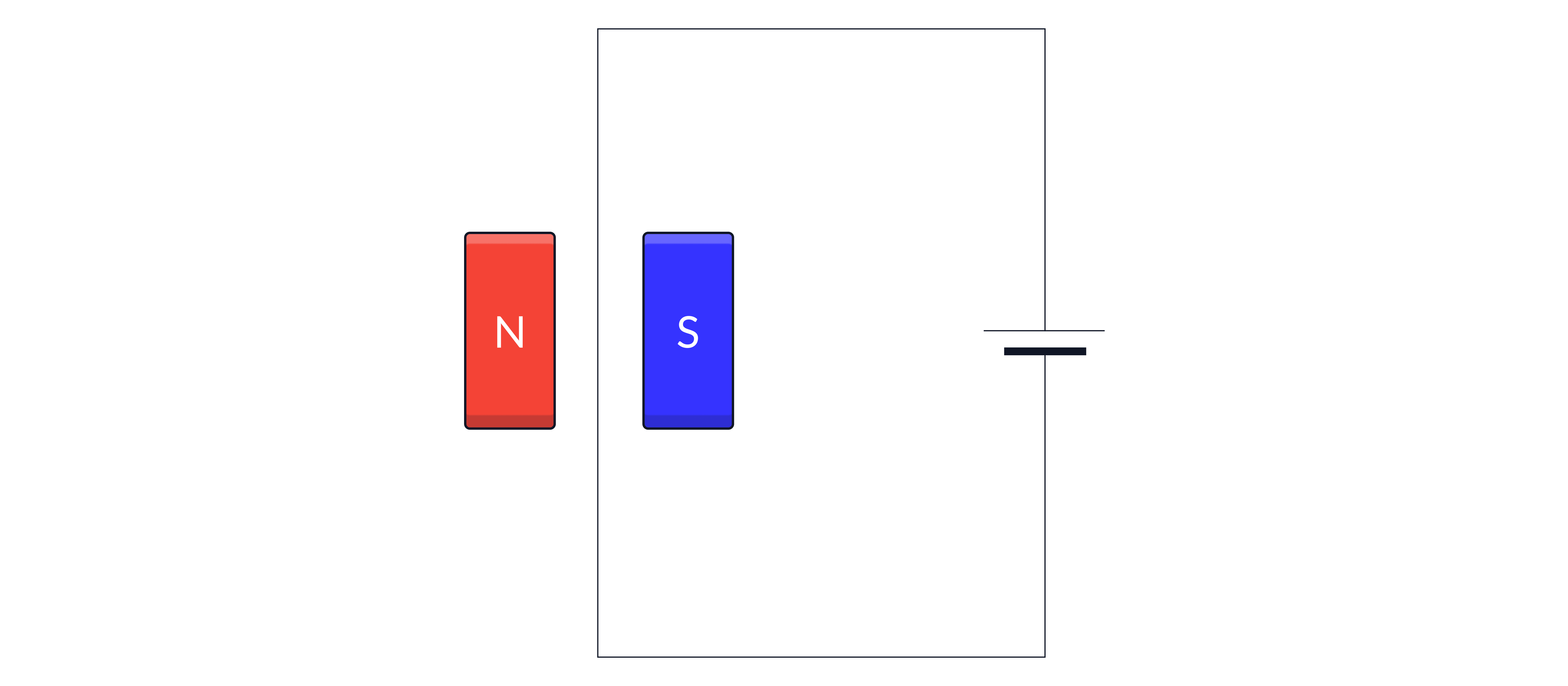
Calculate the mass of the wire when the current in the wire is , the length of the wire in the field is and it is suspended in equilibrium, in flux density .
-> Check out Brook's video explanation for more help.
Answer:
A horizontal wire of length carrying current of is placed perpendicular to a magnetic field. The mass of the wire is and the weight of the wire is supported in equilibrium by the magnetic field.
Calculate the flux density of the magnetic field.
-> Check out Brook's video explanation for more help.
Answer: