Electromotive Force & Internal Resistance
Brook Edgar
Teacher

Explainer Video
Internal Resistance
Internal resistance can be imagined as a small resistor inside the cell. It causes some energy to be lost per unit charge on passing through the cell.


A cell is therefore not perfect, before, if we had a cell, each unit charge left with and returned with , but now, due to the internal resistance of the cell, some energy is lost per unit charge on passing through the cell itself.

Here we can see the emf of the cell is . The emf is the electrical energy supplied per unit charge by the source. The voltmeter connected across the cell, however, reads as the voltmeter reads the energy transferred per unit charge across a component. , is lost on passing through the cell; this is called the lost pd due to the internal resistance of the cell.
The voltmeter reads the energy supplied per unit charge by the source minus the energy lost per unit charge on passing through the internal resistor (the lost pd). .
The equation on the data sheet is a rearrangement of this equation, as .
The cell below has an emf of 15.0 V. The pd across the cell reads 10.0 V when the switch is closed due to lost pd due to the cell's internal resistance.

Using , we can calculate the internal resistance of the cell.
The total resistance of the circuit due to components is .
The current in the circuit, .
Teachers Tip: If there was no internal resistance or if the current was zero, the reading on the voltmeter would equal the emf.
Remember: Parallel components have the same pd across them as that across the cell, and the total resistance of the circuit is calculated the same as before, not including the internal resistance of the cell.
Worked Example
A resistor is connected across the terminals of a power supply.
Calculate the current in the resistor.
Calculate the pd across the power supply.
If the emf of the cell is 15 V, why is the voltmeter reading different?
If the circuit broke, what would the voltmeter read if placed across the power supply?
Answer:
The pd across the power supply is the same as the pd across the resistor =
The voltmeter reading is less than the emf due to the lost pd. Energy is lost per unit charge on passing through the cell due to its internal resistance
If the circuit broke, the current would be , therefore the reading on the voltmeter will equal the emf = . .
Worked Example
A variable resistor controls the brightness of a bulb. As the variable resistance is adjusted, the reading on the voltmeter is monitored.

Explain why the reading on the voltmeter decreases as the brightness increases.
Answer:

To increase the brightness of the bulb we must change the variable resistors so more power is delivered to the bulb . To achieve this the resistance of the variable resistor must be decreased. This will cause the total resistance to decrease and current to increase.
However increasing current causes more lost pd. . More lost pd means less pd supplied to the rest of the circuit. The voltmeter reading decreases.
Remember: If the question does not explicitly state that internal resistance is negligible, do not assume it is. Draw a resistor in the question to represent internal resistance.
Practice Questions
Three cells each have emf, and internal resistance, .
Calculate the total emf and internal resistance of each setup below.
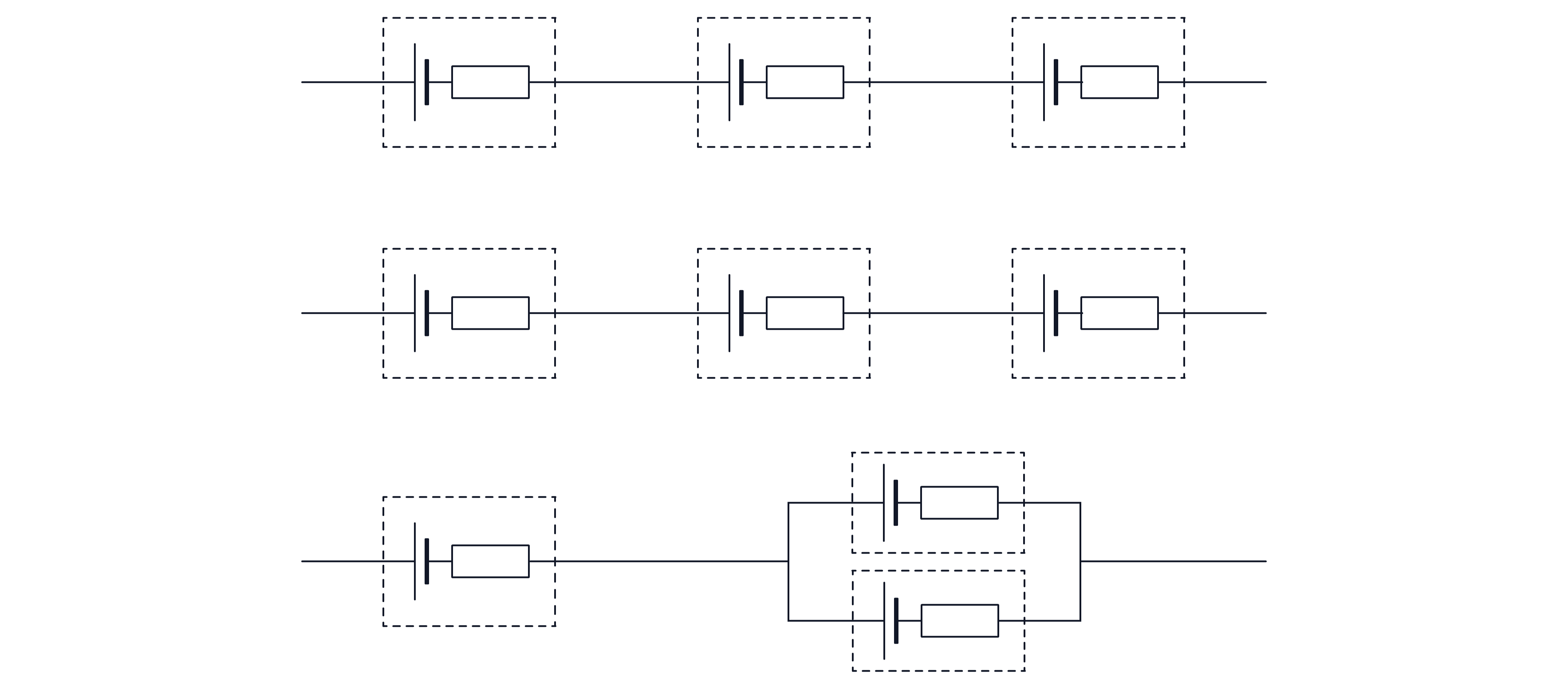
-> Check out Brook's video explanation for more help.
Answer:
Describe a procedure to find emf and internal resistance of the power supply.
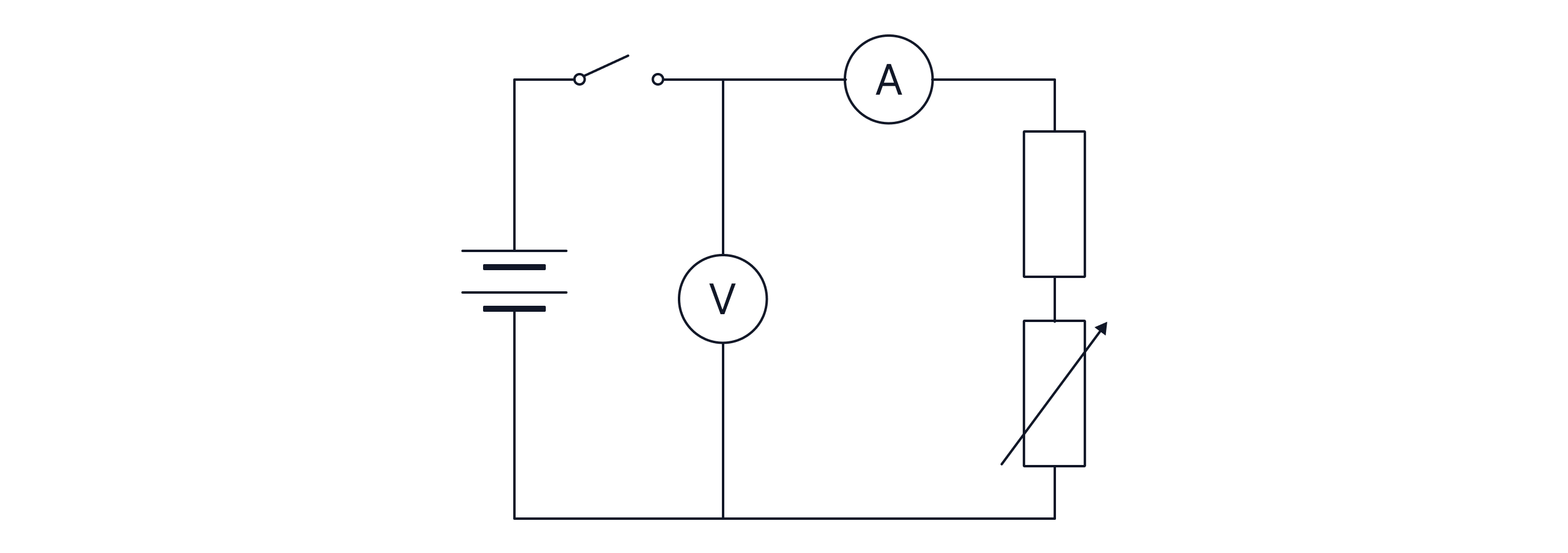
-> Check out Brook's video explanation for more help.
Answer:
Take readings of the potential difference from the voltmeter.
Take readings of the current from the ammeter.
Record these readings in a table.
Change the resistance using the variable resistor to get multiple readings.
Use the data to plot a graph of potential difference against current, where the y-intercept will be equal to the emf and the gradient will be equal to -internal resistance.
In the circuit, the voltmeter has a very high resistance.
The internal resistance, r, is equal to the external resistance of the circuit

Which of the following is not equal to the emf of the cell?
The reading on the voltmeter when the switch is open.
The chemical energy changed to electrical energy when a unit charge passes through the cell.
Twice the reading on the voltmeter when the switch is closed.
The electrical energy produced when a unit current passes through the cell.
-> Check out Brook's video explanation for more help.
Answer:
D
Calculate the internal resistance of the cell.
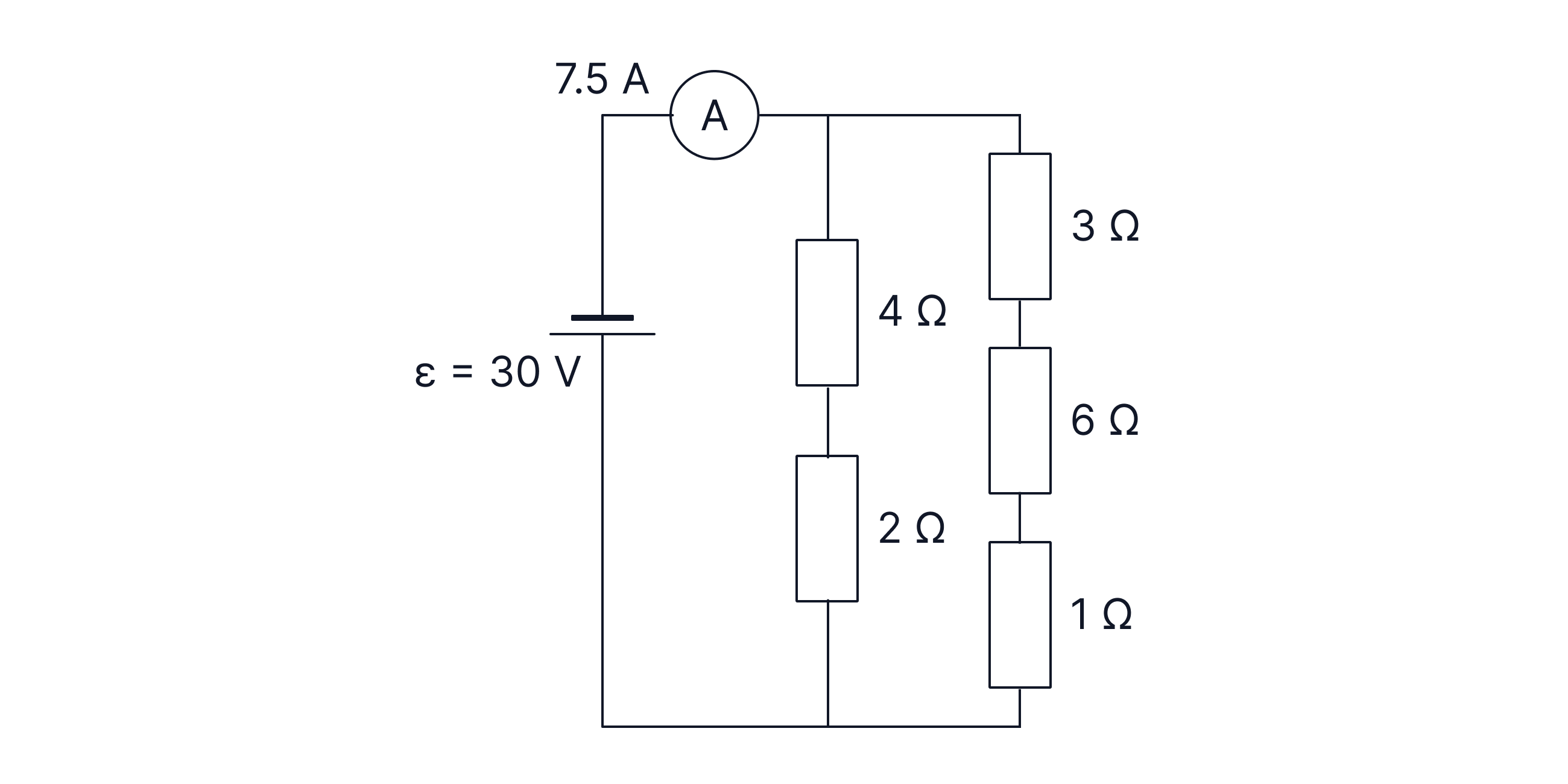
-> Check out Brook's video explanation for more help.
Answer:
The cell has an emf of . When the variable resistor reads , the potential difference across the terminals is .

What is the potential difference across the terminals when the resistance of the variable resistor is ?
-> Check out Brook's video explanation for more help.
Answer: