Lenses
Brook Edgar
Teacher

Contents
Explainer Video
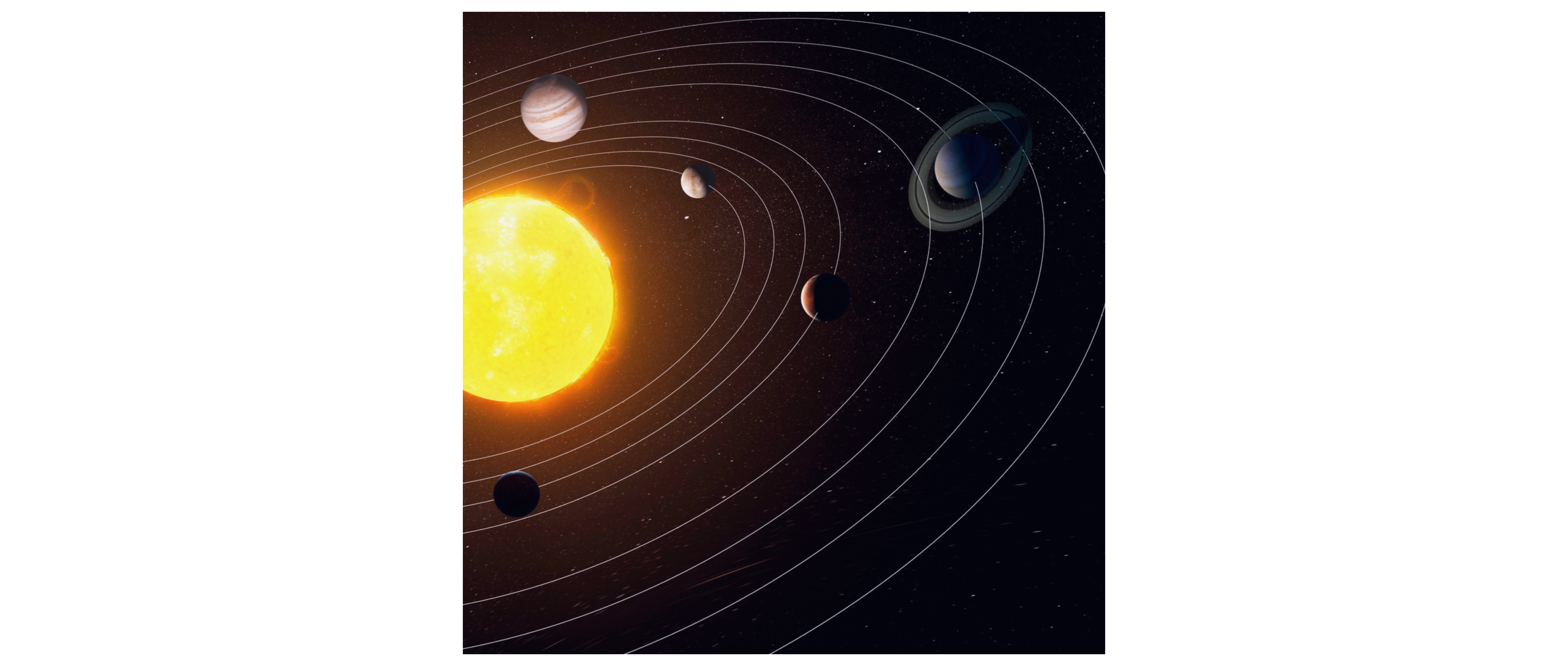
Solar System
There are 8 planets in our Solar System. In order of distance from the Sun:
Mercury, Venus, Earth, Mars, Jupiter, Saturn, Uranus, Neptune.
Our Solar System is in the Milky Way Galaxy.
Objects that orbit planets are called satellites. The Moon is a natural satellite of Earth. The International Space Station (ISS) is an artificial satellite orbiting the Earth.
Observations of the moons of Jupiter by Galileo Galilei proved that not all celestial objects orbit the Earth, disproving the geocentric model at the time and replacing it with the heliocentric model (with the Sun at the centre of the Solar system), challenging the Catholic Church.

Remember: Pluto is no longer a planet and is now known as a dwarf planet, one reason being that it is too small to be called a planet. An acronym to help remember the order of the planets from the Sun is: My Very Excited Mother Just Showed Us Nine Planets, but she was lying, as Pluto is no longer a planet.
Normal Adjustment Refracting Telescopes
Everything we know about our Solar System and beyond came from the careful study of light, either via lenses or mirrors. Therefore, understanding how we can capture light and how lenses work is of fundamental importance to this area of science.
Refraction is the change in the direction of light as it passes from one medium into another. When light travels into a medium with a higher refractive index, such as from air into glass, its direction changes. The light ray bends towards the normal, as the speed of light decreases in this more optically dense medium.
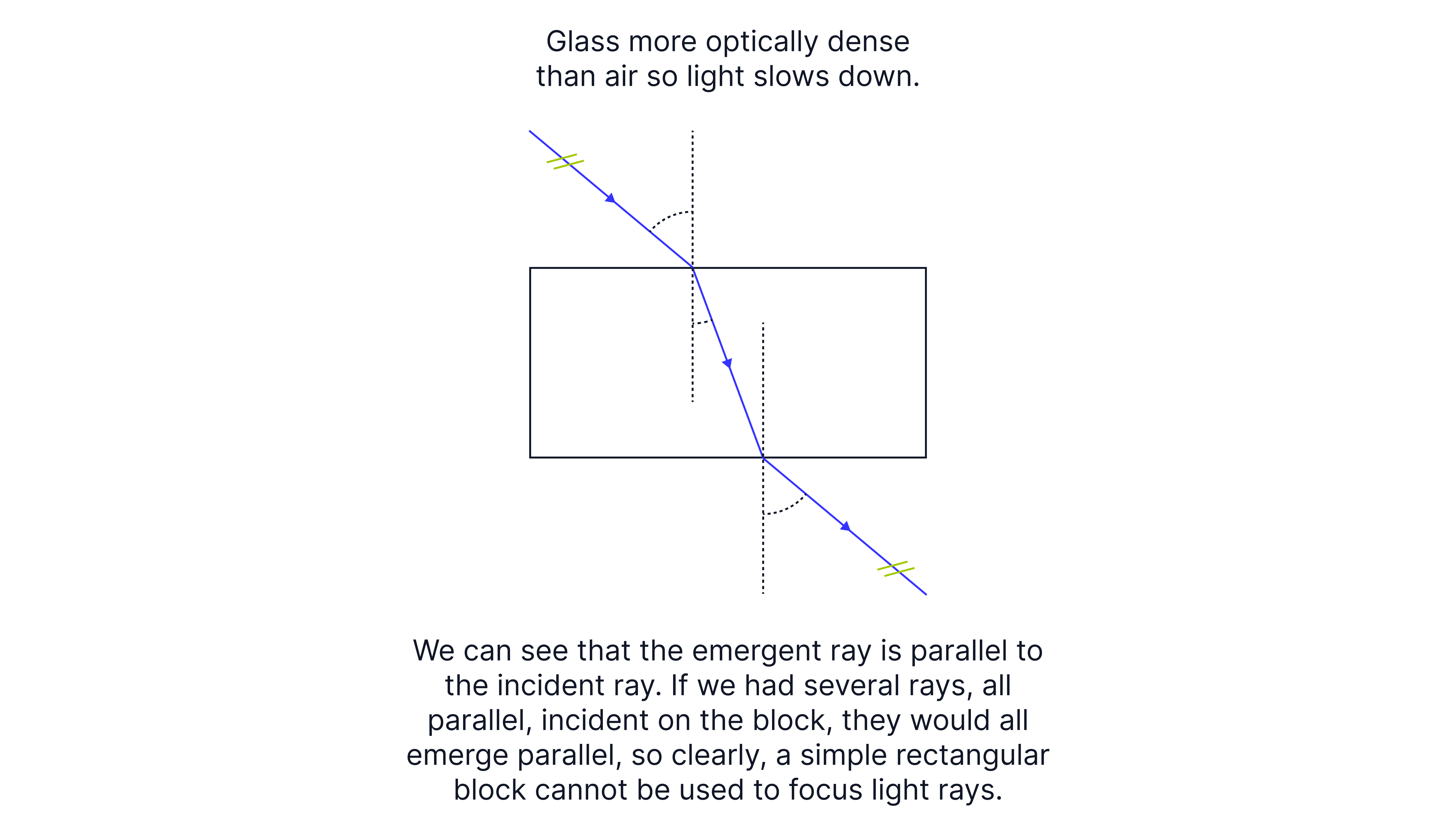
Lenses use refraction to bring light rays to a focus at a single point.
Convex or converging lenses bring rays of light to a focus at the principal focus/focal point. Used in cameras, projectors, the human eye, magnifying glasses and telescopes.
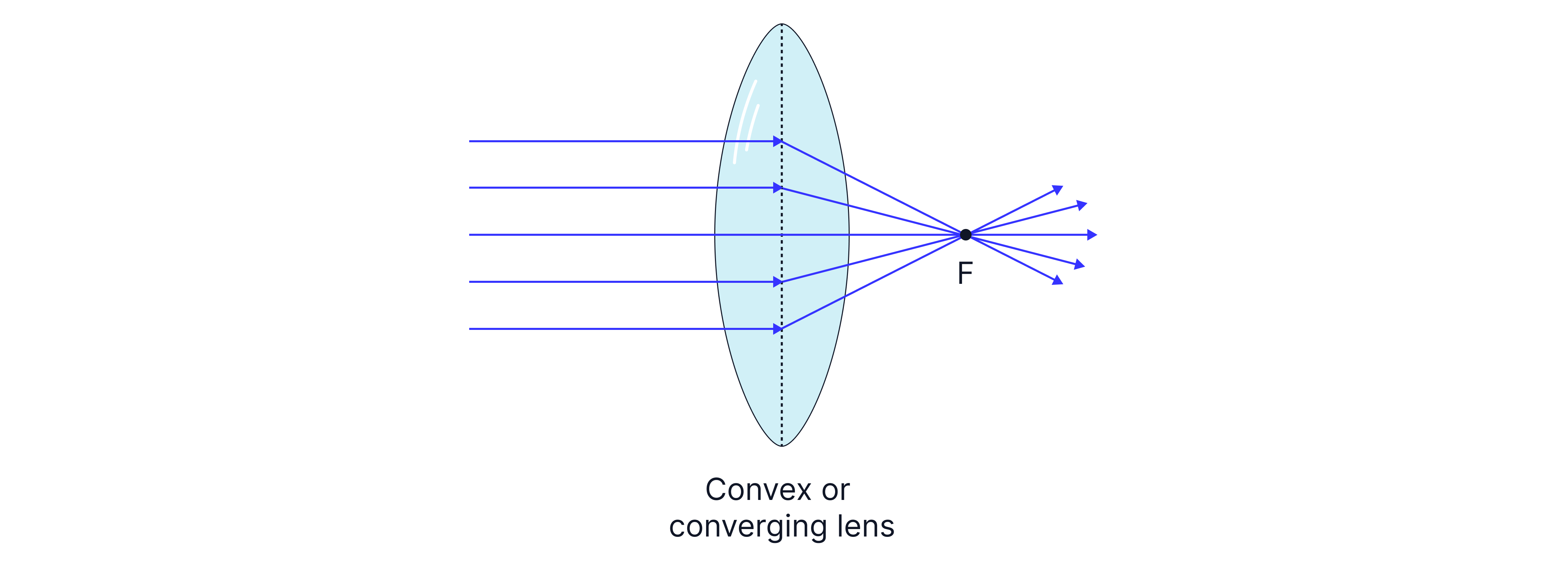
When drawing ray diagrams for lenses, we use the rules below for convex lenses:

A concave or diverging lens makes parallel rays of light diverge. The point from which the rays appear to come is the principal focus/focal point. Used to correct short-sightedness (myopia) as people can’t see things that are far away. The lens in the eye is too strong, bringing rays of light to a focus before the retina. A diverging lens placed in front of the eye causes the light rays from the distant object to spread out before they reach the eye, enabling the distant object to be seen more clearly.
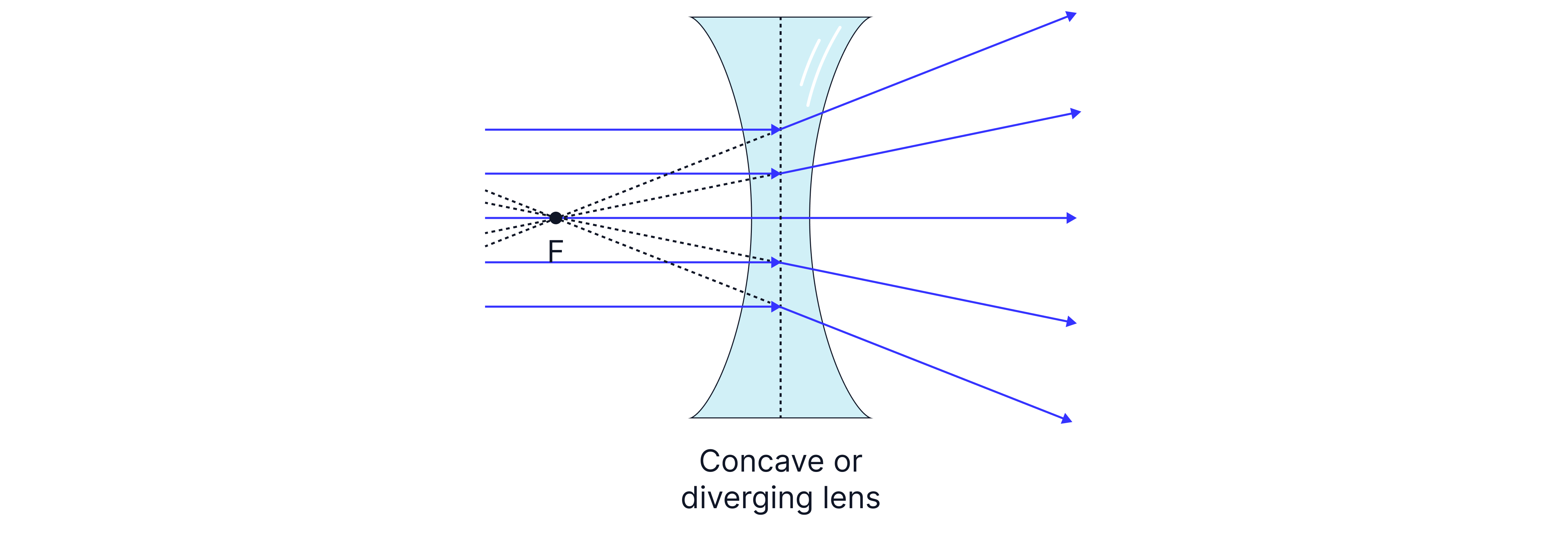
You need to understand how lenses work to understand how the two main astronomical telescopes were designed and are used. Refracting telescopes use two convex lenses, and reflecting telescopes that use a large concave primary mirror work. You also need to know how to sketch diagrams of these two telescopes.
Normal Adjustment Refracting Telescopes
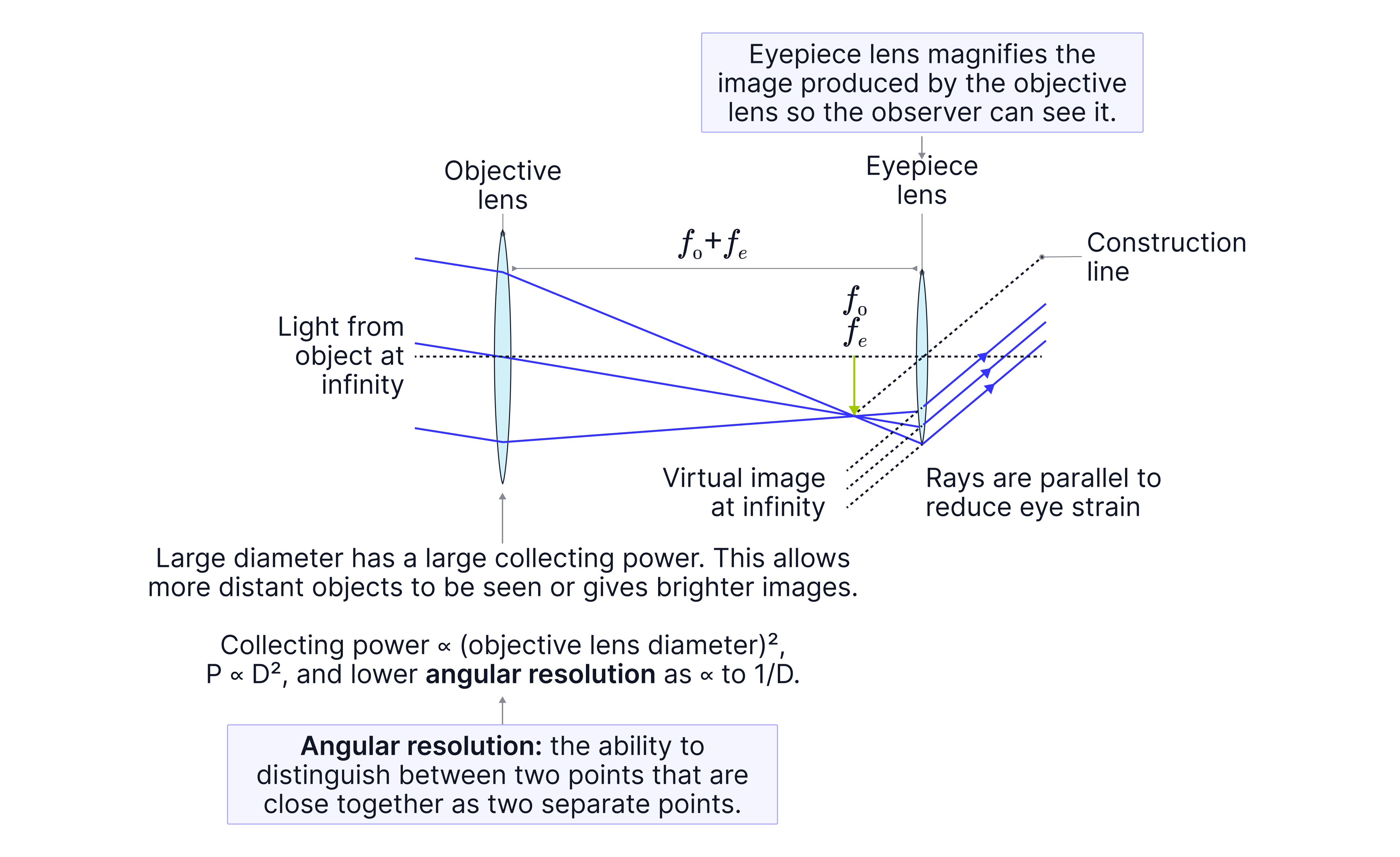
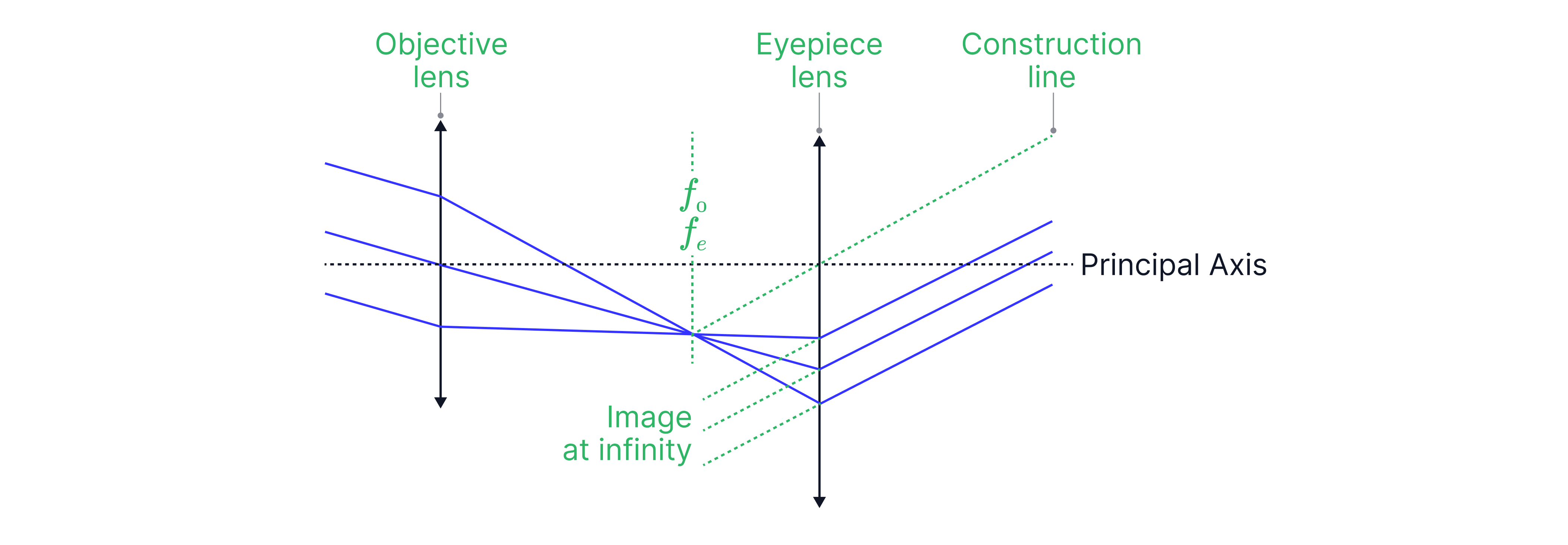
The first lens (the objective) collects the light from a distant object and brings it to a focus in its focal plane. The second lens (the eyepiece) uses this light to form a magnified image at infinity. This is achieved by placing the lens so that its focal plane coincides with the focal plane of the objective. The sum of the focal lengths is equal to the distance between the objective lens and the eyepiece lens.
-> Tips for drawing a Normal Adjustment Refracting Telescope
1. Start by drawing a principal axis, then drawing and labelling the lenses.
2. Mark and label the common principal foci, .
3. Draw an off-axial ray through the centre of the objective to the eyepiece and draw on the intermediate image formed.
4. Draw a construction line from the end of the intermediate image through the centre of the eyepiece as a reference for later.
5. Draw two more non-axial rays from the object through the objective lens to the eyepiece, crossing at the end of the intermediate image.
6. Draw three rays from the eyepiece parallel to the construction line.
7. Add dotted lines continuing these back to show the magnified Image formed at infinity.
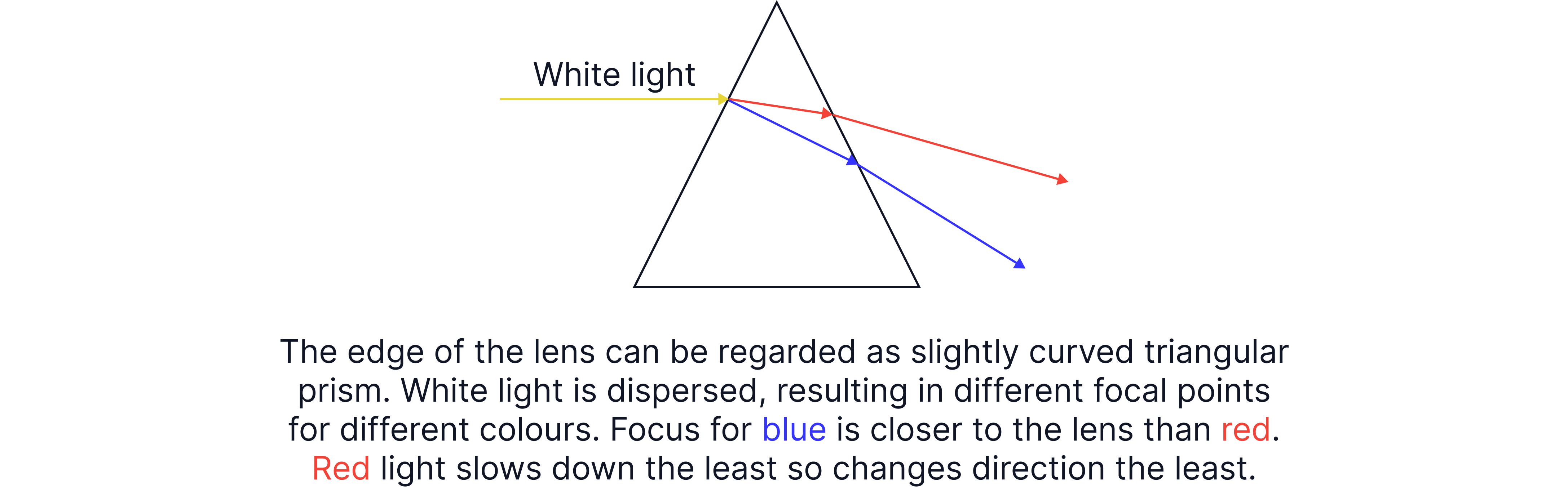
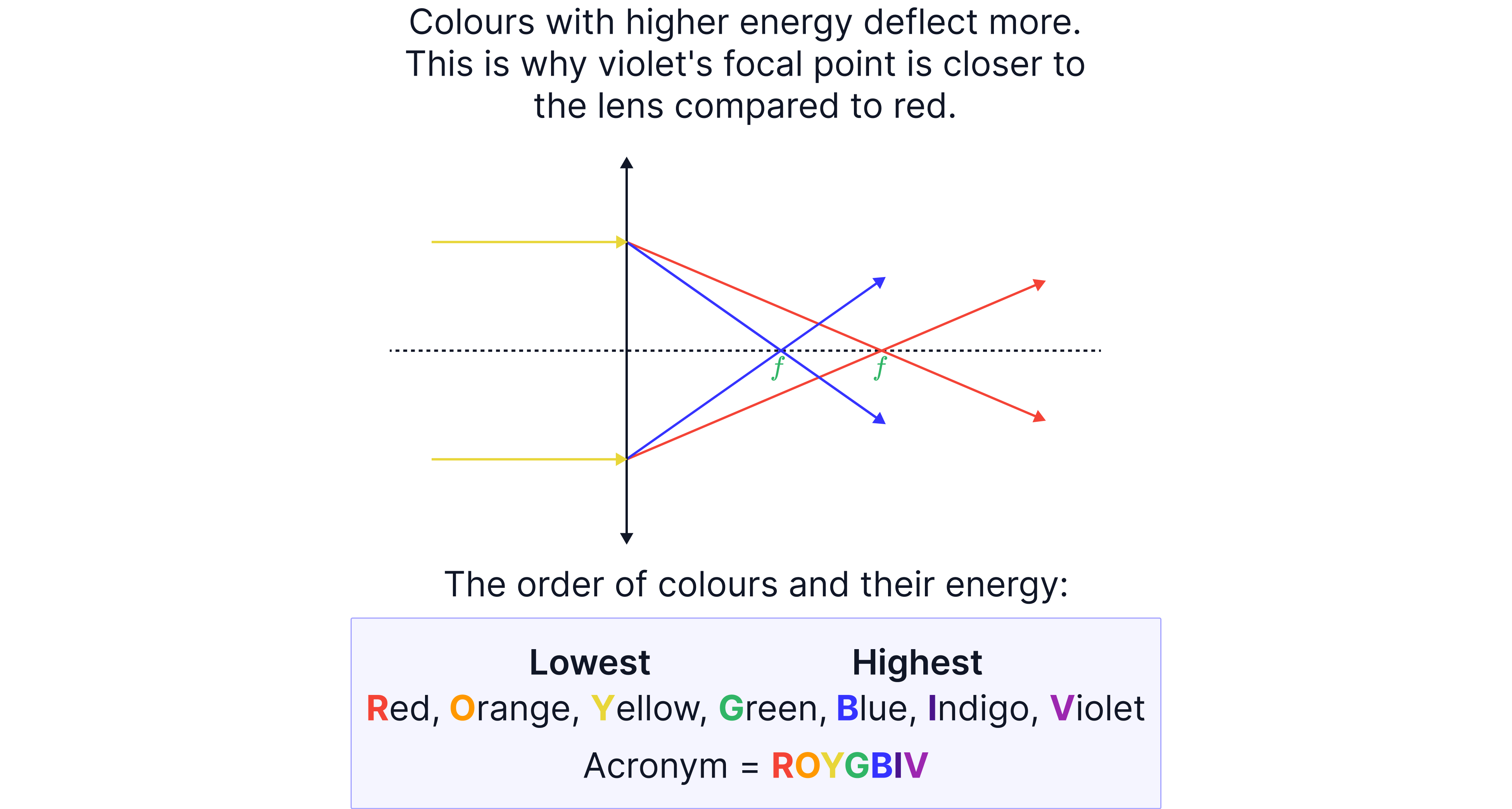
A problem with these telescopes is chromatic aberration. This occurs as light changes direction when entering the lens. Since all colours travel at different speeds, we end up with different colours of light being brought to a focus at different points, resulting in an image with coloured edges.
Remember: You can get asked in exams to sketch a diagram showing chromatic aberration. Always use a pencil and ensure to label the different focal points.
Lens Equations
Lens power
Formula:
A more powerful lens can focus light closer to the lens.
Measured in dioptres, D.

Magnification refers to the process of making an image appear larger than the actual object.
Formula:
To calculate magnifying power / angular magnification of a telescope, we can use the equations below:
Formula:

We apply these equations when designing and using astronomical telescopes.
Worked Example
A telescope is made from two converging lenses of focal lengths and and is used to observe a planet which subtends an angle of rad at the objective. Calculate the angle subtended at the eye by the final image.
Answer:
image eye = view using telescope
unaided eye = view without telescope
The focal plane is always closer to the eyepiece lens, therefore is the smaller number.
Worked Example
The Treptow Giant telescope in Berlin was one of the largest refracting telescopes of its time, built in 1896. Calculate the focal lengths of the eyepiece lens and objective lens.
Distance between eyepiece lens and objective lens =
Angular magnification =
Objective lens diameter =
Answer:
This is a common exam question. You will need two equations to solve this one.
Distance between lenses
Equate the two equations:
Finding the focal length of the objective lens:
Cassegrain Reflecting Telescope
The largest (and therefore best) telescopes are reflectors.
Parallel rays of light enter the telescope from a distant object. The large primary parabolic concave mirror reflects the light onto the secondary convex mirror, which reflects the light out through a hole in the primary concave parabolic mirror.
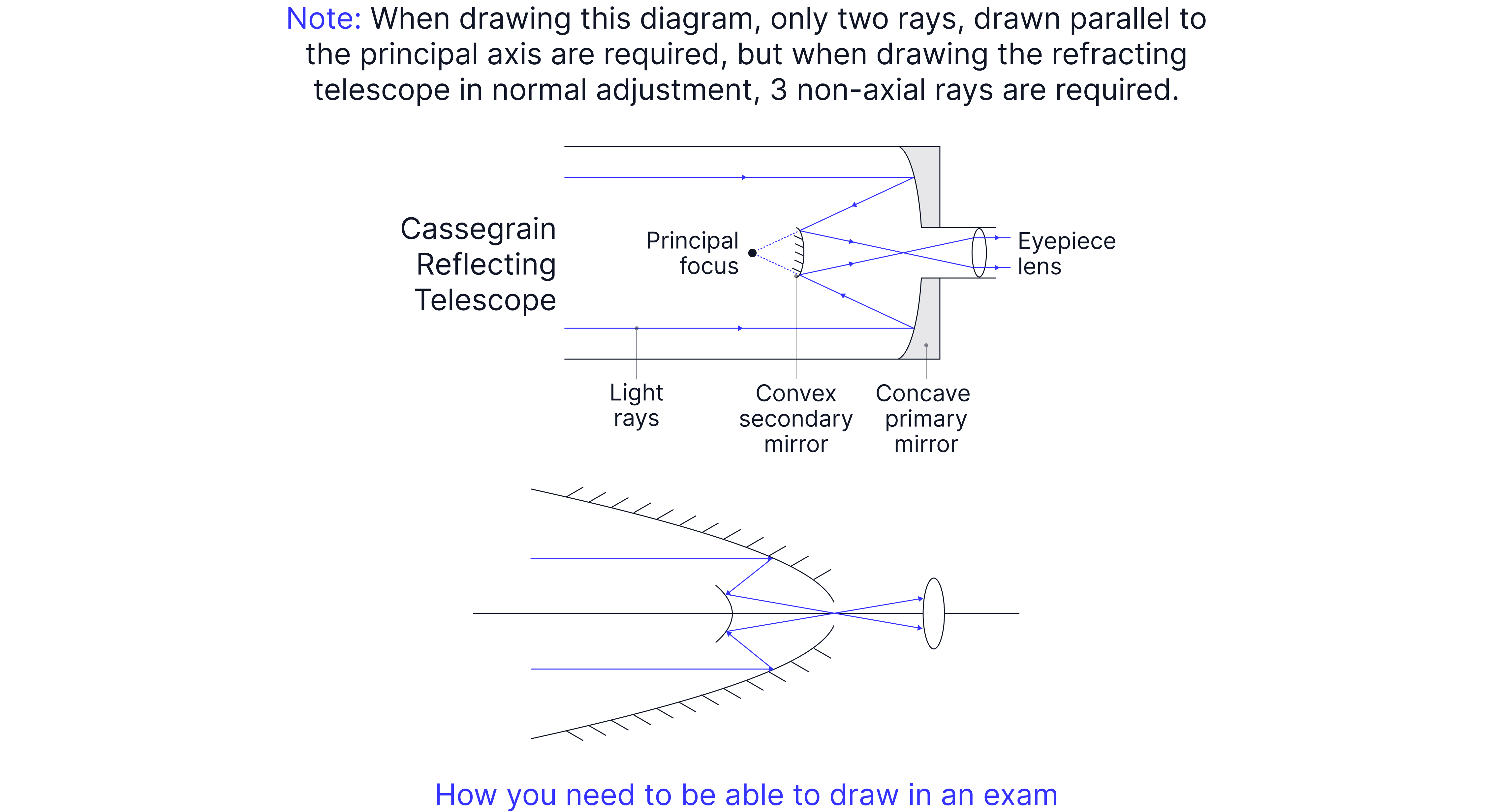
The primary mirror is parabolic in shape to avoid spherical aberration.
Spherical aberration is caused as off axial rays are brought to a focus closer to the mirror.

Spherical aberration occurs in both reflecting and refracting telescopes, but can only be avoided in reflecting telescopes due to their parabolic shape, as mentioned previously.
Practice Questions
Show how a converging lens causes chromatic aberration.
Concave mirrors in reflecting telescopes can have spherical aberration, show this.
-> Check out Brook's video explanation for more help.
Answer:
Sketch two rays of light parallel to the principal axis that refract into 4 rays on the other side of the lens. Have two rays that cross closer to the lens, labelling the focal point violet, and two rays converging further from the lens, labelling the focal point red
Sketch four parallel light rays, above and below the principal axis. Ensure the two rays further from the principal reflect and cross closer to the mirror than the two rays closer to the principal axis.