Telescopes
Brook Edgar
Teacher

Explainer Video
Telescopes
Telescopes must be placed in specific locations depending on the wavelength of light they observe. Telescopes that observe in the gamma region must be placed in space, as gamma rays cannot penetrate the Earth's atmosphere. The atmosphere is % opaque to gamma rays, as shown in the image below. Telescopes that observe in the UV region must also be placed in space, as the Earth's atmosphere absorbs most UV rays.
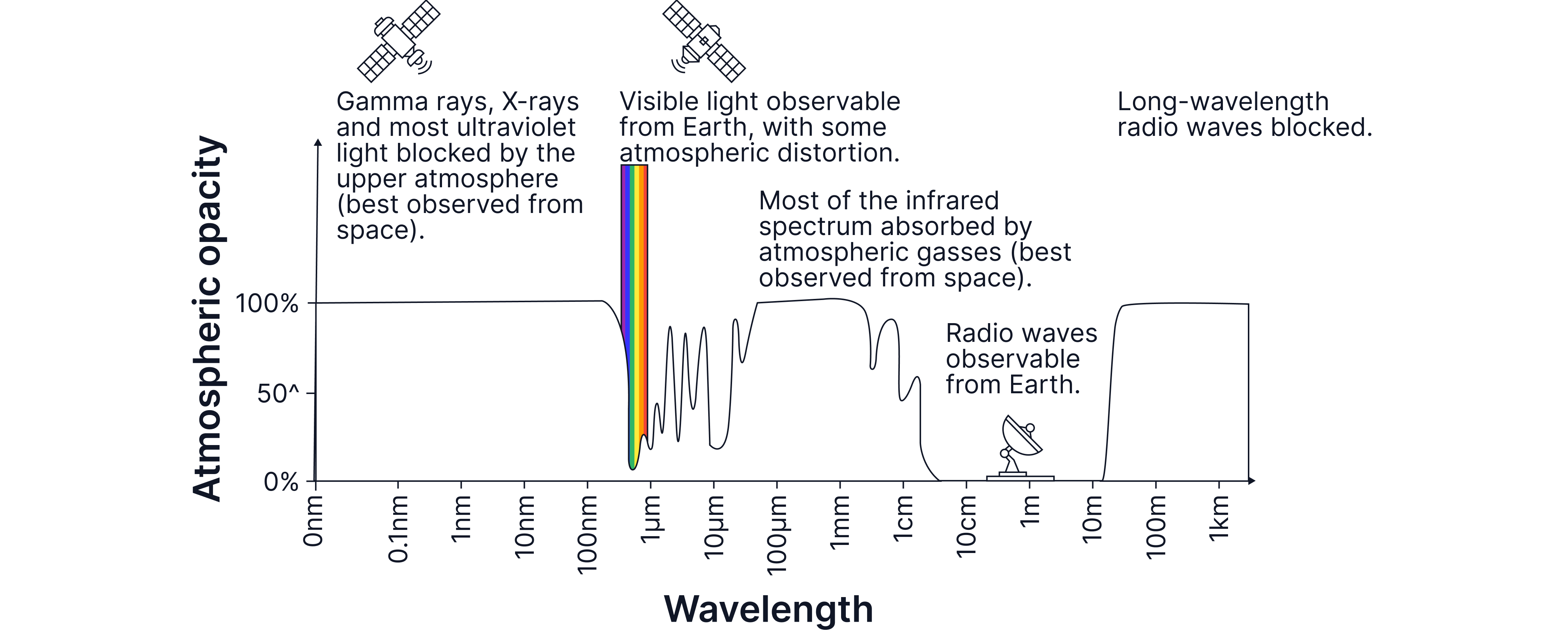
Telescopes that observe in the visible region need to be placed in remote areas to avoid light pollution, which interferes with these optical telescopes.
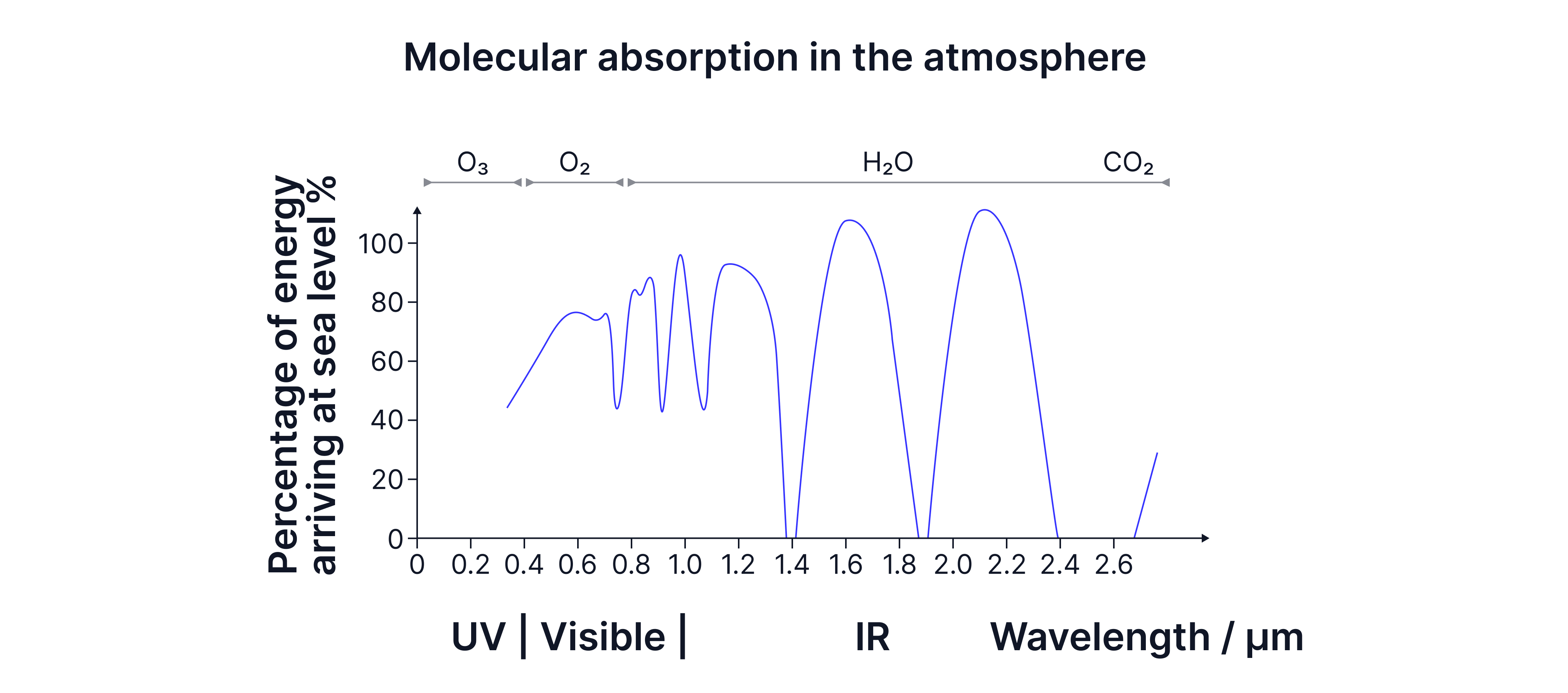
Telescopes that observe in the IR region can be placed on Earth but must be placed in dry areas (e.g., deserts) where there is less water in the atmosphere, as water molecules in the atmosphere absorb IR radiation.
Radio telescopes, like optical telescopes, need to be placed in remote areas to avoid interference from electronic devices (e.g. mobile phones). Radio telescopes are parabolic in shape to prevent spherical aberration and can be constructed with a mesh design to reduce cost and weight.
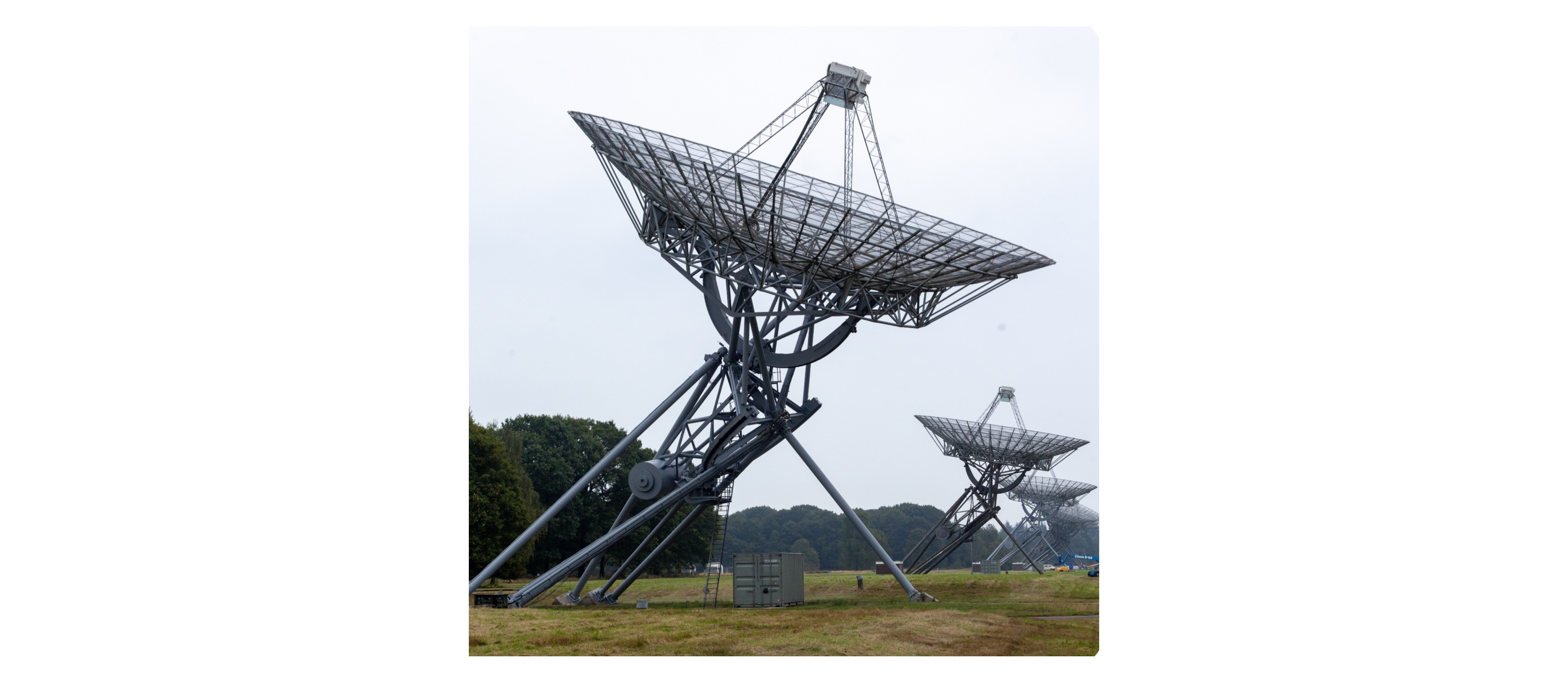
Remember: The diameter of the telescope affects the collecting power of the telescope as -> the larger the diameter, the larger the collecting power of the telescope, the brighter the images.
Brightness/luminosity is the total power radiated by the star (including all regions of the spectrum, not just the visible). Intensity is the power per unit area received at the observer.
Rayleigh Criterion
When a wave passes an obstacle / through an aperture, it is diffracted. When monochromatic light is passed through a narrow slit an interference pattern is seen, if this is rotated about its centre, a circular pattern is seen what the pattern from a circular aperture looks like. The large central maximum is known as the Airy Disc.
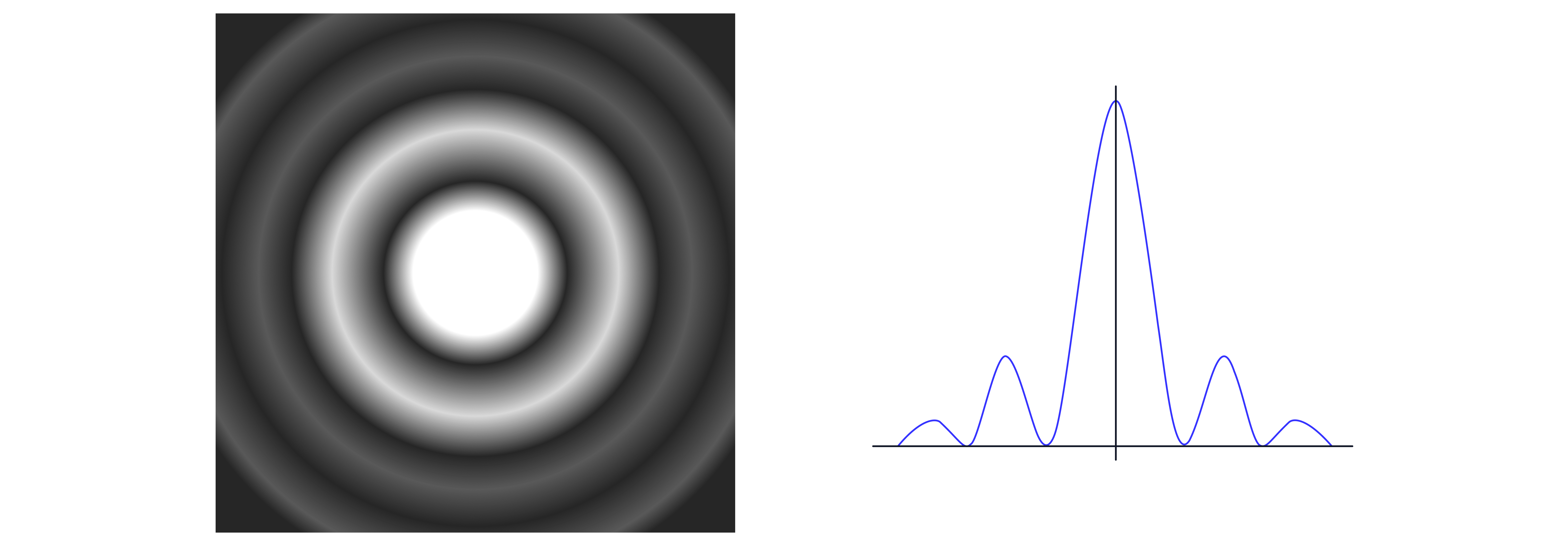
The resolution of a telescope tells us how much detail can be seen. If two objects are very close together, the telescope can resolve them (see them as separate points).
A telescope can resolve an image if the central maximum of the diffraction pattern of one image coincides with the first minimum of the other image.
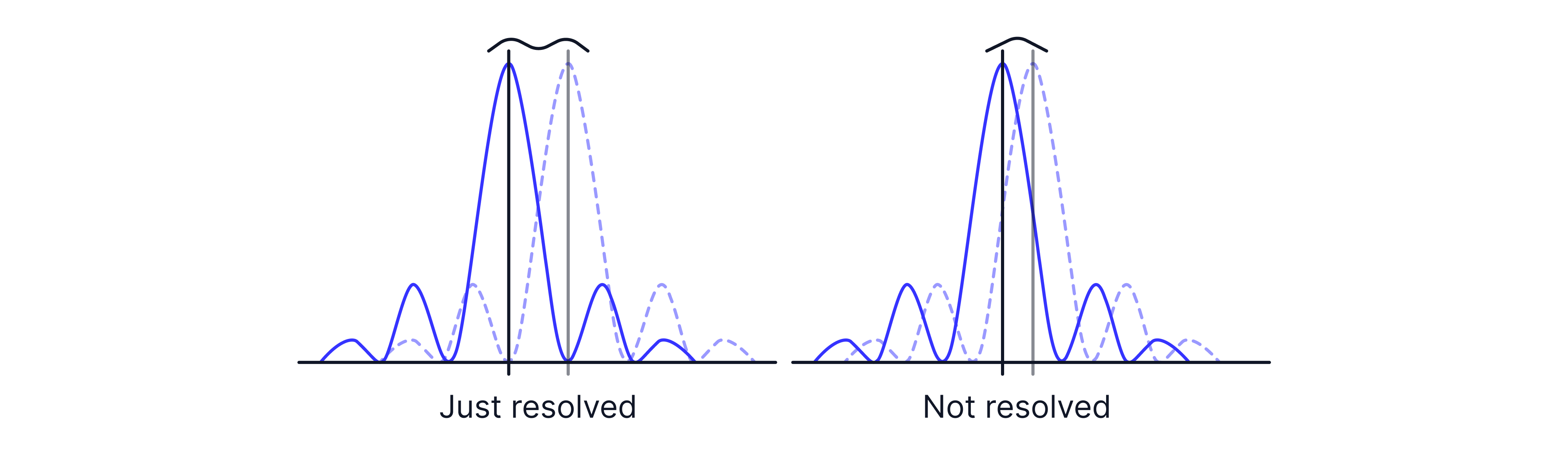
This is also known as the Rayleigh Criterion.
Formula:
Therefore, larger diameter telescopes have a lower value of the Rayleigh criterion, resulting in better resolution and thus clearer images.
Worked Example
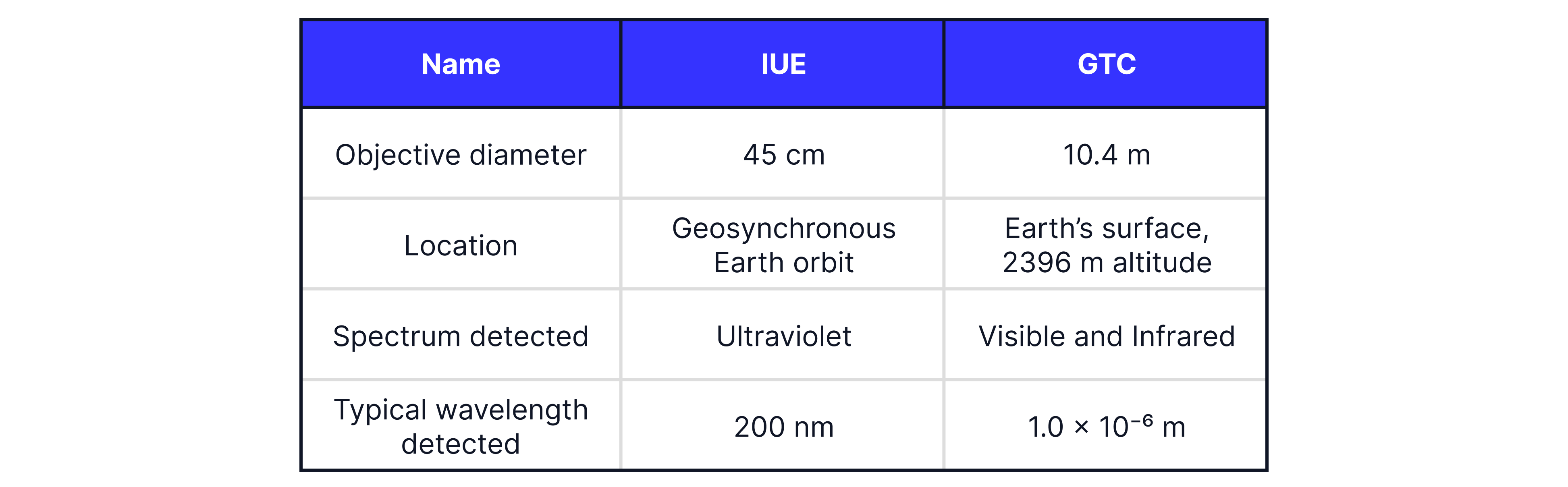
The International Ultraviolet Explorer (IUE), launched in 1978, and the Gran Telescopio Canarias (GTC), located on La Palma, Spain, which began operating in 2009, are reflecting telescopes.
Compare the two telescopes in terms of their location, collecting power, and minimum angular resolution. Include calculations to support your comparisons.
Answer:
Collecting power is proportional to the diameter squared, .
∴ GTC has more collecting power than the IUE, so it produces brighter images.
Rayleigh Criterion/resolution is proportional to the wavelength of light observed divided by the diameter of the telescope,
∴ GTC has the angular resolution of the IUE -> the GTC has a better resolution compared to the IUE (smaller Rayleigh Criterion is better).
IUE is in space because UV light is absorbed by the atmosphere. The GTC must be located in dry, remote areas to avoid light pollution and atmospheric water, as water molecules absorb infrared waves. It is more difficult to perform maintenance on the IUE since it's located in space.
Teacher tips: Ensure that you compare the collecting power and angular resolution by calculating their ratios and then explain which is better. Larger diameter = brighter images. Lower minimum angular resolution/value for the Rayleigh criterion = better resolution = clearer images. Don’t forget to check and convert units before calculating ratios!
To know if a telescope can clearly observe a distant object, such as a crater on Pluto. We need to determine if the size of the objects is greater than the minimum angular resolution of the telescope.
For example, to determine if a crater on Pluto with a diameter of can be observed by a telescope onboard a spacecraft that is away, we need to calculate the minimum angular resolution of the telescope and then use this and the equation for an arc of a circle, , to determine the minimum size of object that can be detected by the telescope at this distance. The telescope onboard has a diameter observing at the wavelength of .
The telescope on board can distinguish between objects that are apart.
At a distance of the telescope can observe objects that are apart. The crater is much larger, so it can be seen by the telescope.
CCDs
When making observations, telescopes use Charge-Coupled Devices (CCDs) rather than the human eye. CCDs can make observations across all parts of the EM spectrum -> they are not restricted to wavelengths in the visible region, like the eye. CCDs also allow for longer observation times, collecting more light, which results in better images and provides digital images that can be stored and examined at a later date.
Charge-Coupled Devices (CCDs) are a crucial component of the detection systems of many modern telescopes, owing to their high quantum efficiency.
CCDs typically have a quantum efficiency , whereas the eye has a quantum efficiency of %.
A CCD is composed of a silicon chip that is divided into individual elements, known as pixels. When a photon hits a pixel, an electron is released—the greater the intensity of light, the more electrons that are emitted. The image produced is identical to the electron pattern.
Remember: For exams, you need to know this calculation off by heart and be able to describe how a CCD works. A quantum efficiency of means that if photons hit the CCD, it will only detect -> cause electron to be emitted.
Practice Questions
Compare the two telescopes.
Telescope 1 | Telescope 2 | |
Diameter | ||
Wavelength detected |
-> Check out Brook's video explanation for more help.
Answer:
Telescope has a collecting power times greater, so it produces brighter images.
Telescope has times better resolution, so it produces clearer images.
Draw a ray diagram for a Cassegrain telescope.
Telescopes can use CCDs or direct observation with the naked eye to identify stars. Compare each.
-> Check out Brook's video explanation for more help.
Answer:
QE of CCD is but the eye is
CCD also detects a broader range of wavelengths, with longer exposure times.