Interpreting evolutionary trees
Laura Armstrong & Joe Wolfensohn
Teachers


Contents
Recall Questions
This topic requires prior knowledge of classification.
What is a species?
A group of organisms that can interbreed to produce fertile offspring.
If two species are in the same genus, what can be concluded?
They are closely related, they must share a recent common ancestor.
What is classification used for?
To organise living things into groups based on similarities and evolutionary relationships.
Topic Explainer Video
Check out this @JoeDoesBiology video that explains interpreting evolutionary trees, then read the study notes. Once you’ve gone through them, don’t forget to try the practice questions!
What Is an Evolutionary Tree?
-
An evolutionary tree (also called a phylogenetic tree) is a diagram used to show how species are related through evolution.
-
They display both living organisms and extinct species using:
-
Current classification data (e.g., DNA and structural features).
-
Fossil evidence for extinct species.
What Do the Branches Represent?
-
Each branch point represents a common ancestor.
-
Organisms that share a recent ancestor are more closely related.
How to Interpret an Evolutionary Tree:
-
Start at the base: it shows the oldest common ancestor.
-
Move up the branches to see how species have evolved.
-
The closer two species are on the tree, the more closely related they are.
-
Species on branches that split more recently share a more recent common ancestor.
Living species are shown at the ends of the branches, and extinct species may be shown branching off earlier without continuing to the present day.
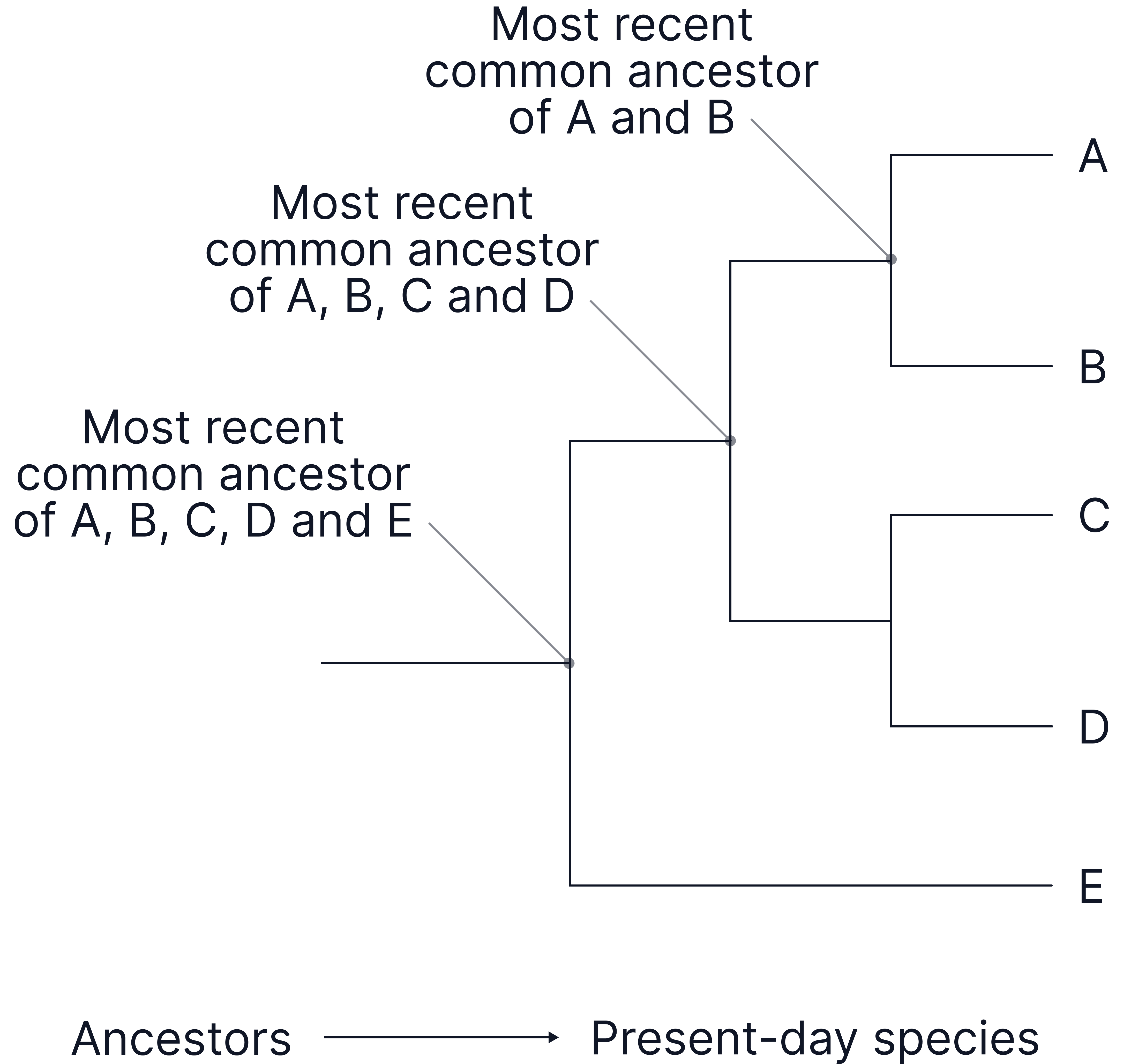
Let's look at an example!
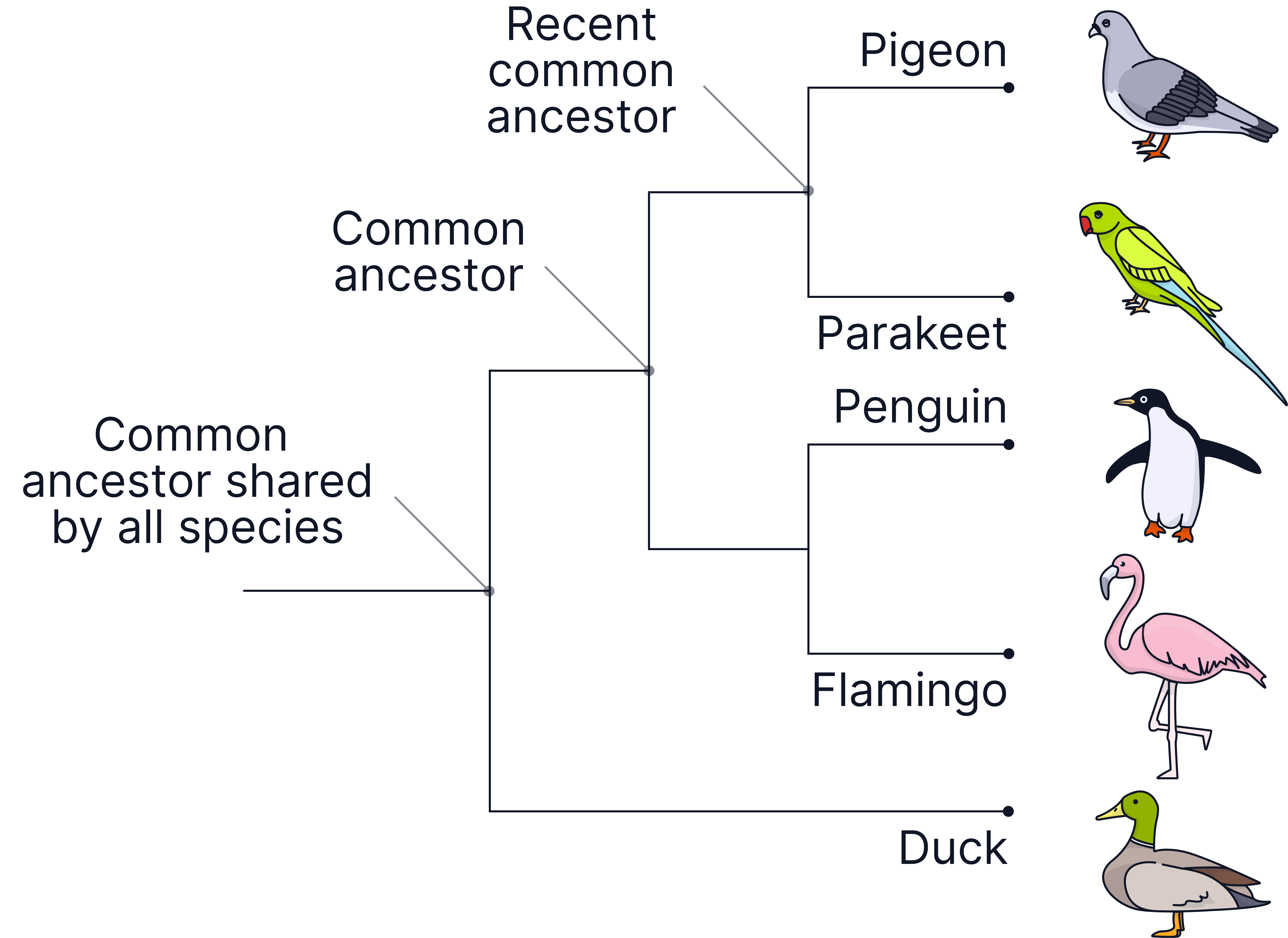
Here you can see all of the species shared a common ancestor.
The duck evolved first from this common ancestor.
The penguin, flamingo, parakeet and pigeon share a more recent common ancestor.
The pigeon and the parakeet are more closely related as they share an even more recent common ancestor.
This tells us the pigeon is more similar to the parakeet than it is to the penguin of the flamingo.
Key Terms
-
Species – A group of organisms that can interbreed to produce fertile offspring.
-
Genus – A classification group that includes several closely related species.
-
Common ancestor – A species from which two or more other species evolved.
-
Evolutionary tree – A diagram showing how species are related through evolution.
No answer provided.
Exam Tip
When comparing relationships, always look at how recently two branches split. The more recent the split, the more closely related the species are.
No answer provided.
Practice Question
The diagram shows the evolution of a group called the primates.
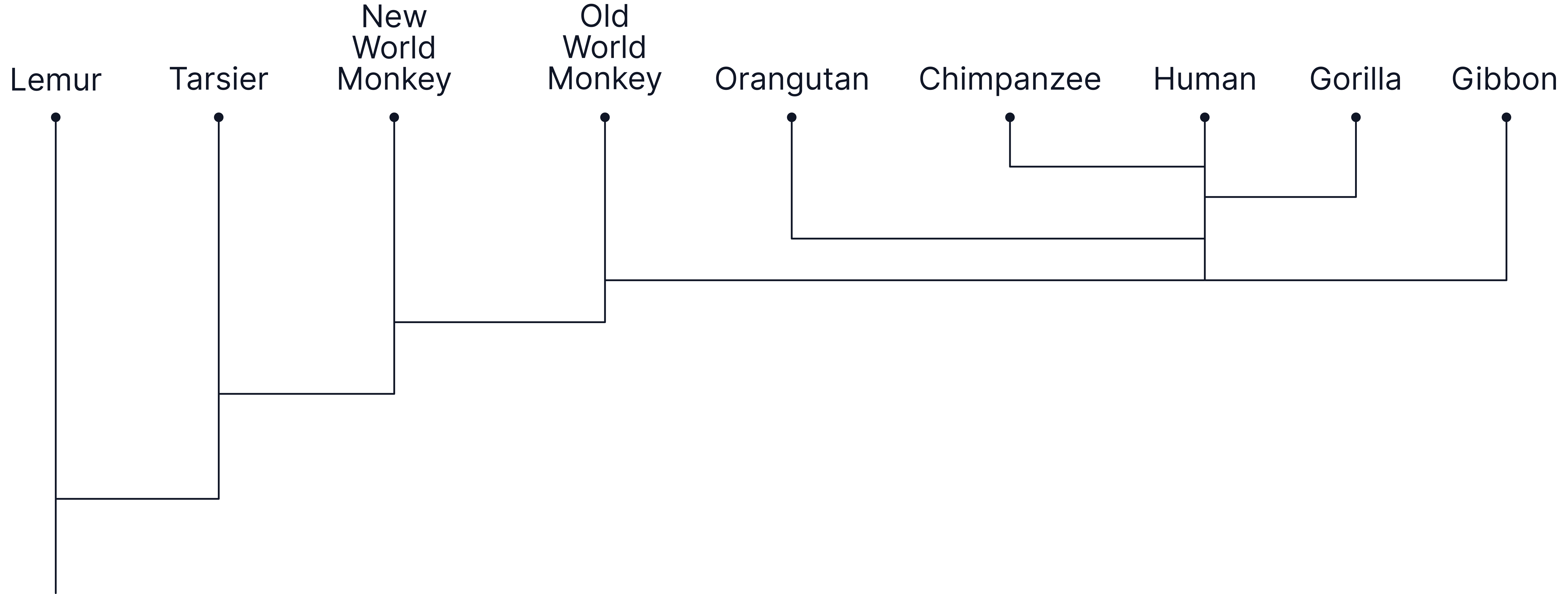
a) Which primate evolved first? (1 mark)
b) Name two primates that developed most recently from the same common ancestor as humans. (2 marks)
a) The lemur evolved first.
b) The chimpanzee and the gorilla developed most recently from the same common ancestor as humans.
More Practice
Try to answer the practice question from the TikTok video on your own, then watch the video to see how well you did!