Deforestation
Laura Armstrong
Teacher

Contents
Recall Questions
This topic requires prior knowledge of photosynthesis and the carbon cycle.
What do plants do during photosynthesis?
They take in carbon dioxide from the air and use water, along with light energy to make glucose.
Why does decay of dead plants lead to carbon dioxide release?
Microorganisms cause decay. They respire and release CO2.
How does the carbon cycle link to forests?
Trees remove CO₂ by photosynthesis and store carbon in their biomass, this is released when they are burnt or when they decay.
Topic Explainer Video
Check out this @lauradoesGCSEbiology video that explains deforestation, then read the study notes. Once you’ve gone through them, don’t forget to try the practice questions!
Deforestation
What Is Deforestation?
- Deforestation is the large-scale removal of forests, especially in tropical areas.
- Huge areas are cleared by cutting down trees or burning them.
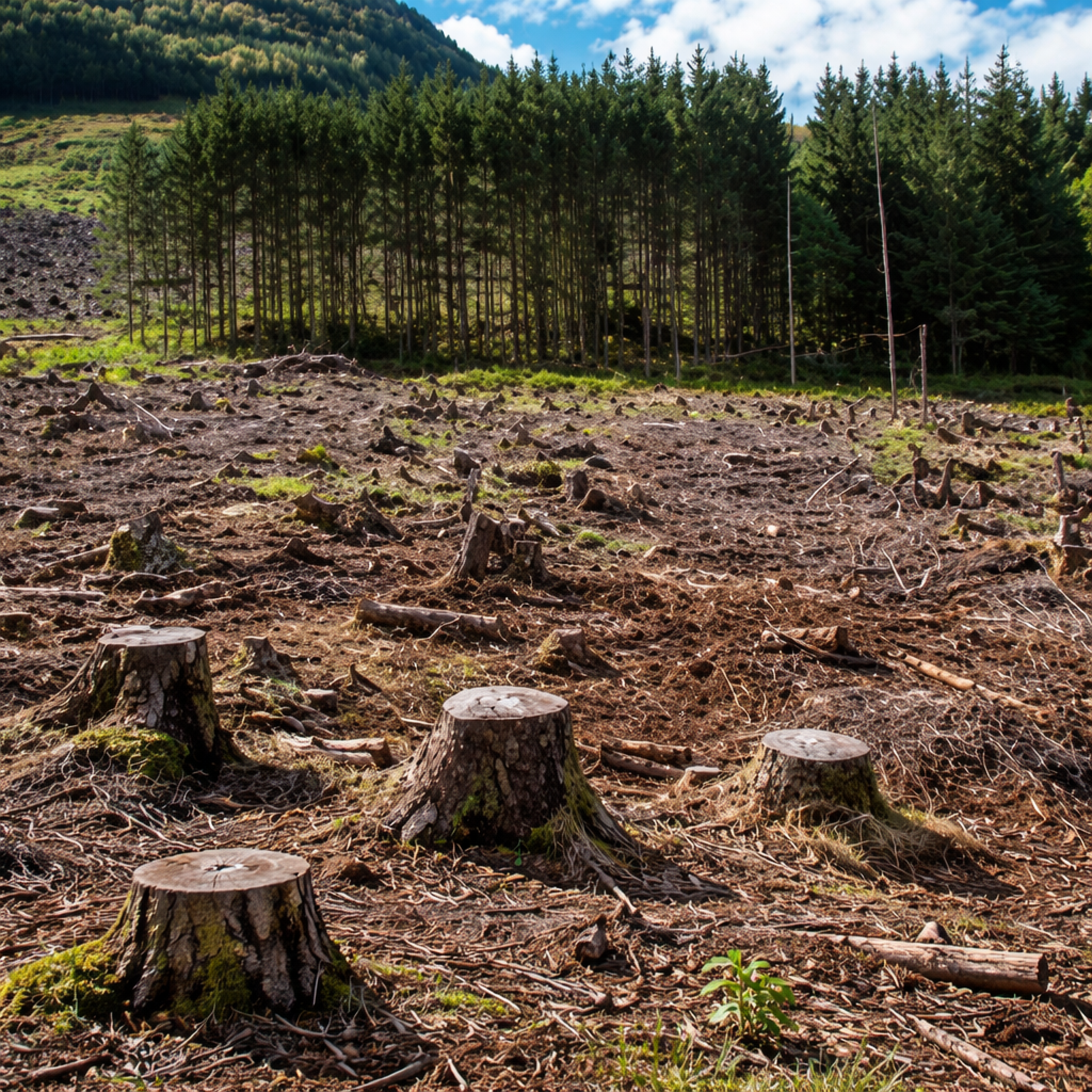
Why Does Deforestation Happen?
- To provide land for cattle ranching - grazing animals like cows.
- To provide land for rice fields to provide food.
- To grow crops for biofuels - fuels made from plants, e.g. palm oil, sugarcane.
- To use the wood to make paper.
- To use the wood to provide timber for furniture.
- To provide land for building.
Impacts of Deforestation on the Carbon Cycle
1. Less photosynthesis:
- Fewer trees means less carbon dioxide is taken in from the atmosphere.
- This reduces the removal of CO₂ by photosynthesis.
2. Burning trees:
- Trees are often burned to clear land.
- Burning releases the carbon stored in trees back into the atmosphere as carbon dioxide.
3. More decay:
- When trees are cut down and left to rot, microorganisms decompose the dead plant material.
- These decomposers respire, releasing even more carbon dioxide.
Result: More CO₂ in the atmosphere increases the greenhouse effect, which contributes to global warming.
What Are Biofuels?
- Biofuels are fuels made from living organisms or recently living material (like crops).
- Example: Sugarcane, maize (corn), palm oil.
- They are sometimes used to replace fossil fuels - but large-scale growing of plants for biofuels requires lots of land, and this can lead to more deforestation.
Environmental Impacts of Deforestation
- Increased carbon dioxide → worsens global warming and leads to climate change.
- Loss of biodiversity → Fewer different plants and trees means animals lose their habitats and their food sources. So animal biodiversity is also reduced.
- If animals cannot find new habitats and suitable food sources they could become extinct.
- Increased soil erosion → without trees, rain washes away fertile soil.
Key Terms & Definitions
- Deforestation - Large-scale cutting down of forests.
- Biofuels - Fuels made from plants.
- Photosynthesis - Plants use CO₂, water, and light energy to make glucose.
- Carbon cycle - The cycling of carbon between living things and the atmosphere.
No answer provided.
Exam Tip:
- When asked to evaluate deforestation, include both reasons why it’s done and its negative impacts - don’t just list one side!
No answer provided.
Practice Question
Describe the reasons why deforestation takes place and the effects deforestation has on the environment. (6 marks)
Model Answer:
Reasons
• tropical rainforests cleared for land.
• that land used to raise cattle, plant rice or plant crops .
• that land used to grow biofuels or palm oil.
• forests cut down for wood for building / paper.
• forests cleared for farming.
Effects
• less trees to take in carbon dioxide for photosynthesis.
• decay by microorganisms which respire - releasing carbon dioxide.
• burning waste wood releases carbon dioxide.
• build-up of carbon dioxide in atmosphere leads to greenhouse effect.
• build-up of carbon dioxide in atmosphere leads to global warming.
• habitat loss.
• reduced biodiversity.
• increased soil erosion.
Answers must consider both reasons and effects.
More Practice
Try to answer the practice question from the TikTok video on your own, then watch the video to see how well you did!