Destruction Of Peat Bogs
Laura Armstrong
Teacher

Recall Questions
This topic requires prior knowledge of biodiversity and land use.
What is biodiversity?
The variety of all the different species of organisms on Earth or within an ecosystem.
How does land use affect biodiversity?
Using land for farming, housing, or industry can reduce habitats and lower biodiversity.
Why are habitats important for maintaining biodiversity?
They provide food, shelter, and the right conditions for different species to survive.
Topic Explainer Video
Check out this @lauradoesGCSEbiology video that explains destruction of peat bogs, then read the study notes. Once you’ve gone through them, don’t forget to try the practice questions!
Peat Bogs and the Destruction of Peat Bogs
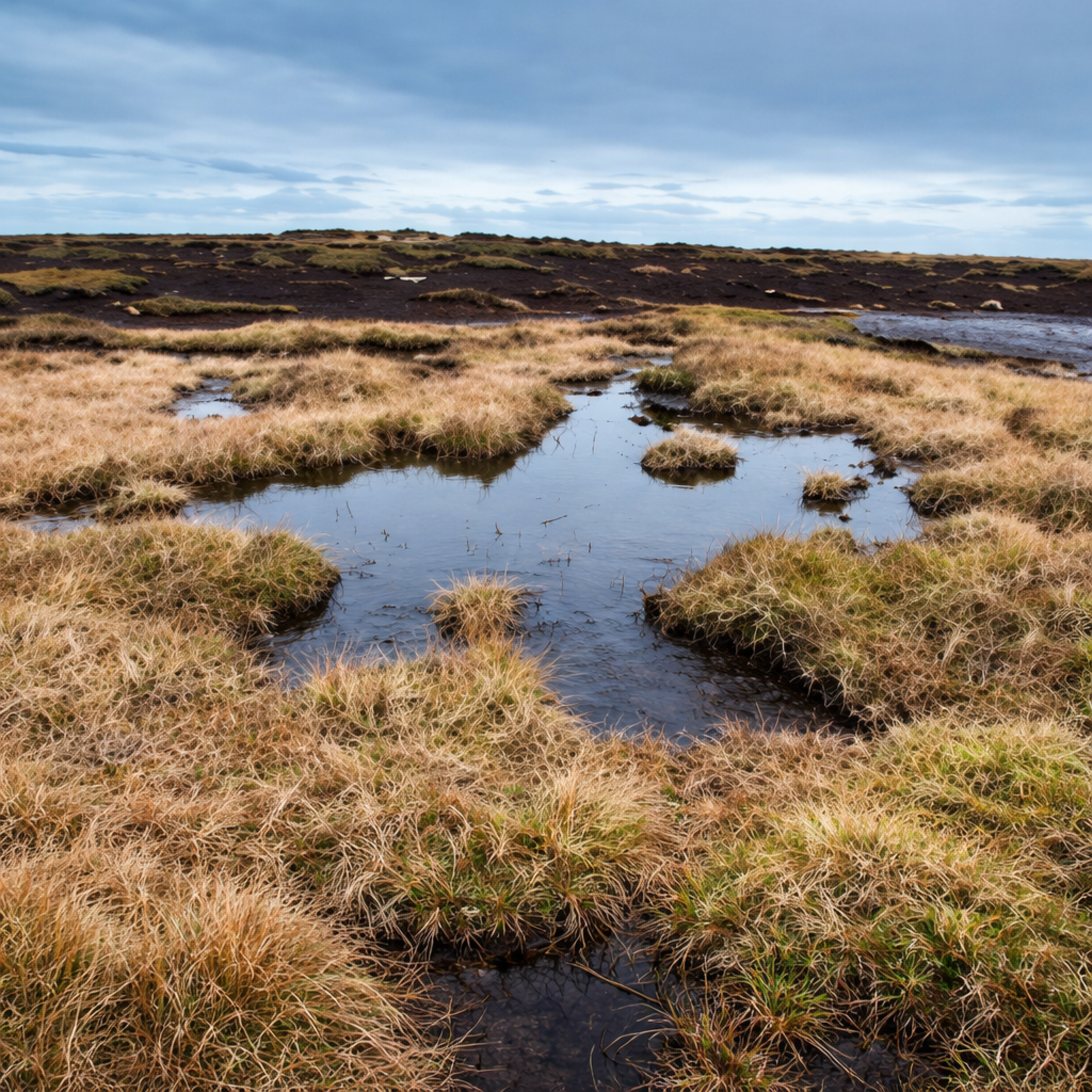
What Is a Peat Bog?
- A peat bog is a type of wetland made up of partly decayed plants (mainly mosses) that build up over thousands of years in waterlogged, acidic conditions.
- Because the conditions are very wet and low in oxygen, decay is very slow, so carbon is stored in the peat.
What Is Peat Used For?
- Peat is cut out of bogs and dried for:
- Fuel (which is burnt for energy).
- Garden compost (added to soil to improve plant growth).
Why Are Peat Bogs Destroyed?
Peat bogs are destroyed when:
- Peat is drained and dug up to make compost for gardening and horticulture. Peat is used to make compost because it helps improve soil structure - making the soil lighter and easier for plant roots to grow through. Peat also holds moisture well, so plants have better access to water.
- Peat bogs are drained to make more space to use in agriculture for growing crops or grazing cattle.
- Peat is burnt as a fuel.
Effects of Destroying Peat Bogs
Local impacts:
- Destroying peat bogs removes habitats for many plants, insects, birds, and animals.
- This reduces biodiversity because species lose food sources and habitats.
Global impacts:
- Peat stores huge amounts of carbon that has built up over thousands of years.
- When peat is drained and exposed to air, it starts to decay, this is done by microorganisms which release CO2 during respiration.
- When peat is burnt as a fuel, the carbon it stored is released as CO2.
- CO2 is a greenhouse gas so contributes to the greenhouse effect and global warming. See future study note for more on this.
Key Terms & Definitions
- Peat bog - A waterlogged area with partly decayed plant material that stores carbon.
- Peat - Partly decayed plant matter found in peat bogs.
- Biodiversity - The variety of different species in an ecosystem.
- Carbon store - Peat bogs lock away carbon and stop it entering the atmosphere.
No answer provided.
Exam Tip:
Always consider the local impact (loss of habitat, lower biodiversity) and the global impact (more CO₂, more global warming) when answering questions relating to the destruction of peat bogs.
No answer provided.
Practice Question
Explain why destroying peat bogs contributes to global warming and explain the impact on biodiversity. (4 marks)
Model Answer:
- Draining / destroying peat bogs releases the carbon stored in the peat as carbon dioxide,
- Which adds to the greenhouse effect and increases global warming.
- Destroying peat bogs removes the habitat for many plants and animals,
- So the biodiversity decreases.
More Practice
Try to answer the practice question from the TikTok video on your own, then watch the video to see how well you did!