Triple Science Only - Trophic Levels And Pyramids Of Biomass
Laura Armstrong & Joe Wolfensohn
Teachers


Recall Questions
This topic requires prior knowledge of food chains, energy transfer, and ecosystem relationships.
What is a producer in a food chain?
A producer is an organism, like a plant or algae, that makes its own food using photosynthesis.
What do we call organisms that eat producers?
Primary consumers.
What is interdependence?
Organisms rely on each other for shelter, food, pollination and seed dispersal.
Topic Explainer Video
Check out this @lauradoesGCSEbiology video that explains trophic levels and pyramids of biomass, then read the study notes. Once you’ve gone through them, don’t forget to try the practice questions!
Trophic Levels And Pyramids Of Biomass
Trophic Levels in an Ecosystem
Trophic levels describe the position of organisms in a food chain based on what they eat and what eats them:
|
Trophic Level |
Organisms |
Description |
|
Level 1 |
Producers (plants, algae) |
Make their own food using sunlight in the process of photosynthesis. |
|
Level 2 |
Primary consumers |
Herbivores that eat plants / algae. |
|
Level 3 |
Secondary consumers |
Animals that eat primary consumers. |
|
Level 4 |
Tertiary consumers |
Animals that eat other carnivores. |
|
Apex predator |
Top predator |
Has no natural predators. |
Decomposers are not usually shown in food chains but play a key role in breaking down dead organisms.
They secrete enzymes, digest material externally, and absorb the small, soluble molecules.
Pyramids of Biomass
- A pyramid of biomass represents the mass of living material (biomass) at each trophic level in a food chain.
- It is usually largest at the base and decreases at each level.
- The bottom level (Level 1) is always the producers, and the top is the tertiary consumer or apex predator.
- Biomass decreases at each level because:
- Not all material is eaten.
- Energy is lost in respiration, movement, and in faeces and urine.
Constructing Pyramids of Biomass
You must be able to:
- Interpret numerical data to compare biomass at different levels.
- Accurately draw pyramids to scale using given data.
- Bars should be equally spaced around the midpoint. The height of each level should be the same.
- Label the x axis with Biomass and the unit (kg)
- Correctly label trophic levels (e.g., Level 1, the producer, at the bottom).
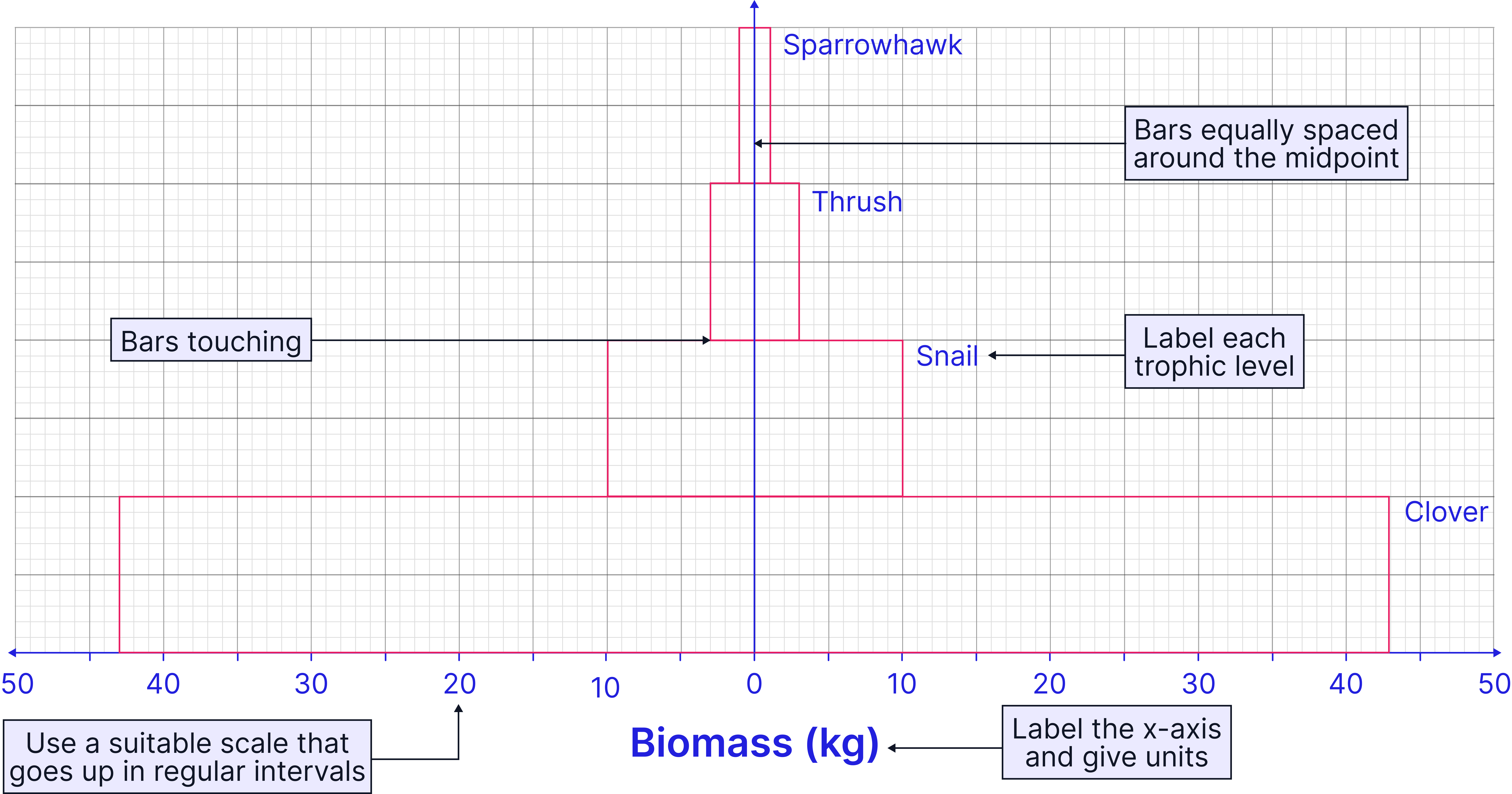
The biomass of the clover is 80kg. The bar is centred around the midpoint of zero and extends to 40kg on either side, this adds up to a total biomass of 80kg.
Sometimes you are simply asked to sketch a pyramid of biomass. This means it does not have to be drawn accurately to scale but the bar widths should still be correct relative to each other, and each trophic level should still be labelled.
Key Terms & Definition
Trophic level - The position of an organism in a food chain.
Producer - An organism that makes its own food through photosynthesis.
Consumer - An organism that eats other organisms.
Biomass - The total mass of living material in a trophic level.
Decomposer - Microorganism that breaks down dead matter using enzymes and absorbs the nutrients.
No answer provided.
Exam Tip:
Remember that biomass and energy decrease as you go up the trophic levels due to energy being lost in respiration, movement, and excretion.
Practice drawing pyramids of biomass. Remember the mass is split evenly on both sides of the pyramid.
No answer provided.
Practice Question
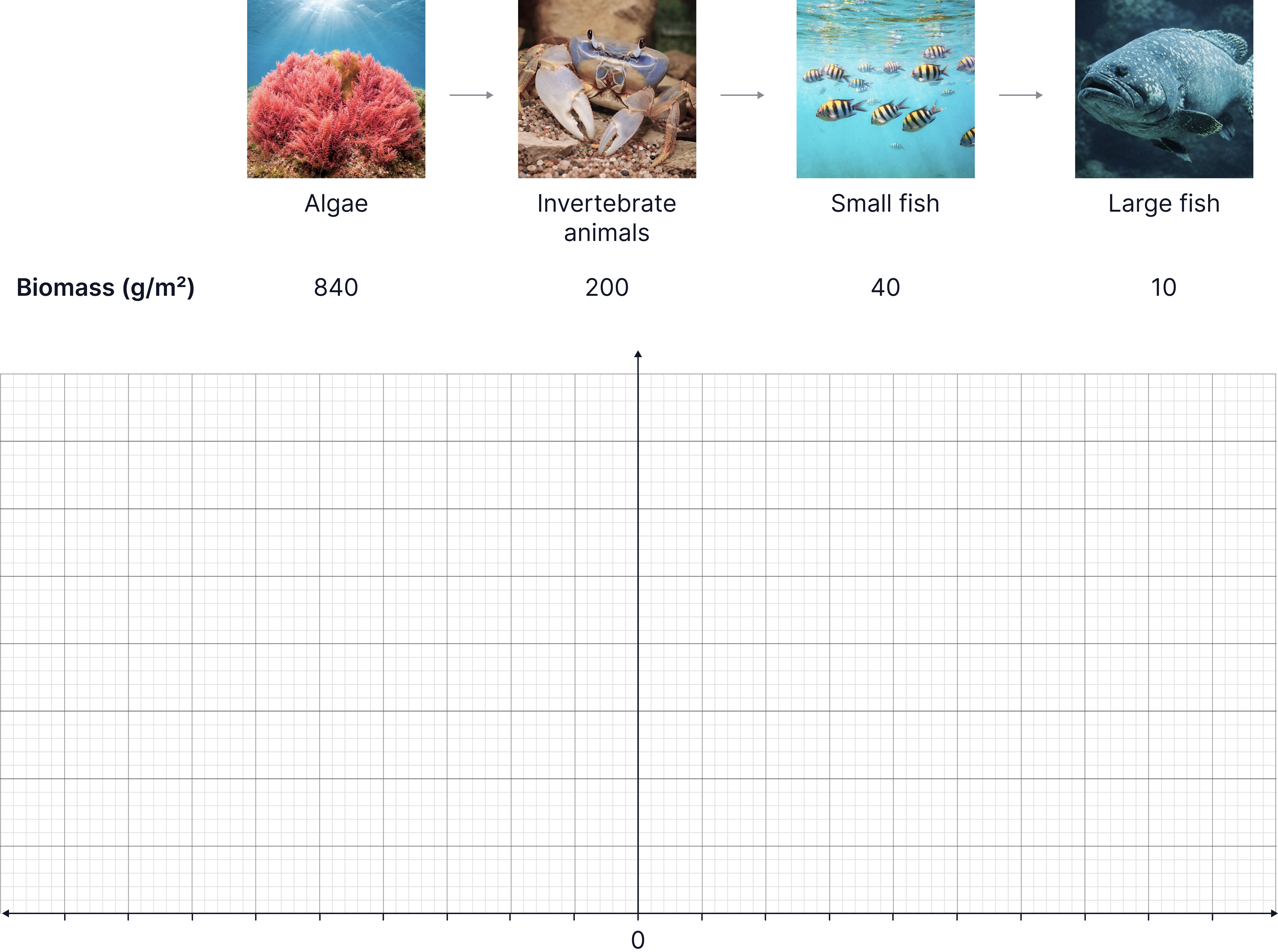
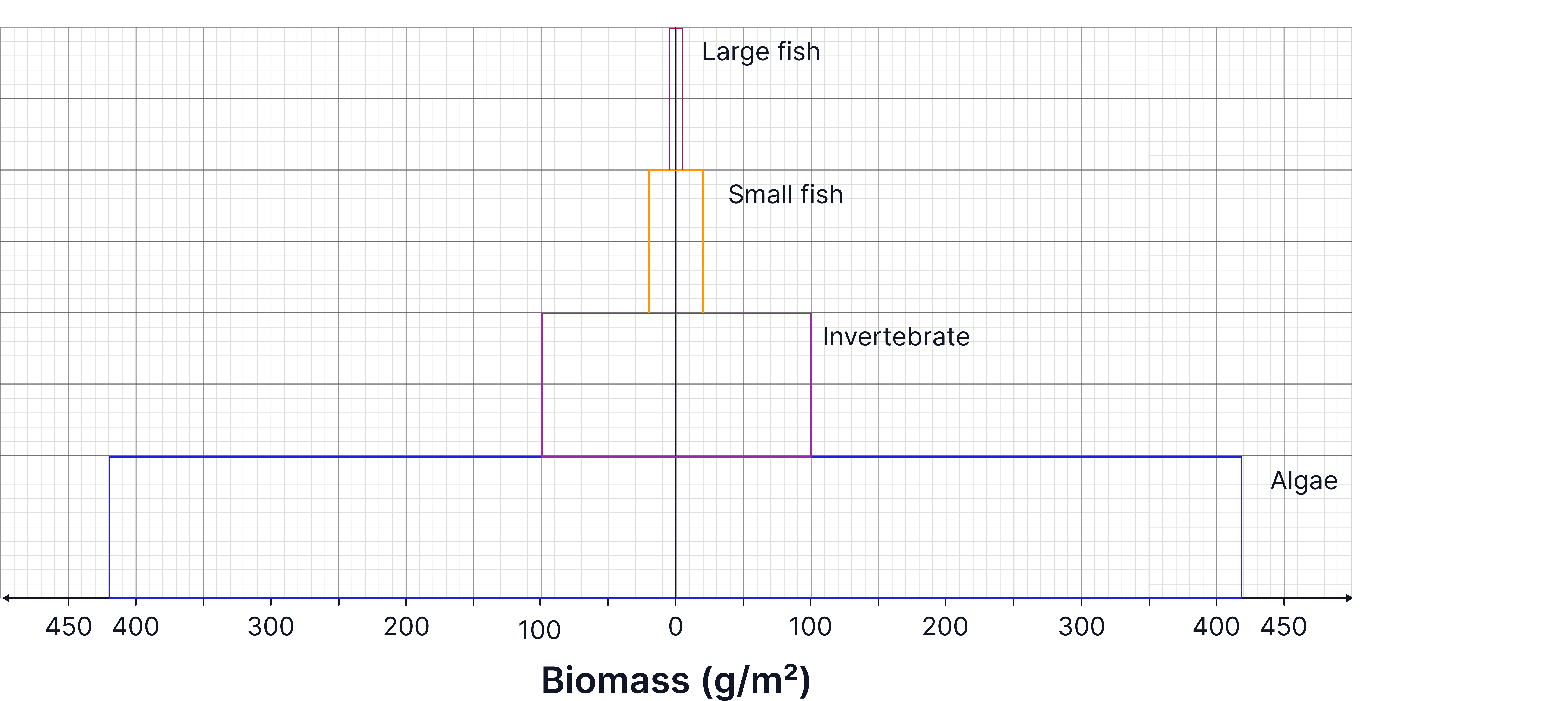
Draw a pyramid of biomass for this food chain. You should label the x-axis and each trophic level. (4 marks)
Model Answer:
More Practice
Try to answer the practice question from the TikTok video on your own, then watch the video to see how well you did!