Refraction
Brook Edgar
Teacher

Contents
Explainer Video
Snell's Law
Refraction is the change in direction of a wave as it travels from one medium to another due to its change in speed. This occurs if the media have different optical densities.
If the wave slows down, upon entering a more optically dense medium, it will bend toward the normal (a reference line, drawn at right angles to the boundary). If the wave speeds up on entering a less optically dense medium, for example from glass to air, the wave bends away from the normal. However, the frequency of the wave remains the same.
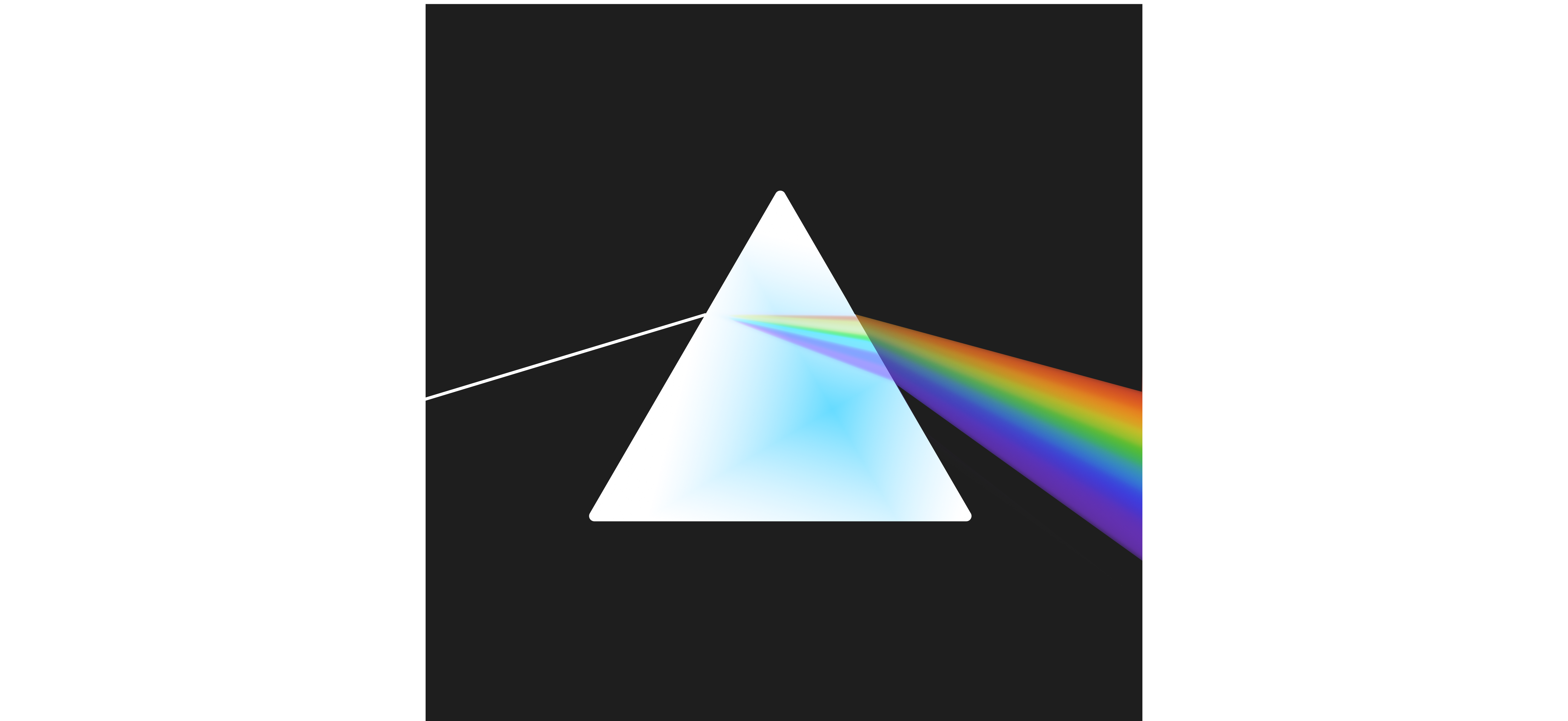
For example, dispersion occurs due to refraction, when white light spreads into all the colours of the visible spectrum (like a rainbow, ROYGBIV). Although all colours of white light travel at the same speed in a vacuum, they travel at different speeds in glass, so refract by different amounts.
We can use Snell's law to calculate the changes in direction of a wave,
Formula:
The refractive index of a medium indicates its optical density. The higher the optical density, the greater the value of the refractive index.
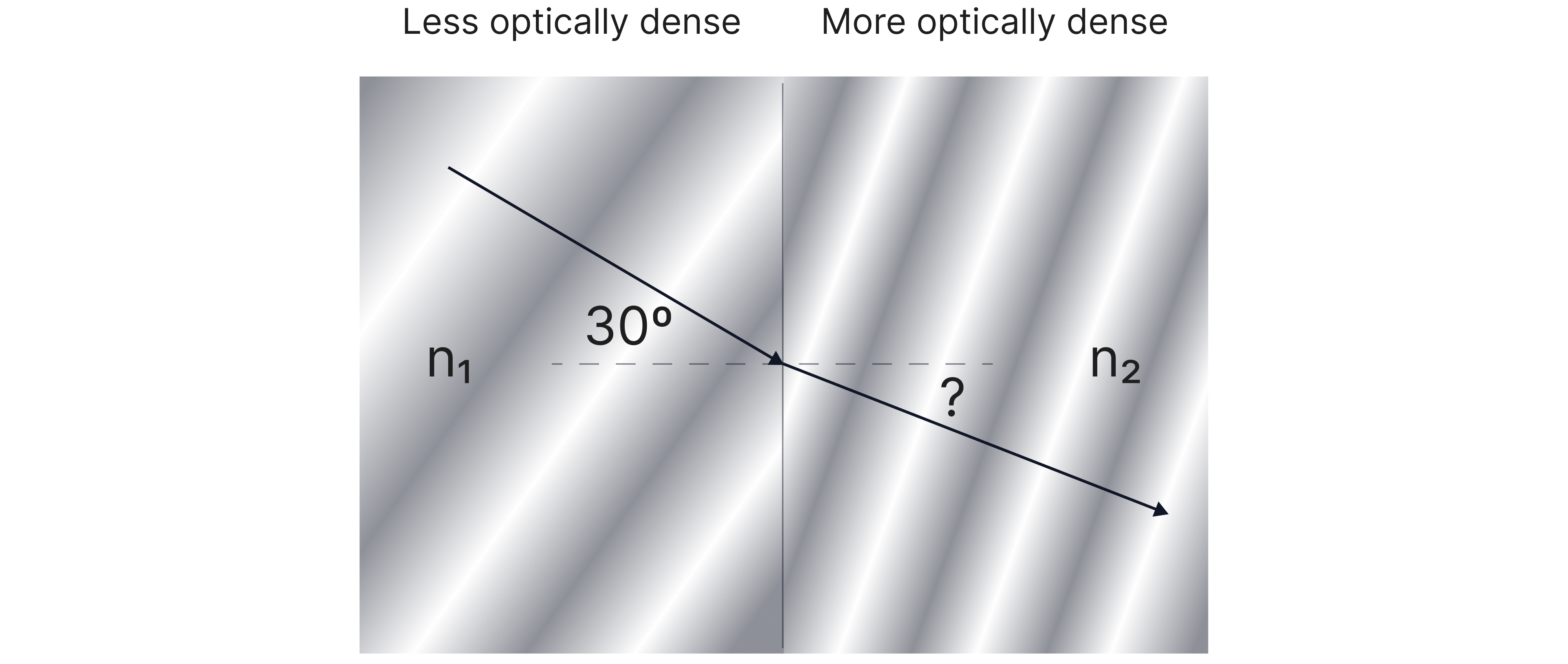
In the image below, we can see that as the wave travels into a more optically dense medium, the ray bends toward the normal. Knowing that the wave travels from air, with a refractive index of into glass, with a refractive index of we can calculate this angle of refraction.
To calculate the refractive index of a substance,
Formula:
Total Internal Reflection
As a light wave travels into a medium of a lower optical density, it changes speed, bending away from the normal.
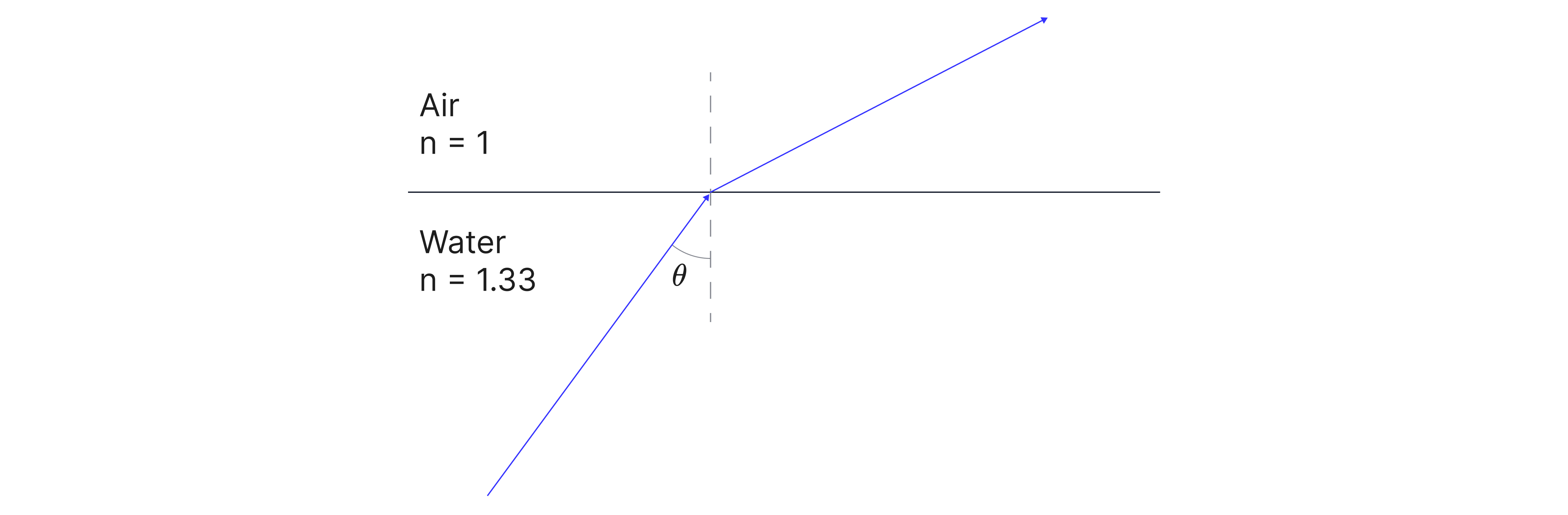
If we increase the angle of incidence, the ray bends further and further away from the normal towards the boundary. Eventually, we reach an angle known as the critical angle, at which the ray of light travels along the boundary.

If the angle of incidence is greater than the critical angle, TIR (Total Internal Reflection) occurs. The angle of incidence = the angle of reflection.

The critical angle is the angle of incidence where the angle of refraction is .
-> , where .
Total internal reflection only occurs as light travels:
-> from a higher to a lower refractive index
-> and the angle of incidence is greater than the critical angle.
Worked Example
Sketch the critical condition for total internal reflection for light travelling from water to air.

Worked Example
Show that is the critical angle for red light travelling from water to air, knowing that the speed of light in water is .
First, we need to calculate the refractive index of water,
Now we can use Snell's law to solve for the critical angle, the angle at which the angle of refraction is .
Optical Fibres
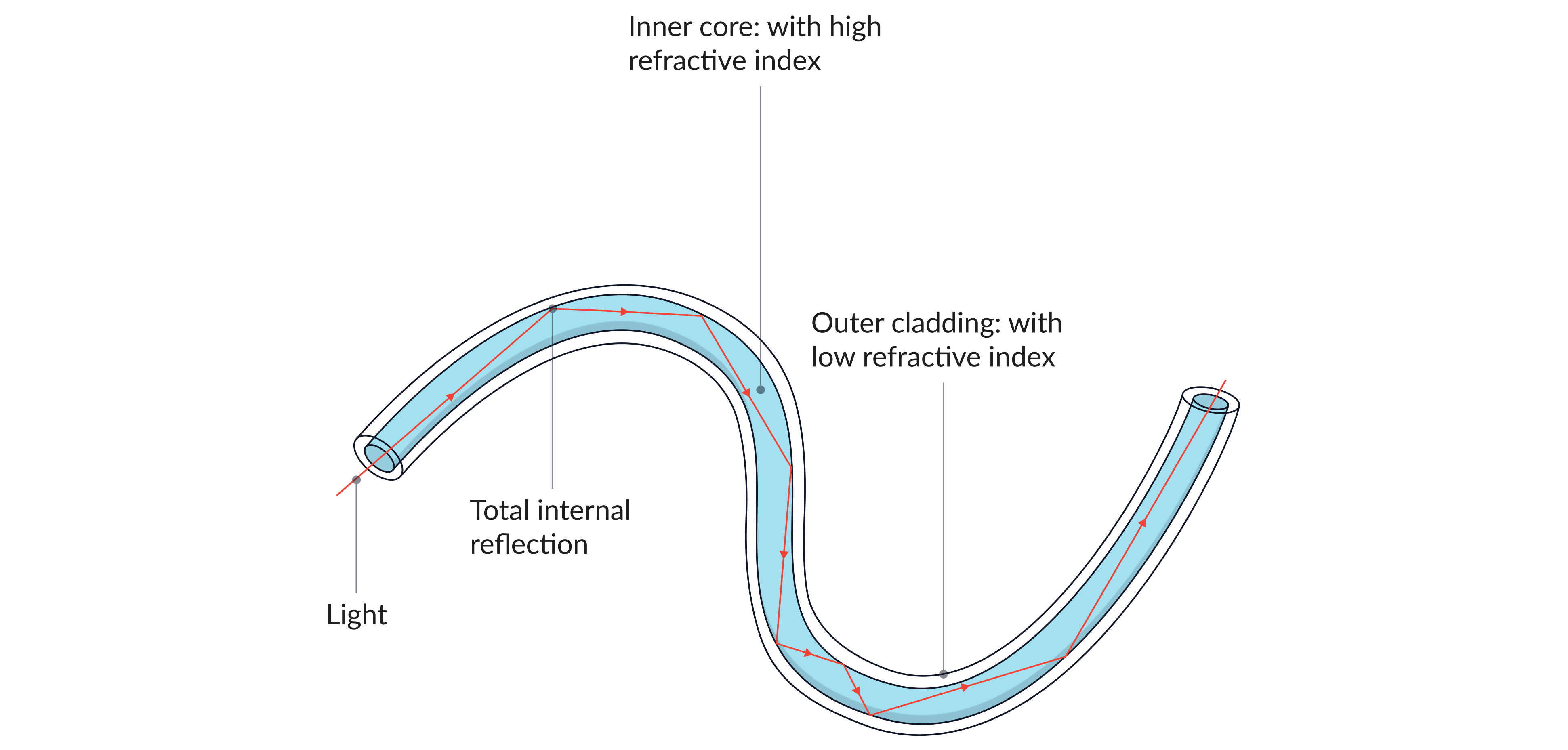
Optical fibres use the principle of total internal reflection in many applications, from optical fibre internet to medical endoscopes used in keyhole surgery.
The fibres are made of two layers, the core and the cladding. The refractive index of the core is higher than that of the cladding, allowing for total internal reflection.
The cladding also protects the core from damage and the loss of the signal/information.
Material dispersion, or spectral dispersion, occurs because different wavelengths of light travel at different speeds.
Blue light travels slower than red light due to its greater refractive index
Therefore, red light reaches the end of the fibre before the blue light
This results in pulse broadening, which reduces resolution and signal clarity.
To prevent this, monochromatic light is used.

Modal dispersion occurs when monochromatic light is used, and the pulse broadening results from the different angles of incidence, causing different rays of light to arrive at different times. Light travelling along the axis of the core travels a shorter distance than light undergoing multiple total internal reflections at the core-cladding boundaries.
This is more prominent in wider cores, so to prevent modal dispersion, the core needs to be very narrow.

Practice Questions
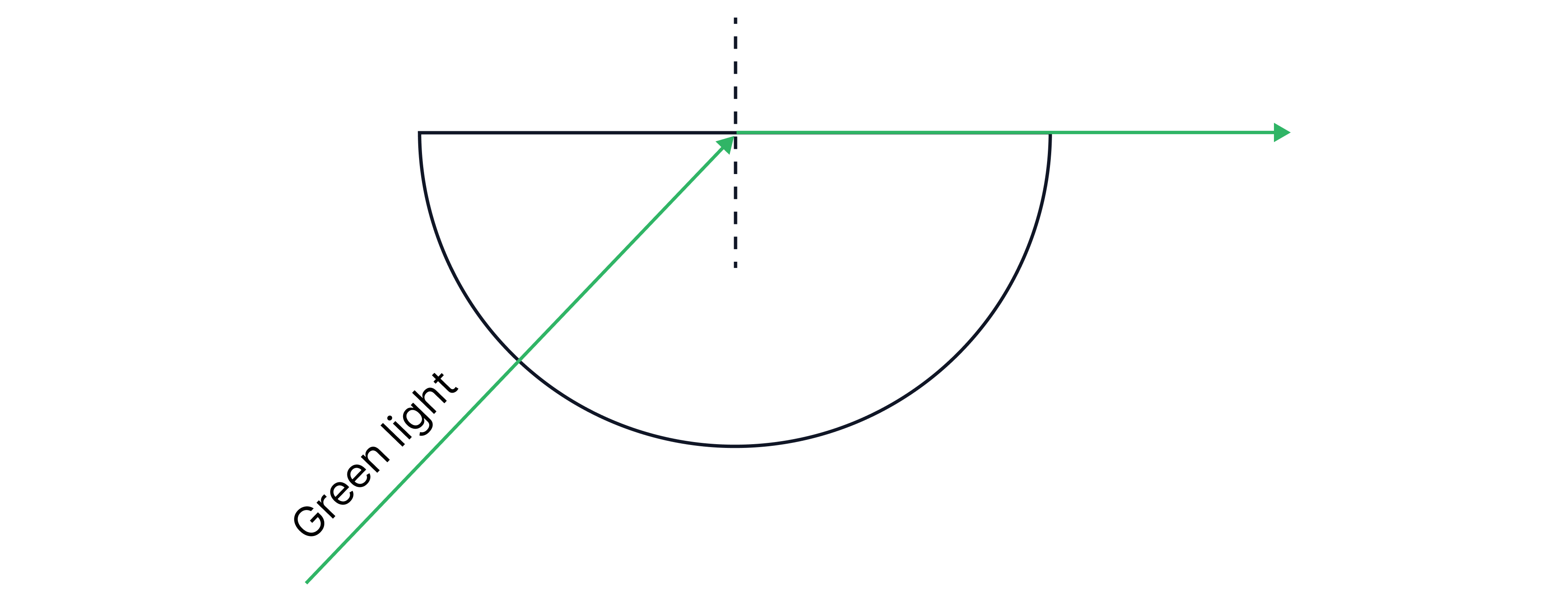
This diagram shows green light approaching an glass to air boundary at the critical angle. The refractive index of glass is 1.6. Calculate the critical angle.
-> Check out Brook's video explanation for more help.
Answer:
Describe the structure of an optical fibre.
-> Check out Brook's video explanation for more help.
Answer:
Optical fibres have a central core which is surrounded by a layer of cladding.
The purpose of the cladding is to protect the core from damage, prevent signal loss and ensure that total internal reflection occurs as the cladding is less optically dense than the core.
Monochromatic light must be used to achieve a sharper signal by preventing material dispersion.
Thin (or single mode fibres) reduce pulse boarding by reducing modal dispersion.