Adaptations
Laura Armstrong & Joe Wolfensohn
Teachers


Recall Questions
This topic requires prior knowledge of adaptations from KS3.
What is an adaptation?
A feature that helps an organism survive in its environment.
Describe two ways a polar bear is adapted to survive in the arctic.
White fur for camouflage and thick fur and fat for insulation.
What is stored in a camel’s hump?
Fat, which acts as an energy store. It also produces water when it is broken down in respiration.
Topic Explainer Video
Check out this @JoeDoesBiology video that explains adaptations, then read the study notes. Once you’ve gone through them, don’t forget to try the practice questions!
What Is an Adaptation?
-
An adaptation is a feature that allows an organism to survive and reproduce in its habitat.
-
Adaptations help organisms cope with abiotic (non-living) and biotic (living) factors.
Types of Adaptations
|
Type |
Definition |
Example |
|
Structural |
Physical features of an organism’s body. |
Thick fur on a polar bear, cactus spines, sharks fins. |
|
Behavioural |
The way an organism acts. |
Swallows migrating in winter to warmer areas, bears hibernating in the winter. |
|
Functional |
Processes inside the body itself. |
Desert animals producing very concentrated urine to save water. |
How Animals Survive in Cold Environments
Animals that live in cold places like the Arctic have special adaptations to keep warm and survive:
Examples:
-
Thick fur: Insulates the body by trapping air (e.g. Arctic fox) which reduces heat loss.
-
Blubber (thick layer of fat): Insulates the body to reduce heat loss and provides an energy store (e.g. whales, seals).
-
Small surface area to volume ratio: Large, round bodies with small ears help reduce heat loss from their skin surface (e.g. polar bears).
-
White fur: Camouflage in snow to avoid predators or hunt prey without being seen.
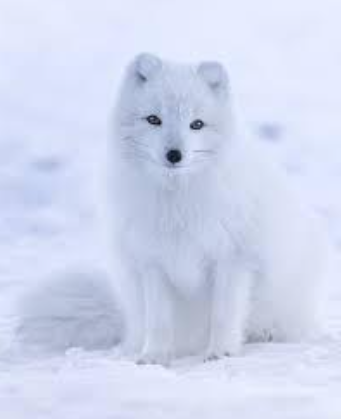
The Arctic Fox
How Animals and Plants Survive in Hot, Dry Deserts
Desert Animals
-
Large surface area to volume ratio: E.g. the large ears of the fennec fox help them lose heat through their skin surface.
-
Nocturnal behaviour: Many desert animals stay in burrows or shade during the day to avoid heat, they are active at night instead.
-
Concentrated urine: Save water by producing very little, very concentrated urine.
-
Camels have wide feet: To spread their weight and stop them from sinking into the sand.
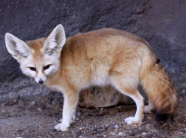
The Fennec Fox
Desert Plants
-
Thick waxy cuticle: Reduces water loss.
-
Small or reduced leaves (spines): Less surface area to lose water by evaporation (e.g. cactus).
-
Store water in tissues: Succulent stems store water for dry periods.
-
Extensive or deep roots: Reach underground water or spread wide to absorb rainfall quickly.
-
Spines: to deter herbivores from eating them (e.g. cactus).
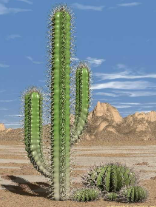
A cactus in the desert
Extremophiles
-
Some microorganisms like certain bacteria live in very extreme conditions: deep sea vents, high salt lakes or hot springs.
-
They have special structural, functional or chemical adaptations to survive high heat, high pressure or high salinity (saltiness).
-
Most bacteria in the domain archaea are extremophiles.
Key Terms
-
Adaptation – A feature that helps an organism survive.
-
Structural adaptation – A physical feature.
-
Behavioural adaptation – An action or behaviour.
-
Functional adaptation – A process inside the body.
-
Extremophile – An organism living in extreme conditions, such as extreme temperature.
No answer provided.
Exam Tip
Always link the adaptation to how it helps the organism survive. E.g., thick fur reduces heat loss in cold climates.
You are not expected to learn every single adaptation for all animals and plants! You will be provided with information or a picture in the exam and expected to apply your knowledge to explain how the organism is adapted to its environment.
No answer provided.
Practice Questions
Question 1
Many orchid plants:
• grow attached to other types of plants
• have brightly coloured flowers
• produce large quantities of pollen
• produce thousands of tiny, light seeds.
Describe how these adaptations help orchid plants to survive and compete. (4 marks)
any four from:
- growing on other plants means support to absorb more light (for photosynthesis) or to obtain water / minerals / ions / glucose from the other plant.
- bright colours attract pollinators or attract insects to transfer pollen.
- large quantities of pollen (increases the likelihood of pollen transfer) and so more seeds / reproduction.
- tiny / light seeds will travel long distances to grow in new areas.
- many seeds mean many new plants so will out-compete other species.
Question 2
Explain how the adaptations of Arctic animals help them to survive in cold conditions. (6 marks)
- a small SA:V ratio means less heat energy lost to surroundings.
- thick fur traps a layer of air which acts as an insulating layer reducing heat loss.
- a layer of fat or blubber acts as an insulating layer.
- a layer of fat or blubber acts as a food store for respiration when food is in short supply.
- small ears reduces surface area so less heat loss.
- white colour for camouflage in the snow so prey do not see them coming and they get more to eat or so predators do not see them and they can escape.
- large feet to spread weight over snow so they can run faster.
- hibernate in winter to conserve energy stores.
More Practice
Try to answer these practice questions from the TikTok videos on your own, then watch the videos to see how well you did!